What Is a Center Drill? The Complete Guide to Center Drill Types, Sizes, Angles, and CNC Applications
Table of Contents

In precision machining, accuracy starts long before the final cutting operation begins. Whether you are turning shafts on a CNC lathe, grinding precision components, or drilling deep holes, one small tool often determines whether the entire machining process succeeds or fails: the center drill.
Many machinists ask questions such as:
- What is a center drill used for?
- What is the difference between a center drill vs spot drill?
- How do I choose the correct #2 center drill dimensions?
- Should I use HSS or carbide center drill bits?
- What is the standard center drill angle?
Although center drills are relatively small cutting tools, they play a critical role in ensuring concentricity, positional accuracy, and machining stability. A poorly formed center hole can cause vibration, runout, tool breakage, and poor surface finish throughout the entire manufacturing process.
In this guide, we will explore everything about center drill tools, including their geometry, standards, applications, speeds and feeds, and the differences between A type, B type, and R type center drills. We will also discuss why solid carbide center drills are becoming increasingly popular in modern CNC machining environments.
What Is a Center Drill and Why Is It Important?
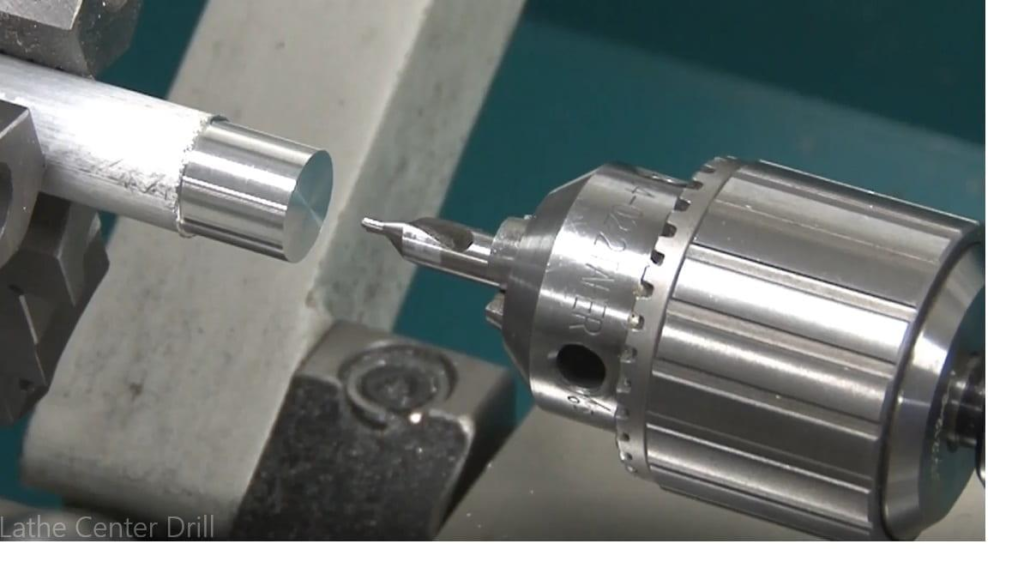
A center drill is a combination drilling and countersinking tool designed to create accurate center holes in metal workpieces. Unlike ordinary twist drills, center drills are short, rigid, and highly resistant to deflection, making them ideal for precision positioning.
The tool typically combines:
- A pilot drill section
- A countersink section
- A 60-degree center angle
The primary purpose of a center drill hole is to establish the rotational center of a workpiece. This allows the part to be accurately supported between centers during turning, grinding, or inspection operations.
Without proper center drilling, even the most advanced CNC machine may struggle to maintain concentricity. The drill may wander, the shaft may rotate eccentrically, and dimensional accuracy can quickly deteriorate.
This is why center drilling remains a standard operation in:
- CNC turning
- Lathe machining
- Shaft manufacturing
- Cylindrical grinding
- Deep hole drilling
- Precision tooling production
Why Are Center Drills Different from Standard Drill Bits?
Many beginners mistakenly think a center drill is simply a small drill bit. In reality, the geometry is entirely different.
A standard twist drill is relatively long and flexible, which makes it more prone to wandering when first contacting the material surface. A center drill, however, is designed specifically for rigidity and precise starting accuracy.
The short flute length dramatically reduces vibration and ensures accurate positioning. This is especially important in CNC machining, where even slight misalignment can affect downstream operations.
Another major difference is the countersink geometry. Most center drills use a 60 degree center drill angle, which creates a precise seating surface for lathe centers.
Some specialized tools may use 82-degree or 90-degree geometries, but 60 degrees remains the international standard for most turning applications.
What Are the Main Types of Center Drills?
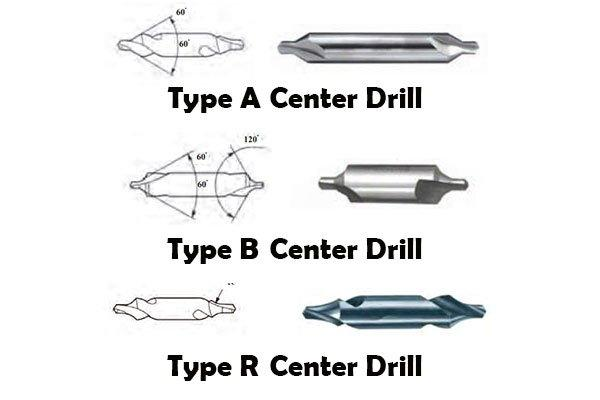
Center drills are generally divided into three major categories according to DIN 332 and ISO 6411 standards.
A Type Center Drill — The Most Common Design
The A type center drill is the standard version used in general machining applications. It contains a pilot drill section and a 60-degree countersink but does not include a protective chamfer.
Because of its simple structure and lower manufacturing cost, it is widely used for ordinary turning and drilling operations.
A type center drills are suitable for:
- General CNC turning
- Standard shaft machining
- Single-setup operations
- Parts that do not require repeated clamping
However, because there is no protective chamfer, the center hole can wear more quickly after multiple installations.
B Type Center Drill — Better Protection for Precision Work
The B type center drill adds an additional 120-degree protective chamfer around the main 60-degree center hole.
This extra geometry helps protect the center seat from damage during repeated setups or long machining cycles. For this reason, B type center drills are commonly used in high-precision shaft production and grinding operations.
Advantages of B type center drills include:
- Longer center hole life
- Better protection against edge damage
- Improved repeated positioning accuracy
- Higher reliability during grinding
This is one reason why many aerospace and automotive manufacturers prefer B type center drill dimensions for critical rotating components.
R Type Center Drill — Radius Protection for Maximum Durability
The R type center drill uses a radius profile instead of a straight countersink geometry. This radius reduces stress concentration and improves wear resistance.
R type drills are especially useful in applications involving:
- Repeated clamping
- High rotational speeds
- Precision grinding
- Long production cycles
Although they are more specialized, radius center drills are becoming increasingly popular in high-end CNC manufacturing environments.
HSS vs Carbide Center Drill — Which One Should You Choose?
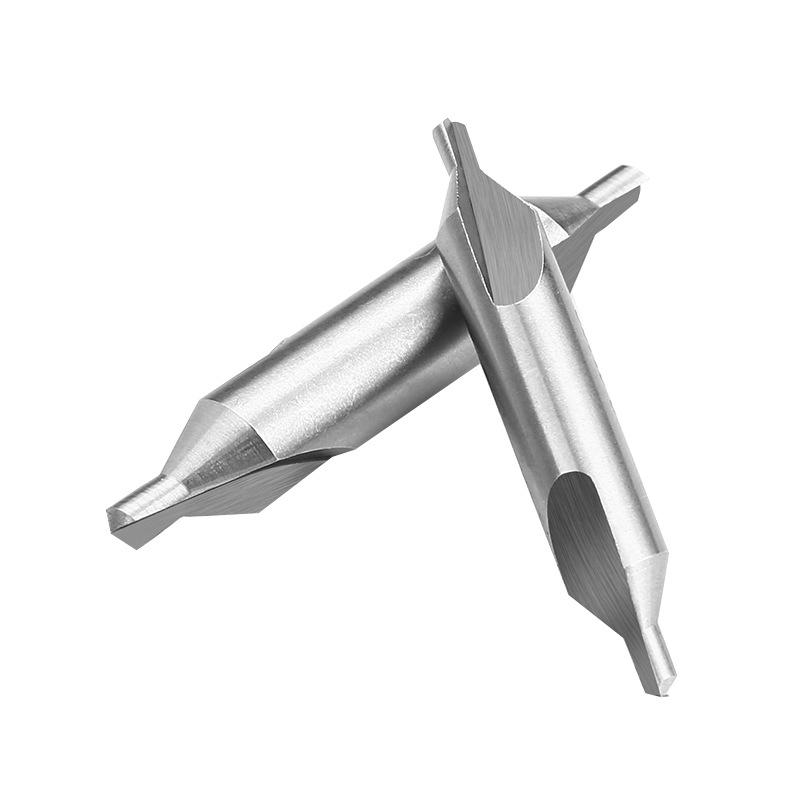
One of the most important purchasing decisions is choosing between HSS center drill bits and solid carbide center drills.
For decades, HSS center drills dominated the industry because of their toughness and affordability. However, with the rise of high-speed CNC machining, carbide center drills have rapidly gained market share.
HSS Center Drill Advantages
HSS center drills are still widely used because they offer:
- Excellent toughness
- Lower cost
- Good resistance to impact
- Easier regrinding
They are ideal for:
- Manual lathes
- Conventional machining
- Small workshops
- Mild steel machining
Cobalt center drills, a premium variation of HSS tooling, provide improved heat resistance and are commonly used for stainless steel applications.
Why Are Solid Carbide Center Drills Becoming More Popular?
Modern CNC machining centers operate at much higher spindle speeds than traditional machines.
In these environments, solid carbide center drills offer several advantages:
- Higher cutting speed capability
- Superior wear resistance
- Better dimensional consistency
- Improved automation reliability
- Longer production life
Carbide center drill tools are especially effective for machining:
- Stainless steel
- Hardened steel
- Titanium alloys
- High-temperature materials
Because carbide is significantly stiffer than HSS, it also produces more accurate center holes with less vibration.
Standard Center Drill Sizes and Dimensions
One of the most searched topics online is the center drill size chart.
Machinists frequently search for terms like:
- #2 center drill dimensions
- #3 center drill size
- #4 center drill diameter
- standard center drill dimensions
- metric center drill dimensions
Below is a simplified overview of common DIN 332 center drill sizes.
Standard Center Drill Size Chart
Drill Size | Pilot Diameter | Body Diameter | Typical Application |
#00 center drill | 0.5 mm | 3.15 mm | Micro machining |
#0 center drill | 1.0 mm | 3.15 mm | Small precision parts |
#1 center drill | 1.6 mm | 4.0 mm | General machining |
#2 center drill | 2.0 mm | 5.0 mm | Standard CNC turning |
#3 center drill | 2.5 mm | 6.3 mm | Medium shafts |
#4 center drill | 3.15 mm | 8.0 mm | Heavy-duty turning |
#5 center drill | 4.0 mm | 10.0 mm | Large rotating parts |
Among these, the #2 center drill remains one of the most commonly used sizes in modern machine shops because it balances rigidity and versatility.
Center Drill vs Spot Drill — What Is the Real Difference?
This is one of the most misunderstood topics in machining.
Although center drills and spot drills may appear similar, they are designed for completely different purposes.
Center Drill vs Spot Drill Comparison
Feature | Center Drill | Spot Drill |
Main Purpose | Create center holes | Position drilling |
Geometry | Pilot + countersink | Single-angle point |
Lathe Support | Yes | No |
Common Angle | 60° | 90° or 120° |
Rigidity | Extremely high | High |
A center drill is designed to create a support point for a lathe center, while a spot drill is intended to guide twist drills during CNC hole-making operations.
If the goal is shaft turning or grinding, always use a proper center drill tool rather than a spotting drill.
How to Use a Center Drill Correctly
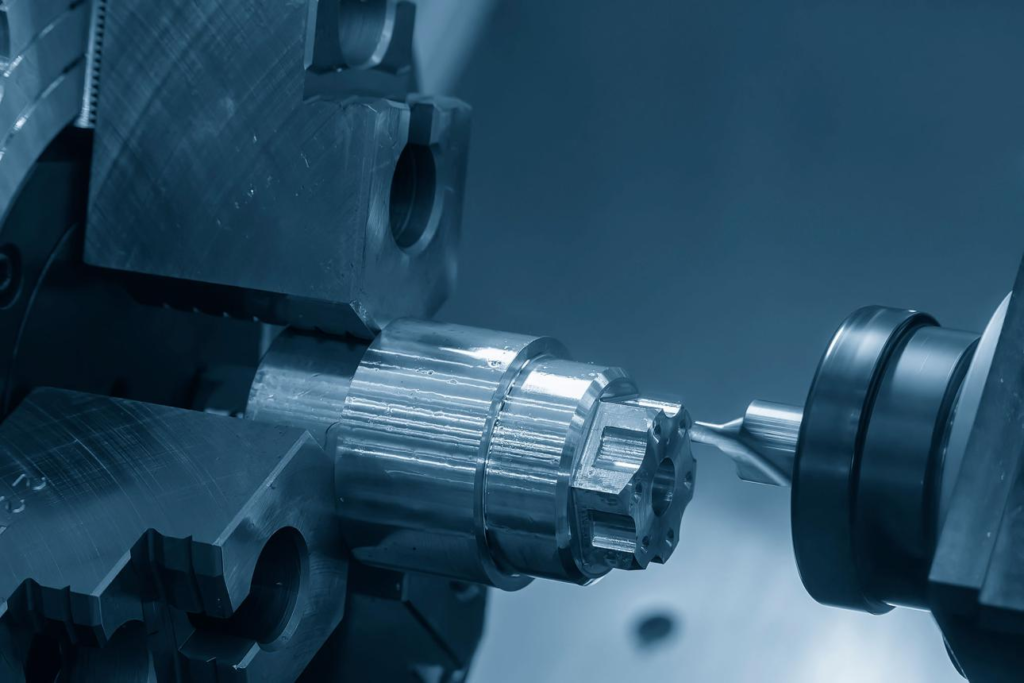
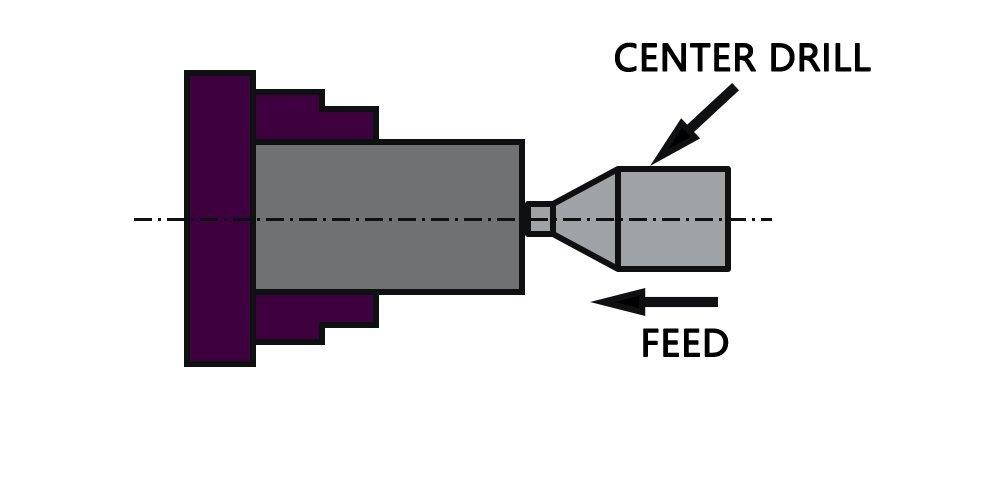
Using a center drill properly is critical because these tools are relatively small and can break easily if misused.
The first step is selecting the correct center drill size according to the shaft diameter and machining requirements. Small shafts may only require a #1 center drill, while larger rotating components often need #4 or #5 center drills.
Tool clamping is equally important. The overhang should remain as short as possible to maximize rigidity and reduce vibration.
Because cutting occurs near the spindle centerline, the surface speed is relatively low.
Therefore, center drilling typically requires:
- Higher spindle RPM
- Light feed rates
- Continuous coolant supply
For most steel machining applications, recommended spindle speeds range between 500 and 1000 RPM for HSS center drill bits. Solid carbide center drills can often run significantly faster.
Coolant is essential because chip evacuation inside the pilot section can become difficult. Insufficient cooling often causes premature wear or breakage.
Common Problems When Using Center Drills
Even experienced machinists occasionally encounter center drilling problems.
Why Do Center Drills Break?
The most common causes include:
- Excessive feed rate
- Poor alignment
- Long tool overhang
- Inadequate coolant
- Incorrect spindle speed
Because the pilot tip is very small, sudden impact or excessive pressure can quickly fracture the tool.
Why Does the Center Hole Wear Out Quickly?
Rapid wear is often caused by:
- Repeated setups
- Poor lubrication
- Using A type drills for precision work
In such cases, switching to a B type center drill or R type center drill can dramatically improve durability.
What Standards Govern Center Drill Dimensions?
Most industrial center drills follow internationally recognized standards such as:
Standard | Description |
DIN 332 center drill | German industrial standard |
ISO 6411 center drill | International center hole standard |
BS center drill sizes | British standard dimensions |
DIN 332 remains the most widely used specification worldwide, particularly in CNC machining and European manufacturing industries.

Final Thoughts — Why Every Precision Machine Shop Still Relies on Center Drills
Although machining technology continues to evolve rapidly, the center drill remains one of the most fundamental tools in precision manufacturing.
A properly selected center drill improves:
- Rotational accuracy
- Concentricity
- Tool life
- Surface finish
- Machining stability
Whether you are using:
- HSS center drill bits
- Solid carbide center drills
- DIN 332 center drills
- CNC center drill tooling
the correct geometry and machining method can significantly improve production quality.
As CNC machining speeds continue to increase, solid carbide center drills are becoming the preferred choice for manufacturers seeking maximum precision, reliability, and efficiency in modern production environments.