Cutting Tool End Mill Basics: A Practical Guide to Choosing the Right Tool for Your CNC
Table of Contents
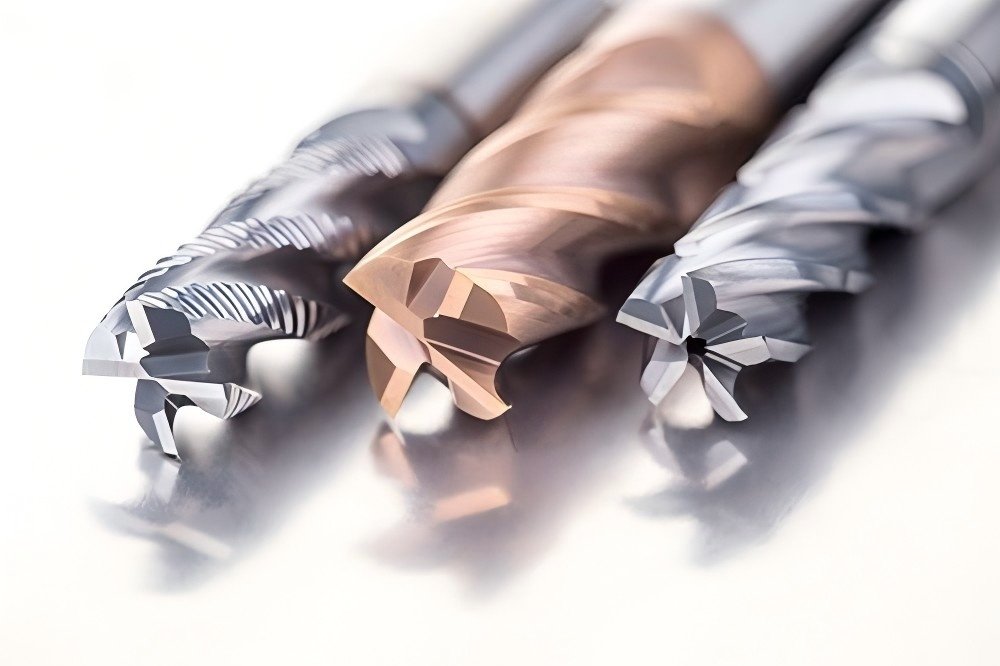
When a job goes wrong in the spindle, it’s almost never “just the program.”
In many cases, the real issue is the cutting tool end mill itself: the wrong material, incorrect flute count, unsuitable coating, or an incompatible end mill tool holder. Understanding how end mills work—and how to choose the right one—leads to longer tool life, stable machining, and predictable surface finishes.
This guide explains the fundamentals of cutting tool end mills and how different design choices affect real-world CNC machining performance, whether you use European brands, premium private-label tools, or a China cutting tool end mill.
What Is a Cutting Tool End Mill?
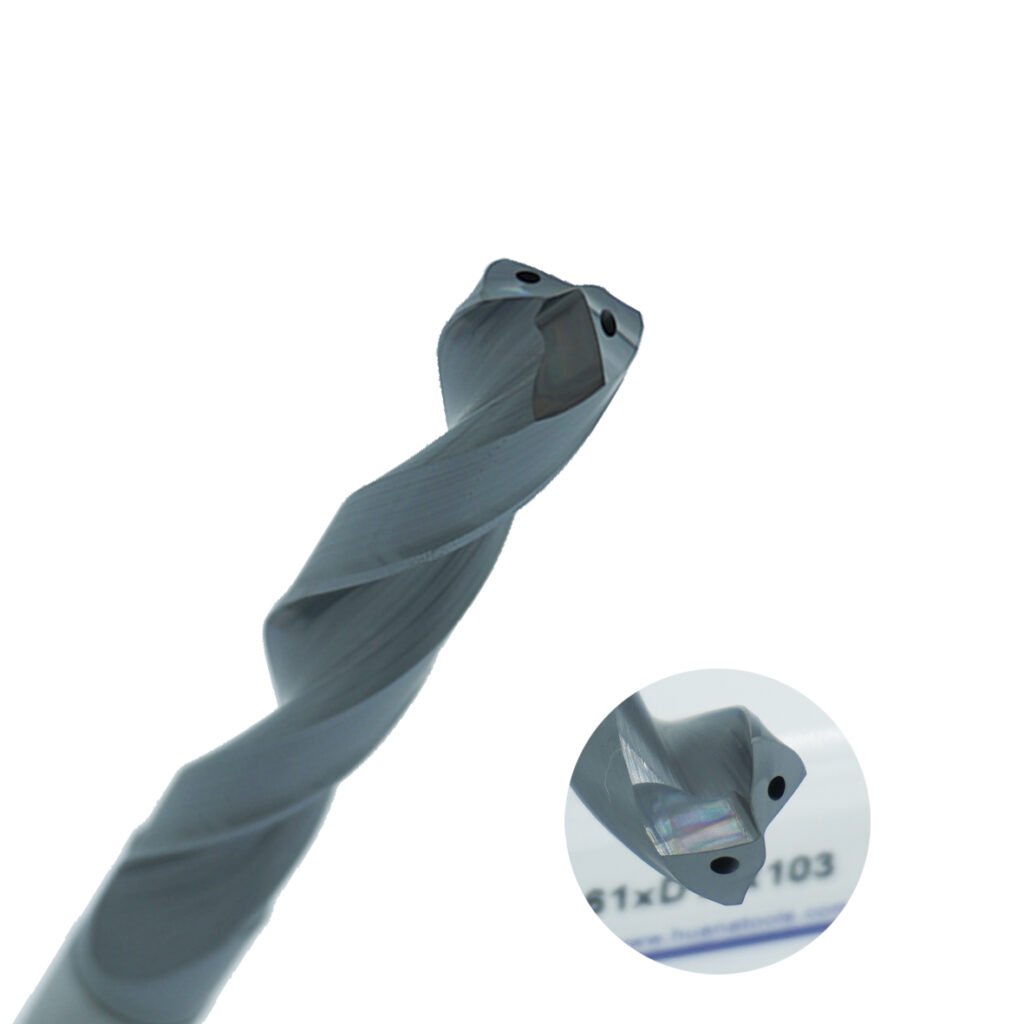
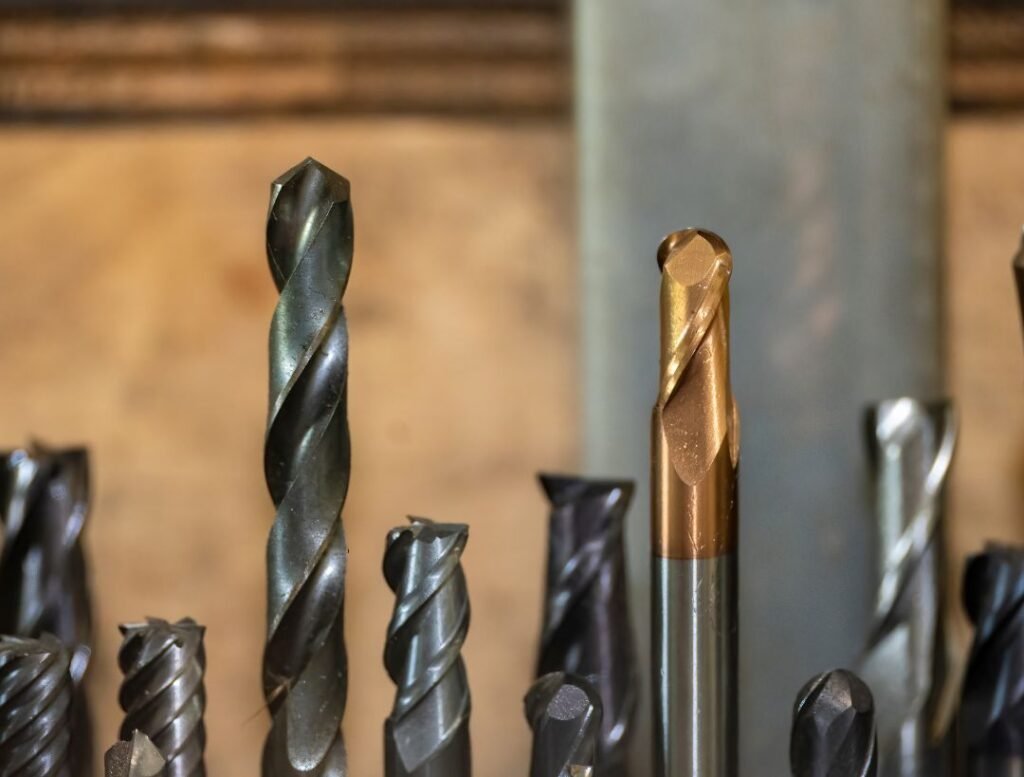
A cutting tool end mill is a rotary cutting tool primarily used in milling operations on CNC machining centers and milling machines. Unlike drills, end mills are designed to cut in multiple directions, making them essential for shaping complex parts.
Definition and Basic Structure
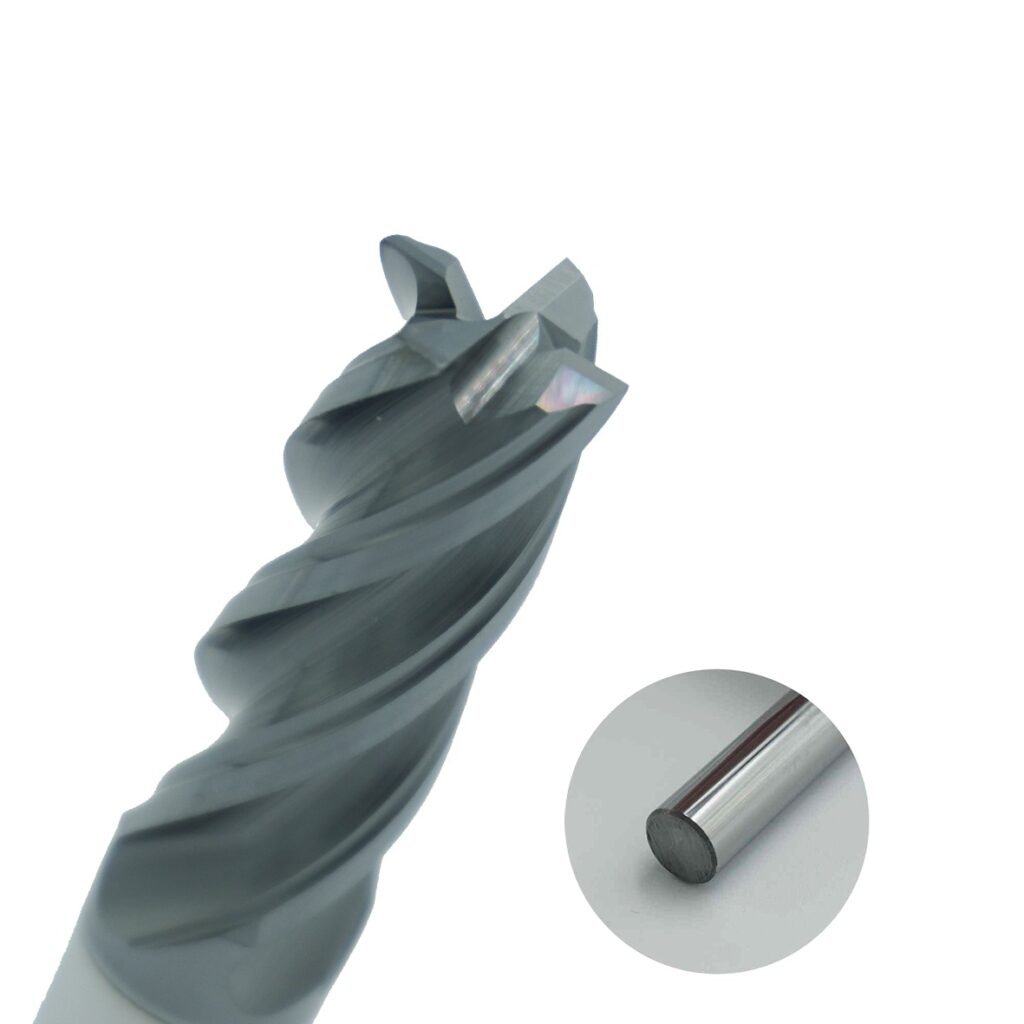
A typical tool end mill consists of:
- Shank– The cylindrical portion clamped in the end mill tool holder, such as an R8 end mill tool holder, collet chuck, or BT/HSK holder
- Flutes– Helical grooves that form the cutting edges and allow chip evacuation
- Core– The center of the tool that provides strength and rigidity
- End geometry– Flat, corner radius, chamfered, or ball end mill tool
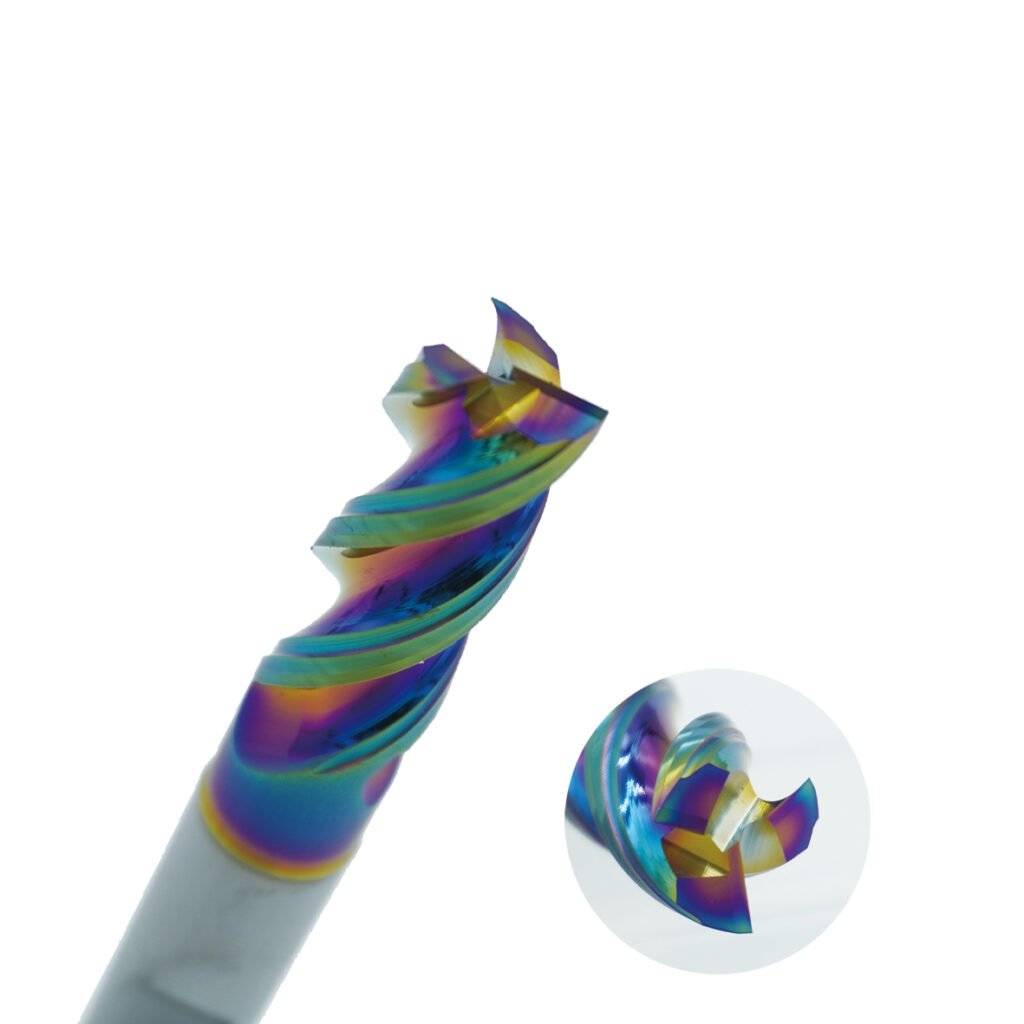
- Coating– PVD or CVD layers (e.g., AlTiN or nano coatings) that improve wear resistance and heat control
End mills are highly geometry-sensitive. Small changes in helix angle, rake angle, or edge preparation can significantly affect cutting forces, vibration, and end mill tool life.
How End Mills Differ from Drills and Other Tools
- Drills cut mainly in the axial direction; end mills cut both axially and radially
- Drills create round holes; end mills perform profiling, slotting, pocketing, facing, and 3D surfacing
- Reamers and boring tools refine hole size, while end mills shape external and internal features
In many machining processes, drilling establishes a hole, and a flat end mill tool or ball end mill tool completes the final shape or surface finish.
Key Parameters That Matter
Selecting the right end mill involves matching tool parameters to the workpiece material, machining operation, and machine capability.
Diameter, Flute Length, and Shank Type
Diameter
- Small diameters (≤ 3 mm) suit fine details, micro-features, and tight radii, similar to a Harvey Tool miniature end mill
- Larger diameters (10–20 mm) offer greater stiffness for roughing and facing
Flute Length
- Shorter flute lengths reduce deflection and vibration
- Excessive flute length or tool overhang increases chatter and accelerates wear
Shank Type
- Straight shank, Weldon flat shank, and reduced shank designs are common
- The shank must match the toolholder type, whether collet chuck, hydraulic chuck, shrink-fit holder, or R8 end mill tool holder
Number of Flutes and Chip Evacuation
Flute count determines chip size and available chip space.
Typical Flute Counts by Material
Material / Operation | Common Flute Count | Notes |
Aluminum & non-ferrous metals | 2–3 flutes | Large chip space; polished flutes preferred |
Low / medium carbon steel | 3–4 flutes | Balanced strength and chip evacuation |
Stainless steel | 4 flutes | Strong core; high helix improves chip flow |
Hardened steel (HRC > 55) | 4–6 flutes | Smaller chips; variable helix often used |
Finishing operations | 4–6 flutes | Higher tooth count for smoother surfaces |
Using too many flutes in aluminum or deep slotting often leads to chip packing, overheating, and rapid tool failure.
Coating Types (TiAlN, AlTiN, Nano Coatings)
Coatings directly affect heat resistance and wear behavior:
- TiN– Basic coating, now limited to light-duty applications
- TiCN– Improved wear resistance for abrasive materials
- AlTiN / TiAlN– Standard for steel and stainless steel, optimized for high-temperature cutting
- DLC / ZrN– Low-friction coatings for aluminum and non-ferrous metals
- Nano coated end mill tools– Advanced AlTiN-based nano-structured coatings that improve thermal stability and resistance to micro-cracking, especially in hardened steels
Cutting Tool End Mill Materials
The base material of an end mill determines cutting speed capability, toughness, and tool life.
HSS vs Carbide vs Cobalt
Property | HSS | Cobalt HSS (M35/M42) | Solid Carbide |
Hardness | Low | Medium | Highest |
Toughness | Very high | High | Lower (more brittle) |
Typical Use | Low-speed machining | Tough materials at moderate RPM | High-speed CNC, hardened steel |
Cost | Lowest | Medium | Highest |
Tool Life | Shortest | Moderate | Longest (especially coated) |
Typical Application Ranges
- HSS– Manual machines, low RPM, interrupted cuts
- Cobalt HSS– Tough steels and stainless at moderate speeds
- Carbide– Modern CNC milling, hardened steel, tight tolerances, high productivity
Carbide tools are frequently reconditioned using professional end mill sharpening systems such as Cuttermaster end mill & tool sharpener setups.
Matching End Mills to Workpiece Materials
Steel and Stainless Steel
For carbon and alloy steels (e.g., 1045, 4140):
- 3–4 flute flat end mill tools
- AlTiN or TiAlN coatings
- Medium to high helix angles
For stainless steels (304 / 316):
- 4-flute variable helix designs
- High helix for improved chip evacuation
- Rigid end mill tool holders to minimize runout
Aluminum and Non-Ferrous Metals
- 2–3 flute tools with sharp edges
- Polished flutes or DLC coatings
- Uncoated or low-friction coatings preferred
Chip evacuation is critical. Aluminum-specific ball end mill tools consistently outperform general-purpose steel tools in these materials.
Hardened Steel and Special Alloys
For tool steels above 55 HRC:
- 4–6 flute tools with small corner radius or ball end geometry
- Premium carbide substrates
- Nano-structured AlTiN-based coatings
- Short tool stick-out and rigid toolholding
Many manufacturers, including Fullerton tool end mills, HTC tool end mills, and advanced China cutting tool end mill lines, provide cutting data tailored for hardened steel applications.
End Mill Selection by Operation Type
Roughing vs Finishing
Roughing
- Focuses on material removal rate
- Uses chip-splitter or serrated geometries
- Strong core and corner radius designs
Finishing
- Prioritizes dimensional accuracy and surface quality
- Typically uses 4–6 flute tools with refined edge prep
- Ball end mill tools and corner radius tools are common
Slotting, Profiling, and 3D Contouring
- Slotting– Requires fewer flutes and effective chip evacuation
- Profiling– Accuracy depends heavily on tool geometry and holder runout
- 3D Contouring– Ball end mill tools dominate; step-over and radius define surface finish
Common Mistakes in End Mill Use
Incorrect Flute Count
Too many flutes in soft materials cause chip packing. Too few flutes in hard steel reduce surface quality and accelerate wear.
Using General-Purpose Tools on Demanding Materials
Titanium, Inconel, and hardened tool steels require dedicated end mills with optimized geometry and advanced coatings. General-purpose tools lead to unstable cutting and inconsistent results.
Poor Toolholding and Runout
Runout dramatically reduces tool life, especially on small-diameter tools. High-quality end mill tool holders and proper clamping are essential for consistent performance.

Conclusion
End mills are precision tools that convert spindle power into controlled material removal.
Understanding:
- End mill structure and geometry
- The relationship between flute count, coating, and material
- Differences between HSS, cobalt, and carbide tools
- Proper matching of flat and ball end mill tools to each operation
- The impact of toolholding and reconditioning
allows machining operations to achieve longer tool life, better surface finishes, and more predictable results.
Whether using premium brands like Harvey Tool miniature end mills, Fullerton tool end mills, HTC tool end mills, or high-value China cutting tool end mill solutions, the same fundamental principles apply across all CNC machining environments.