Skip to content
Why Single Flute End Mills Are Ideal for Soft Materials
Table of Contents
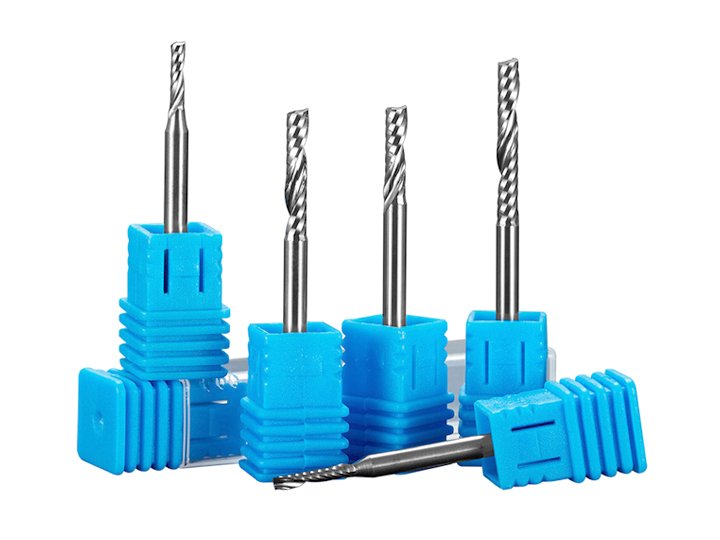
Soft materials often look easy on paper. Aluminum cuts quickly. Acrylic and PVC do not demand the same spindle power as steel. MDF, wood-based boards, and many composites can be routed at high speed. Yet these materials create a familiar set of shop-floor problems: packed chips, melted plastic, welded aluminum on the edge, fuzzy edges, noisy cuts, and parts that measure well on the first piece but drift after a few minutes of heat buildup.
That is where the single flute end mill earns its place. By using one cutting edge instead of two, three, or four, the tool creates a larger chip space and gives the chip a clearer path out of the cut. For aluminum, plastic, acrylic, PVC, soft non-ferrous metals, and many routing applications, that extra chip room can matter more than having additional cutting edges.
This guide explains how single flute end mills work, why they are especially useful in soft materials, and how engineers, CNC router users, production managers, and tooling buyers can choose them more confidently.
What is a single flute end mill?
A single flute end mill is a milling cutter with one main cutting edge and one flute. In many catalogs it may also be described as a single edge end mill, single flute spiral cutter, or single flute router bit, depending on the machine and industry.
The design is simple, but the effect is significant. A one-flute cutter has much more open space around the cutting edge than a two-flute or four-flute cutter of the same diameter. That open space is the chip gullet. It gives chips somewhere to go before they rub against the tool, recut against the wall, or weld back onto the edge.

For soft materials, the chip is often the real enemy. Aluminum can form built-up edge when chips stick to the tool. Acrylic and PVC can soften or melt when heat stays in the cut. MDF and wood-based boards can pack dust and fibers into the flute. Composites may produce abrasive chips that should leave the cut as quickly as possible. A single flute end mill helps by making chip evacuation the first design priority.
Why fewer flutes can be better in soft materials
More flutes usually sound like more productivity. In hard metals and finishing operations, that can be true. More cutting edges can support higher feed rates, smoother engagement, and better tool life when chip space is not the limiting factor.
Soft materials behave differently. They often need aggressive chip removal, sharp edges, and enough chip load to cut instead of rub. If a multi-flute cutter has too little room for chips, the tool can start recutting material. That raises heat, damages the finish, and makes the machine sound unstable even when the setup is otherwise rigid.
Single flute tools solve this by trading cutting-edge count for chip clearance. The tool takes one larger chip per revolution rather than several smaller chips squeezed into narrow flutes.
In practical terms, that often means:
– Cleaner evacuation in slots and pockets.
– Lower risk of plastic melting or aluminum sticking to the edge.
– Better control at high spindle speeds on CNC routers.
– More forgiving performance on small-diameter tools where flute space is limited.
– A smoother process in materials that make soft, stringy, dusty, or gummy chips.
The tool is not automatically better for every operation. If the machine is very rigid and the material is harder, a two-flute or three-flute end mill may be more productive. But when chips and heat are the main problem, the single flute design is often the cleaner answer.

Single flute vs. multi-flute end mills
The difference is not just the number stamped on the tool box. Flute count changes chip load, heat generation, feed rate, and how much space the tool has for chip evacuation.
Tool type | Best-fit materials | Main advantage | Main limitation |
Single flute end mill | Aluminum sheet, acrylic, PVC, plastics, MDF, soft composites, CNC router work | Maximum chip space and strong evacuation at high spindle speed | May leave a more pronounced tool mark if feed, runout, or finishing strategy is poor |
Two-flute end mill | Aluminum, brass, softer steels in suitable operations, general slotting | Good balance of chip space and cutting-edge support | Can pack chips in deep slots if geometry is not designed for soft materials |
Three-flute end mill | Aluminum finishing and higher-feed non-ferrous milling | Higher feed potential with acceptable chip clearance | Needs good machine rigidity and chip control |
Four-flute or higher end mill | Steel, stainless, cast iron, finishing in harder materials | More cutting edges and better support in harder materials | Chip space is limited; less suitable for gummy plastics or soft material slotting |
For a purchasing team, this table is useful because it prevents a common mistake: buying a “stronger-looking” multi-flute tool for a soft material problem. In many aluminum and plastic jobs, the right question is not “How many cutting edges can we fit on the tool?” It is “Can every chip leave the cutting zone before it creates heat or damage?”
Better chip evacuation
Chip evacuation is the main reason single flute cutters are used in soft materials. A tool may be sharp, coated, and made from premium carbide, but if chips cannot escape, the cut becomes unstable.
In aluminum, packed chips can weld to the edge and form a lump of built-up material. Once that happens, the cutting edge is no longer cutting with its intended geometry. The surface can look smeared, the machine load can rise, and the tool may break suddenly when the welded material catches.
In plastics, the failure mode is often thermal. Chips that stay in the cut rub against the tool and part wall. The plastic softens, then sticks. Acrylic may show melted edges or cloudy finish. PVC can leave a rough, dragged surface. Nylon and other engineering plastics may string and wrap around the cutter.
A single flute spiral end mill gives the chip a wider exit channel. The helix then helps lift or direct the chip away from the cut, depending on whether the tool is up-cut, down-cut, or compression-style. This is especially valuable in narrow slots, sheet cutting, sign making, and CNC router work where spindle speeds are high and the tool diameter may be small.

Lower cutting heat and less melting
Heat is not only created by speed. It is created by rubbing, poor chip load, dull edges, chip recutting, and poor evacuation. Single flute tools reduce several of those risks at once.
Because there is only one cutting edge, the tool spends more of each revolution with open space moving through the cut. The larger chip gullet carries more material away, and the tool is less likely to churn chips inside the slot. If feed per tooth is set correctly, each pass produces a real chip instead of dust or powder.
That matters most in plastics and soft non-ferrous metals. Plastic parts do not always fail loudly; sometimes they simply come off the machine with softened edges, size variation, or a finish that needs hand work. Aluminum can look acceptable until built-up edge starts changing the effective cutting diameter. In both cases, heat control is part of dimensional control.
For plastic machining, operators often improve results by reducing spindle speed, increasing feed enough to form chips, using air blast, and choosing a polished single flute geometry. For aluminum, a sharp carbide single flute cutter with good flute polish, mist or air blast, and a stable chip load can produce a cool, clean cut on many routers and light CNC machines.
High-speed CNC router compatibility
Many soft-material jobs run on CNC routers rather than heavy machining centers. These machines often have high spindle speeds but less rigidity than a vertical machining center. That combination changes tool selection.
At 18,000 to 24,000 rpm, a four-flute tool can demand an impractically high feed rate to maintain a healthy chip load. If the machine cannot feed that fast, the tool rubs instead of cuts. A single flute tool is easier to match to high-rpm routing because only one edge cuts per revolution. The required feed rate for a useful chip load is lower than it would be with multiple flutes.
This is one reason single flute cutters are common in sign making, acrylic cutting, aluminum composite panel work, PVC board processing, and small-format aluminum sheet cutting. They help high-speed machines produce chips instead of heat.
Material-specific applications
Single flute end mills are not all the same. A tool for acrylic may not be the best tool for aluminum. A cutter for MDF may need a different edge and helix direction than a cutter for clean plastic edge finishing. The material still decides the geometry.
Material | What usually goes wrong | Single flute selection focus | Practical cutting note |
Aluminum and aluminum sheet | Built-up edge, chip welding, rough slot walls | Carbide body, sharp edge, polished flute, large chip gullet | Use air blast, mist, or suitable coolant to keep chips moving |
Acrylic | Melting, cloudy edges, chipping at exit | Very sharp polished edge; geometry suited to plastic | Avoid rubbing; test feed and speed until chips are clean, not powdery |
PVC and engineering plastics | Heat buildup, stringy chips, burrs | Low-friction geometry and clean chip path | Reduce spindle speed if edges soften or chips wrap |
MDF and wood-based boards | Dust packing, fuzzy edges, heat marks | Router-style single flute or compression geometry where needed | Dust extraction and tool sharpness are part of finish quality |
Soft composites | Abrasive wear, delamination, poor edge quality | Carbide grade and geometry matched to fiber/filler content | Confirm whether up-cut, down-cut, or compression action is safer for the laminate |
The table is a starting point, not a universal recipe. Actual speed, feed, depth of cut, and coolant strategy depend on the tool diameter, stick-out, machine rigidity, fixturing, and finish requirement.
Carbide single flute end mills
Carbide is the usual choice for production single flute tools because it holds a sharp cutting edge better than high-speed steel at high spindle speeds. It also resists wear when cutting abrasive plastics, composites, MDF, and non-ferrous materials.

The advantage is not only hardness. A well-ground carbide single flute end mill can combine a sharp rake, polished flute, and stable cutting edge in a small diameter. That combination is valuable when machining thin aluminum sheet, small acrylic parts, or routed plastic components where runout and edge quality matter.
For B2B buyers, carbide grade and grinding quality should be part of the evaluation. Cheap single flute tools may look similar in a photo, but they often differ in edge consistency, flute polish, runout control, and coating suitability. Those differences show up as burrs, tool marks, tool breakage, and inconsistent part finish.
Up-cut, down-cut, and helix direction
Helix design affects where chips go and how the tool loads the part. An up-cut single flute tool pulls chips upward and is useful when evacuation is the priority. A down-cut tool pushes chips downward and can help protect the top edge of sheet materials, but it may pack chips if the slot is deep and extraction is weak. Compression geometries combine cutting directions to protect both top and bottom surfaces in selected sheet materials.
For aluminum, chip evacuation is usually the priority, so up-cut geometry is common. For acrylic or laminated sheet, edge quality may push the choice toward down-cut or compression designs, provided chips can still escape. For thin parts, vacuum fixtures, and small tabs, the direction of cutting force can also affect part movement.
This is why “single flute” should be treated as a family of tools rather than one universal item. Diameter, flute length, helix direction, coating or polish, and cutting edge preparation all need to match the job.
Choosing the right single flute cutter
A practical selection process starts with the material and the cut. Are you profiling acrylic sheet? Slotting aluminum plate? Routing PVC signs? Trimming composite panels? The same diameter tool may need different geometry in each case.
Use this checklist before ordering or testing a tool.
Selection point | Why it matters | What to check |
Tool diameter | Controls strength, corner radius, chip space, and minimum feature size | Use the largest diameter that fits the feature and fixture |
Flute length | Too much flute length weakens the tool and increases chatter | Choose only enough cutting length for the material thickness plus clearance |
Shank diameter | Affects rigidity and holder grip | Avoid tiny shanks when the cut or stick-out is demanding |
Helix direction | Controls chip movement and top/bottom edge quality | Match up-cut, down-cut, or compression geometry to the material and fixture |
Edge polish | Reduces sticking in aluminum and plastics | Prefer polished flutes for gummy or heat-sensitive materials |
Carbide quality | Affects edge life and breakage resistance | Evaluate consistency, runout, and supplier support, not only unit price |
Coolant or air strategy | Determines whether chips actually leave the cut | Plan air blast, vacuum, mist, or coolant before production testing |
A common mistake is choosing a long cutting length “just in case.” Long flute length reduces tool stiffness and can make chatter worse. If the part only needs 6 mm of cutting depth, a short flute tool will usually run more cleanly than a 22 mm flute tool hanging far out of the holder.
Speed, feed, and chip load
Single flute tools need enough feed to form a real chip. If feed is too low for the spindle speed, the edge rubs. Rubbing creates heat, dulls the tool, and causes melting or built-up edge.
A simple way to think about it:
Feed rate = spindle speed x number of flutes x chip load per tooth
Because a single flute cutter has one flute, it needs only one chip load per revolution. That makes it easier to use on high-rpm routers. A two-flute cutter at the same rpm needs twice the feed rate to maintain the same chip load per tooth. A four-flute cutter needs four times the feed rate.
The right numbers depend on tool diameter, material, machine rigidity, and supplier data. Start with the toolmaker’s recommendation when available.
Then read the chips and the part:
– Dust or powder often means rubbing, especially in plastics and wood-based materials.
– Melted edges suggest too much heat from rpm, low feed, dull tooling, or poor evacuation.
– Welded aluminum on the edge suggests adhesion, heat, poor lubrication, or insufficient chip clearance.
– Heavy chatter marks point to rigidity, excessive stick-out, poor workholding, or aggressive engagement.
Small adjustments can make a large difference. Reducing spindle speed while increasing feed slightly may cool a plastic cut. Adding air blast may solve an aluminum slotting issue without changing the tool. Shortening stick-out may remove chatter that looked like a tooling problem.
Troubleshooting common problems
When a single flute tool performs poorly, the cause is usually not “single flute is wrong.” More often, the setup is forcing the tool to rub, recut chips, or run beyond its rigidity limit.
Problem | Likely cause | Corrective action |
Plastic melts on the edge | Spindle speed too high, feed too low, dull tool, chips not leaving | Lower rpm, increase chip load within safe limits, use sharper polished tool, add air blast |
Aluminum sticks to the cutter | Built-up edge from heat or poor lubrication | Improve chip evacuation, use mist or suitable coolant, choose polished carbide geometry |
Tool breaks in a slot | Chips packed in flute, too much depth, excessive stick-out, poor runout | Reduce depth per pass, clear chips, shorten stick-out, check collet and holder |
Rough wall finish | Chatter, recutting chips, worn edge, poor finishing strategy | Add finish pass, reduce radial engagement, improve fixturing, replace worn tool |
Fuzzy MDF edge | Dull tool, wrong helix direction, poor dust extraction | Use sharp router-style geometry, improve extraction, test down-cut or compression tool |
Size changes during the run | Heat buildup, tool wear, built-up edge, part movement | Improve cooling and chip removal, inspect edge, verify fixture and tool offset |
Good troubleshooting starts with the chips. If the chips look hot, smeared, dusty, or welded to the tool, the process is not cutting cleanly. If the chips leave freely and the edge stays clean, surface finish and tool life usually become easier to manage.
Maintenance and handling
Single flute end mills have one working cutting edge, so edge condition matters. A small chip on that edge can show up on every revolution and every finished wall. Tools should be cleaned after use, stored so the cutting edge does not contact other tools, and inspected before critical jobs.
For aluminum and plastics, remove stuck material before it hardens into a larger problem. Do not continue running a tool with visible built-up edge and expect the next part to improve. If the tool is dull, the process will usually drift toward more heat, more burrs, and worse finish.
In production, track tool life by material and operation rather than by a vague number of hours. A single flute cutter used for clean acrylic profiling may last differently from the same diameter cutter slotting aluminum plate. Good records help purchasing teams order the right geometry and help operators replace tools before scrap begins.
When a single flute end mill is not the best choice
Single flute cutters are excellent for many soft-material jobs, but they are not universal. A two-flute or three-flute aluminum end mill may outperform a single flute tool in rigid machining centers where the feed rate, coolant delivery, and chip evacuation are well controlled. Multi-flute tools can also produce smoother finishing in some applications because more edges share the cut.
Harder metals, abrasive interrupted cuts, and precision finishing in stable setups may require a different flute count or coating strategy. The point is not to use one flute everywhere. The point is to recognize when chip space and heat control are more important than edge count.

Conclusion
Single flute end mills are ideal for many soft materials because they give chips room to escape. That one design feature reduces several common problems at once: packed chips, plastic melting, aluminum built-up edge, unstable cutting, and poor edge finish.
For aluminum, plastics, acrylic, PVC, MDF, and soft composites, the best results usually come from pairing the right single flute geometry with realistic speeds, feeds, chip evacuation, and tool stick-out. Carbide single flute cutters add wear resistance and edge stability, especially in high-rpm CNC routing and production work.
HNCarbide supports carbide cutting tool selection for aluminum, plastic, composite, and other soft-material applications. If you are comparing single flute end mills for a specific job, share the material, tool diameter, machine type, spindle speed range, and current cutting problem. A tool recommendation becomes much more useful when it is tied to the real cut.