Skip to content
What exactly are CNC cutting tools? And how do they work?
Table of Contents

CNC cutting tools are the core tools of digitalization manufacturing. They allow precise computer-controlled removal of material by drilling, milling, turning, boring, reaming, thread cutting and more. To optimize accuracy, cycle time, tool life and unit cost, it is necessary to choose the right tool series (milling cutters, drills, turning inserts, tapping tools, reaming tools, etc.), substrate material (HSS, HSS, carbide, ceramic, PCD/CBN) and coating (TiN coating, AlTiN coating/TiAlN coating, DLC coating, etc.). This article will provide a comprehensive explanation of CNC cutting tools types, how they work, their material composition and timing of use, as well as how the performance of the CNC cutting tools can be enhanced by the correct choice of tool coating and geometry.
How CNC Cutting Tools Work?
During the operation of a CNC cutting tool, the CNC machine executes a programmed tool path (G-code), which directs the spindle speed, feed rate, depth of cut, and multi-axis motion. The rotating cutting edge cuts the material into chips, while the cutting load, tool material and cooling method are concerned with controlling temperature and wear. Choosing the right tool pair (e.g., carbide milling cutters for steel, PCD-coated tools for aluminum/composite materials, and CBN-coated tools for high-hardness ferrous alloys) allows you to increase work speeds while preserving machining accuracy and mold surface integrity.
What are the core CNC cutting tools? What are their best applications?
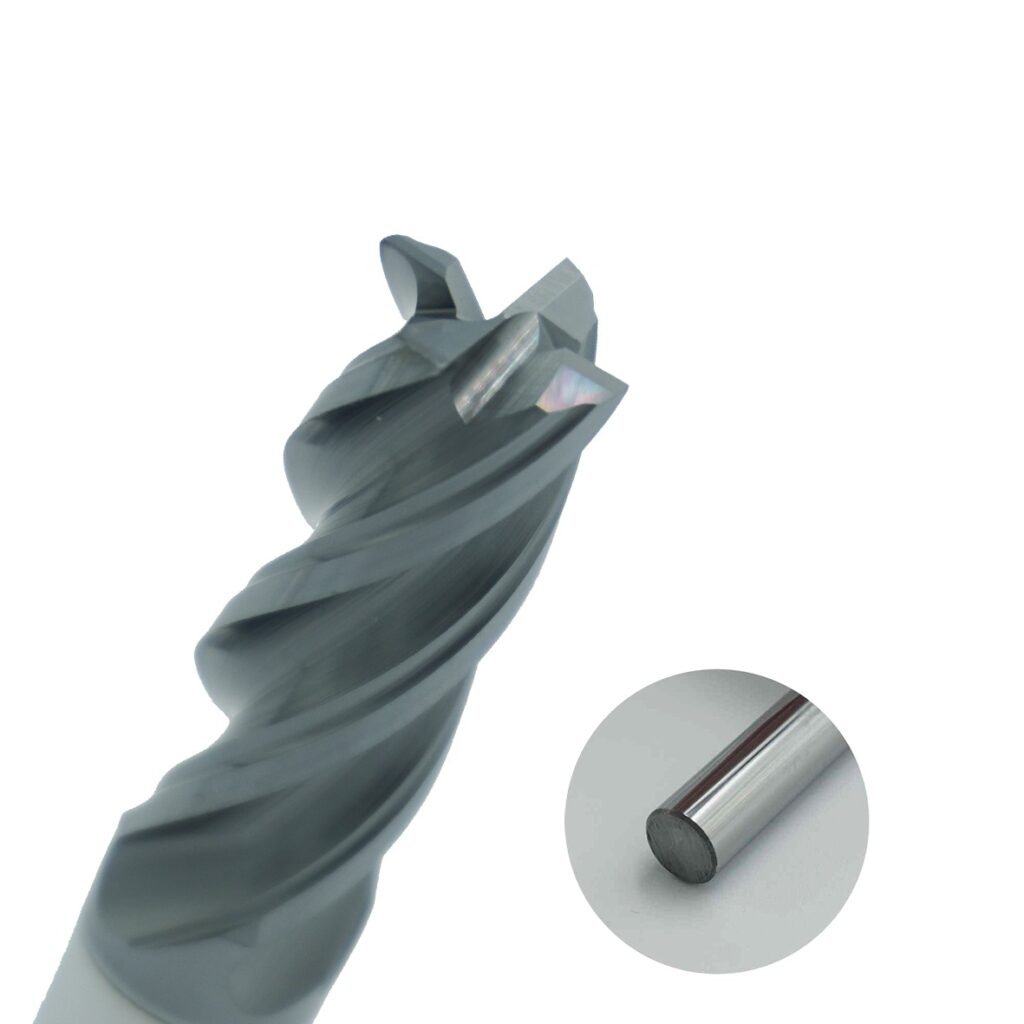
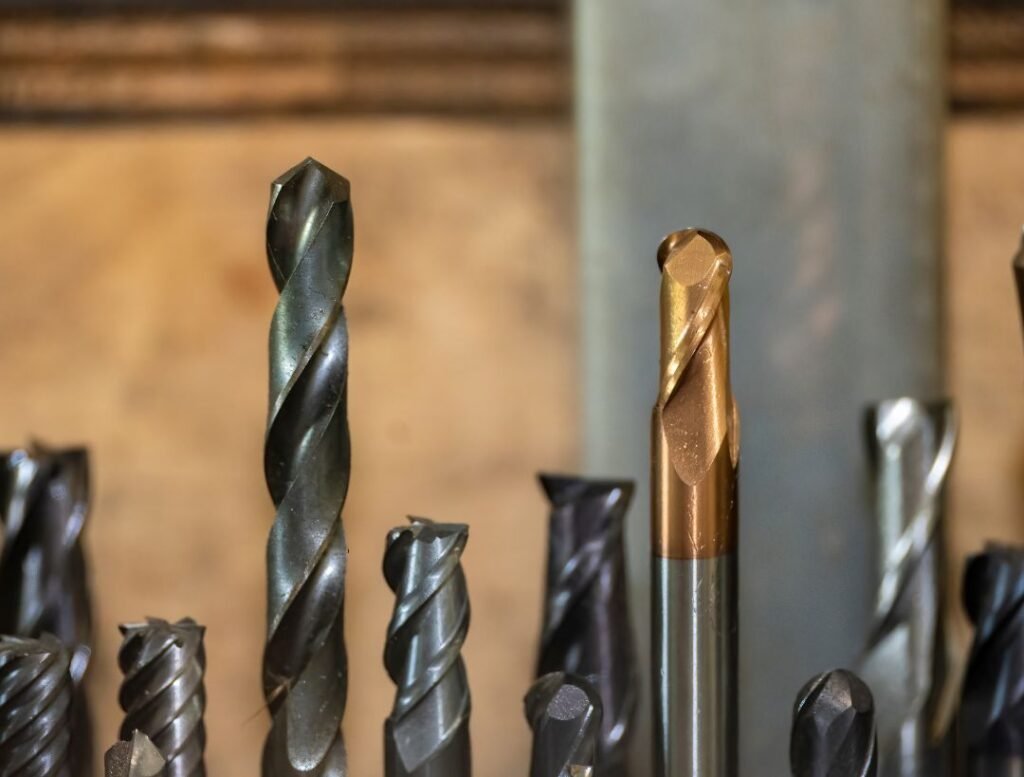
- End Mills (Square, Ball nose, Corner radius): Multi-flute end mills are suitable for surface milling, slot milling, slotting, 3D contouring, and more. Among them, ball end mills are more flexible and can be used for free-form surface finishing, and Corner radiusend mills can strengthen the cutting edge for cutting more difficult materials.
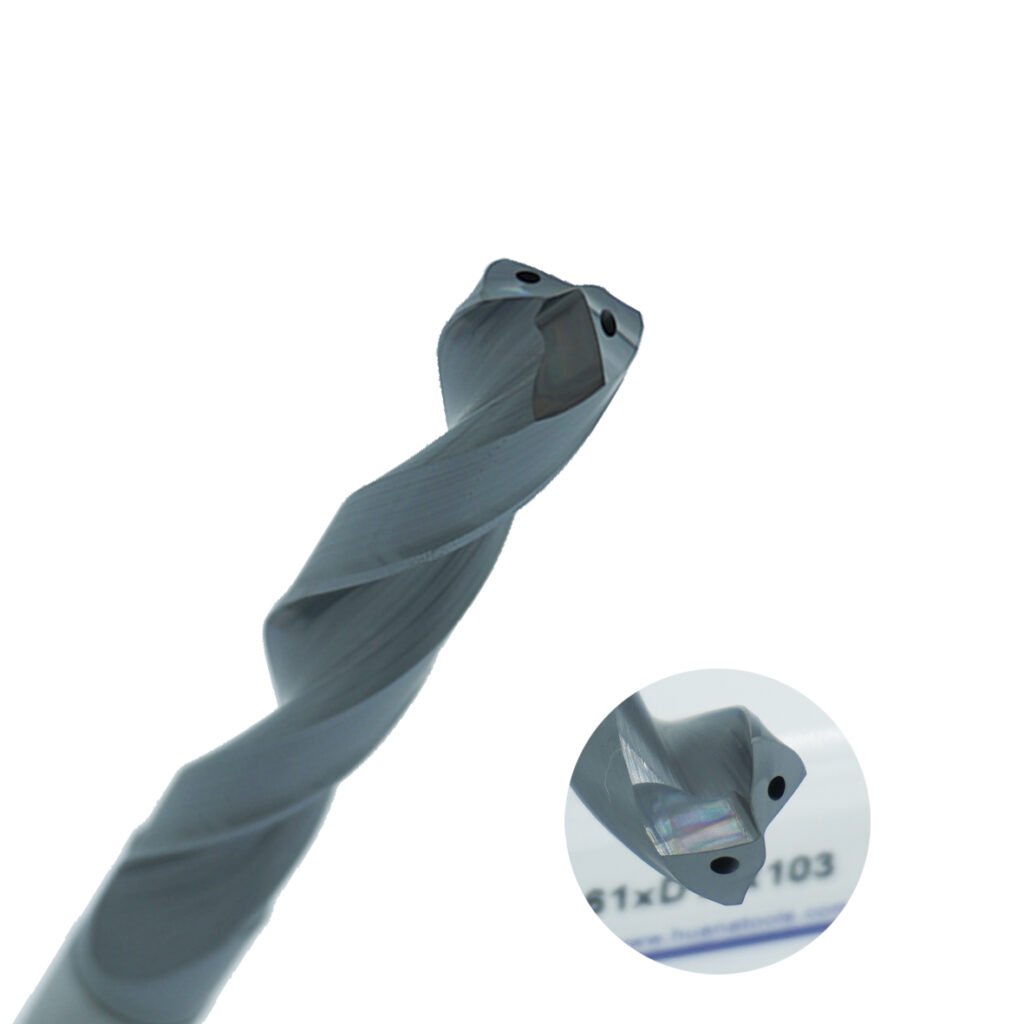
- Drills (auger, parabolic drill, step drill): Drills are suitable for fast straight line hole machining, suitable for punching in the Z-axis direction. For precise dimensions and surface finish requirements, reaming or boring operations are often required prior to drilling.
- Reaming tools/boring tools: These tools are used to assist in the dimensional correction of holes and to improve surface finish. Reaming tools quickly achieve uniform diameters and smooth surfaces; boring tools correct hole dimensions, define location, and provide greater roundness and straightness.
- Turning inserts and holders: for external/internal turning, chamfering, grooving, threading, for cnc lathe/turnmillingl machine.
- Tapping, thread milling and plane inserts: for internal/external thread machining; threading tools can be used for high hardness alloys, while tapping tools are suitable for machining deformable materials.


CNC Cutting Tool series with Typical Operations, Benefits and Surface Finish Paths
Tool series | Typical operations | Strengths | Common finishing path |
End mills (square/Ball nose/Corner radius) | Facing, slotting, pocketing, 3D contours | Multi-axis flexibility; supports hard materials with proper geometry | Light finishing pass or ball-nose blend |
Drills (twist/parabolic/step) | Through/bottoming holes | Fastest like-diameter hole making; low programming overhead | Ream or bore for tight fits |
Reamers | Hole sizing & surface finish | Quick, uniform diameter & fine Ra | Often final step for H7/H8 holes |
Boring tools | Correct size/position/straightness | Best positional control & roundness | May be followed by ream/polish |
Turning inserts | OD/ID turning, facing, grooving | High MRR; stable chip control on lathes | Wiper or light finish pass |
Threading tools | Internal/external threads | Taps are fast; thread mills flexible | Gauging, deburr |
CNC Cutting Tool Materials: HSS, High-Speed Steel, Carbide, Ceramic, PCD, and CBN
- High-Speed Steel (HSS): HSS materials offer toughness, tolerance, and cost-effectiveness; suitable for general machining, interrupted cuts, and low-speed applications. With lower thermal hardness than carbide, HSS materials operate at reduced cutting speeds.
- Carbide (WC-Co): Carbide materials are widely used for milling and drilling steel, stainless steel, and ferrous materials. They offer high thermal hardness and excellent edge life, with a broad range of grades and coating options available.
- Ceramic (SiAlON, whisker-reinforced, etc.): Ceramic materials possess extremely high thermal hardness, suitable for high-speed cutting of cast iron and heat-resistant superalloys (HRSAs). Ceramic materials are brittle, making them suitable for stable cutting and optimized tooling.
- PCD (Polycrystalline Diamond): PCD is exceptionally hard, suitable for non-ferrous metals (aluminum, copper alloys) and abrasive non-metals (graphite, CFRP). It delivers long tool life and excellent surface finish; however, it is not suitable for ferrous alloys under high-temperature conditions.
- CBN (Cube Boron Nitride): Second only to diamond in hardness, CBN is specifically designed for hardened ferrous materials like high-hardness steels and cast iron. CBN exhibits exceptional thermal stability.
Select CNC cutting tool materials based on workpiece material
Tool material | Steel (ISO P) | Stainless (ISO M) | Cast iron (ISO K) | Non-ferrous (ISO N) | HRSA/Ti (ISO S) | Hardened steels (ISO H) |
HSS | ✓ general | ✓ light | △ | ✓ soft Al/plastics | △ | ✕ |
Carbide | ✓✓ primary | ✓✓ | ✓✓ | ✓ | ✓ with grades | ✓ (pre-hardened) |
Ceramics | △ | △ | ✓✓ high speed | ✕ | ✓✓ HRSA | ✕ |
PCD | ✕ | ✕ | ✕ | ✓✓ best choice | △ composites | ✕ |
CBN | △ | △ | ✓ chilled | ✕ | △ superalloys | ✓✓ best choice |
Why is coating important for CNC cutting tools? How should we choose?
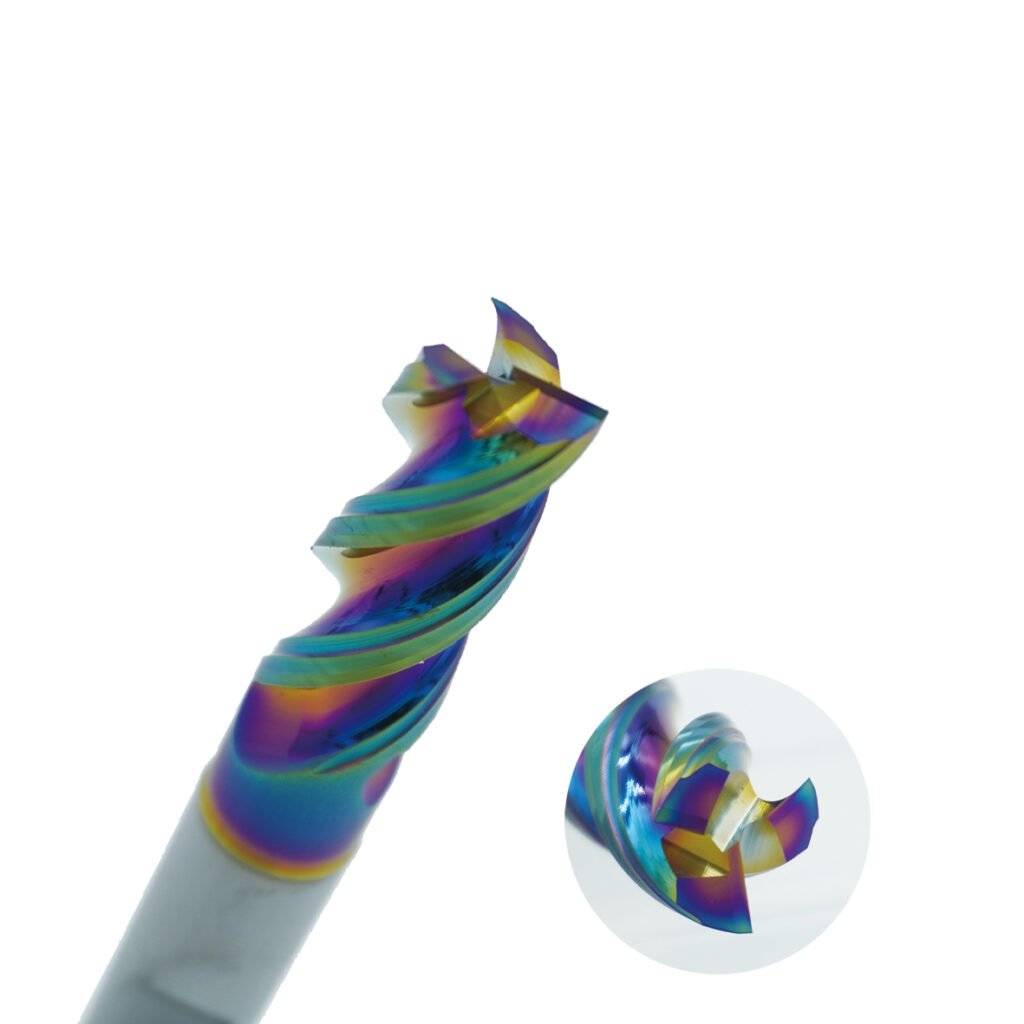
PVD coatings reduce friction, prevent diffusion wear, and enhance the oxidation resistance of CNC cutting tools. This enables higher cutting speeds and longer tool life while improving the quality of machined parts.
How to Select Coatings for CNC Cutting Tools? Why?
Coating | Best with | Key benefits | Typical cautions |
TiN Coating | HSS drills/taps, gen-purpose carbide | Low friction, basic wear barrier | Lower hot hardness than AlTiN/TiAlN |
TiAlN Coating / AlTiN Coating | Carbide end mills/drills in steels/stainless | Oxidation resistance, heat shielding at speed | Not ideal for sticky Al (BUE risk) |
DLC Coating | Non-ferrous (Al, Cu), plastics, CFRP | Very low friction; anti-adhesion; smooth finish | Avoid high-heat ferrous cuts |
How to Select the Geometry and Optimal Number of Cutting Edges for CNC Cutting Tools? Small Details, Big Returns!
- Cutter tooth count and helix angle(2 flute vs 4 flute end mill): Fewer teeth (2 flute end mill, end mill 3 flute) suit aluminum alloy machining; more teeth (4 flute end mill, 6 flute end milland above) suit steel and finishing operations. Variable pitch/variable helix designs help reduce tool vibration, enhance surface finish, and improve machining stability.
- Drill geometry: Split points reduce deflection, while parabolic flutes aid chip evacuation in deep holes.
- Cutting edge preparation: Micro-grinding + polishing stabilizes the cutting edge, improving coating adhesion on CNC cutting tools and reducing micro-cutting damage to workpieces—especially critical when machining hard steel and abrasive cast iron.
What are the steps for hole machining? Drilling → Reaming/Boring to ensure CNC cutting accuracy
- Drilling is suitable for rapid machining; reaming is suitable for more precise hole diameters and smoother surface finishes (typically Ra ~0.2–0.8 µm). Reaming does not correct hole position.
- Boring is used to correct dimensions and drill hole positioning. It is slower but provides exceptional roundness, straightness, and positioning accuracy for machined parts.
How to match CNC cutting tools with materials? What are the practical application scenarios?
- Aluminum alloy casings (ISO N): PCD-coated or DLC-coated smooth-faced carbide end mills reduce BUE; high-helix-angle 2-flute and 3-flute end mills facilitate rapid chip evacuation.
- Hardened tool steel (58HRC-62 HRC, ISO H): CBN inserts for hard turning and hole finishing; carbide ball-nose/end mills with AlTiN/TiAlN coatings suit various engraving features.
- Cast iron brake components (ISO K): Ceramic carbide turning inserts or coated carbide turning inserts for high-speed cutting; scraper geometry improves surface finish.
- Nickel-based superalloys (ISO S): Requires sharp, tough carbide or ceramic grades with excellent oxidation-resistant coatings.
CNC Cutting Tool Machining Setup, Cooling, and Inspection
- Fixture and Runout Control: Use high-quality chucks or shrink chucks/HP chucks, especially for small-diameter machining.
- Cooling Strategy: Employ tool coolant during deep hole drilling; direct coolant flow to the cutting zone during milling. Prioritize lubricity for difficult-to-machine alloys; focus on temperature control and chip evacuation for hard steels.
- Inspection: Monitor diameter wear, edge chipping, and flank wear; plan tool life based on parts produced per mm³ removed.
How to balance CNC cutting tool costs, throughput, and tool life?
- Prioritize drilling methods to maximize speed; employ reaming or boring for finishing when precision tolerances and fine Ra surfaces are required.
- Select appropriate substrate and coating based on material type: carbide + TiAlN coatings for steel; DLC coatings for aluminum alloys; PCD/CBN for extended machining of target materials.
- Program according to process requirements: thin-chip cutting, return strategies, or high-efficiency milling maintain cutting load and temperature control.
F A Q
Q: Are HSS tools still useful?
A: Yes—HSS offers significant value when toughness and economy are required. Carbide dominates when speed and thermal hardness are needed.
Q: How do I choose between PCD and CBN?
A: PCD is suitable for non-ferrous metals and abrasive non-metals; CBN is suitable for hardened ferrous materials.
Q: Which coating is best for machining aluminum alloys?
A: DLC coatings (or bare uncoated carbide) reduce adhesion/BUE and lower friction.
Q: What surface finish/tolerance can reaming achieve?
A: With proper pilot hole sizing and setup, Ra is approximately 0.2–0.8 µm; boring is preferable when correcting workpiece dimensions/drill hole positioning.