What are the types of CNC grinding and how do they benefit precision milling tool manufacturing?
Table of Contents

CNC grinding isn’t a “one-size-fits-all” process—it encompasses specialized techniques like surface grinding, outer diameter (OD) grinding, centerless grinding, internal cylindrical grinding, deep feed grinding (Creep-Feed Grinding), and custom grinding applications.
Each CNC grinding method is optimized at different levels for specific geometries, materials, and tolerance ranges. For carbide end mills and high-speed steel (HSS) end mills, proper matching of grinding methods, ultra-hard abrasives (diamond or CBN), CNC grinder control strategies, and post-grinding edge treatment is particularly crucial.
This article explains the main types of CNC grinding, their roles in carbide end mill production, key inspection items, and how to select grinding wheels, coolant, and parameters to optimize tool life.
Why remains CNC grinding crucial in the “milling era”?
In tool manufacturing, CNC grinding continues to be the most controllable method for achieving micron-level tolerances and sub-micron surface roughness, particularly for hard materials like cemented carbides and hardened tool steels.
Compared to CNC turning or milling, CNC grinding features multi-edge self-sharpening and high rigidity, enabling stable production of groove profiles, back angles, and micro-edge geometries required for modern PVD coatings and high-speed machining.
Taking end mills as an example: ·
Roughing:
Typically performed using centerless or external cylindrical grinding to ensure concentricity, facilitating subsequent groove grinding. ·
Grooving and back angle grinding:
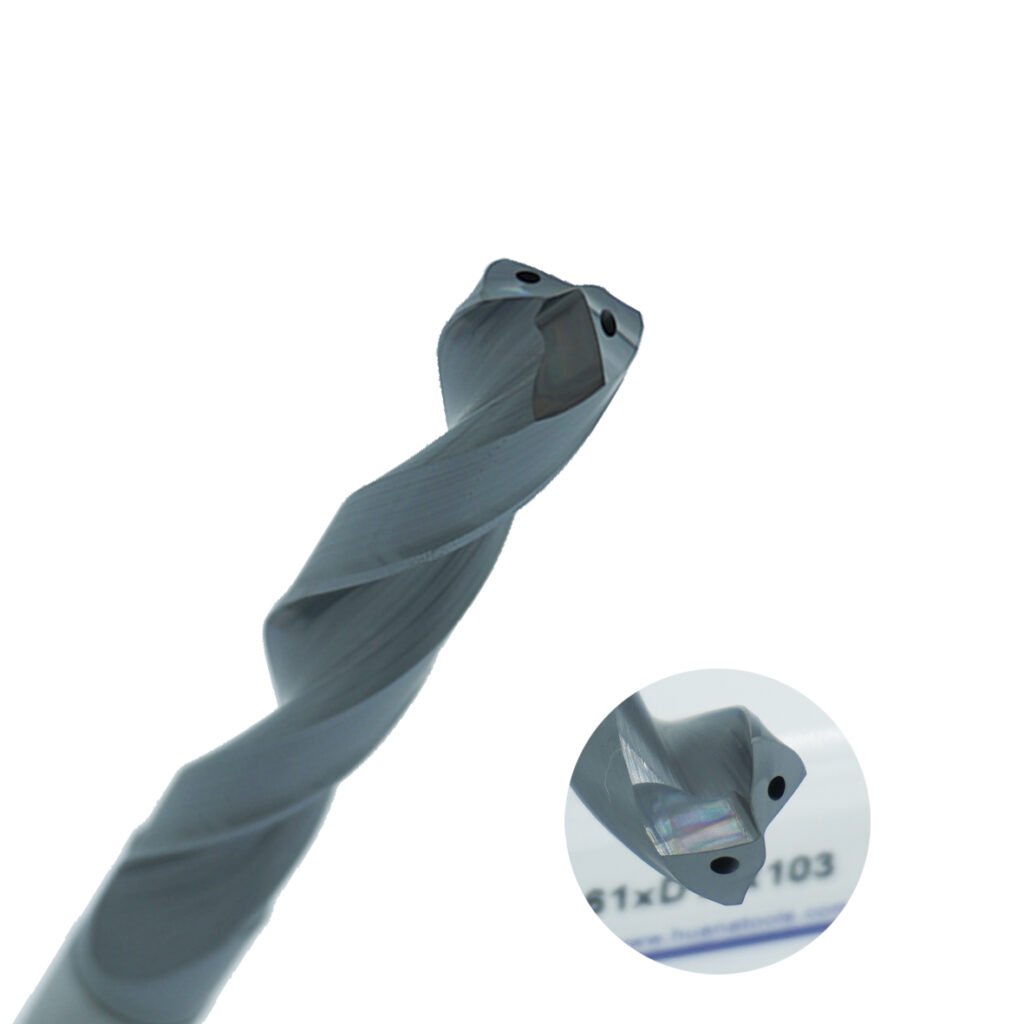
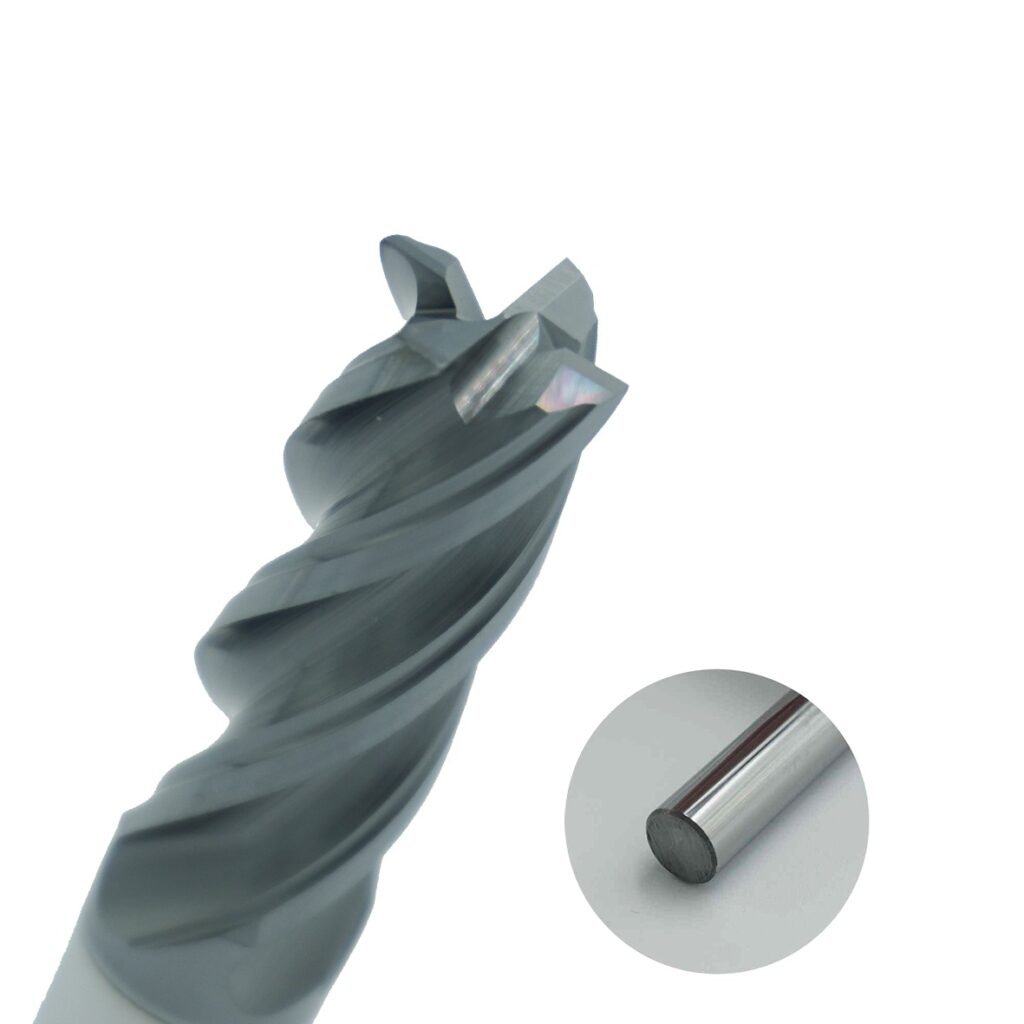
Utilizing 5-axis CNC grinders, cemented carbides employ resin-bonded diamond wheels while HSS uses CBN wheels. ·
Edge finishing (beveling/passivation):
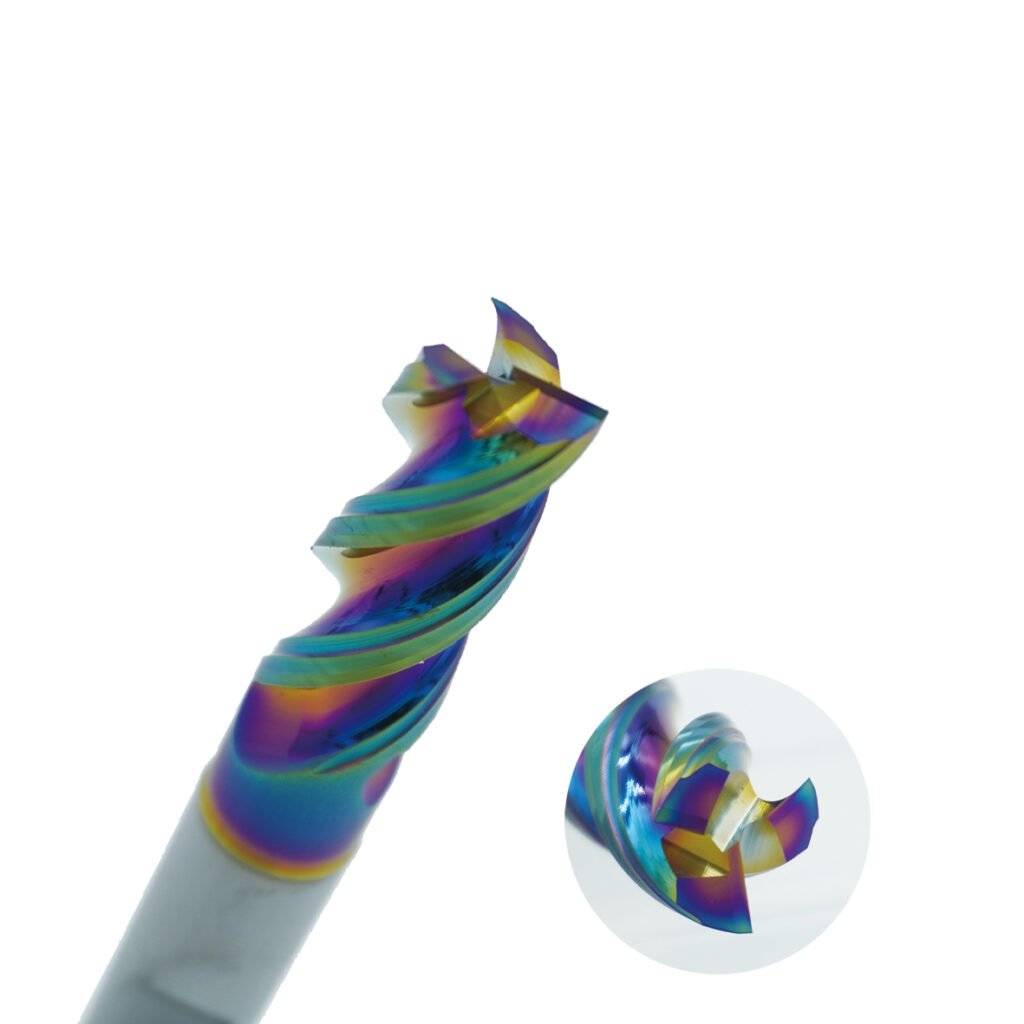
Conducted after CNC grinding to enhance wear resistance, coating adhesion, and cutting stability.
What are the main types of CNC grinding and their practical applications?
1) Surface Grinding (CNC Surface Grinding)
CNC surface grinding is used for machining flat reference surfaces, fixture plates, and insert components. In tool manufacturing, it primarily serves fixture and measuring tool parts rather than tool body grooves. When combined with proper grinding wheels, dressing, and cooling, CNC surface grinding can achieve extremely high geometric accuracy and flat surfaces.
2)Outer Diameter Grinding (CNC OD Grinding)
CNC OD grinding is suitable for circular parts (e.g., tool blanks, tool holders). This process determines runout and concentricity before tool slotting, which is crucial for the performance and balance of end mills.
What are the typical steps in CNC OD grinding?
Stock → Cutting → Centerless pre-grinding → Outer diameter precision grinding → Five-axis slotting/posterior angle grinding.
3)Centerless Grinding (CNC Centerless Grinding)
In CNC centerless grinding, workpieces are positioned between grinding wheels and adjusting wheels, supported by blade supports without centering. This method is ideal for batch production of blanks requiring strict roundness specifications, offering high roundness and efficiency. It serves as the core process for pre-processing hard alloy milling tool blanks.
4)Internal Circular Grinding (CNC ID Grinding)
CNC ID grinding is used for precision holes or internal contours (such as bearings and valve bodies). While rarely seen in milling cutter manufacturing, it plays a crucial role in processing tool holders, bushings, and spindle components.
5)Deep-Cut Creep-Feed Grinding (CFG)
Creep-Feed Grinding achieves single-pass heavy cutting with extremely low feed rates and deep cutting depth. It is suitable for deep grooves, complex surfaces, and difficult-to-machine alloys. In aviation and energy sectors, CFG can even replace multi-pass milling or EDM. Continuous dressing of CFG maintains stable grinding wheel sharpness and removal rate. In tool manufacturing, CFG is primarily used for forming thick-section or complex-shaped surfaces.
6)Customized Grinding Applications
Special Grinding includes tooth profile, thread, form, and contour grinding. For end mills, groove and back angle grinding on 5-axis CNC tool and cutter grinders best demonstrate its performance. Parameters like rake angle, helix angle, core thickness, front groove, and back angle are determined during this stage.


CNC Grinding type, typical applications, geometric features, and surface precision comparison
CNC Grinding Type | Typical Uses in Toolmaking | Geometry Strength | Typical Finish / Tolerance* |
CNC Surface Grinding | Datums, fixtures, flat plates | Flatness & parallelism | Fine Ra; tight flatness on hardened steels |
CNC OD Grinding | Blanks, shanks (pre-flute) | Roundness & concentricity | µm-level roundness achievable |
CNC Centerless Grinding | High-volume blanks | Throughput + roundness | Excellent concentricity, fast cycle times |
CNC ID Grinding | Spindle/holder bores, bushings | Bore roundness/size | High accuracy in hardened parts |
CFG | Deep slots, difficult alloys | Complex forms single-pass | High MRR with stable finish |
Customized Grinding Applications | Flutes, reliefs, profiles | Cutting geometry itself | Cutter performance depends on it |
* depends on the grinding wheel, binder, dressing, cooling and rigidity of the machine tool.
What is the selection of grinding wheels for CNC tools? Diamond vs. CBN Materials.
Principles for Abrasives Selection in CNC Grinding: ·
Diamond: Suitable for cemented carbide and non-ferrous/crystalline materials. ·
CBN (Cubic Boron Nitride):
Recommended for ferrous materials (HSS, tool steel), as diamond reacts with iron at high temperatures.
Bonding Characteristics: ·
Resin Bond: Common in CNC grinding, offering excellent cutting cooling and shape retention.
Ceramic Bond: Ideal for CNC OD/ID grinding and CFG applications, requiring frequent dressing and cooling management.
Turner Wheel Selection Quick Guide
Workpiece | Best Abrasive | Typical Bond | Notes |
Carbide (WC-Co) | Diamond | Resin | Standard for flute/relief grinding; keeps heat low, good form holding. |
HSS / Tool Steels | CBN | Resin / Vitrified | CBN avoids diamond-iron reactivity; vitrified for rigidity/higher stock. |
High-Alloy Ferrous (≥60 HRC) | CBN | Vitrified | Excellent form retention and thermal resistance at high hardness. |
Ceramics / Carbides (non-ferrous) | Diamond | Resin / Vitrified | Choose bond by form accuracy need and dressing strategy. |

What are the key parameters and process control points for CNC grinding?
CNC grinding follows two fundamental principles:
1.The linear speed of the grinding wheel is critical.
The standard range is approximately 5000–6500 sfm, adhering to the upper limits of both the grinding wheel and the 5-axis CNC grinder.
2.CNC grinding with deep slow feed differs from conventional tool feed.
The CFG employs high cutting depth and low feed rate, requiring high-pressure, high-flow cooling nozzles for heat dissipation. When properly implemented, this approach enables the integration of multiple processes and shortens production cycles.
Comparison of CNC grinding process characteristics
CNC grinding Aspect | Conventional Surface/Cylindrical | Creep-Feed Grinding | Centerless (Through-Feed) | Typical Benefit |
CNC grinding Depth of Cut | Shallow, multiple passes | High single-pass depth | Moderate, continuous | Varies by process |
CNC grinding Feed/Work Speed | Moderate–high | Low table/work speed | Continuous feed via regulating wheel | Process dependent |
CNC grinding Coolant Strategy | Flood or MQL; modest pressure | High-pressure, high-flow, targeted | Flood; stability & dressing focus | Thermal control |
CNC grinding Strength | General finishing, versatility | Deep slots, complex shapes, time reduction | High throughput and roundness | Productivity/quality |
CNC grinding Benefit | Fine finish, flexible | Cycle time reduction with improved surface quality | Balanced productivity + accuracy | Cost/throughput balance |
What are the key stages in CNC grinding during milling cutter manufacturing?
1)Rough machining (CNC centerless grinding/CNC OD grinding):
Ensuring consistent diameter, runout, and straightness. CNC centerless grinding or CNC OD grinding establishes subsequent geometric references. The stability of grinding wheel dressing and support blades or adjustment wheels determines the workpiece surface and roundness.
2) Grooving grinding (5-axis CNC grinder):
Using resin-bonded diamond wheels for HSS materials; controlling helix angle, rake angle, core thickness, and front groove shape. When processing HSS materials, switch to CBN wheels. During machining, pay attention to abrasive concentration and cooling steps. Burn marks or chip fractures can significantly reduce tool life and coating performance.
3)Rear angle and secondary machining:
Rear angle and anti-chipping angles (bevels or chamfers) affect cutting stability and heat dissipation. Maintain wheel profile accuracy with frequent light dressing, and use optical/laser pre-adjustment instruments for consistency checks.
4)Edge treatment (passivation/polishing):
Controlled micro-passivation enhances tool strength, reduces micro-chipping, and improves coating adhesion. Maintain sharpness for aluminum tools (small passivation radius), while steel tools require moderate enlargement for wear resistance. All tool specifications should have standardized target values managed through statistical process control (Cp/Cpk).
What should we pay attention to in the cooling, dressing, and thermal stability of CNC grinding? ·
Cooling: Conventional CNC grinding requires thorough cooling and filtration to prevent clogging. The CFG system needs high-pressure, high-flow precision spraying in the contact zone. Poor cooling can cause burn marks, tensile stress, and dimensional drift. ·
Dressing: Frequent light dressing maintains stable surface morphology and normal force on the grinding wheel. Continuous dressing in the CFG system ensures sharpness. ·
Thermal monitoring: Monitor color changes, burn marks, or straightness variations, combined with power monitoring and post-measurement control.
How to inspect your milling cutter quality?
1. Runout and concentricity (holder/blade): Inspect during both roughing and finishing stages, as runout affects vibration and cutting load uniformity.
- Groove geometry: Verify helix angle, rake angle, and blade thickness by cross-checking with CAD drawings.
- Rear angle and front groove: Ensure proper chip clearance and back rake clearance.
- Cutting edge radius (blunting radius): Measure with a micrometer and align with material/coating specifications.
- Surface integrity: Inspect for cracks or pull-outs under a microscope, paying attention to burn marks.
- Pre-coating preparation: Ensure the blade surface meets adhesion requirements through thorough cleaning.
What are the common defects and causes in CNC grinding? ·
Blade chipping/rapid wear → Insufficient or unstable dulling; overly hard grinding wheel; excessive heat; incorrect abrasive selection. ·
Carbide groove pulling → Incorrect abrasive specifications or excessive load; dull grinding wheel; poor cooling filtration. ·
Jumping-induced vibration → Insufficient pre-grinding of blank or clamping errors; check concentricity. ·
Burn marks/surface damage → Insufficient coolant flow or pressure; low dressing frequency; slow feed rate or dull grinding wheel; CNC grinding nozzle deviation from grinding zone.
What are the key implementation recommendations for milling production lines? ·
Standardize grinding wheel specifications by tool diameter/material and establish fixed dressing procedures. ·
- Use diamond for cemented carbide tools and CBN for HSS tools; strictly prohibit mixing under high-temperature conditions. ·
- Maintain a series-specific edge dullness log with regular calibration and Statistical Process Control (SPC) monitoring. ·
- Upgrade cooling systems (pressure, flow rate, nozzle design) for high-efficiency processes or Computer Numerical Control (CNC) grinding (CFG). ·
- Implement closed-loop control using optical/laser pre-adjustment instruments and detection systems. ·
- Train operators to differentiate between CNC grinding modes (CNC grinding vs. CFG) and master CNC centerless grinding fundamentals (adjusting wheel angle and support height).

Conclusion
CNC grinding is a comprehensive technical system rather than a single process. For any milling cutter manufacturer, the successful formula typically involves: stable blank pre-grinding (centerless/outside cylindrical) + high-precision five-axis slotting/backside grinding (using appropriate superhard abrasives, binders, and dressing plans) + controlled edge finishing.
When combined with optimized cooling systems and inspection protocols, this approach achieves higher process capability indices (Cp/Cpk), extended tool life, and reduced unit costs. For potential transitions from CNC grinding forming processes to deep slow-walking grinding, conservative cutting depths and complete nozzle/dressing solutions should be implemented through pilot testing, with gradual expansion based on data-driven evaluations.