Walter vs Kennametal: Which Carbide End Mills Should You Choose?
Table of Contents

When precision is crucial, it is no longer about technical details. It has now become a matter of the performance, cost, and consistency on the shop floor. In European machining circles, two carbide giants, Walter and Kennametal, come up in the same conversation quite often.
They provide solid carbide end mills, drills & inserts that are trusted by manufacturers from aerospace to automotive and general engineering. They are not only the suppliers but also the engineering partners for many CNC professionals across Germany and beyond.
Which of the two is better for your workflow, budget, and materials?
This guide outlines all the differences between product lines, coating technologies, material performance, and distribution support.
Brand Overview
Walter Tools and Kennametal have become quite synonymous with quality solid carbide tooling owing to the level of trust they have gained among their customer base. While both of them have their presence worldwide, the awareness of their respective strengths, histories, and core business areas can help in choosing the right partner for your production needs.
Walter is a German company that is known for precision and focus on creating tooling for particular applications. The US-based company, Kennametal, with the European side of the business, is all about new ideas and being flexible, especially when it comes to the machining of difficult materials.
Feature/Focus Area | Walter Tools | Kennametal Tools |
Headquarters | Tübingen, Germany | Pittsburgh, USA |
European Presence | Strong DACH network and local engineering teams | Broad EU distribution, including German support |
Specialties | High-performance milling, threading, drilling | Versatile carbide tooling, wear-resistant solutions |
Key Industries | Automotive, aerospace, die & mold | Aerospace, energy, general machining |
Tooling Innovation | Custom end mills, M4000 modular system | Beyond™ platform, HARVI™ solid carbide tools |
Strength in Carbide Tools | Advanced coatings like AlTiN, geometry R&D | Coatings like KCSM15A, TiAlN; feeds/speeds tech |
Service Model | Application engineering, tool lifecycle support | Smart tool diagnostics, digital catalogs |
Each brand brings its own philosophy to carbide tooling. Walter focuses deeply on German manufacturing efficiency and precision, while Kennametal drives toward innovation in tool longevity and adaptive performance.
Walter Tools
Walter dates back to almost a hundred years ago. The company was established in 1919 by Richard Walter in Düsseldorf and by 1925 had relocated its headquarters to Tübingen and started pioneering cemented-carbide tooling. The 1930s saw Walter reach new heights as it patented carbide milling innovations and introduced the world’s first carbide milling cutter in 1927.
Additionally, it went on to unveil the first fully automatic grind machine in 1953 and the world’s first CNC-controlled grinding machine in 1977. Today, as part of Sandvik, Walter employs around 3,800 people globally and maintains deep production and R&D operations in Germany and Austria, and that dedication to precision remains strongly rooted in its business model.


Kennametal
The story of Kennametal’s growth dates back to 1938 when Philip M. McKenna, a metallurgist, started this venture in Latrobe after he developed a tungsten‑titanium carbide alloy that revolutionized the machining of steel.
The company grew very fast in WWII and got listed in 1967. For many more years, Kennametal grew by acquiring Widia, Hertel, and other names to become well-known throughout Europe. Now based in Pittsburgh with engineering centers in Germany and India, Kennametal makes about $2.4 billion in revenue and has close to 10,000 workers; this growth is supported by constant new ideas about carbide materials and tool coatings.


Product Range Comparison
Walter and Kennametal offer a wide range of carbide tooling assortment, but their strengths will become more evident when comparing some product categories, like solid end mills and high-performance coatings.
Walter focuses heavily on precision milling with its Perform, Advance, and Supreme tool lines. Its solid carbide end mills come with optimized flute designs and cutting-edge coatings such as AlTiN and TiSiN. Walter’s MC and MD series are particularly popular in Germany’s die and mold industry, thanks to their predictable performance and wear resistance in hardened steels. Their M4000 modular milling platform also stands out for flexibility in face, shoulder, and slot milling.
Kennametal offers a wider range of shapes and is better at high-feed uses and hard materials. Its HARVI™ series is designed for aggressive metal removal in aerospace-grade alloys. Coatings such as KCSM15A along with innovative edge treatments have proven to be a great benefit for the tool lifetime that is particularly for nickel-based alloys and titanium. Kennametal tools have the feature that they are often pre-set for optimized speed and feed, which means that the setup process for CNC operators is simplified.
When comparing product focus, Walter puts emphasis on process reliability and tool life in specialized applications. On the other hand, Kennametal is the spearhead in versatility and performance across mixed-material machining environments.
Both brands continue their commitment by providing not only off-the-shelf but also custom tooling services. However, Walter tends to emphasize the collaboration of engineering, whereas Kennametal focuses on variety in the catalogue and rapid turnaround.
Performance in Common Applications
The performance of the tool is really dependent on the material which is to be machined. Walter and Kennametal each issue a great number of carbide end mills of high quality, however different materials tend to bring out the differences in their offerings.
General Steel Machining
Walter is undoubtedly the leader in the general steel field, especially in the automotive and mold-making industries. The MC233 Advance lines basically represent stable cutting performance within the structural and alloyed steels of a wide range. Coatings such as TiAlN together with optimized geometries cooperate to keep edge life during continuous runs, even for older CNC setups.
Kennametal end mills represent the same good performance here. Their KOR™ and HARVI™ series are intended for roughing and semi-finishing. But, the tools are more suitable for aggressive and high-speed conditions, more important is that the machine rigidity and cooling systems are ready to support fast material removal.
In most cases, Walter’s edge stability at moderate speeds is a better match of cost and performance in general steelwork for job shops.

Aluminum Components
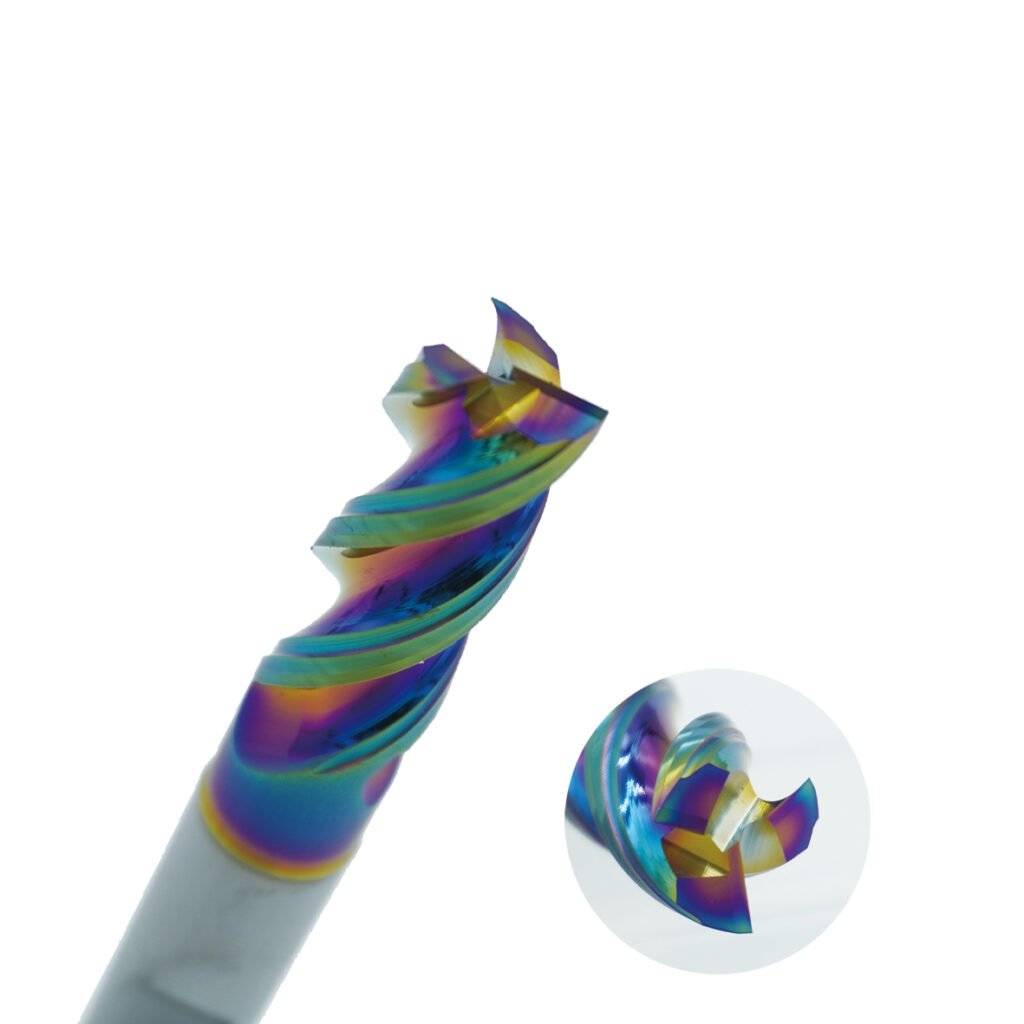
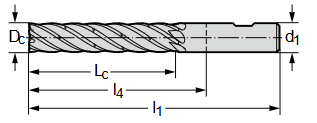
Kennametal’s advantage becomes more apparent in aluminum machining. Its 3-flute solid carbide tools, especially those with polished flutes and sharp helix angles, deliver excellent chip evacuation and surface finish. End mills like HARVI™ Ultra 8X are engineered for high-speed aluminum cutting and aerospace-grade components.
Walter’s tools in this space are dependable but often focused more on universality than niche aluminium performance. The AL-series tools work pretty well in structural aluminum, but Kennametal’s special shapes and smoother finishes matter in uses like airplane skins or electronic casings.
High-Temperature Alloys (Inconel, Titanium)
Machining superalloys is where both brands bring their top-tier offerings. Walter’s Supreme line of end mills with AlCrN and TiSiN coatings provides controlled heat resistance and reduced edge wear. These tools are commonly found in German aerospace hubs, where dimensional accuracy and tool life are critical.
Kennametal, however, has made a name for itself in this segment. Its HARVI™ series is designed specifically for materials that work hard, with edge preps and coatings that extend life even in dry or near-dry machining environments. Many CNC users machining Inconel or titanium report better chip control and tool longevity with Kennametal feeds and speeds.
Pricing and Availability
Different vendor strategies and distribution networks mean Walter and Kennametal tools often carry distinct costs and accessibility dynamics in Europe. Understanding these helps you select the brand that aligns best with your operational priorities.
General Pricing Overview
- Walter toolstypically sit at a competitive premium, reflecting German engineering and precision. For instance, a 12 mm solid carbide end mill from Walter Prototyp might range around €70–€230, depending on coating and flute design.
- Kennametal carbide toolsoften fall in a similar range, though specialized series (like HARVI™ or Beyond™ with premium coatings) may cost more based on performance requirements.
Distribution & Support in Europe
Walter’s excellence is in tools that are made-to-measure and support from local engineers, which is perfect for those shops that need guidance in design and performance that is just right. Kennametal provides a larger product ecosystem with stronger after-sales features, particularly for customers with high volumes of production who need quick turnaround times and global programming integrations.
Brand | Distribution Coverage | After-Sales & Support Notes |
Walter | Strong presence through DACH region distributors; over 45,000 tool types | Emphasizes application-engineering support and close customer collaboration in the tool lifecycle. |
Kennametal | European HQ in Switzerland; broad continental network | Offers RRC program (Rapid Response Centers) in Germany, Poland, UK for quick regrinding and support. Also offers carbide recycling and digital tool planning. |
Pros and Cons
Walter and Kennametal bring decades of expertise, deep tooling portfolios, and serious R&D firepower to the table. But which fits your priorities: precision, cost, tool life, flexibility? One will suit your needs better than the other. Here’s how their strengths and trade-offs stack up in real-world European shop floors.
Main Advantages of Walter
Walter Tools has been a firm that has symbolised German precision and engineering discipline, cutting work tolerances: the company’s strength lies in supplying specialised cutting tools for tight-tolerance work and complex geometries.
Manufacturers operating in aerospace, die-mould, and high-end automotive sectors often turn to Walter for end mills that deliver predictable tool life and minimal deviation, even on the toughest materials.
The integration of Walter GPS (an advanced tool selection and process planning system) and extensive product support helps shops achieve repeatable performance. Their premium positioning means customers get strong technical backing, though the tradeoff is a higher cost structure and regionalised distribution that may require planning for lead times.
Main Advantages of Kennametal
Kennametal is a brand that uses a totally different strategy by providing broad-spectrum tooling solutions with an emphasis on productivity, tool durability, and availability. They are very proud of their HARVI line of carbide end mills, which are specially designed for the heavy stock removal and long tool life in stainless steel, nickel alloys, and general-purpose steel.
The brand is loved by high-throughput plants where the cost per part and the most consistent factor are the ones that matter the most. The NOVO digital tooling platform from Kennametal is also a great way to simplify the process of picking out the right tool and figuring out the machining parameters, which makes it especially appealing for shops investing in digital workflows.
On the other hand, the tools that Kennametal produces tend to be more affordable and more accessible than Walter’s but they may not have the same high level of fine-tuned geometry.
Potential Drawbacks
Walter’s premium tooling normally requires more money to be invested upfront and it is also more dependent on the local distribution and the technical partners. As a result, there is a possibility that the support or restocking of goods may not be available in those regions outside the core European markets.
On the other hand, the large scale of Kennametal all over the world can create fluctuations in the product lines, which is especially important when changing between different production batches or coated variants. Several machinists have always been there when some new lots come. They always want to re-validate the product, especially in applications where surface finish and tolerance stacking are very important.
The two brands are certainly along the lines of their segments, but a choice between them calls for a frank appraisal of production needs, available budget, and internal knowledge of tooling.
Conclusion
The decision to select Walter or Kennametal does not imply that one is superior to the other. It is more about learning your machining needs. Walter is a company that focuses on precision tools that are designed with the geometry of the industry in mind, and are therefore perfect for aerospace and mould making, where repeatability, part finish, and tool life are more important than volume.
On the other hand, the operations that are least concerned about throughput and cost-efficiency and are mainly focused on production-heavy environments, cutting steel, stainless, or high-temp alloys, find the products of Kennametal more suitable.
If you’re machining complex titanium aerospace parts with tight tolerances and long cycle times, Walter’s specialised geometries and advanced coatings will likely justify the investment. For batch production of structural components or stainless parts where tool change frequency impacts hourly output, Kennametal’s durable, application-flexible end mills might deliver better value.
But there’s also room to think beyond the established names.
HN Carbide provides an agile alternative—combining German-engineered precision with flexibility and responsive support. If you’re looking for carbide end mills tailored to your exact materials, cycle times, and surface finish requirements, HN Carbide delivers tools that perform without inflating your overhead.
When every spindle hour counts, partner with a supplier that understands what your shop floor demands.
Reach out to HN Carbide today and explore performance-driven solutions designed for modern European manufacturing.