U-Drills in CNC Machining: Applications, Advantages & Best Practices
Table of Contents

Hole-making operations will always be considered the most time-consuming stage of CNC machining. In high-volume German manufacturing lines, cycle time, tool life, and hole quality require precise matching. When deeper holes, faster feeds, and repeatable accuracy are required, traditional twist drills can’t make it. That’s where the U drill picks up from.
U drills are engineered for high-efficiency drilling with replaceable inserts. The automotive, aerospace, and energy sectors readily adopt them throughout Europe because they can provide higher feed rates and better chip evacuation with lower setup times consistently while keeping production as rigorous as DIN-compliant.
This guide covers what is meant by a U drill, how its design allows for deep and fast cuts, and why it has become the preferred tool in modern CNC processes.
What is a U-Drill?
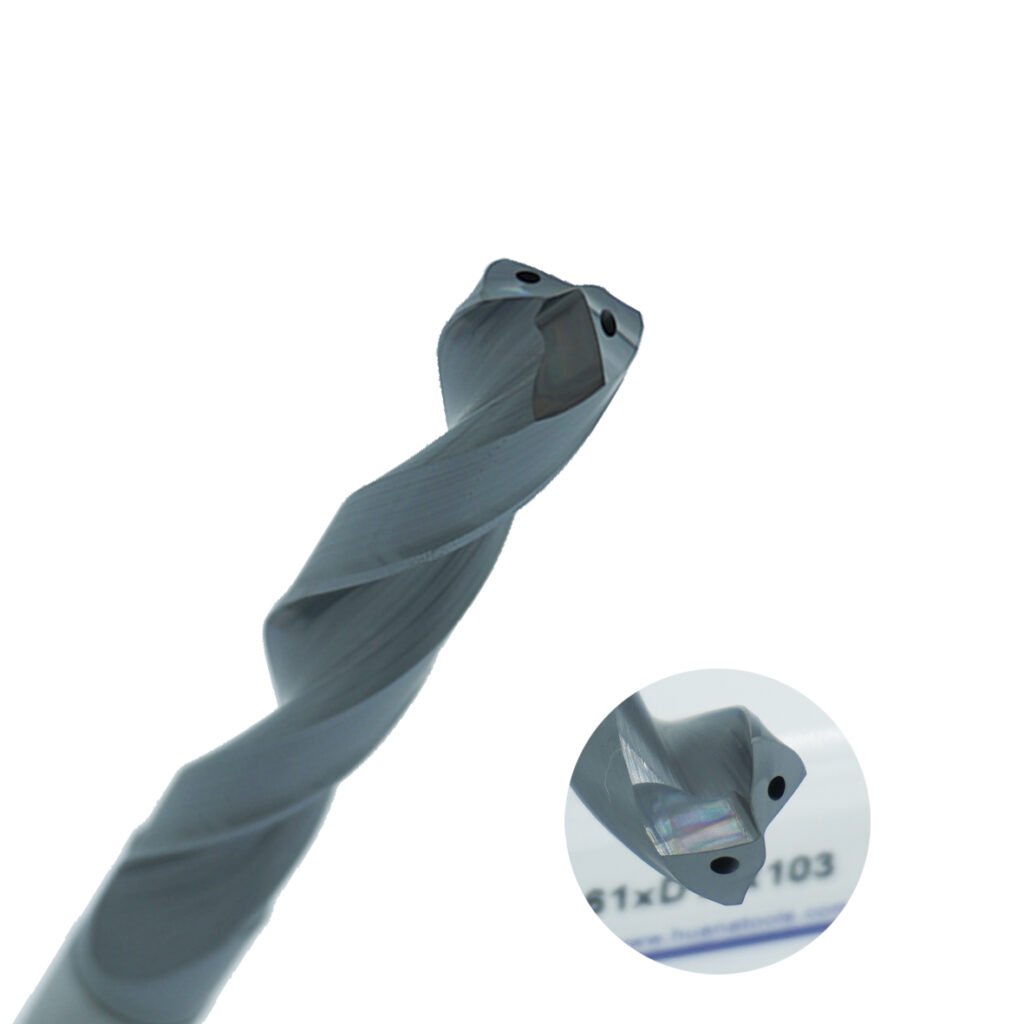
A U drill is a high-efficiency indexable drilling tool built for modern CNC environments. It does not use a continuous helical flute as employed by twist drills but comprises a rigid steel body with two or more replaceable carbide inserts-one at the center and the other on the periphery. This configuration allows precise control over hole diameter and improves tool stability.
Contemporary U-drills operate over an extensive gamut of transactions, ranging from 12mm U drill holes to beyond 60 mm, and provide effective depth-to-diameter ratios of 2×D to 5×D without the necessity of pilot drilling. German CNC shops is the main users of U-drills as they yield:
- Replaceable inserts, which reduce the cost of tooling
- Rigid body structure that facilitates higher feed rates
- Deep-hole capacity without extra installation
- Internal cooling channels that send away the heat and chip evacuation
The different cutting zones for each of the inserts are optimally load distribution areas, thus increasing the life of the tool. Coolant through the tool makes it possible to drill fast in materials such as P20 steel, cast iron, and aluminium alloys.
This modular, robust design is why the U drill has found a home in automotive, aerospace, and heavy industries where repeatable hole quality and cycle time are of utmost importance.

Structural Features of U-Drills
A U drill’s efficiency is a result of a highly engineered design that is a perfect match of rigidity, insert control, and heat management. Essentially, the body is composed of alloyed tool steel or hardened structural steel to endure the axial forces experienced in high-feed drilling. Inserts are precisely machined pockets, which are quite stable cutting geometry even under aggressive parameters, to clamp the cutting edges.
Feature | Function | Notes |
Insert Configuration | Dual-insert layout | Common formats include WCMT U drill inserts |
Tool Body | Rigid alloy or hardened steel | Provides stability at high feed rates |
Coolant Channels | Internal or external cooling paths | Internal preferred for 3×D to 5×D deep-hole drilling |
Replaceability | Indexable inserts and modular design | Reduces downtime and tooling cost |
Diameter Range | Typically 12 mm to 60 mm | Custom tools available for specialised geometries |
Length Options | 2×D, 3×D, 5×D | Determines hole depth capacity and chip evacuation quality |
Most tools feature two insert pockets, one central, one peripheral. The centre insert breaks material in the core while stabilising the drill path, and the outer insert defines the U drill diameter and manages chip flow. Insert types like the WCMT U drill format are widely used for their positive rake and reliable chip breaking in both steel and cast iron.
Another point that is really important is coolant management. Generally, the high-performance U drills have internal coolant channels that deliver fluid right to the cutting edges. Some tools also support external coolant configurations for machines without through-spindle capability. The control between the internal and external cooling depends on the material, hole depth, and machine compatibility.
U-drills have standard and custom dimensions. Off-the-shelf options run the gamut from 12 mm to 60 mm in diameter, with lengths anywhere from 2×D to 5×D. German OEMs and tier suppliers frequently request customized tooling for repeat part geometries or high-run jobs.
All the structural parts work together, so the drilling can be really efficient. Plus, they make sure it sticks to DIN standards and surface integrity.


Applications in Modern CNC
U-drills have become indispensable in industries that require elements of speed, consistency, and precision in their deep-hole tasks. U-drills’ success in eliminating cycle times without affecting hole integrity has made them a trusted tool on German machining floors across industries with demanding part geometries and high material removal volumes.
Automotive Component Machining
Automotive manufacturers are known for working with cast iron, P20, and alloy steel parts that not only need several holes, but these holes should also meet specific requirements in terms of depth. U-drills reduce the time needed for machining by removing pilot hole steps and allowing direct plunging at feed rates of up to 0.3 mm/rev.
Tools of the kind of the WCMT U drill perform efficiently in terms of chip control and surface quality in materials such as 45# steel. German Tier 1 suppliers used these drills to achieve higher throughput, together with maintaining DIN-level tolerances. Less insert wear, as well as faster tool changes, lead to higher uptime on automated CNC cells running various tasks such as engine blocks, differential housings, etc.
Aerospace & Energy Sectors
Titanium, Inconel, and duplex stainless steel are examples of materials that are hard to machine and most often used for the production of aerospace as well as energy components. Such applications require very high-rigidity drill bits that have a low level of deviation over the length of the boring, heat resistance.
The described performance of U-drills is further supported by tasks such as hole straightness and clean chip evacuation at depths up to 5×D.
12mm U drill tools are used in through-spindle coolant systems by several German drilling plants while machining turbine disk hubs and valve seats. Tool life is greatly improved, and only one finishing operation is needed, which leads to a lower cost per part and a more reliable process.
Performance Advantages
High speed, stability, and cost-efficiency signify the usefulness of a good quality U drill in CNC production. U-drills, conversely, are able to run at higher feed rates and get rid of chips more easily. Cycle times drop significantly when tools operate at feed rates of 0.15 to 0.3 mm/rev, especially when combined with high-pressure coolant and precise insert geometry.
HNCarbide recently tested its WCMT U drill on 45# steel and P20. Results confirmed stable cutting action, minimal deflection, and full-diameter accuracy even at 3×D depths. Surface finish remained within tolerance without secondary reaming.
Shops using U-drills report measurable improvements:
- Faster cycle timeson multi-hole components
- Cleaner chip evacuation with reduced clogging risk
- Improved hole straightness over traditional twist drills
- Lower tool replacement costs due to modular design
- Longer tool body lifespan with only inserts replaced
- Reduced machine load due to stable axial force distribution
- Minimised heat build upfrom internal coolant flow
German CNC operations focused on DIN-compliant results increasingly adopt U-drills as standard tooling. These drills simplify setup, reduce downtime, and deliver better performance across materials ranging from carbon steel to high-temperature alloys.
Best Practice Guidelines
U-drills deliver excellent results but only when matched with the right parameters, insert grades, and machine conditions. Many tool failures stem not from design flaws, but from misapplied speeds, incorrect chiploads, or incompatible insert selections. Stable performance begins with a sound understanding of how to pair each U drill with material type, depth, and machine capabilities.
Cutting Speeds and Feed Rates
Correct speed and feed settings determine whether a U drill runs smoothly or overheats and fails prematurely. Most tools operate efficiently between 80 and 180 m/min, depending on the material, with feed rates reaching up to 0.3 mm/rev in low-carbon steels. Feed adjustments must consider insert geometry, coolant delivery, and hole depth.
A U drill speeds and feeds chart helps define safe starting values. Feed per revolution should increase as material machinability improves, for example, 0.25 mm/rev for grey cast iron, and 0.1–0.15 mm/rev for stainless steel. U-drills handle aggressive parameters well but still require consistent machine rigidity and proper chip evacuation to perform at full capacity.

Insert Grade Selection by Material
The insert is where material compatibility really comes into play. Using a product of the wrong grade for the same application is typically the cause of edge chipping, crater wear, or a built-up edge. Steel and cast iron are materials that need coated carbide inserts with high toughness. ISO P-grade inserts are good for carbon steels and alloy steels. When cast iron is concerned, it is better to use ISO K-grade inserts that have sharp edges and chip formers since they are more consistent in their performance.
Multilayered AlTiN or TiAlN coatings usually provide heat resistance and wear stability to the inserts, which are used for aerospace-grade alloys. Consequently, choosing the insert geometry that fits the hole profile and the material solves the problem of longevity and less insert indexing.
Preventing Common Failures
Failure modes in U-drilling are often very transparent, as different techniques can be observed. A built-up edge in aluminium and stainless steel takes place when feed rates are too low or the coolant does not sufficiently reach the cutting zone.
Excess vibration manifests itself when the tool overhang is too large or the feed per tooth decreases below the suggested level. Incorrect insert positioning or too much runout produces bellmouth entries or holes with a tapered shape.
Risk reduction through some preventive measures starts at regular inspection of insert seating, uninterrupted use of through-spindle coolant, and rigid fixturing during high-feed operations. Controlled entry conditions and a well-adjusted toolpath make the results stable.
Why Choose a Long-Term Manufacturer
CNC deployments that use U-drills for high-volume production stand for a consistent supply, application insight, and support that goes beyond the sale point. A long-term manufacturer gives stable product quality and the engineering guidance that is necessary for the modification of tools for changing materials, machines, and shapes of parts.
Since its establishment in 2008, HNCarbide has committed to providing German CNC shops with process-specific and on-site tooling help. Professionals carry out experiments selecting the appropriate U drill diameter, insert geometry, and cutting parameters with real results of the same nature. Personal consultations and customised responses allow issues to be sorted out fast and thus help to decrease machine downtime and scrap.
Shops often benefit from:
- Application-specific insert matching for difficult materials
- OEM and ODM support for custom tool designs
- In-person troubleshooting on chip control or entry tolerance
- Sample testing and tool trials before large-volume orders
- Reliable delivery of standard and special-dimension tools
Manufacturers who offer this level of partnership ensure that tools evolve with your shop. Selecting a 12mm U drill or a 50 mm custom tool becomes more efficient when backed by insight from those who helped build it. That relationship leads to better outcomes on the shop floor and fewer surprises in production.
Case Studies
Real-world results offer the strongest validation for any CNC tooling decision. U-drills have consistently reduced cycle times, improved dimensional accuracy, and lowered tool costs across German manufacturing lines.
The following case demonstrates how targeted implementation of a U drill, matched with proper speeds, insert grades, and cooling, translates into measurable gains.
Cast Iron Drilling – Automotive Application
An automotive supplier in Bavaria was producing cast iron gearbox housings with multiple deep bores per part. The original process relied on solid twist drills followed by reaming, with an average drilling cycle time of 28 seconds per hole. Tool life was unpredictable, and chip evacuation remained inconsistent during longer shifts.
Switching to a WCMT U drill with internal coolant and ISO K-grade inserts led to an immediate improvement. Feed rates increased to 0.2 mm/rev with cutting speed set at 110 m/min. Drilling time dropped to 18 seconds per hole, and the need for secondary reaming was eliminated entirely. Over the course of a 500-piece production batch, insert indexing was reduced by 40%, and surface finish remained within DIN tolerances throughout.
By adjusting speeds and selecting the correct U drill diameter, the supplier not only improved efficiency but also freed up machine capacity for additional contracts.
Conclusion
U-drill is the first tool that comes to mind when the need arises for consistency, speed, accuracy, and high efficiency with the single body of the tool. U-drills with the proper setup and condition outperform traditional drills, cutting deep, fast, and cleanly across a wide range of materials.
The German manufacturers looking for methods to make their hole-making operations more efficient, are not changing anymore in their decisions to go for U-drills, as it is the one that gives them consistent performance and cost-effective production.
HNCarbide is providing tested, ready-to-use tools and knowledge from the field. We not only provide a 12mm U drill for precise parts but also a bigger diameter for cast iron housings, each one coming with the engineering insight and reliable delivery. Your production will remain efficient throughout if you avail of sample testing, insert guidance, and OEM support.
Looking to streamline your drilling operations? Connect with HNCarbide for expert recommendations tailored to your material and machining setup.