The Hidden Geometry Behind a Stable Cut: Helix Angle Selection for Solid Carbide End Mills
Table of Contents
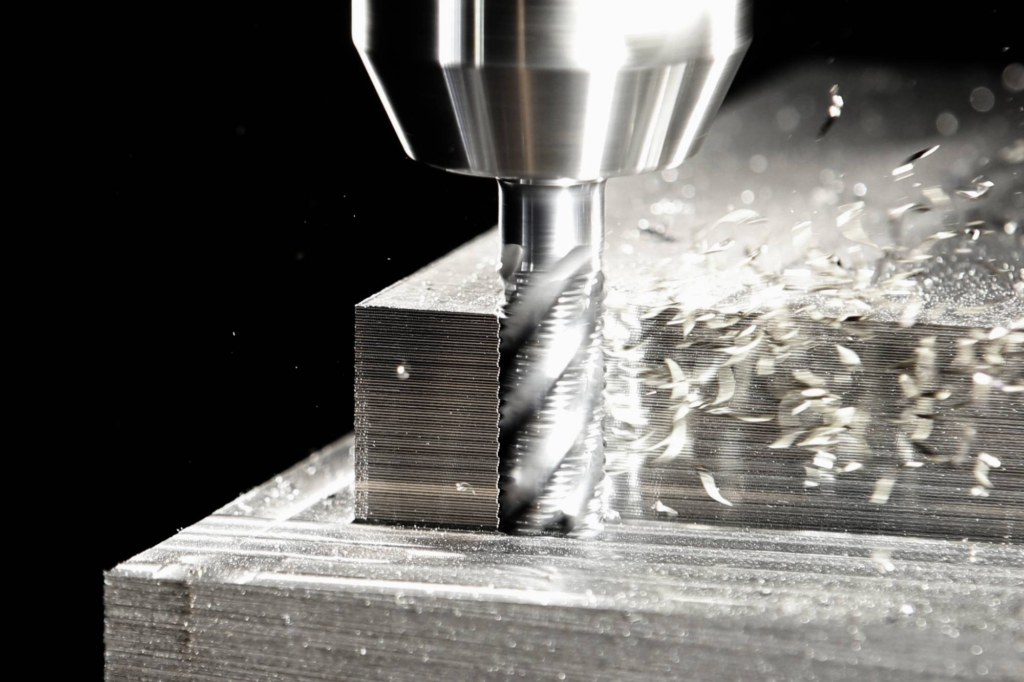
When a milling job goes wrong, the first suspects are usually speed, feed, coating, tool length, or fixture rigidity. Those checks matter, but they can miss a quieter cause: the helix angle of the end mill.
In CNC milling, helix angle changes how the cutting edge enters the workpiece. It affects tool rigidity, cutting smoothness, wall finish, chip evacuation, vibration, axial pulling force, and workpiece deflection. That is why two solid carbide end mills with the same diameter, flute count, coating, and carbide grade can behave very differently in the same program.
If a shop is fighting chatter marks on a side wall, small steps between passes, thin-wall movement, early edge chipping, or a finish that never quite reaches the drawing requirement, helix angle deserves a serious look. The right angle will not rescue a poor setup, but the wrong angle can make a good setup harder to control.
This guide explains how to choose low, medium, high, and variable helix solid carbide end mills for real machining scenarios.
What the Helix Angle Actually Changes
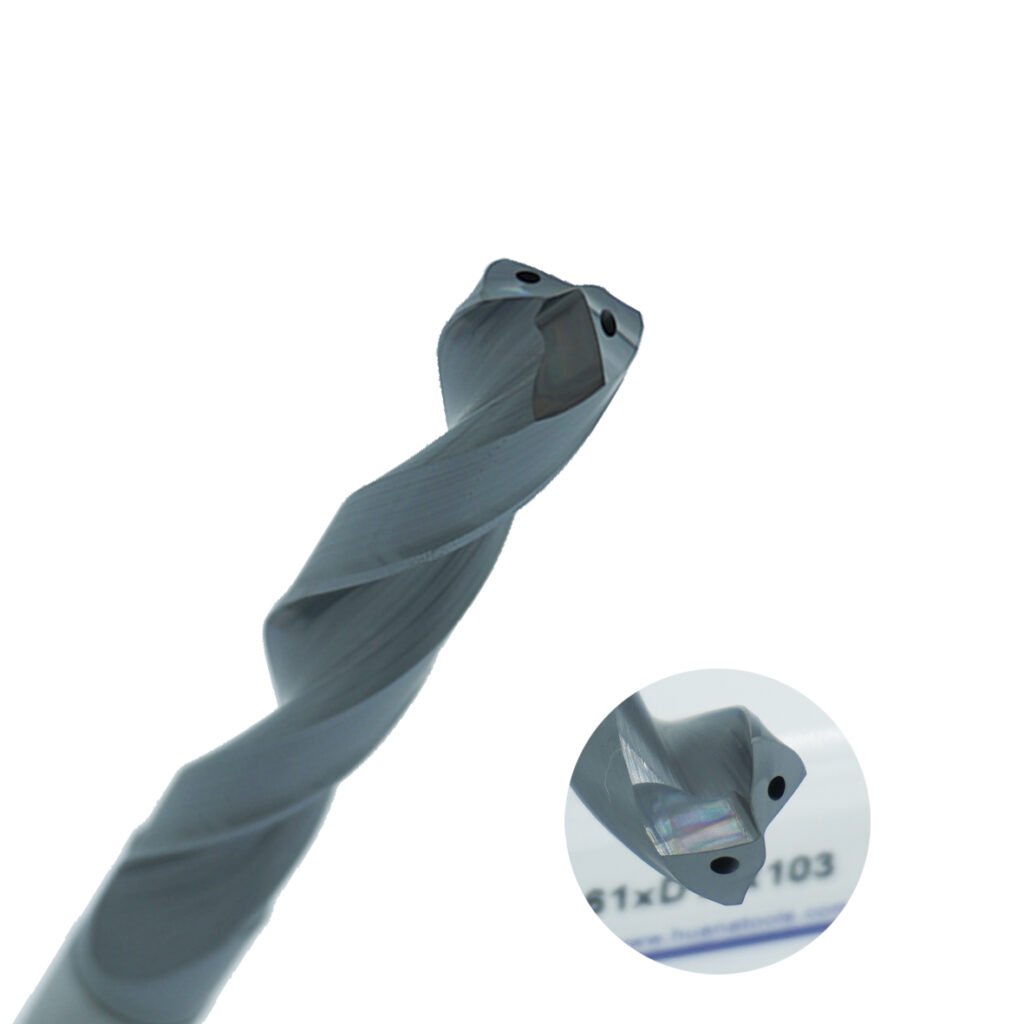
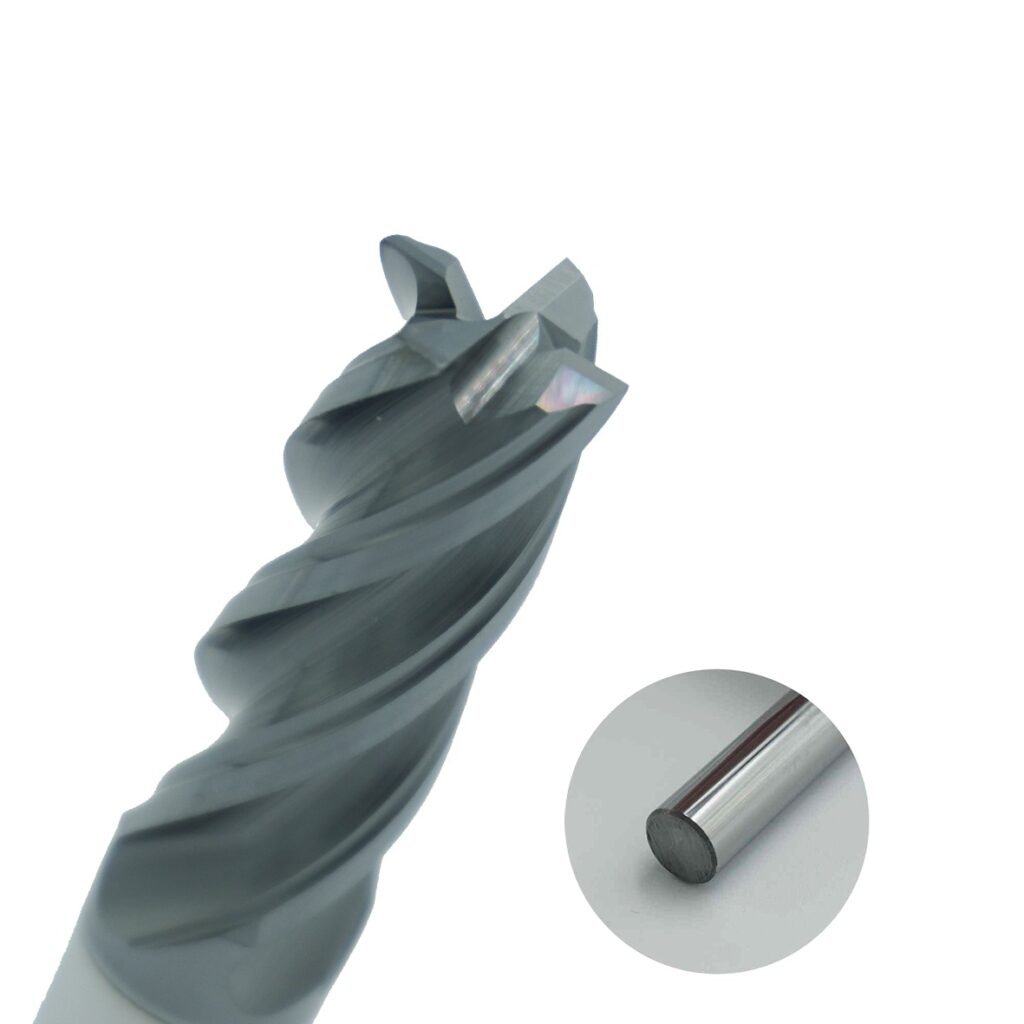
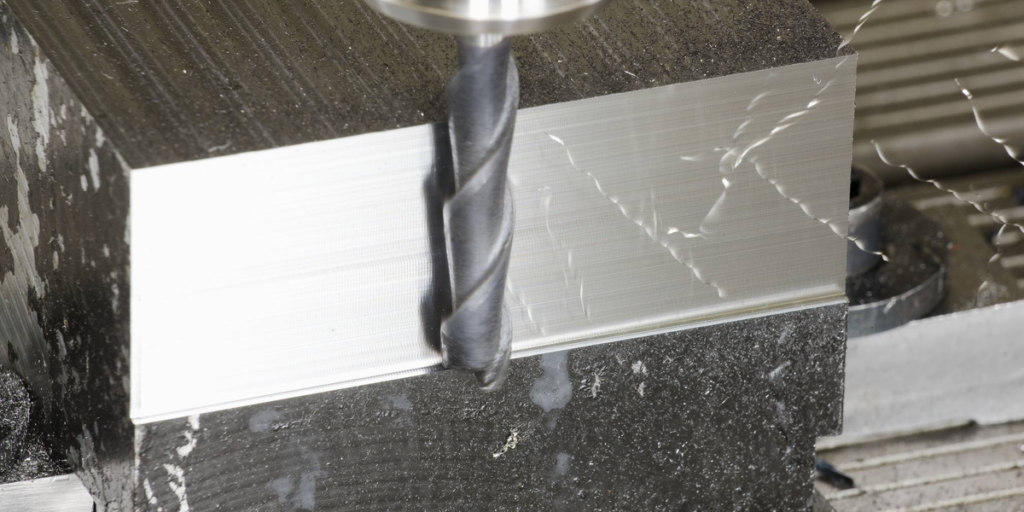
The helix angle is the angle formed by the flute spiral relative to the tool axis. A low helix tool has a flatter spiral. A high helix tool wraps more steeply around the cutter.
That geometric change moves the balance between edge strength and cutting smoothness.
A lower helix angle usually leaves more core behind the flutes and gives the edge a thicker normal section. The tool resists bending, torsion, and impact better. It also keeps axial force lower, so tool pullout risk is reduced. The tradeoff is higher radial force and more abrupt tooth engagement, especially in side milling.
A higher helix angle creates a longer, more gradual cutting contact. The tool enters the material more smoothly, spreads load along more cutting edge, and often reduces radial force. This is useful for wall finish and weak workpieces. The tradeoff is thinner edge support and stronger axial force, which increases the need for secure toolholding.
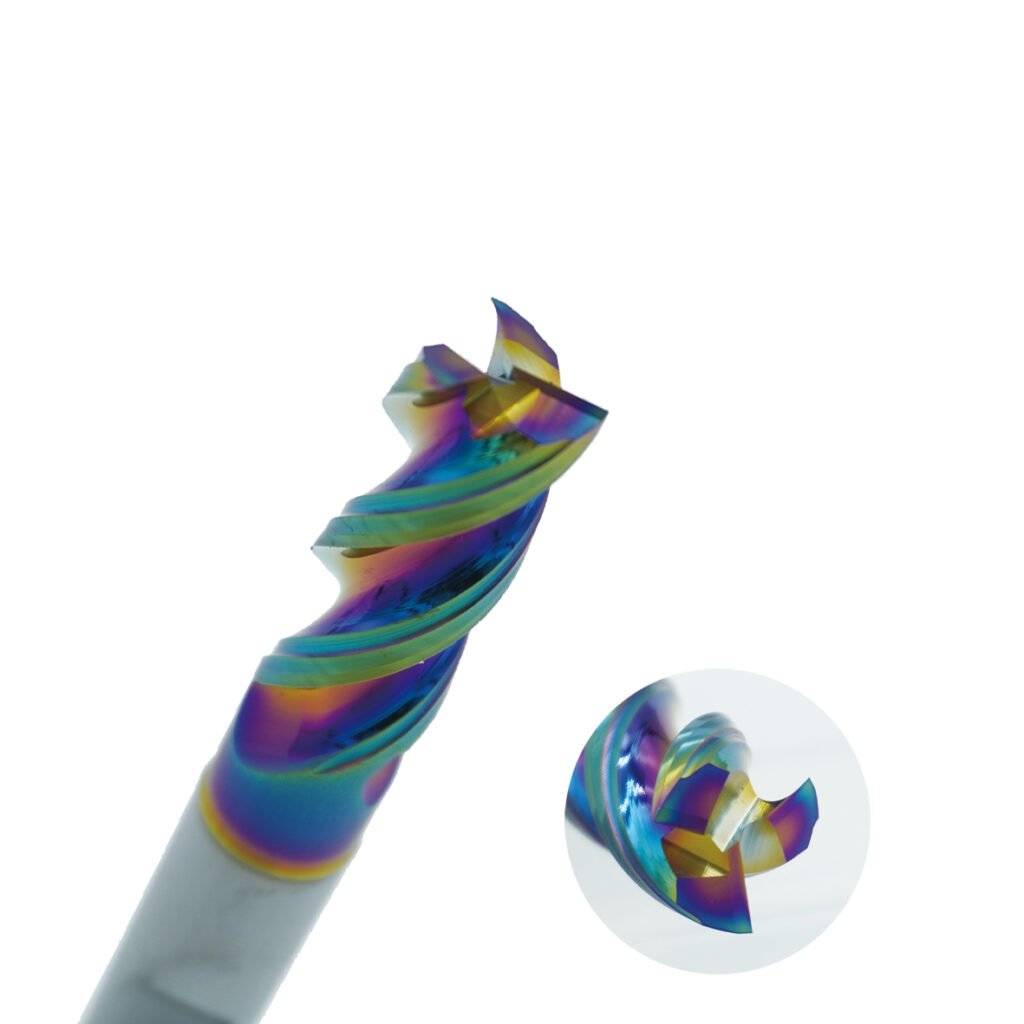
Medium helix tools sit between these two behaviors. Variable helix tools add another layer by changing the timing of tooth engagement to reduce harmonic vibration.
Helix angle type | Typical range | Main advantage | Best-fit operations | Main caution |
Low helix | 15 to 35 degrees | Strong core, impact resistance, low pullout tendency | Slotting, roughing, interrupted cuts, heavy stock removal | Higher radial force can mark walls or trigger chatter |
Medium helix | 35 to 45 degrees | Balanced rigidity and smooth cutting | General milling, shoulders, contours, semi-finishing | Toolholding quality matters as axial force rises |
High helix | 45 to 60 degrees | Smooth side cutting, lower radial force, better wall finish | Thin walls, long-reach side milling, aluminum finishing | Higher pullout risk and weaker edge section |
Variable helix | Usually built on medium or high helix ranges | Chatter suppression through unequal tooth timing | Long overhangs, deep cavities, difficult materials, chatter-prone walls | Must still match the base helix range to the cut |
Low Helix End Mills: Rigidity and Impact Resistance First
Low helix solid carbide end mills are usually selected in the 15 to 35 degree range. Their flute inclination is smaller, so the tool keeps a stronger core and a more robust cutting edge section. In practical terms, the cutter is better prepared for shock.
This makes low helix tools useful in rough and unstable conditions: slot milling, shoulder roughing, interrupted cuts, cast surfaces, scale, uneven allowance, and heavy stock removal in steels, cast iron, and some harder materials. If the operation includes repeated entry shock or the machine is removing a lot of material with limited forgiveness, a lower helix can be a safer starting point.
The lower axial force is another benefit. High helix tools tend to pull themselves along the tool axis under load. Low helix tools do less of that, so they are less likely to creep out of a collet or holder when the setup is marginal.
The limitation appears when the job asks for a clean side wall. Low helix tools generate more radial force. In side milling, that force pushes the cutter and workpiece sideways. On a rigid block this may only show as a rougher texture. On a thin rib, long overhang, deep cavity, or flexible fixture, it can become visible chatter, wall taper, or a pass-to-pass step.
Use low helix geometry when the main question is, “Can the edge survive this cut?” Be careful when the main question is, “Can this wall finish cleanly at final size?”
Medium Helix End Mills: The Practical Shop Default
Medium helix carbide end mills, often around 35 to 45 degrees, are common because they are forgiving. They keep enough tool body strength for normal roughing and semi-finishing while giving smoother tooth engagement than a low helix cutter.
For many shops, this is the best inventory backbone. A good medium helix end mill can handle side milling, bottom milling, contouring, pocketing, and ordinary finishing across a wide production mix. Job shops cutting carbon steel in the morning, stainless in the afternoon, and a small aluminum repair job before closing time often rely on this range because it does not demand a narrow operating window.
Medium helix tools are also useful in difficult materials when the setup is controlled. In stainless steel, alloy steel, and heat-resistant alloys, they offer a workable compromise between cutting stability and edge strength. Coating, edge preparation, flute count, and coolant strategy still matter, but the helix angle does not force the programmer into an extreme.
The setup caution is axial force. Compared with a low helix tool, a 40 degree cutter increases the tendency to pull along the spindle axis. In heavy side milling or deep engagement, a worn collet, dirty holder bore, poor clamping torque, excessive projection, or high runout can allow the tool to move. When the cut suddenly becomes deeper than expected, check toolholding before assuming the carbide grade failed.
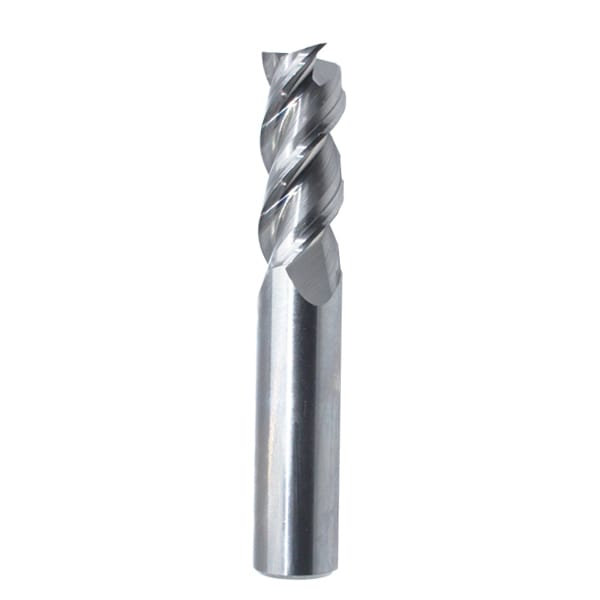
High Helix End Mills: Better Wall Finish and Lower Radial Force
High helix end mills usually start above 45 degrees and may reach roughly 55 to 60 degrees in tools designed for non-ferrous finishing or very smooth side cutting. The steep flute angle creates a longer cutting edge contact. Instead of a sudden hit, the edge enters progressively and shares the load over more of the flute.
That matters most in side milling.
When radial cutting force drops, the workpiece is less likely to push away from the cutter. Thin walls, ribs, deep cavity walls, and long unsupported features often respond well to high helix geometry. The wall finish improves because the tool cuts more smoothly and excites less vibration. In aluminum, copper, brass, and many plastics, a sharp high helix tool can also produce bright surfaces and clean chips when flute polish and chip evacuation are suitable.
High helix geometry is not a universal upgrade. The cutting edge section becomes thinner, so it is less tolerant of impact. The axial force is also stronger. That raises the risk of tool pullout, especially with high engagement, long projection, worn clamping components, or aggressive roughing. In deep slots, the longer flute path can make chip control harder if coolant, air blast, or flute space is not adequate.
For that reason, high helix tools are usually strongest in side finishing, thin-wall finishing, long-reach finishing, aluminum machining, and light-to-medium profiling where surface quality is important. They are usually a poor first choice for heavy slotting in steel or abusive interrupted roughing.
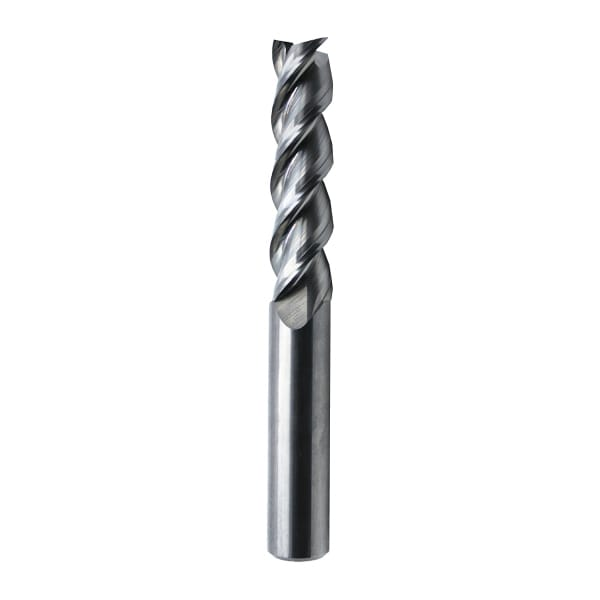
Variable Helix End Mills: Breaking the Chatter Pattern
Standard equal-helix end mills engage the workpiece at a regular rhythm. In many operations this is fine. In long overhang, deep cavity, thin-wall, and finish milling, that steady rhythm can line up with the natural frequency of the machine-tool-workpiece system. Once that happens, chatter marks become regular and stubborn.
Variable helix tools are designed to disturb that rhythm. The helix angle may differ from flute to flute, vary along the flute, or be combined with unequal pitch. The goal is to spread cutting excitation across different frequencies instead of feeding one dominant vibration mode.
In medium helix variable designs, the tool keeps much of the general-purpose strength of a 35 to 45 degree cutter while adding chatter resistance. This is useful in roughing and semi-finishing difficult materials where vibration starts before the tool reaches its productive cutting parameters.
In high helix variable designs, the tool keeps the smoother side-cutting behavior of a high helix cutter while improving stability in long reach and thin-wall finishing. These tools are often useful when a standard high helix end mill gives a good finish for a short time but leaves repeating vibration lines as depth, overhang, or wall height increases.
Variable helix geometry should not be treated as a magic label. A variable helix rougher and a variable helix finisher may have very different edge prep, core diameter, flute count, and coating. Choose the base design first, then use variable helix as the vibration-control feature.
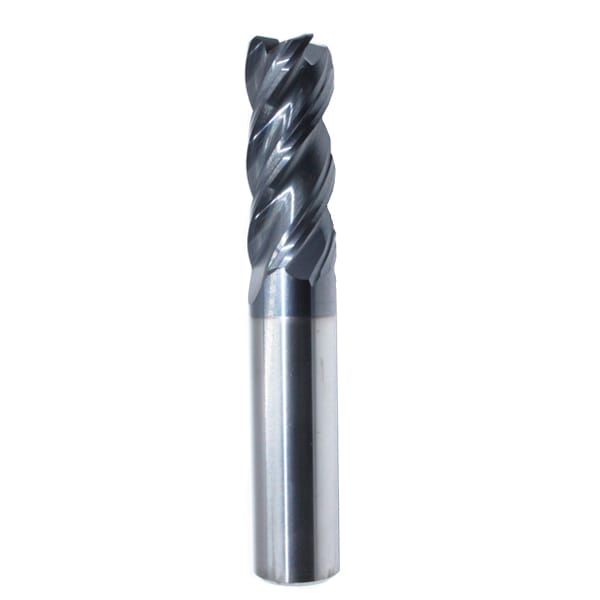
Matching Helix Angle to Common Milling Problems
Many helix angle decisions start with a visible symptom. The table below gives a practical way to connect shop-floor problems with likely tool-geometry causes.
Machining symptom | Possible helix-related cause | What to check first | Practical adjustment |
Chatter marks on a side wall | Radial force is too high or tooth timing is exciting resonance | Tool overhang, radial engagement, fixture stiffness, runout | Try a higher helix or variable helix design; reduce radial width of cut |
Thin wall bends away from the cutter | Side load is too high for the workpiece stiffness | Wall support, machining sequence, stock left for finishing | Use high helix finishing geometry and lighter radial engagement |
Tool creeps out of the holder | Axial force is too high for the clamping condition | Collet wear, holder cleanliness, torque, shank oil, pullout marks | Improve holder condition; reduce engagement; avoid high helix roughing |
Edge chips during roughing | Edge section is too weak for impact or interrupted load | Entry condition, stock variation, feed per tooth, material scale | Move toward lower or medium helix with stronger edge prep |
Chips pack in a deep slot | Flute space or evacuation path is overloaded | Coolant/air blast, peck strategy, chip color and shape | Avoid high helix deep slotting unless flute design and chip evacuation support it |
Fine finish is inconsistent by depth | Tool is stable at short engagement but vibrates as overhang increases | Stickout, holder type, wall height, axial depth | Use variable helix, shorter reach, reduced axial depth, or staged finishing passes |
Material and Operation Selection Notes
Helix angle selection is not only about material hardness. It is about the relationship between material behavior, chip formation, engagement, and part rigidity.
Steels and cast irons often reward a conservative choice when the operation is roughing, slotting, or interrupted. Low to medium helix tools give more edge support. When the same materials need a final side wall, a medium helix or variable helix tool may reduce chatter without sacrificing too much edge strength.
Stainless steel and heat-resistant alloys need stable chip formation and controlled heat. A medium helix variable design is often a practical starting point for roughing and semi-finishing. For finishing deep walls or long reach features, a high helix variable tool may help, but toolholding and cutting parameters must be controlled carefully.
Aluminum and non-ferrous materials often benefit from sharper high helix tools with polished flutes and enough chip space. The tool should cut freely rather than rub. For thin-wall aluminum, high helix geometry can reduce wall deflection, but the programmer still needs a finishing strategy that leaves consistent stock.
Workpiece or operation | Recommended starting point | Why it works | Avoid |
Heavy slotting in steel | Low to medium helix, strong core | Better edge support and lower pullout tendency | High helix with weak clamping or poor chip evacuation |
Cast iron roughing | Low helix or robust medium helix | Handles interrupted, abrasive cutting loads | Very sharp high helix finishing tools |
General job-shop milling | Medium helix around 35 to 45 degrees | Broad balance of rigidity, finish, and adaptability | Stocking only specialized high helix tools |
Stainless or titanium semi-finishing | Medium variable helix | Better stability without losing too much edge strength | Excessive projection and poor holder maintenance |
Thin-wall aluminum finishing | High helix, sharp edge, good flute polish | Lower radial force and cleaner wall formation | Heavy radial engagement at final wall height |
Deep cavity side finishing | High helix variable or medium-high variable helix | Smooth cutting plus chatter suppression | Long stickout without checking runout and holder rigidity |
Toolholding Matters More as Helix Angle Rises
The higher the helix angle, the more seriously the shop must treat toolholding. A high helix cutter can make side milling smoother because it shifts more of the cutting force toward the tool axis. That same benefit creates pullout risk.
Before blaming the cutter, inspect the whole clamping chain:
– Use clean, undamaged holders and collets.
– Keep the tool shank free of oil, chips, and burrs.
– Control runout, especially in finishing and small-diameter tools.
– Use the shortest practical projection.
– Apply the correct tightening torque for the holder system.
– Consider shrink-fit, hydraulic, or high-precision collet systems for high-speed or long-reach finishing.
This is especially important when moving from a low or medium helix tool to a high helix tool without changing the rest of the setup. The finish may improve, but the process window becomes less tolerant of poor clamping.
A Simple Selection Logic
If the operation is heavy, interrupted, or slot-heavy, start with rigidity. A low or robust medium helix end mill is usually safer.
If the operation is general machining with mixed side and bottom cutting, start with a medium helix. It gives the best balance for production environments where jobs change often.
If the operation is side finishing, thin-wall machining, aluminum finishing, or long-reach finishing where radial force is the problem, move toward high helix geometry.
If chatter is the recurring failure mode, especially in long overhangs or deep cavities, consider variable helix. Choose the underlying helix range based on the operation, then use variable geometry to reduce resonance.
Decision question | Better direction |
Is the tool breaking or chipping during roughing? | Lower helix, stronger edge prep, shorter projection |
Is the wall vibrating or deflecting? | Higher helix, lighter radial engagement, better work support |
Is the tool pulling out? | Improve holder condition, reduce axial load, avoid aggressive high helix cuts |
Is the finish poor only at longer stickout? | Variable helix, better holder, reduced axial depth |
Is one cutter needed for many materials? | Medium helix general-purpose design |
Is the job aluminum thin-wall finishing? | Sharp high helix with good chip evacuation |

Conclusion
Helix angle is not a small catalog detail. It decides how the cutting load is distributed, how smoothly the edge enters the material, and whether the process favors rigidity, finish, chip evacuation, or vibration control.
Low helix tools protect the edge in heavy and interrupted cuts. Medium helix tools cover the broadest daily machining range. High helix tools shine in side finishing and weak-rigidity parts, as long as pullout risk is controlled. Variable helix tools help when chatter is built into the setup rather than caused by one simple parameter mistake.
For shops buying solid carbide end mills, the best choice is rarely the highest-performance-looking cutter on the page. It is the geometry that matches the machine, holder, material, engagement, and part stiffness. HNCarbide can support tooling selection around those real conditions, especially when buyers need a practical balance between performance, stability, and tool cost.