Skip to content
Solid Carbide vs. Indexable Milling Cutters: When to Use Each
Table of Contents

Many milling tool decisions start with a familiar tradeoff. A solid carbide end mill gives excellent rigidity and accuracy, but once the diameter grows, the price can climb fast. An indexable milling cutter is easier to justify for heavy stock removal because the steel body is reused and only the inserts are replaced, but buyers often wonder whether the setup will hold the tolerance and finish they need.
That question comes up in mold shops, job shops, production machining, aerospace suppliers, and general engineering plants. It is also easy to oversimplify. “Solid carbide is accurate” and “indexable is cheaper” are both true in the right context, but neither statement is enough to choose a cutter for a real job.
The better question is this: what does the operation value most: diameter, rigidity, cutting-edge repeatability, metal removal rate, tool-change speed, or cost per edge?
For most shops, the practical rule is straightforward. Use solid carbide for small diameters, fine finishing, tight runout control, and difficult materials under stable cutting conditions. Use indexable cutters for larger diameters, heavy roughing, face milling, interrupted cuts, and high-volume work where insert cost and changeover time matter more than absolute cutter-body precision.
The two tool families
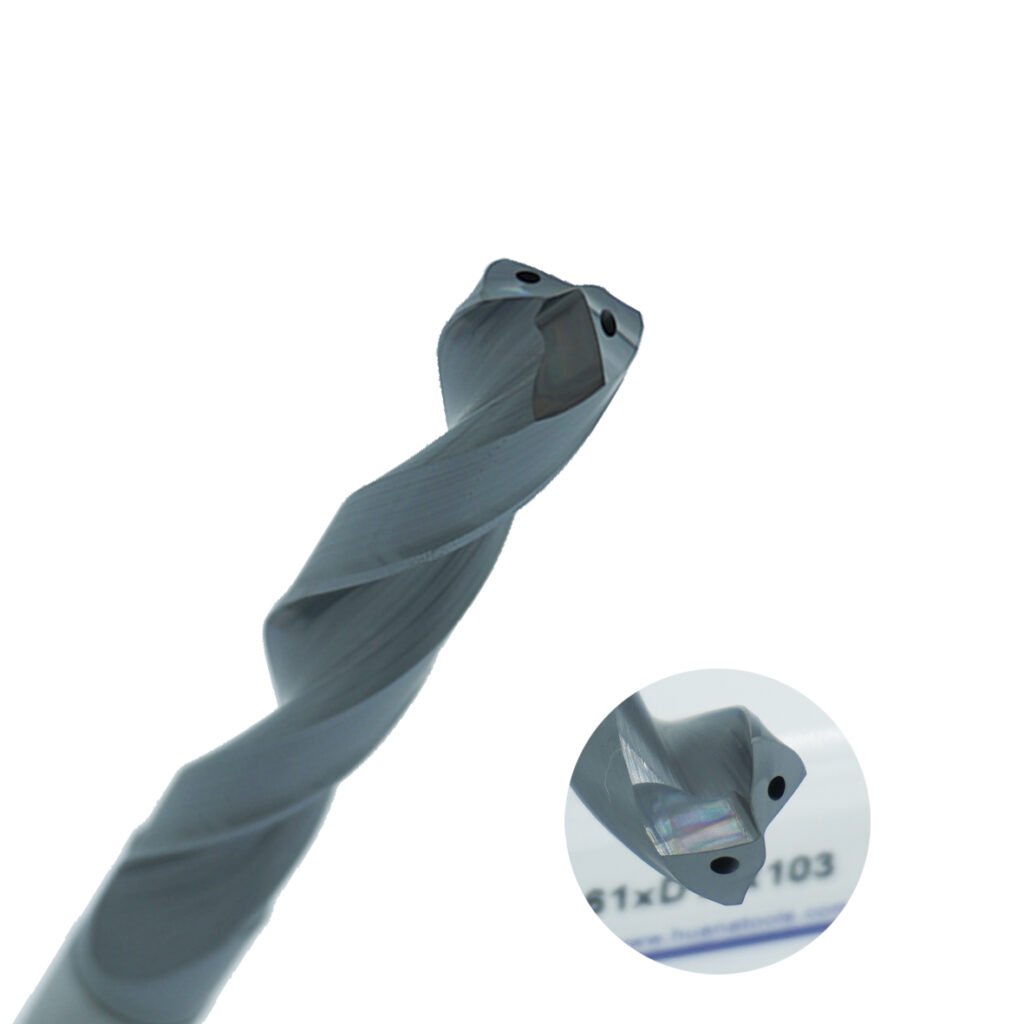
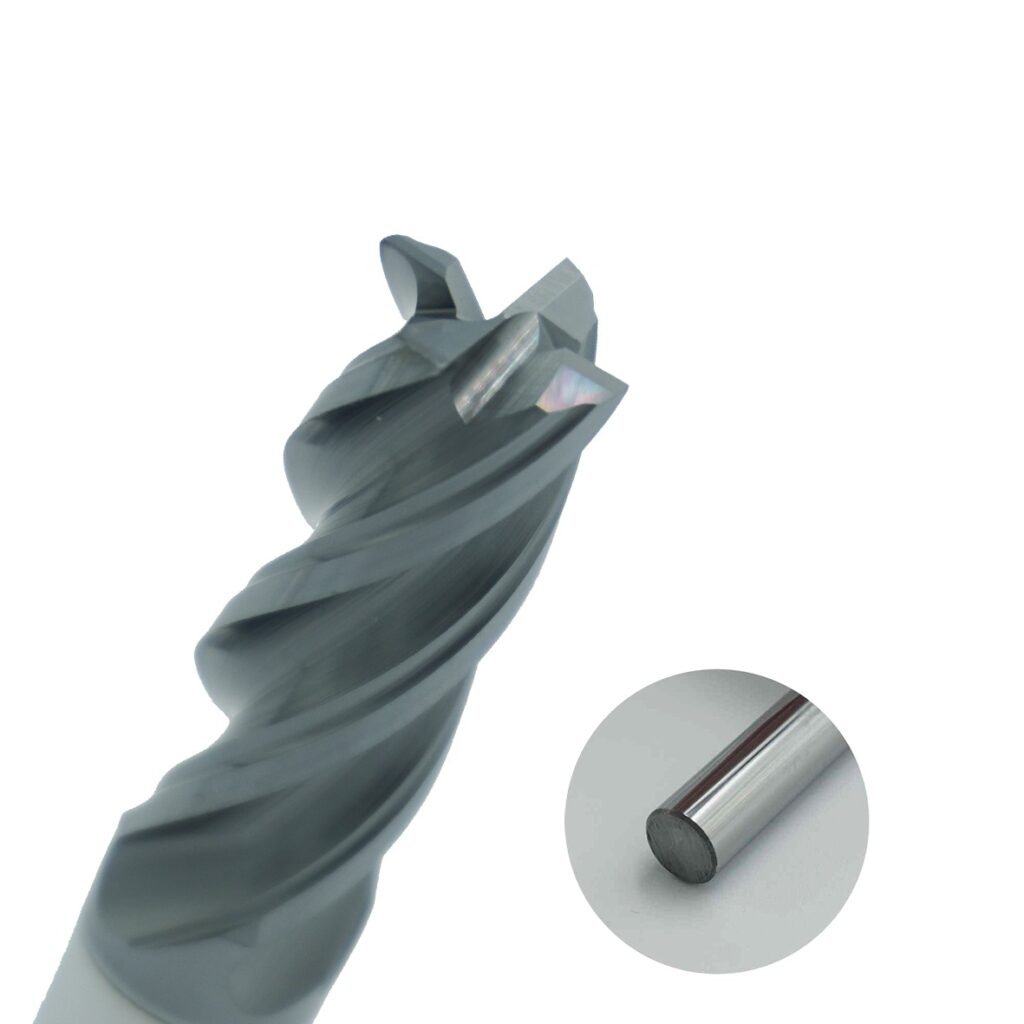
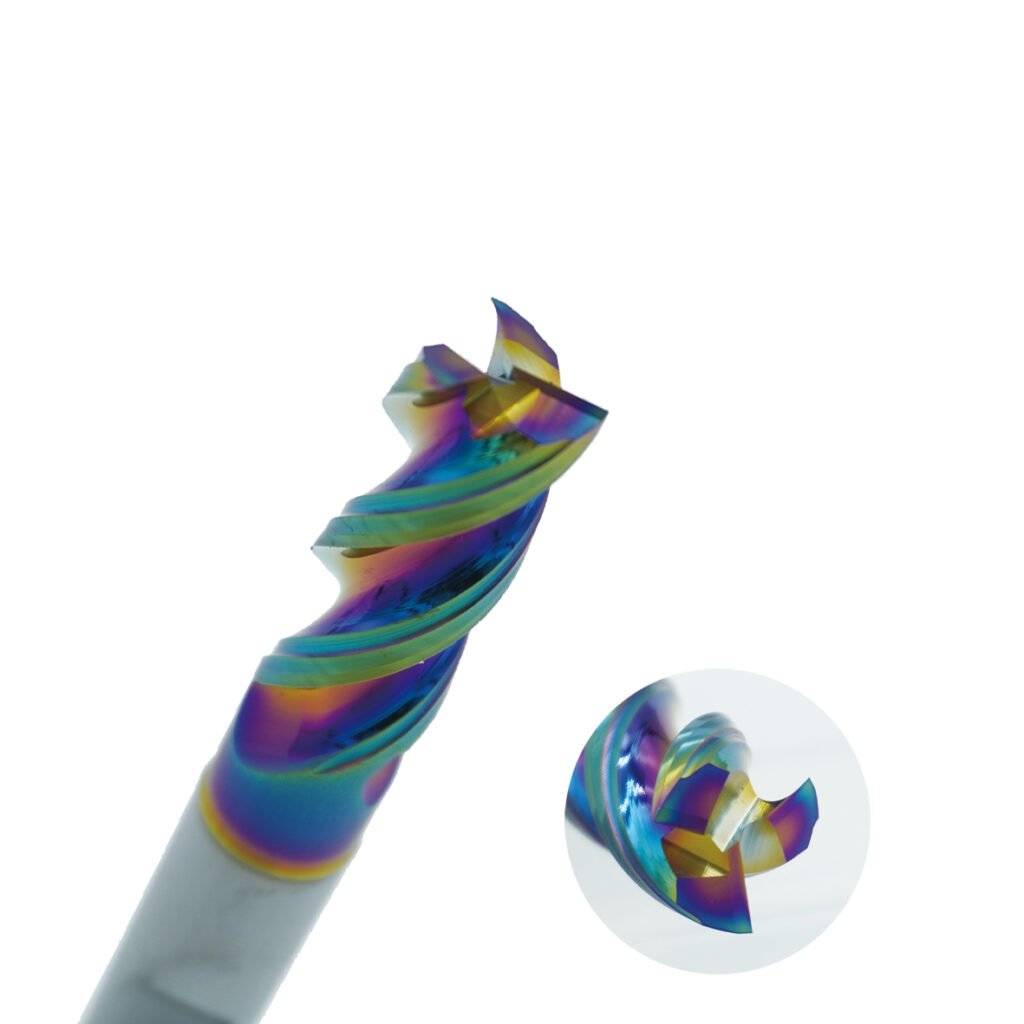
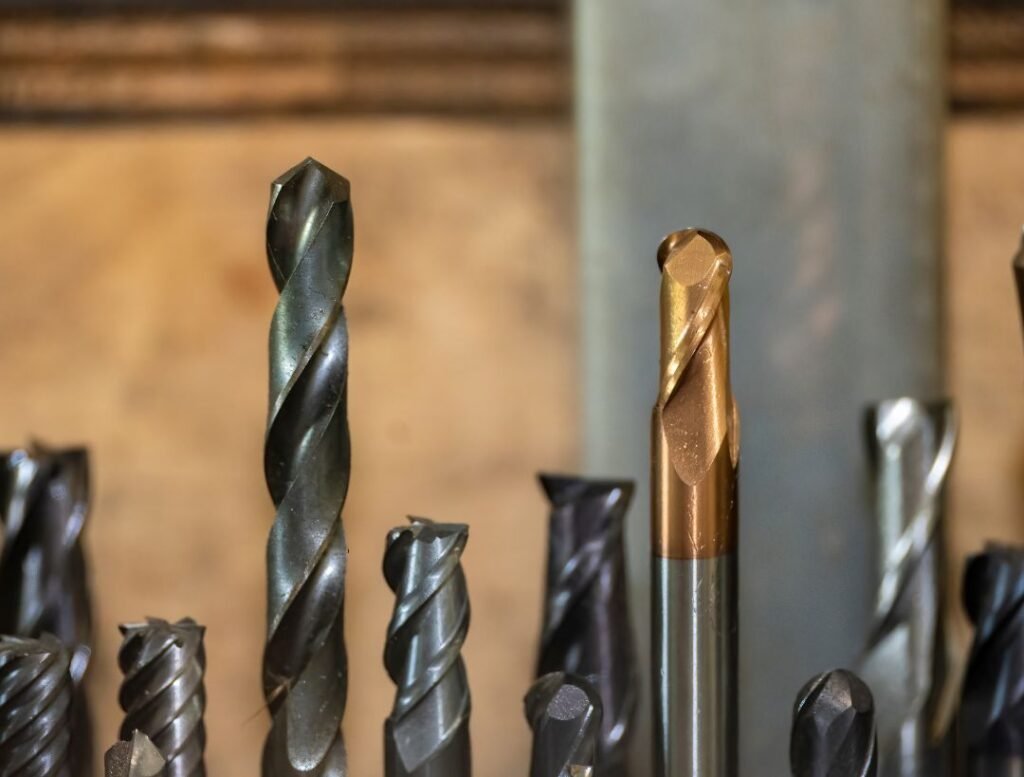
A solid carbide end mill is ground from one piece of carbide. The shank, core, flutes, cutting edges, and end geometry are part of the same body. Because there is no insert pocket, screw, wedge, or assembled cutting edge, the tool can offer excellent concentricity and predictable cutting action. This is especially valuable in small tools, long-reach finishing, hard milling, profiling, and die/mold work.
The drawback is material cost. Carbide is expensive, and a large-diameter solid tool uses a lot of it. Tool replacement also means replacing the whole cutter, or sending it for regrinding and recoating if the geometry allows. For one-off precision work that cost may be acceptable. For heavy roughing on a production line, it can become hard to defend.
An indexable milling cutter uses a reusable cutter body, usually steel, with replaceable carbide inserts mounted in pockets. When an insert edge wears, the operator indexes to a fresh edge or installs new inserts. The cutter body stays in service. This makes indexable tools strong candidates for face milling, shoulder milling, high-feed milling, rough pocketing, and large-diameter work.
The tradeoff is the assembled cutting edge. Insert seating accuracy, screw condition, pocket wear, insert grade, insert tolerance class, and cutter body quality all affect runout and repeatability. A good indexable cutter can produce accurate work, but for micro features or fine finishing, it usually cannot match the edge continuity of a properly held solid carbide end mill.

The quick comparison
Selection factor | Solid carbide end mill | Indexable milling cutter | Practical takeaway |
Typical diameter range | Very small to medium diameters, including micro tools | Usually starts around medium diameters and extends to large face mills | Below about 10 mm, solid carbide is often the only realistic choice |
Rigidity and runout | Very strong when held correctly because the tool is one piece | Depends on insert seating, pocket accuracy, and cutter body condition | Choose solid carbide for the last finishing pass when tolerance is tight |
Cost behavior | Cost rises sharply as diameter increases | Higher body cost at first, lower ongoing insert cost | Indexable usually wins once large diameters and repeatable production are involved |
Tool change | Whole tool change, usually followed by tool length check | Inserts can often be indexed at the machine | Indexable reduces downtime in batch production |
Roughing strength | Good in stable cuts, but brittle under shock | Steel body handles interrupted and heavy cuts well | Use indexable for heavy roughing when the machine and setup can support it |
Surface finish | Excellent in finishing and contouring | Good, but insert-to-insert variation can show in fine work | Keep finishing allowance for solid carbide when surface quality is critical |
Inventory | More complete tools or regrind cycles | Fewer bodies, more insert grades and geometries | Large shops often manage indexable tooling more easily |
This table does not replace supplier data, but it captures the direction of the decision. Small, precise, and stable work favors solid carbide. Large, rough, repeated work favors indexable tooling.
When solid carbide is the better choice
Solid carbide is strongest when the cutter diameter is small. Many indexable tools do not exist below roughly 10 mm, and even where small indexable designs are available, the insert geometry and screw size limit what the tool can do. A 3 mm or 6 mm end mill used for ribs, fine slots, engraving, electrodes, or small mold details needs a continuous, compact cutting structure. Solid carbide is the natural fit.
Precision finishing is another clear case. If the drawing calls for close size control, clean walls, small corner radii, or a consistent surface across a 3D contour, solid carbide gives the process fewer mechanical variables. There is no insert height mismatch and no insert pocket error to print onto the part. With a quality holder and controlled runout, the tool can hold a clean finishing path and reduce the amount of hand polishing or secondary work.
Solid carbide also earns its place in difficult materials, provided the setup is stable. Titanium alloys, stainless steels, nickel-based alloys, hardened steels, and tool steels often benefit from specialized carbide grades, coatings, edge preps, and flute forms. A solid tool can combine a strong core with geometry built for chip control, heat resistance, and vibration reduction. The caution is shock. If the workpiece has scale, cast interruptions, uneven stock, or poor clamping, carbide’s hardness can turn into edge chipping.
For a shop buyer, the solid carbide question should be framed around value per completed feature, not only tool price. If one accurate cutter prevents scrap on a high-value mold insert, aerospace bracket, medical component, or die cavity, the higher unit price may be the cheaper outcome.

When indexable cutters make more sense
Indexable tools become attractive as diameter, engagement, and chip volume increase. A 50 mm, 80 mm, or 125 mm face mill made entirely from solid carbide would be expensive and unnecessary for most production work. A steel cutter body with carbide inserts gives the shop a more practical route to high metal removal rates.
Roughing is the classic indexable application. In heavy shoulder milling, face milling, interrupted cuts, castings, forgings, weldments, and uneven stock, a steel-bodied cutter can absorb more abuse than a large solid carbide tool. Inserts are also available in many grades and chipbreaker forms, so the same body may be adapted to steel, cast iron, stainless steel, or nonferrous material by changing the insert.
The production argument is just as important. When inserts wear, the operator can usually index or replace them quickly at the machine. The cutter length often remains close enough for roughing and semi-finishing, and the tool body stays in the holder. Compared with removing a worn solid carbide cutter, installing a new one, touching off, and rechecking the process, insert changes can save meaningful spindle downtime across a shift.
Indexable cutters also reduce inventory pressure. Instead of carrying several large solid carbide tools and waiting for regrind cycles, a shop may keep one or two bodies and several insert grades. That does not mean indexable tooling is automatically cheaper. Body quality, insert cost, pocket damage, spare screws, torque control, and setup discipline all matter. Still, for repeat work, the cost per cutting edge usually points toward indexable.
Do not force one tool to do the whole job
Modern CNC shops rarely need to choose one family for the entire part. The strongest process often uses both.
A common strategy is to rough with an indexable cutter, leave a controlled finishing allowance, then finish with a solid carbide end mill. The indexable cutter removes stock quickly and economically. The solid carbide tool then cleans up the final wall, contour, pocket floor, or tight feature with better runout control and surface consistency.
This combination is especially useful in mold and die work. A large indexable high-feed mill may remove bulk material from a cavity, a smaller indexable shoulder mill may semi-finish accessible walls, and solid carbide ball nose or corner-radius end mills may finish the contour. Each tool is doing the job it was designed to do.
The same logic applies in production machining. A face mill can establish a datum surface, an indexable shoulder cutter can rough the outside profile, and solid carbide tools can finish holes, pockets, slots, and precision forms. The process becomes easier to control because no single cutter is asked to carry every requirement.

Between roughly 12 mm and 38 mm, many shops run into a gray zone. A solid carbide end mill is available, but not cheap. An indexable cutter may be available, but the diameter may be small enough that insert geometry, body rigidity, or effective flute count limits performance. This is where modular or exchangeable-head milling systems can make sense.

A modular milling cutter uses a reusable shank with a replaceable carbide head. The cutting head behaves more like a short solid carbide tool, while the shank stays in service. Compared with a full solid carbide cutter, it uses less carbide. Compared with an indexable tool, it can offer better edge continuity and often better repeatability for finishing or semi-finishing.
Modular systems are not a universal replacement. The connection must be rigid, the head change must be controlled, and the available geometries must match the work. But for shops that frequently use mid-size end mills, long reach tools, or mixed roughing and finishing operations, they deserve a place in the tooling discussion.
Workpiece material and operation guide
Workpiece or operation | Better starting point | Why it usually works | Watch carefully |
Aluminum slotting below 10 mm | Solid carbide end mill | Small diameter and open flute geometry help chip evacuation | Built-up edge, chip packing, flute polish, air blast |
Steel face milling | Indexable face mill | Larger diameter and replaceable inserts lower cost per edge | Insert runout, cutter body balance, surface marks |
Mold cavity finishing | Solid carbide ball nose or corner-radius end mill | One-piece geometry helps surface finish and dimensional control | Holder runout, tool deflection, programmed stock allowance |
Cast iron roughing | Indexable cutter | Inserts and steel body handle abrasive, interrupted cutting well | Dust control, insert grade, edge toughness |
Titanium or nickel alloy finishing | Solid carbide, if the setup is stable | Dedicated geometry and coating can control heat and deflection | Tool engagement, coolant strategy, chatter, edge chipping |
Unstable rough stock | Indexable cutter | Replaceable inserts and tougher body tolerate interruptions better | Pocket damage, screw torque, insert edge strength |
Mid-size long reach milling | Modular head or solid carbide | Depends on reach, tolerance, and cost target | Connection rigidity, stickout, repeatability after head changes |
Material is only part of the choice. A stable titanium finishing pass and an interrupted titanium roughing pass may need different tools. Likewise, a small steel slot and a large steel facing cut do not belong in the same tooling bucket.
Buying and process checks before you decide
Before approving a new cutter, look beyond the catalog description. Ask what diameter is really needed, how much material must be removed, how much stock will remain for finishing, and how often the cutting edge will be replaced. Check whether the machine spindle, holder, workholding, and coolant delivery can support the tool’s recommended data.
For solid carbide, pay close attention to flute geometry, coating, corner protection, neck relief, overall length, and holder runout. A premium tool can disappoint if it is held in a worn collet or pushed too far out of the holder. For indexable tooling, inspect the body, pockets, screws, insert tolerance, and tightening procedure. Many finish problems blamed on “indexable accuracy” come from dirty pockets, damaged screws, mixed insert batches, or inconsistent torque.
The financial check should include downtime. A solid carbide end mill may look expensive, but if it removes secondary finishing, it can be justified. An indexable cutter may have a higher initial body cost, but if it saves tool-change time and reduces regrind inventory, it may pay back quickly in production.
Decision question | If the answer is yes | Likely tool direction |
Is the cutter below about 10 mm? | Insert mounting becomes impractical or unavailable | Solid carbide |
Is the final pass holding a tight wall, form, or surface finish? | Runout and edge continuity matter more than edge cost | Solid carbide |
Is the cutter diameter large or the cut mainly roughing? | Carbide volume and insert replacement cost dominate | Indexable |
Will operators replace edges many times per shift? | Fast edge changes reduce spindle downtime | Indexable |
Is the job in the mid-size range with frequent tool changes? | Full solid carbide may be costly, but inserts may be too coarse | Modular head |
Is the stock interrupted, scaled, or uneven? | Edge toughness and replaceability become important | Indexable or tougher geometry |
Bottom line
Solid carbide and indexable milling cutters are not rivals in a simple winner-takes-all contest. They solve different problems. Solid carbide is the precision choice for small diameters, fine finishing, stable difficult-material cuts, and features where runout matters. Indexable milling is the production choice for larger diameters, heavy roughing, face milling, interrupted cuts, and jobs where fast insert indexing lowers total cost.
The most efficient shops usually build a sequence: indexable cutters remove the bulk, solid carbide tools protect the final accuracy, and modular cutters fill the middle where cost and repeatability both matter. That approach keeps each tool in its natural role.
If you are comparing milling tools for a new process, HNCarbide can help review the part material, diameter range, finish requirement, and production volume so the cutter choice matches the real machining goal.