Skip to content
Precision Cutting with Carbide Slitting Saws: A Practical Guide for Engineers
Table of Contents

Slotting and parting need to be clean. Material and time are wasted by bad edges, heat marks, and slow feeds. Cuts need to be fast, sharp, and repeatable for engineers working with medical devices, aerospace parts, and fine electronic components.
That is what a carbide slitting saw delivers. It gets all the advantages over HSS in its cleaner cutting ability. It provides better tool life and can stay sharp for a long time, even under conditions involving tough material and tight tolerances.
This guide shares the best application practices for carbide slitting saw blades to achieve optimal results. Selection tips on thickness, tooth count, coating, and much more are included inside. Also discussed are trial runs, customization options, and practical support that will help you maximize every cut.
What Makes Carbide Slitting Saws Different?
Every saw blade does not necessarily produce equivalent results. Carbide slitting saw offers more hardness, more wear resistance, and cleaner finishes than a typical HSS blade. Carbide simply holds up better in shops running hard metals and in shops running grooves that need to be held tightly.
Tungsten carbide reaches hardness levels above HRA 89. That means the cutting edge stays intact longer, even during long cycles or high-speed runs. HSS blades often dull faster, heat up more, and need frequent replacement.
A better finish is another advantage. Smoother slots, fewer burrs, and less polishing after the cut. For parts that go into medical devices or aerospace assemblies, that level of control saves time and prevents rework.
- Tungsten carbide material gives longer edge life
- High hardness reduces wear during extended use
- Sharp finishes lower the need for cleanup or secondary work
This combination of strength and precision makes carbide slitting saw blades a practical choice in any high-precision CNC environment.
Choosing the Right Saw Blade
A good slitting saw is the one that best fits the properties of your material, the type of machine you are using, and your finishing requirements. Choosing the wrong diameter or the wrong coating can result in a poor chip flow, tool wear, or part damage. Precision cutting requires the right combination of blade size, tooth geometry, and speed control.
The performance of the carbide slitting saw is influenced by several factors, and the target is to get a slotting that is as smooth as possible, with very little vibration, no chatter, and a surface finish that satisfies the specifications the first time.
Diameter, Thickness, and Tooth Count
Every cut depends on blade geometry. A larger diameter gives more reach but adds flex. A smaller diameter increases rigidity but limits depth. Most jobs require a diameter in the range of 40 mm to 160 mm, while thicknesses for thin grooves start at 2mm.
Tooth count is chosen based on the given material. More teeth give smoother finishes on thin stock, but increase heat. On the contrary, cutting with fewer teeth helps to get rid of chips quickly while making the cut deeper or dealing with difficult-to-cut materials such as stainless steel. Balanced selection prevents edge loading and keeps the cut clean across the full depth.
Coating Options for Materials
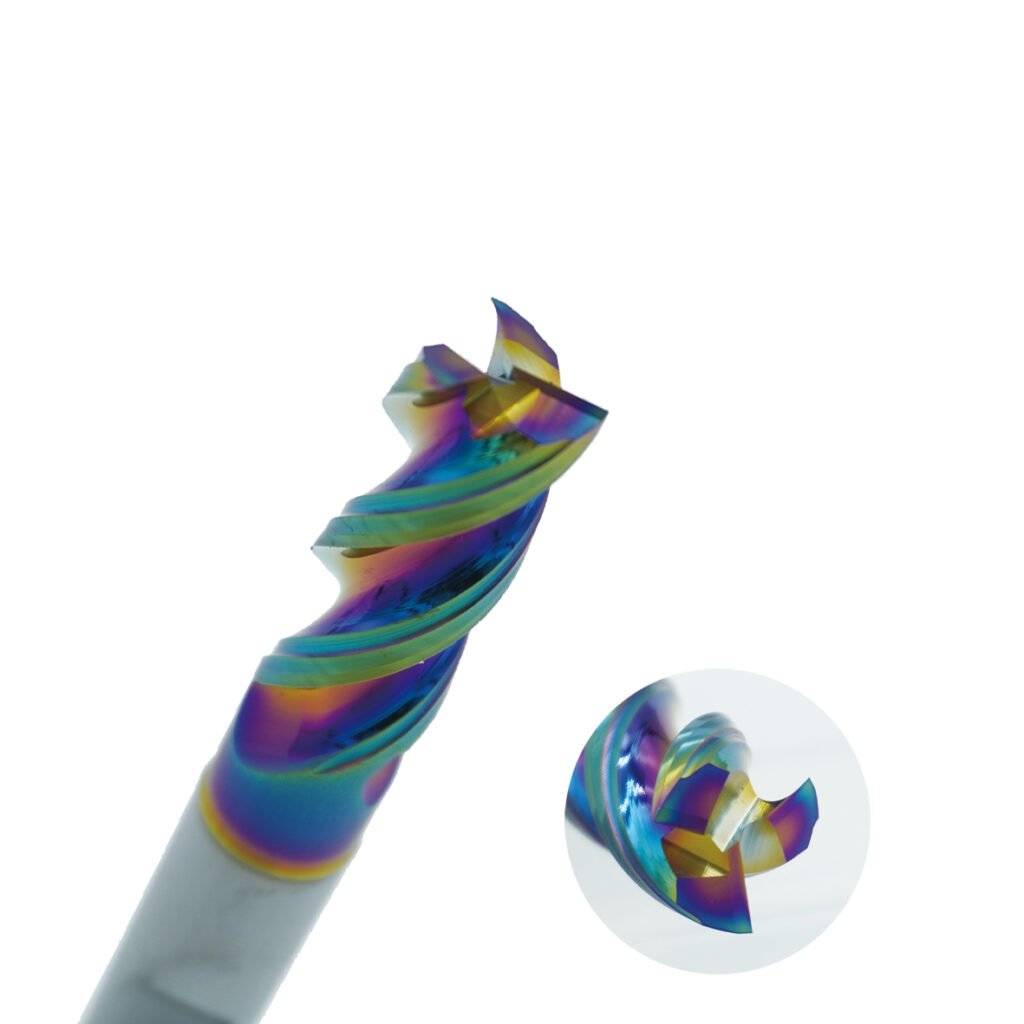
Material choice guides the coating. TiN works well on general steels and keeps costs low. TiAlN is more suitable for operations that need high-temperature resistance, such as high-speed milling of alloy steels or stainless steel. Diamond coatings help to get the best results on non-ferrous materials, such as copper, aluminum, or graphite.
Each of the coatings assures the longer life of the tool and better chip control. Even if the saw tooth is sharp, without it, the saw tool will fail early in long-cycle jobs. For medical parts or aerospace grooves, the right coating keeps tolerances tight over repeat runs.


Applications in Engineering
Precision parts in the medical, aerospace, and electronics industries are so precise that they cannot have any mistakes. Even the smallest slot, groove, or space has to be within very narrow tolerances and with a clean edge. Carbide slitting saws not only provide that accuracy but also are able to withstand the production load.
HNCarbide tools are already running in Swiss-type lathes and precision CNC mills across Germany, helping teams meet both quality demands and delivery targets.
Slotting and Grooving in Medical, Aerospace, and Electronics
Slots in surgical guides, grooves in titanium airframe parts, and fine channels in sensor housings all require exact blade control. A 2mm slitting saw cuts narrow features without flexing, even at full depth. The right tooth count helps clear chips and prevent heat marks, which is critical for parts used in implants or electrical enclosures.
Parts made for medical or aerospace use must avoid burrs, edge wear, or dimensional drift. Carbide blades maintain edge stability and produce a smooth finish, reducing the need for rework or polishing.
Cutoff Operations on High-Precision Components
Cutoff tools need to exit cleanly. Many medical pins, electronic connectors, or aerospace brackets rely on controlled parting cuts to maintain structure and surface integrity. Carbide slitting saws avoid pull-out and smearing, giving each part a clean edge that’s ready for inspection or assembly.
Thin-walled parts benefit from the rigidity of carbide and the clean slicing action of fine-pitch saws. Shops using Swiss lathes or multi-axis mills run these blades to cut clean without damaging adjacent features.
HNCarbide provides slitting saws used in Swiss lathe shops and precision milling centers that serve high-spec industries.
Trial Runs & Sample Test Service
Even the best carbide slitting saw can behave differently depending on the machine, material, and setup. That’s why test runs matter. Real results help confirm speed, finish, and tool life before going into full production.
HNCarbide offers support for small-batch trial runs. These tests help validate tool fit, tooth geometry, and cutting parameters on your actual machine. For engineers working with high-spec materials or custom part profiles, this step reduces the risk of tool mismatch or premature wear.
Many German CNC shops run trial setups for medical tubing, sensor housings, or small aerospace components. Tool feedback from these runs often leads to quick tweaks in speed or insert geometry, which improves both performance and finish.
Our technical team supports small-batch trial runs for accuracy validation and long-term confidence.
Custom Solutions for Special Applications
Many production lines need saw blades that match a specific bore, profile, or clearance requirement. A medical groove may call for a non-standard thickness. An aerospace bracket might need a blade with multiple cutting profiles. In these cases, off-the-shelf solutions are not effective, but custom tooling is.
HNCarbide supports engineers who need more than catalog options. Custom carbide slitting saw blades can be made with keyways, step geometries, or altered tooth forms to match complex slotting needs. Engineers across Germany use these tailored tools in Swiss-type lathes, high-speed mills, and multi-axis CNC setups for grooving, slot isolation, or fine cut-off work.
Custom Feature | Purpose | Common Applications |
Internal bore sizes | Fit non-standard slitting saw arbor dimensions | Compact CNC mills, Swiss lathes |
Keyways or drive notches | Improve stability and torque transmission | Deep slotting, heavy grooving |
Multi-tooth profiles | Allow multiple cutting widths in one pass | Electronic housings, aerospace brackets |
Special thicknesses | Support unique slot widths | Medical implant grooves, sensor slots |
Custom coatings | Match material (TiAlN, diamond, etc.) | Aluminium, titanium, copper, composite cuts |
Local Service Makes a Difference
High-performance cutting is powerfully efficient if the right tool is chosen, but it does not guarantee the best performance without good service. Allied environments of CNC machines are very volatile. Even a perfect selection of a carbide slitting saw might require some adjustments after it is accepted in real workholding, due to material inconsistency or thermal load. Local service is the answer to this problem.
Precision industries in Germany implement tight delivery schedules and keep their shopfloors lean, with little margin for trial and error. Engineers require face-to-face advice, fast answers, and tools that accommodate process feedback. HNCarbide acts as a bridge for those who are in need of hands-on support and quality tooling, so each setup becomes more comfortable and every result is backed by knowledge.
Technical visits
Real-time openness and on-site visits are inextricably linked. For example, a slitting saw problem can be caused by not only a blade geometry error but also a wide range of other things. Machine setup, part material, and clamping stability changes can also affect the cut to be affected. Therefore, technical visits are necessary to facilitate the quick solution of these issues.
HNCarbide field engineers are those who come with their experience and hands-on knowledge. They do machine condition checks, observe tool behavior during a live run, and give suggestions that are in line with your actual process instead of general and impersonal catalogue-based advice.
Many adjustments happen right there on the floor:
- Change to a more rigid slitting saw arbor
- Switch to a coated carbide slitting saw for better heat control
- Reduce runout or adjust tooth load for cleaner cuts
These small changes often lead to fewer tool changes, cleaner edges, and faster part completion.
Walk-In Support
Some questions need a face-to-face answer. Walk-in support gives engineers and machinists a chance to bring parts, drawings, or worn tools directly to the technical team. No email chain, no delays, just focused problem solving with the right people in the room.
HNCarbide provides face-to-face consultations at its regional service hubs. These centres of local support in Germany are highly used by German car manufacturers for various purposes like carbide slitting, saw blade checking, test sample geometries, or comparing 2mm slitting saw options side by side.
The hands-on approach makes it far easier to communicate little things like part tolerances, fixturing limits, or cutting problems, which do not appear in data.
Typical walk-in issues are:
- Choosing the blade geometry that more capably fits the slot width or the part material
- Inspecting the tool wear pattern to decide the source of the problem
- Deciding on saw bodies or insert setups that are more suitable for chip flow
The walk-in support modality accelerates the decision process and imparts a better understanding of error prevention in the future.
Application Discussion
Every application brings its own difficulties. A saw that is very efficient for one part may be problematic for another because of the material’s hardness, available spindle speed, or depth restrictions. Hence, application discussions play a significant role. They make it possible to relate the tool to real-life job applications.
The HNCarbide team is always ready to help those engineers who deal with the preparation of the part drawings, cutting goals, and machine limitations. These talks are usually the source of picking the most suitable tool, finding the best slitting saw speeds and feeds, and the maximum tool life to satisfy. The emphasis is still on the result, which is clean slots.
Engineers often bring up questions like:
- Which carbide slitting saw works best for stainless or copper?
- Will a fine-tooth blade cut clean or clog during long runs?
- Should the cut start with a 2mm slitting saw or a wider profile for clearance?
Application discussions give you a more straightforward path to results before you load the tool into the spindle.
Field Feedback Loop for Continuous Improvement
Tooling doesn’t just process with delivery. Good feedback starts with the moment a carbide slitting saw is put on production. Chips, finish quality, and tool wear give truthful information. HNCarbide is creating a continuous loop between field performance and future tool upgrades.
The designs of the saw are changed with the flow of information that machine teams in Germany transfer directly. These include insert geometry and coating improvement.
Consequently, more and more innovative tooling occurs as times go by. Each batch of saws receives not only specs but also shop-floor experience.
Feedback often leads to:
- Adjusted rake angles for better chip evacuation
- New coatings to improve tool life in high-temp materials
- Bore or slitting saw arbor tweaks for tighter spindle fits
This loop builds long-term trust. Shops don’t just receive a product—they help shape its future.
Conclusion
Precision cutting is influenced by several factors. It requires not only a good tool but also proper support and the ability to adjust when there are changes in the production environment. A carbide slitting saw provides the accuracy, edge stability, and durability that engineers require in the various industries that are very precise and still have some questions.
HNCarbide backs every saw with practical support, field insight, and trial testing when needed. From standard slitting saw blades to custom-built options with exact tooth geometry, every tool is matched to real application needs.
Looking to improve your slotting or cutoff process? Contact HNCarbide for custom recommendations or a trial sample that fits your machine, material, and part tolerances.