Skip to content
Mastering Milling Cutters: How to Choose the Right One for Different Materials
Table of Contents
CNC machine tools now make up almost 80% of the total global machine tool market, showing how important precision milling is to today’s manufacturing. In Germany’s industrial economy, milling gives a strong advantage where success is measured by quality, repeatability, and efficiency.
And yet, the best machines in the world can still produce less than optimal results with an inappropriate cutter. Geometry, coating, and material compatibility will determine the success or failure of a project.
Choose properly, and your end milling cutters increase tool life, cutting cleanly while meeting or exceeding tight tolerances. Choose poorly and you get chatter, wear, and rework.
This guide is made for pros who count on gear that matches their effort. We’ll show you how to pick the right cutter.
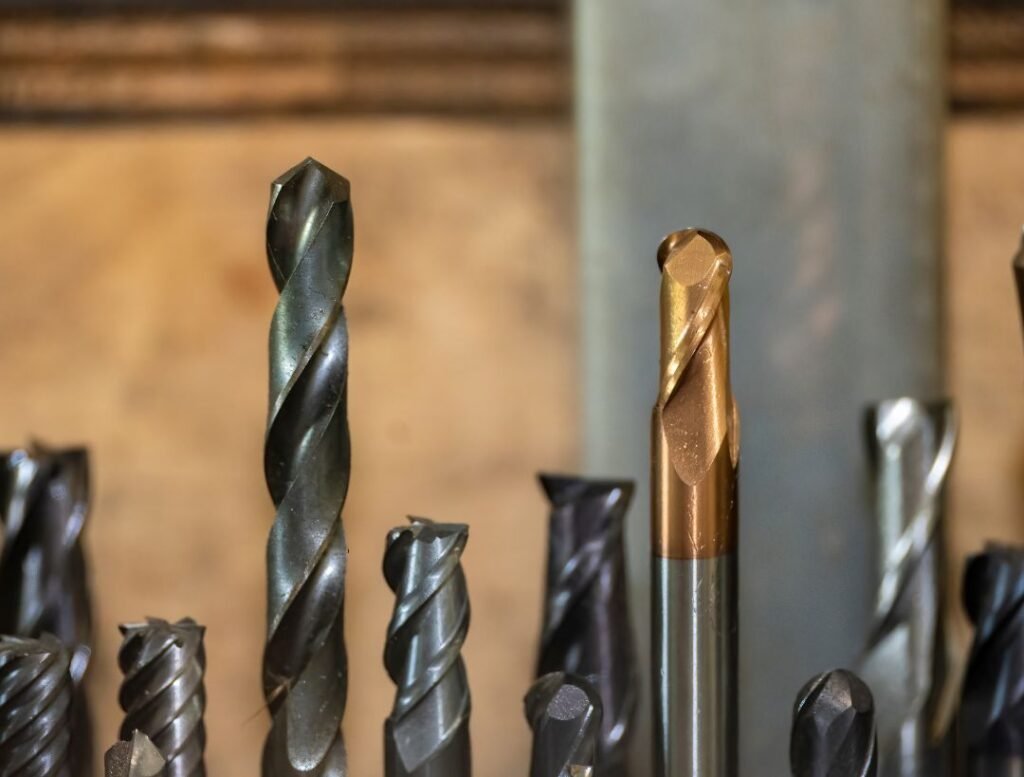
Overview of Milling Cutter Types
CNC machining is only as precise as the tool at the spindle. With hundreds of geometries on the market, knowing the functional differences between milling cutter types helps match tool to task, especially when tolerances are tight and materials vary.
Milling Cutter Type | Geometry & Edge Style | Best for Application | Common Workpiece Materials |
Square End Mill | Flat tip, sharp corners | Slotting, contouring, shoulder milling | Mild steel, cast iron, plastics |
Ball End Mill | Hemispherical tip | 3D contouring, surface finishing, mold cavities | Tool steel, stainless steel, aluminium |
Bull Nose End Mill | Flat tip with radiused corners | Blending, semi-finishing, reducing corner chipping | Alloy steel, titanium, pre-hardened steel |
Lollipop End Mill | Circular cutting head on a long neck | Undercuts, deep pockets, complex contours | Hardened steel, aerospace components |
Roughing End Mill | Serrated cutting edges | Fast material removal, rough passes | Carbon steel, cast iron, stainless steel |
Each of these tools can be further optimized with specific flute counts, helix angles, and coatings.
1. Square End Mill
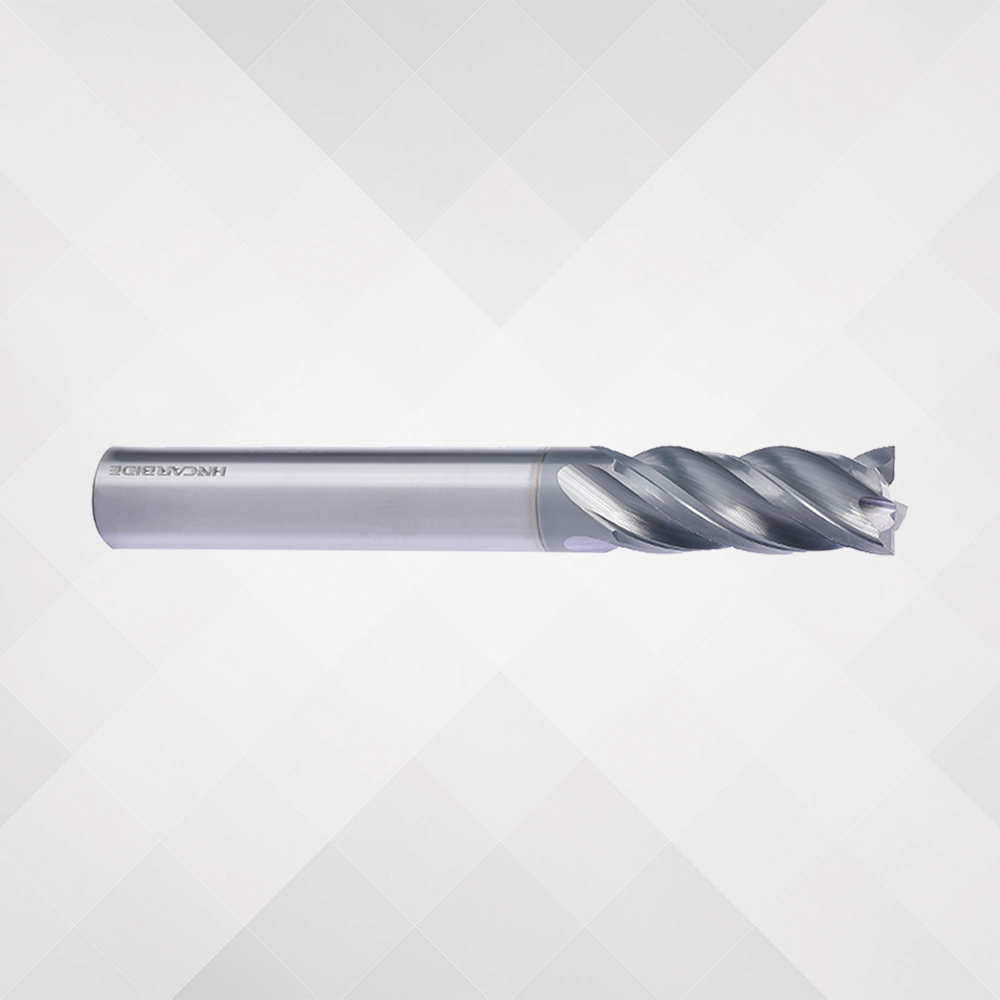
The square end mill is the most fundamental tool in any machinist’s inventory. It is designed with a flat cutting face and sharp 90° corners. It excels at precision slotting, profiling, and shoulder milling where crisp internal corners and flat surfaces are required.
In German CNC operations, square end mills are frequently used in mold base machining, component housing outlines, and planar surfacing of steels, irons, and engineered plastics. They’re ideal for parts requiring true geometrical accuracy and well-defined transitions between surfaces.
Tooling Considerations:
- Geometry:Choose a tool with polished flutes for aluminium or a variable helix to suppress vibration in steel.
- Flute Count:2-flute for non-ferrous metals, 4-flute or more for harder materials and tighter surface finishes.
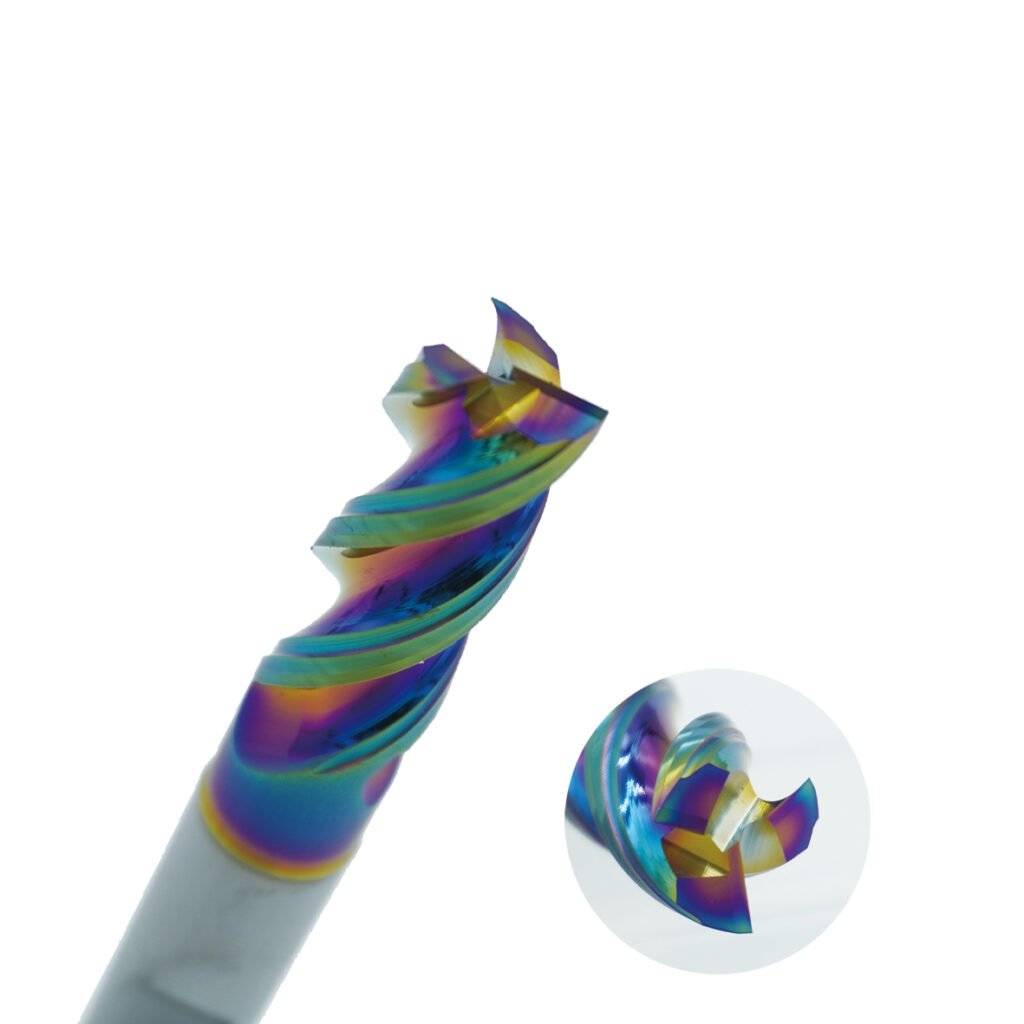
- Coatings:Apply TiAlN or AlCrN for heat resistance in steels; ZrN coating is better suited for non-ferrous metals like aluminium.
Square end mills can make a clean cut across roughing and finishing passes if there is rigidity in the setup and enough coolant or air blast, preferably sourced with DIN-compliant tolerances.

2. Ball End Mill
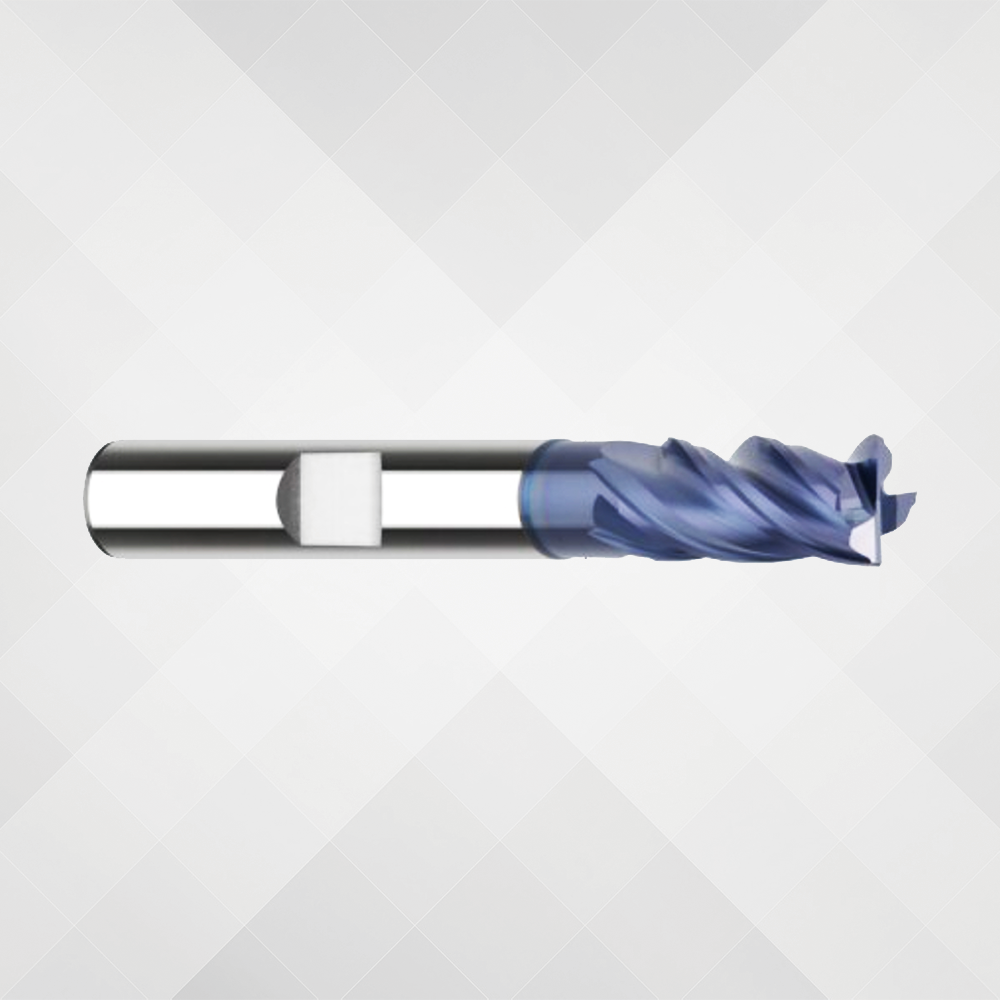
The ball end mill has a hemispherical cutting tip intended for high-precision contouring of 3D surfaces. This is the preferred tool among mold makers, die manufacturers, and aerospace part suppliers, essentially anyone working with curved profiles or fine surface detail.
It is chosen essentially for the reason that it removes material inside a contour or pocket where sharp internal corners may cause stress concentrations. Surface finish with minimal tool marks left from multi-axis operations is achievable due to rounded geometry, which also permits fine surface finishing since fillet tools can easily cut close to a surface.
Ball mills are often used in conjunction with high-speed finishing techniques when sub-μm Ra values are required, and where tolerances and aesthetic finishes are uncompromising.
3. Lollipop End Mill
The lollipop end mill, which takes its name from its spherical cutting head and the long neck, is designed to perform undercutting and also for the complicated internal shapes that are beyond the reach of conventional tools. Due to its rounded shape, the tool can cut curved walls, make passages behind obstacles, and access tight spots, thus being the perfect tool for 5-axis CNC setups and advanced mold machining operations.
This tool is often applied in the finishing of deep cavities, turbine blades, medical implants, and die-repair work where clearance is limited and access angles are non-linear. The necked shank design prevents tool-body contact while ensuring the ball-end makes full engagement with the workpiece.
Lollipop cutters are usually produced from micro-grain carbide, which has high rigidity so that they can reduce the deflection in long-reach applications. They require a very accurate spindle and clean programming to avoid the situation of tool breakage, especially when they are working with hard steels or titanium alloys.
Although this tool is not so common in the daily milling work, the lollipop end mill still finds its place as a perfect substitute when the geometry is such that backside machining or sculpted internal channels are needed.
4. Roughing End Mill
Roughing end mills are designed to remove large amounts of material quickly. Their serrated cutting edges, often referred to as “corn cob” teeth, break up chips and reduce cutting forces. This allows for aggressive passes without overloading the spindle or compromising tool life.
German machine shops frequently rely on roughers during the initial stages of machining high-volume parts, forged blocks, and die components. These tools perform exceptionally well when paired with rigid machines and high-torque spindles, helping reduce overall cycle time and preserving finishing tools for later stages.
Geometry matters, too. Coarse pitch teeth are superior to soft materials such as carbon steel or cast iron, while fine pitch versions are more suitable for tougher alloys. Flute design should facilitate maximum chip evacuation to avoid heat accumulation or tool breakage that may occur in case of deep cuts.
Surface finishes that come from the roughing tools are generally of a lower quality. Coatings such as AlTiN or AlCrN give extra power to steel and hardened alloys, while ZrN is still considered the best choice in non-ferrous metals at high speeds.
Material-Specific Selection Guide
Each material contains its own unique set of challenges that come with machining, for example, built-up edge in aluminium, work-hardening in stainless steel, or heat resistance in hardened alloys. A perfectly matched cutter enhances the surface finish, minimizes the tool wear, and also keeps machines working normally.
Material | Recommended Cutter Type | Geometry Notes | Best Coating | Why It Works |
Aluminium | Square end mill, ball end mill | Sharp edge, high rake, polished flute | ZrN coating | Prevents built-up edge, allows high-speed machining |
Stainless Steel | Bull nose end mill, square end mill | Unequal helix, variable pitch | TiAlN or AlTiN | Minimises vibration, reduces work hardening |
Hardened Steel (>45HRC) | Ball end mill, lollipop end mill | Multi-flute, small nose radius, high rigidity | AlCrN | Handles high temperatures and abrasive conditions |
Titanium Alloys | Bull nose end mill, lollipop end mill | Rigid geometry, reduced engagement per tooth | AlTiN or AlCrN | Manages heat, avoids tool deflection |
Cast Iron | Roughing end mill, square end mill | Coarse pitch flutes, straight edges | TiN or uncoated (dry cut) | Resistant to abrasive particles, performs dry cutting |
Plastics/Composites | Square end mill, ball end mill | Razor-sharp edge, polished flute | ZrN coating | Reduces melting, improves chip evacuation |
Understanding Hardness & Machinability
The choice of a tool should be backed up by a good knowledge of the hardness of the workpiece and how it influences the cutter’s performance. The degree of hardness of the material determines the extent of tool wear, the heat generated, and the formation of chips.
Machinists working with DIN-grade materials in German facilities tend to use HRC (Rockwell Hardness) for hardened steels and HB (Brinell Hardness) for softer metals such as aluminium and cast iron when they talk about the hardness of these materials.
Materials with higher hardness require cutting tools with advanced coatings, sharper geometries, and higher rigidity. However, softer materials need high rake angles and polished flutes to avoid chip sticking and smearing.
Why hardness matters:
- More heat → Faster tool wear
- Higher resistance → Slower feed rates
- Brittle surface → Increased chipping
- Elastic deformation → Reduced accuracy
- Built-up edge → Poor surface finish
Matching cutter design to hardness allows manufacturers to extend tool life, lower scrap rates, and maintain consistent cycle times.
Testing Before Bulk Orders
Tool performance varies significantly depending on material type, machine dynamics, and part geometry. No datasheet or catalog spec can fully predict how a cutter will behave under real-world shop conditions. That’s why sample testing is not just recommended—it’s essential.
Running a small batch or test cut allows evaluation of surface finish, chip formation, tool wear, and cutting noise. Subtle issues like micro-chipping, unexpected burrs, or thermal deformation often emerge only under live conditions.
HNCarbide provides sample testing support to validate cutter performance before committing to full-volume orders. This process helps eliminate costly mismatches and ensures that every end milling cutter, ball end mill, or bull nose end mill selected is suited to its actual application.
Benefits of testing:
- Predictable performance
- Lower scrap rate
- Confident tooling decisions
- No bulk investment errors
- Quicker production approval
German CNC shops focused on DIN-compliant workflows and ISO production standards benefit most from taking this extra step when machining new materials or updating tool paths.
Common Mistakes in Tool Selection
Anyone experienced in machine work can make a mistake if they hurry tool selection or become too dependent on general-purpose solutions.
Using Standard Cutters on Specialized Materials
Generally, the common mistake is the use of standard end milling cutters for materials that are very different, like Inconel, duplex stainless, or pre-hardened tool steels.
Those materials are not just the ones that need to have a durable substrate, but also require the right geometries and coatings, which help with heat, chip evacuation, and the tool load.
Overlooking Helix Angle and Flute Design
Another common issue is neglecting helix angle and flute design. High-helix tools might work well in aluminium but can worsen vibration in stainless steel. On the other hand, low-helix or straight-flute tools may reduce chatter in cast iron but lead to chip packing in softer metals.
Ignoring Coating Compatibility
Ignoring coating compatibility can also shorten tool life. Applying ZrN coating to hardened steel instead of non-ferrous metals reduces effectiveness and accelerates wear. In the same manner, the use of uncoated tools in titanium alloys also results in the generation of excessive heat, which in turn leads to the risk of galling and built-up edge, due to the friction between the surfaces of the tool and the workpiece.
Mismatched Tool Diameter and Reach
Most of the time, tool diameter and reach are not suitable for the geometry of the part, which results in deflection or chatter during extended toolpaths. The choice of a tool should always take into consideration the depth of cut, machine rigidity, and available spindle speed, etc.
Avoiding these errors means going over tool specs twice for every job, verifying the real-world setting with catalog assumptions, and following cutter technologies that are relevant to the German CNC industry.
After-Sales Support: What to Expect
Precision tooling doesn’t end at delivery. Once cutters hit the spindle, real-world variables, such as material batches, machine dynamics, and unexpected heat loads, can affect performance. Basically, when a problem comes up, you are able to decide if after-sales support will help you get the right partner or just a supplier of goods.
It is at failure diagnosis that the major role of task duration minimization and the localizing of the sources of wear, chipping, or premature breakage comes in. Instead of trying to guess, engineers can go over the wear patterns, cutting paths, and material interaction in order to decide whether to refine process parameters or turn to a more appropriate cutter geometry, for instance, choosing a bull nose end mill or lollipop end mill according to the profile.
With over 15 years in operation, HN Carbide’s post-sale support ensures customers never work alone. That experience means solutions are based on thousands of field-tested scenarios, not guesswork. German CNC buyers who have to meet DIN-grade tolerances and deadlines can rely on the support of experienced personnel who understand both tool life and production schedules, and are therefore able to help them.
Conclusion
Targeting the perfect milling cutter has a great effect on the accuracy, the life of the tool, and the efficiency of the production. This manual has touched on the basic cutter types, suggestions for materials, and the most frequent errors to avoid.
With 15 years of experience in the field, HNCarbide provides sample testing, expert guidance, and after-sales support to make sure you work with confidence. Contact us now for a tailored solution based on your material, application, and production plans. Every tool change can be a success.