Mastering End Mill Speeds and Feeds: A Precision Guide for CNC Machining Excellence
Table of Contents

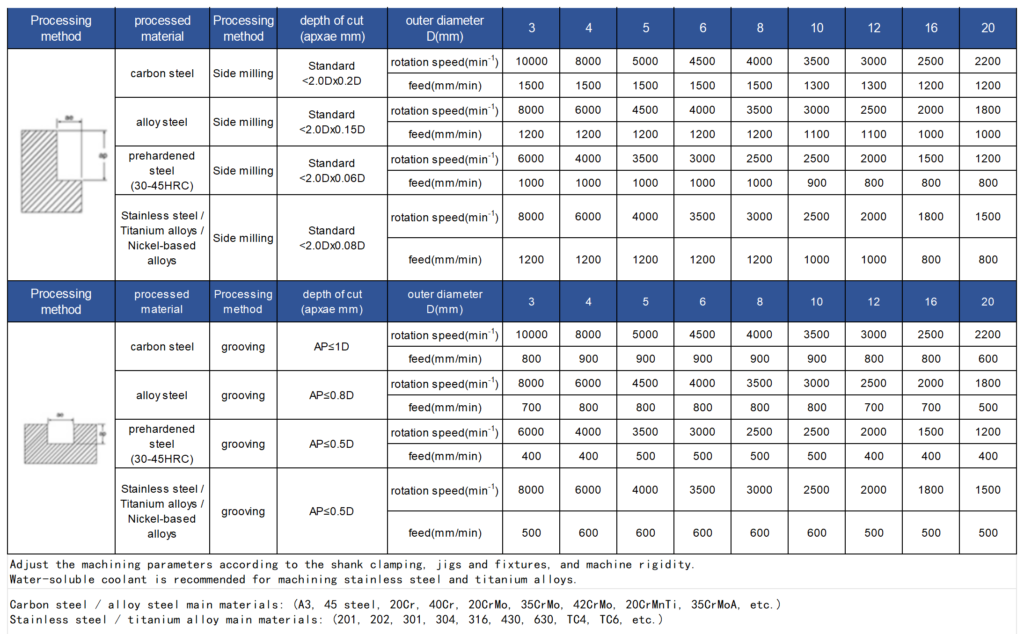
Optimizing your end mill speeds and feeds isn’t just a matter of achieving faster cuts—it directly influences tool life, part finish, and overall efficiency in your CNC machining operations. Yet, many machinists and shop owners rely on outdated rules of thumb or guesswork, leading to premature tool wear, surface imperfections, and wasted material.
In this guide, we dive deep into end mill speed and feed optimization, providing practical guidelines, data-driven insights, and calculators to ensure every cut counts. Whether you’re using 2-flute carbide end mills, helical solutions end mills, or solid carbide square end mills, this article will help you fine-tune your milling strategy.
Why Speeds and Feeds Matter
When you talk about CNC milling, “feeds and speeds” is more than jargon—it’s the formula for precision and productivity. The cutting speed (typically measured in meters per minute) and the feed rate (millimeters per minute) govern how your tool interacts with the workpiece.
Common Misconceptions:
- Faster spindle speeds always equal faster production.
- Feeds can be increased indefinitely if the machine is rigid.
- Coating alone solves tool wear issues.
In reality, achieving optimal cutting performance requires considering tool geometry, material properties, machine rigidity, and lubrication.
Basic Concepts
Before you start adjusting parameters, let’s define key terms:
Term | Definition |
Cutting Speed (Vc) | The speed at which the workpiece surface moves past the cutting edge (m/min). |
Feed Rate (F) | Distance the tool advances per minute of cutting (mm/min). |
Spindle Speed (RPM) | Rotational speed of the end mill (rev/min). |
Chip Load (fz) | Material removed by each cutting edge per revolution (mm/tooth). |
Formula Overview:
RPM Calculation:
RPM=1000×Vcπ×D\text{RPM} = \frac{1000 \times Vc}{\pi \times D}RPM=π×D1000×Vc
Where DDD = tool diameter (mm), VcVcVc = cutting speed (m/min).
Feed Rate:
Feed Rate (mm/min)=RPM×Number of Flutes×fz\text{Feed Rate (mm/min)} = RPM \times \text{Number of Flutes} \times f_zFeed Rate (mm/min)=RPM×Number of Flutes×fz
Using a Ø10mm, 2-flute carbide end mill:
Material | Surface Speed (m/min) | Feed per Tooth (mm) | RPM | Feed Rate (mm/min) |
Aluminum | 400 | 0.12 | 12732 | 3056 |
Mild Steel | 200 | 0.06 | 6366 | 1528 |
Stainless Steel | 120 | 0.04 | 3820 | 915 |
This table highlights how material drastically affects speed, feed, and the resulting cutting conditions.
How to Use an End Mill Speed & Feed Calculator
Modern end mill speed feed calculators take the guesswork out of cutting.
Here’s a step-by-step workflow:
1.Select Tool Diameter: Common sizes include 1/4 end mill bit, 12 mm end mill, or 2 flute end mill aluminum.
2.Specify Number of Flutes: End mills may have 2, 4, or more flutes. More flutes require slower chip load per tooth.
3.Choose Material: Different metals need different cutting speeds. For instance, aluminum can be milled much faster than stainless steel.
4.Input Coating or Tool Type: Carbide vs HSS, PVD coatings, and helix angles influence optimal feeds.
5.Calculate RPM & Feed Rate: The tool calculates precise RPM, feed per tooth, and feed rate, helping avoid chatter or excessive wear.
Using calculators ensures consistency, especially for specialized end mills like tapered end mills or roughing end mills designed for high material removal rates.
Factors Influencing Cutting Parameters
Several variables determine how aggressively you can run an end mill:
a) Tool Geometry
- Diameter: Larger tools can remove more material but require slower speeds to maintain cutting edge integrity.
- Flute Count: More flutes mean a smaller chip per flute, requiring slower feed per tooth.
- Helix Angle: Influences chip evacuation and surface finish.
b) Coatings
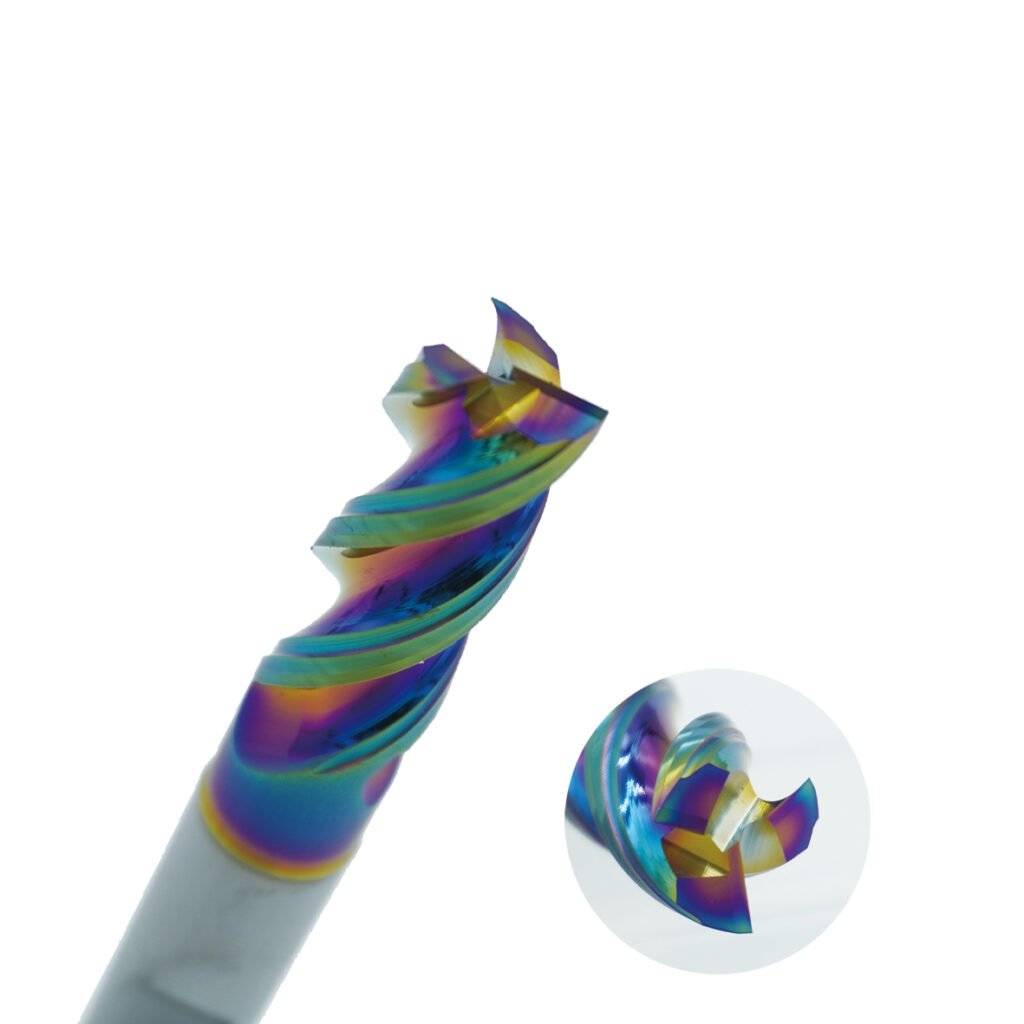
PVD and CVD coatings enhance wear resistance and allow higher speeds, especially in solid carbide end mills.
c) Machine Rigidity
Even the best end mill feeds and speeds calculator cannot compensate for a flexible setup. Rigid fixturing reduces chatter.
d) Lubrication & Coolant
Coolant affects heat dissipation. Aluminum machining often benefits from minimal lubrication, while stainless steel requires flood coolant.
Practical Guidelines
End Mill Depth of Cut Rule of Thumb
Depth of cut is critical to avoid deflection or tool breakage. Here’s a practical reference:
Tool Diameter | Axial DOC (×D) | Radial DOC (%D) | Application |
6 mm | 1.5×D | 25–40% | Light finish |
10 mm | 2×D | 30–50% | General purpose |
16 mm | 1.5×D | 20–30% | Heavy roughing |
Tips:
- Reduce radial engagement for hard materials.
- Increase axial DOC cautiously for high-rigidity machines.
- Always check if the tool is center cutting end millfor plunging operations.
Adjustments by Material
Material | Typical Cutting Speed (m/min) | Feed per Tooth (mm) | Notes |
Aluminum | 350–450 | 0.10–0.15 | High-speed milling possible |
Mild Steel | 180–220 | 0.05–0.08 | Use coolant, avoid chatter |
Stainless Steel | 100–150 | 0.03–0.05 | Slower speed, smaller chip load |
Troubleshooting Poor Surface Finish
Even experienced machinists encounter surface finish issues.
Common causes:
1.Wrong Feed/Speed: Too fast can chatter; too slow may burn the workpiece.
2.Tool Wear: Dull edges produce rough surfaces. Inspect end mill carbide bits regularly.
3.Chatter: Often due to long extensions or weak setups. Consider end mill extension or shorter tool overhang.
Corrective Actions:
- Adjust feed per tooth or RPM according to material.
- Switch to a higher flute count end mill for finishing passes.
- Use vibration-dampening fixturing for long or flexible parts.


Advanced Tips for End Mill Optimization
- Helical End Mills: Ideal for high-speed roughing; their helix evacuates chips efficiently.
- Indexable End Mills: Reduce downtime, perfect for large-diameter milling.
- Tapered End Mills: Enable fine detailing and die work, but require slower speeds at the tip.
- Solid Carbide vs HSS: Carbide allows higher spindle speeds and improved wear resistance.
Comparing 2-Flute vs 4-Flute End Mills on Aluminum (Ø10mm):
End Mill Type | RPM | Feed Rate (mm/min) | Chip Load | Application |
2-Flute Carbide | 12732 | 3056 | 0.12 | Roughing & slotting |
4-Flute Carbide | 12732 | 2037 | 0.08 | Finishing |
Notice how increasing flutes reduces the feed per tooth while maintaining the same spindle speed—critical for achieving superior finish without overloading the tool.
Using Calculators to Improve Productivity
A precision end mill feed and speed calculator is invaluable for modern CNC shops. It allows you to:
- Quickly determine RPM and feed rate for any mill end millor ball end mill.
- Avoid trial-and-error, saving material and tool life.
- Fine-tune end mill depth of cut rule of thumbfor specific applications.
Many machinists now integrate calculators into their workflow for materials ranging from mild steel to titanium.
Why HNCarbide End Mills Stand Out
At HNCarbide, our precision-ground end mills are engineered for maximum tool life and consistent performance:
- Solid Carbide Options: For high-speed milling of aluminum, steel, and exotic alloys.
- Variety of Flute Counts: From 2-flute slotting cutters to 8-flute finishing tools.
- Coated and Uncoated Versions: PVD or TiAlN coatings for optimized speed and durability.
- Specialty Profiles: Including tapered end mills, center cutting end mills, and helical end millsfor complex geometries.
Using these tools with an end mill speed feed calculator ensures every cut is precise, repeatable, and cost-effective.

Conclusion
Mastering end mill speeds and feeds transforms CNC machining from guesswork into precision science. By understanding tool geometry, material properties, and machine capabilities—and leveraging end mill calculators—you can maximize tool life, enhance surface finish, and reduce operational costs.
Whether you’re using roughing end mills, helical solutions end mills, or 1/4 end mill bits for steel, precision and calculation are your best allies. For consistent performance, HNCarbide offers an extensive range of high-quality end mills ready to tackle any milling challenge.