Long neck carbide end mills: a practical guide for precision CNC machining
Table of Contents
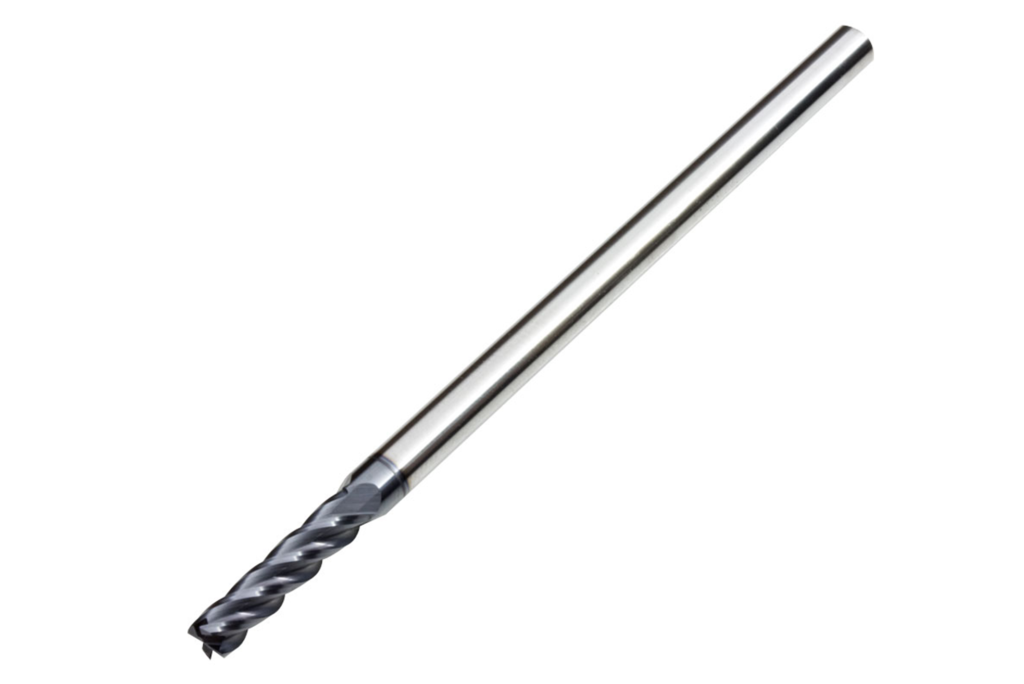
Deep walls, ribs, narrow pockets, and mold cavities create a familiar problem for CNC shops: the cutter must reach the feature, but the holder must stay out of the workpiece. A standard end mill may have enough cutting diameter, but the shank or holder interferes before the tool reaches the bottom. Extending the tool farther out of the holder can work for one rough job, but it often brings chatter, taper, poor wall finish, and unpredictable tool life.
That is where a long neck carbide end mill earns its place. The tool has a reduced neck behind the cutting edge, so it can reach past a wall or rib while keeping the cutting length short. The design looks simple. In practice, it asks for careful selection because every extra millimeter of neck length reduces rigidity.
This guide explains where long neck carbide end mills make sense, how to select them, and what to watch during setup. It is written for engineers, CNC programmers, shop owners, and tooling buyers who need a practical answer, not a catalog slogan.
What makes a long neck end mill different
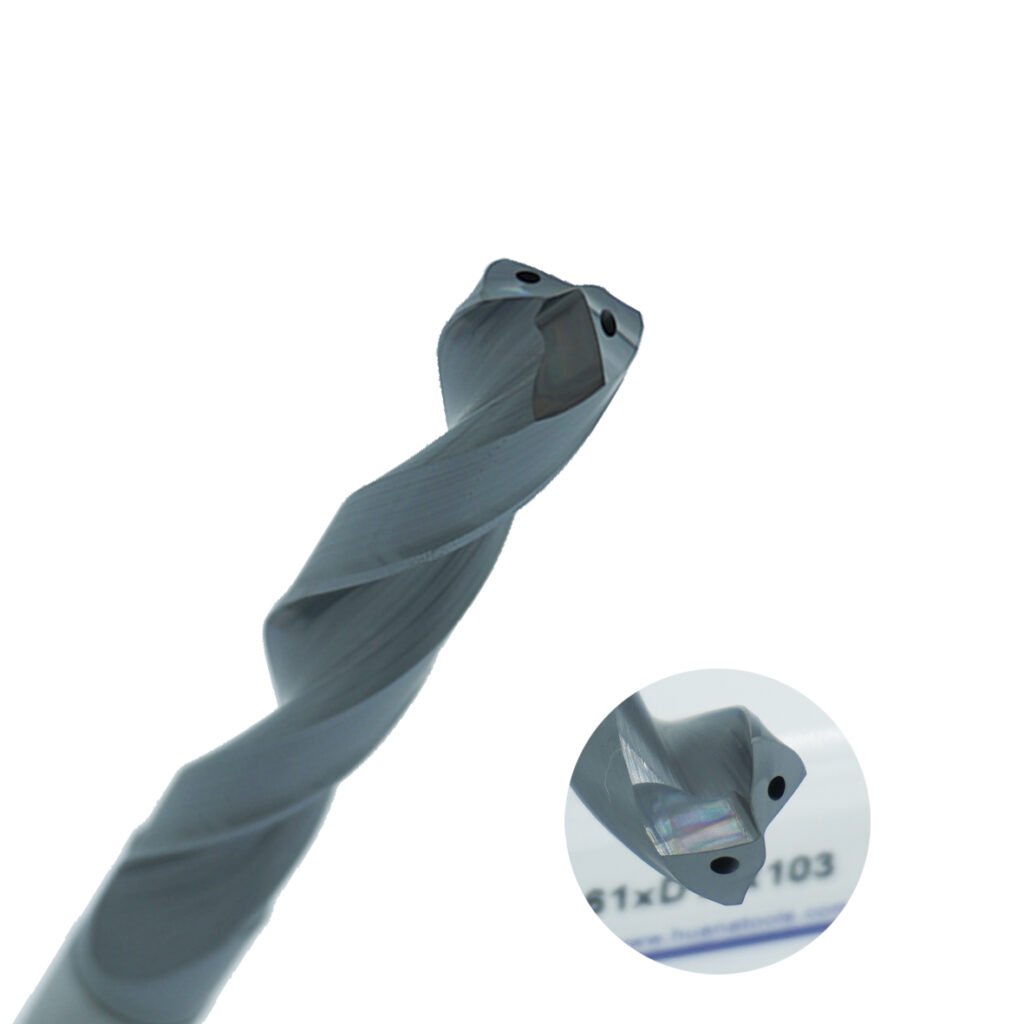
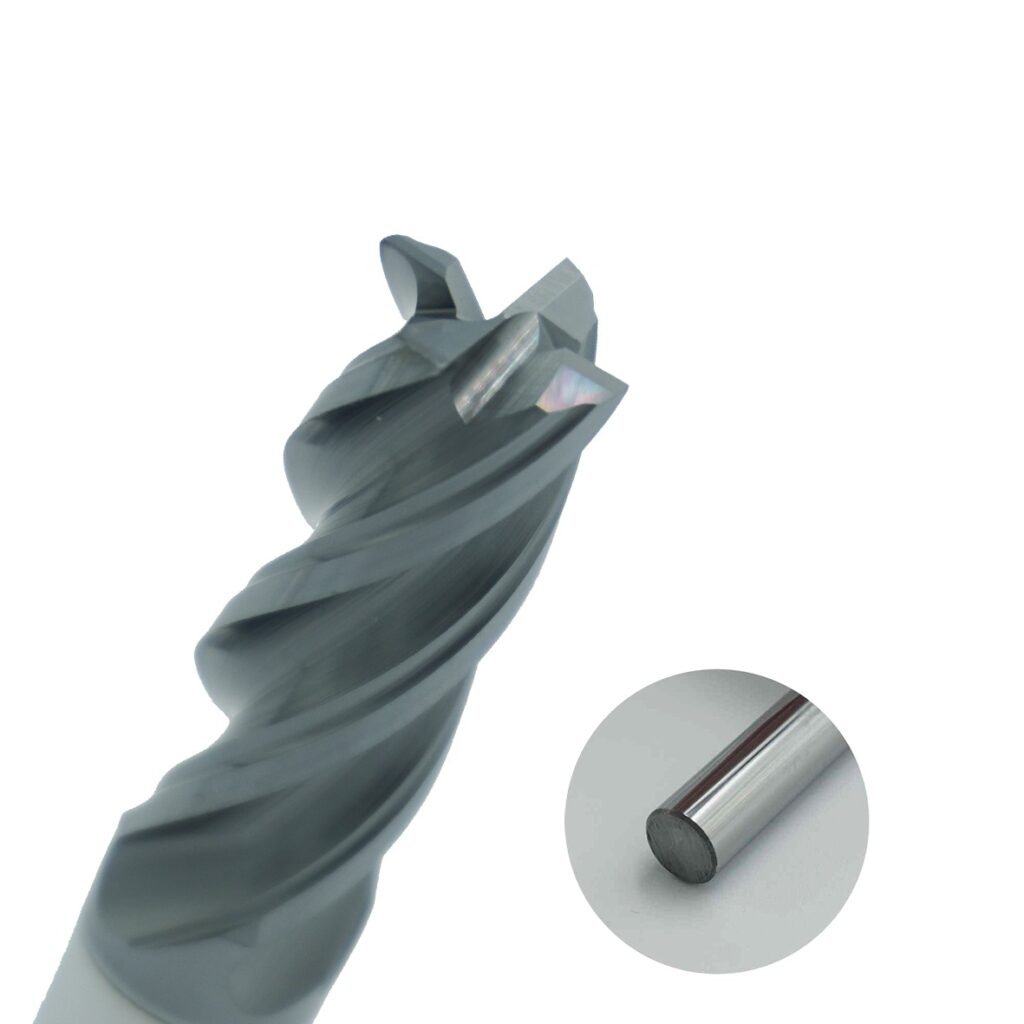
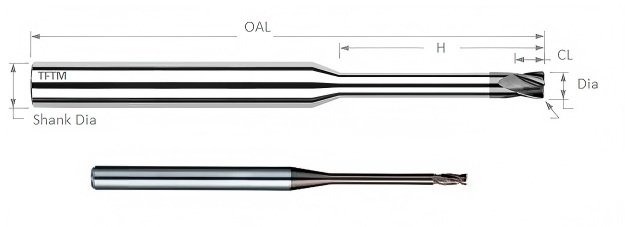
A long neck end mill is not simply a long flute end mill. The cutting flute is usually short, while the neck behind it is relieved to a smaller diameter than the cutting diameter. That relieved neck helps avoid side-wall interference during deep pocketing, mold finishing, rib machining, and detail work.
The main design elements are:
Feature | What it does | Buyer or programmer concern |
Short cutting length | Keeps the cutting edge supported near the tip | Choose only the flute length needed for the actual cut. |
Reduced neck diameter | Clears walls, ribs, shoulders, and draft angles | Check whether the neck clears the model plus toolpath tolerance. |
Solid carbide body | Provides hardness, wear resistance, and heat resistance | Requires stable clamping and careful handling. |
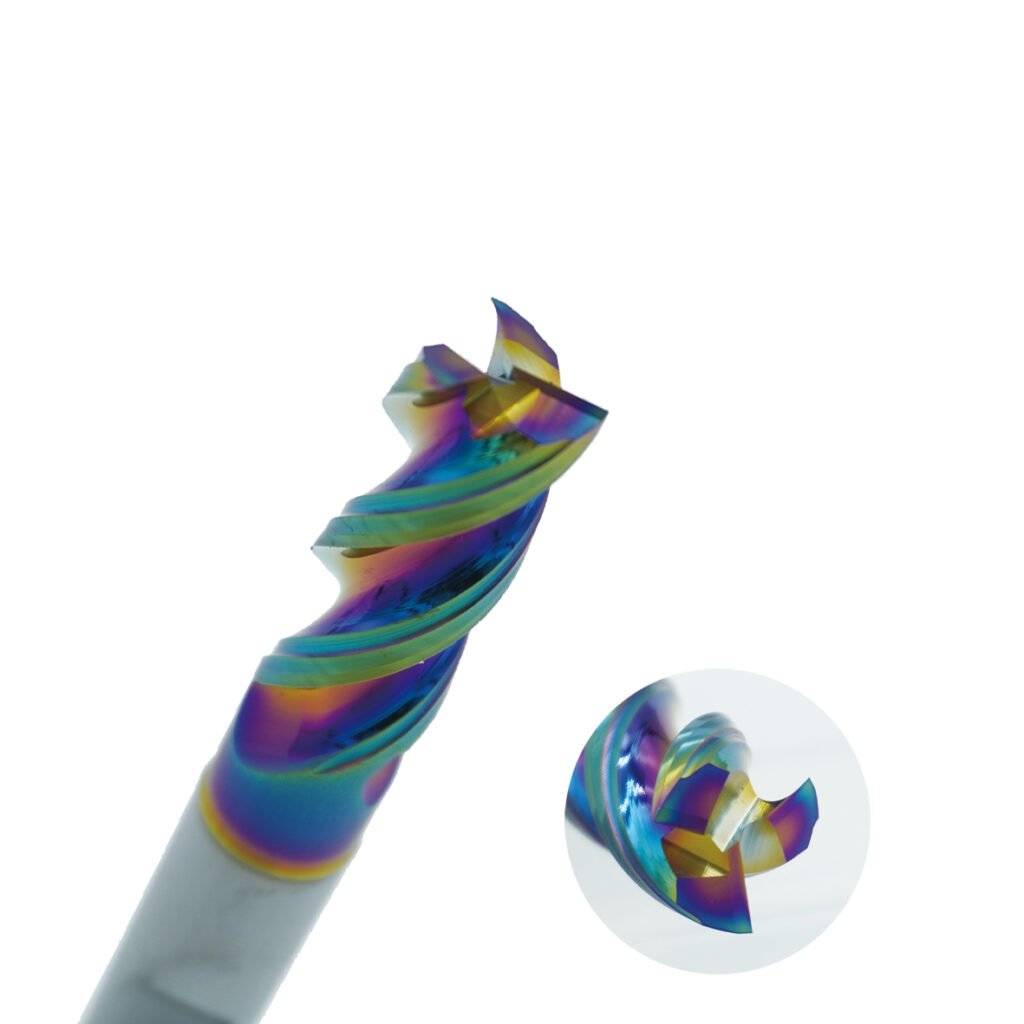
Coating and edge prep | Controls wear, heat, built-up edge, and chipping | Match to steel, stainless steel, graphite, aluminum, or hardened material. |
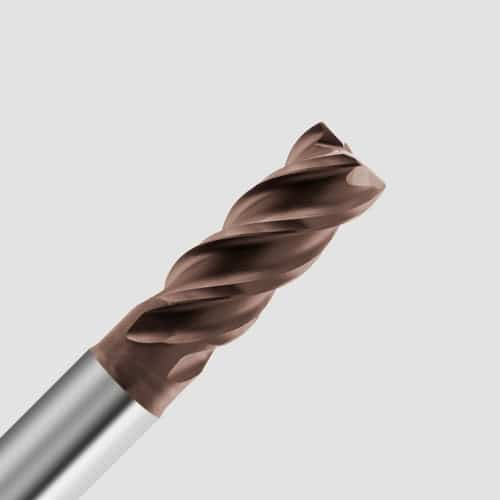
Helix and flute geometry | Affects chip evacuation, cutting force, and finish | Avoid copying one geometry across all materials. |
The difference matters because a long flute tool and a long neck tool solve different problems. A long flute is used when the cutting edge must remove material along a tall wall. A long neck tool is used when the tool must reach past an obstacle but only cut near the end.
Why shops choose long neck carbide end mills
The first reason is interference avoidance. In mold and die work, medical components, aerospace brackets, precision fixtures, and small mechanical parts, it is common to machine deep features with narrow access. A long neck tool lets the programmer keep the holder away from the workpiece while using a cutter small enough for the detail.
The second reason is finish control. A short cutting edge can be more stable than a long flute when only a small axial contact length is needed. In finishing passes, especially on ribs, vertical walls, and small fillets, this can help reduce rubbing marks and improve repeatability.
The third reason is process flexibility. A shop may rough with a stronger standard or high-feed tool, then switch to a long neck carbide end mill for semi-finishing and finishing where access becomes the limiting factor. That is often better than asking one overextended tool to do everything.
Common applications in precision CNC machining
Long neck carbide end mills show up most often when geometry, not raw metal removal, controls the job.
Mold and die machining is the obvious case. Injection molds, die-casting molds, forging dies, and stamping tooling often include deep pockets, thin ribs, steep walls, and small corner radii. Long neck square end mills and ball nose end mills help finish these areas after the bulk stock has been removed.
Precision mechanical parts use them for narrow slots, recessed shoulders, small pockets, and clearance features. The parts may not look dramatic, but a normal holder can still collide with the workpiece or fixture before the cutter reaches the floor.
Aerospace and medical components can also need deep-reach finishing. In these jobs, surface integrity and burr control matter. The tool should cut cleanly without forcing the programmer to run an unstable projection.
Electrode and graphite machining is another common area. Small long neck tools are used to reach fine details in EDM electrodes. The priorities shift toward dust control, edge wear, and avoiding fragile tool breakage.
Application | Typical tool choice | Main risk | Practical note |
Mold cavity finishing | Long neck ball nose or corner radius end mill | Chatter on steep walls | Use small stepovers and stable toolpaths. |
Deep ribs and slots | Long neck square end mill | Tool deflection and wall taper | Use the shortest neck that clears the rib. |
Electrode machining | Micro long neck carbide tool | Fragile edges and breakage | Keep runout very low and control dust. |
Aerospace pocket detail | Coated long neck end mill | Heat and work hardening | Avoid rubbing and keep chip load consistent. |
Precision small parts | Long neck end mill with short flute | Burrs, poor finish, broken tips | Verify clamping and reduce sudden engagement. |
How to select the right long neck end mill
Start with the model, not the catalog. Measure the required reach from the tool tip to the highest interference point. Then add only the clearance needed for the toolpath, holder, and machine tolerance. A tool with a 20 mm neck may look safer than a 14 mm neck, but if the job only needs 14 mm, the longer tool costs rigidity for no benefit.
Cutting diameter comes next. Smaller diameters improve access and corner detail, but they also reduce stiffness. If the design allows a larger radius or a slightly wider corner, the larger tool often gives better surface finish and longer life.
Flute length should be short unless the feature needs side cutting over a long wall. Extra flute length weakens the tool and can trap chips. For finishing a deep pocket floor or local radius, a short flute with a relieved neck is usually the cleaner choice.
Material and coating matter. For hardened mold steel, a coated carbide tool with suitable edge strength is usually preferred. For aluminum, a sharp uncoated or polished-flute tool may reduce built-up edge. For stainless steel and titanium, avoid rubbing, keep coolant or air strategy consistent, and use toolpaths that prevent sudden load spikes.
Cutting parameters: start conservative, then prove the process
Long neck tools are sensitive to deflection. That does not mean they must run slowly, but it does mean heavy radial engagement, poor runout, and sudden corner loading will punish the tool quickly.
For most deep-reach finishing work, keep radial depth of cut light and use toolpaths that maintain steady engagement. Trochoidal, adaptive, or high-speed machining strategies can help roughing and semi-finishing, but a long neck tool should not be used as the first choice for heavy material removal if a stronger tool can do the job.
Feed per tooth should be high enough to cut rather than rub, but not so high that the tool bends. If the wall finish shows chatter marks, reducing spindle speed slightly may help. If the tool rubs or overheats, feed, stepover, coolant, and chip evacuation need review. There is no single magic number because neck length, tool diameter, material hardness, holder quality, and machine condition all change the answer.
Coolant strategy depends on the material. Flood coolant can help with steel and stainless applications if it reaches the cutting zone. Air blast is often useful for graphite and some dry hard-milling strategies. In deep pockets, coolant that cannot reach the cut may create a false sense of security while chips remain packed near the tool.
Setup details that decide success
Runout matters more as the tool gets smaller and longer. A few microns of runout can make one flute work harder than the others, leaving a poor finish and shortening tool life. Use a clean, accurate holder, keep the shank fully supported, and avoid clamping on the relieved neck.
Projection should be kept as short as the job allows. The same rule applies to the holder. A long neck tool in a long, weak holder creates a stack of flexibility. Shrink fit, hydraulic, or high-quality collet holders can improve stability, but only if they are clean and in good condition.
Toolpath entry also deserves attention. Plunging into a deep feature with a delicate long neck tool is rarely the best move. Ramping, helical entry, pre-drilled access, or using a stronger roughing tool first can reduce shock at the cutting edge.
Troubleshooting long neck end mill problems
Problem | Likely cause | What to check first |
Chatter marks on wall | Neck too long, projection too high, radial cut too heavy | Shorter neck, lower engagement, holder condition, spindle speed. |
Wall taper or size error | Tool deflection under cutting load | Reduce stepover, leave stock for spring pass, verify tool diameter. |
Tip chipping | Entry shock, hard spots, excessive runout | Ramp entry, inspect holder, reduce sudden corner engagement. |
Poor floor finish | Rubbing, chip recutting, weak coolant access | Adjust chip load, improve air/coolant, clear chips from pocket. |
Short tool life | Wrong coating or geometry, heat buildup, unstable setup | Match tool to material, check coolant, review cutting data. |
The fastest fix is often not a bigger reduction in feed. If the tool is rubbing, slowing the feed can make heat and wear worse. A better first check is the whole setup: reach, runout, engagement, chip evacuation, and whether the tool is being asked to rough when it should only finish.
Purchasing checklist for B2B buyers
Tool buyers should collect enough job information before asking for a quote. A supplier can recommend a much better tool when the request includes workpiece material, hardness, required reach, cutting diameter, flute length, corner radius, coating preference, machine type, holder type, coolant method, and whether the operation is roughing, semi-finishing, or finishing.
For repeat production, ask for consistency information as well. Neck diameter tolerance, runout specification, coating batch consistency, and packaging matter when small tools are used across multiple machines or shifts. For mold shops and job shops, availability of nearby sizes can also matter because a small design change may require a different neck length or corner radius.
When not to use a long neck tool
A long neck carbide end mill is the wrong first choice when the feature is open and a standard short tool can reach it. It is also a poor choice for aggressive roughing if a larger, more rigid cutter can remove the material before the finish tool enters.
Unstable fixtures, worn spindles, low-quality holders, and interrupted cuts all raise the risk. Carbide has high hardness and good wear resistance, but it is not forgiving when the setup vibrates. If the operation breaks tools repeatedly, the answer may be fixturing, toolpath strategy, or holder quality rather than a different brand of the same long neck cutter.

Conclusion
Long neck carbide end mills are valuable because they solve a real access problem in precision CNC machining. They help shops finish deep pockets, mold cavities, ribs, small slots, and recessed features without holder interference. The tradeoff is stiffness. The best results come from choosing the shortest usable neck, keeping the flute length appropriate, controlling runout, and using cutting data that respects the tool’s slender geometry.
For buyers, the practical question is not whether carbide is strong enough. It is whether the tool geometry, holder, machine, material, and toolpath work together. HNCarbide can support custom and standard carbide end mill selection for deep-reach applications when the drawing, material, and machining conditions are clear.