Kyocera vs. Korloy: Carbide Tooling Solutions for Precision Milling and Drilling
Table of Contents

When your machining line runs 18 hours a day and downtime costs more than the tools themselves, the wrong end mill delays orders, strains teams, and erodes margins. Inconvenience is a minor part of the problem. The bigger problem is missed tolerances, rejected parts, and tough questions from customers.
An increasing number of manufacturers from Germany and Eastern Europe are reconsidering their carbide tooling suppliers. Not just based upon price or catalog breadth, but consistency, support, and how well a tool integrates into complex material workflows.
This is where two names, Kyocera and Korloy, most often crop up. There’s milling and drilling that each excel at, but the priorities are entirely different. This article throws them toe to toe in comparison so that you can align your tooling decision with your actual machining reality.
Company Background & Market Position
Although Kyocera and Korloy are both internationally known brands for carbide tooling, their strategies and market focus are quite different. Kyocera runs with a strong R&D backing, leading to new ideas in precision machining and advanced coating methods.
Korloy has earned its name by meeting production issues through quick changes, modular setups, and dependable tools at good prices for OEM and Tier 2 providers in the automotive and mold fields.
Feature | Kyocera | Kolroy |
Origin | Japan (Kyoto) | South Korea (Seoul) |
Market Position | Mid to high-end, innovation-focused | Mid-range, value-driven |
Primary Industries | Aerospace, medical, semiconductor, precision machining | Automotive, mold & die, general machining |
European Focus | Germany, France, Northern Europe | Eastern Europe, DACH region, expanding OEM footprint |
Go-to-Market Strategy | R&D investment, premium service, MEGACOAT tech | Modular tooling, quick delivery, price/performance ratio |


Kyocera
Kyocera is an important global participant in precision ceramics and slicing tools. Its reputation in Europe is built on high tooling systems for supplies, which can be tough to machine with tolerances.
Coating science and device geometry optimization are the main investments for Kyocera Precision Tools, which serves markets that require accuracy, good tool life, and excellent surface finish.
Highlights of Kyocera:
- MEGACOAT and MEGACOAT NANO coatings for superior wear resistance
- Strong in aerospace, medical, and high-precision manufacturing
- Broad offering of DIN-compatible carbide and indexable tools
- Focus on R&D and custom tooling solutions for complex applications
- Mid to high-end positioning with strong technical support in the DACH region


Korloy
Korloy has become a trusted name for cost-effective cutting tools with consistent quality. Its strategy emphasises speed-to-market, wide availability, and competitive pricing. Korloy America and its European channels support a wide customer base in automotive production and general engineering with dependable insert tooling and roughing systems.
Highlights of Korloy:
- PC5300 and PC3500 coating series for steel and stainless steel
- Focused on OEMs and volume machining in automotive and die/mould
- Known for practical performance in roughing and mid-tolerance work
- Efficient delivery channels across Germany and Eastern Europe
- Attractive alternative for factories prioritising price-performance balance
Product Range Coverage
The product strategies of Kyocera and Korloy differ vastly as a reflection of their broader brand philosophies. Kyocera positions itself as a high-precision tools supplier in the market with an offering that ranges from solid carbide end mills to indexable inserts and modular milling systems as part of its full-spectrum solutions.
It is backed up by decades of in-house materials research and cutting-edge R&D, visible particularly through their MEGACOAT coating development as well as high-precision geometries. Their catalog covers everything from micro-machining to high-feed milling, focusing on aerospace, medical, and precision parts industries.
Korloy focuses on easy, low-cost tools for making multiple items. It is good at milling systems, turning inserts, and roughing end mills, which work well when used normally. The product line changes fast to fit new needs in car part machining and simple milling tasks, where speed of work and tool price matter most.
Application Focus
Kyocera and Korloy serve different tiers of precision machining, tailored to the performance demands of their core industries.
Kyocera’s strength lies in complex, tolerance-critical operations. Its tools are engineered for environments where even micron-level inaccuracies are unacceptable. Aerospace components, surgical tools, and high-tensile alloys often demand advanced coatings, chip control geometries, and wear resistance that Kyocera’s tools consistently deliver.
Kyocera Precision Application Areas:
- Aerospace structural components (titanium, Inconel, composites)
- Orthopaedic and surgical-grade implants
- Precision molds for the semiconductor and electronics industries
- Swiss-style micromachining for watches and the medical sectors
Korloy, on the other hand, addresses the high-throughput requirements of automotive, mold, and general engineering workshops. The emphasis is on balanced cutting economics, durability under heavy load, and tools that perform well even on lower-rigidity machines, making them ideal for production shops and mid-range OEMs.
Korloy Practical Application Areas:
- Engine block and transmission machining (steel, cast iron)
- Mold and die making in tool steels
- High-volume component runs in automotive sectors
- Mid-tolerance general metalworking where tooling costs matter
This divergence reflects their design priorities. Kyocera builds for uncompromising precision, while Korloy focuses on cost-efficient output in demanding but repeatable environments.
Material and Coating Technology
Coatings are very important in a cutting tool in a number of ways, such as in tool life, thermal resistance, and surface finish. Kyocera and Korloy are two companies that have different visions and strategies for coating and carbide substrate design because of the core customer bases and application priorities they have.
Comparison at a Glance
Feature | Kyocera | Korlow |
Coating Types | MEGACOAT NANO (PVD), MEGACOAT TOUGH, CVD coatings | PC5300 (CVD), PC3500/5400 (PVD) |
Heat Resistance (°C) | 1000+ (Nano) | ~850–950 |
Best Suited For | Aerospace, medical, and high-precision machining | Automotive, mold & die, general steel cutting |
Edge Wear Resistance | High | Moderate-High |
Substrate Strength | Ultra-fine carbide with reinforced binder | Optimized base carbide for cost-performance |
Kyocera: MEGACOAT Nano & Advanced Substrate Engineering
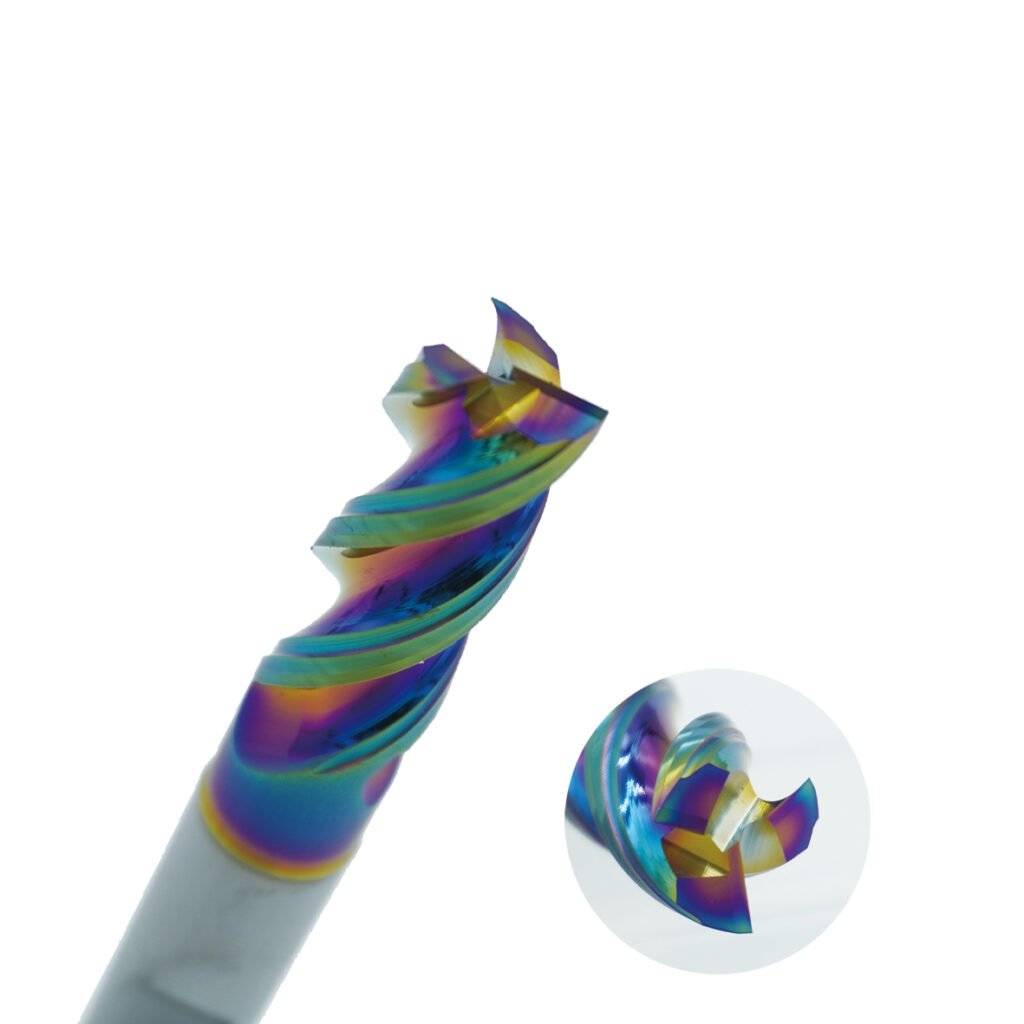
Kyocera has long been known for providing very durable coatings for the most severe conditions. Their exported MEGACOAT NANO and MEGACOAT TOUGH are quite ambitious projects aiming to develop the lifetime of the tool by keeping the edge sharpening constant and low flank wear through multi-layered PVD coatings.
- MEGACOAT NANO: This coating, which is nano-layered, has high oxidation resistance (up to 1000°C), very low surface roughness, and good wear protection that can be the best choice for hardened steels and aerospace alloys.
- MEGACOAT TOUGH: This one is for the interrupted cuts and unstable conditions. It is a kind of compromise between the hardness and the fracture resistance.
These coatings are applied using a very advanced PVD method. They are combined with Kyocera’s ultra-fine grain carbide substrates. What you get is really high wear resistance with very low chip formation for aerospace and medical machining, where finish quality and trust are not debatable.
Korloy: PC Series Coatings for Everyday Efficiency
Korloy focuses on making high-performing yet cost-effective inserts, supported by coatings engineered to handle the most common workshop materials. Their PC5300, PC5400, and PC3500 series reflect an iterative approach to coating optimization.
- PC5300: A CVD-coated grade ideal for high-speed machining of steel. It has high thermal stability and excels in continuous or lightly interrupted cuts.
- PC3500: Designed for general-purpose stainless steel cutting, this PVD-coated grade provides stable wear resistance and edge integrity.
- PC5400: Built for tougher machining conditions, including interrupted cuts in steel and cast iron. Its strong coating adhesion improves edge security during ramping and entry cuts.
Korloy’s coatings may not reach the thermal resistance levels of Kyocera’s nano-coatings, but they are effective for most medium-precision tasks. They perform particularly well when paired with the right chipbreaker geometries and toolholders for automotive or mold operations.
Comparison of Life and Surface Roughness Data
Tooling decisions directly impact part quality, rework rates, and per-piece profitability. Tool life and surface roughness (Ra) are two of the most telling metrics in high-speed machining environments. A tool that lasts longer and leaves a smoother finish reduces downtime and eliminates the need for secondary finishing operations.
Test Conditions:
- Material: 42CrMo4 (30–32 HRC)
- Cutting Speed: 180 m/min
- Feed Rate: 0.2 mm/rev
- Depth of Cut: 1.5 mm
- Dry Cutting
Metric | Kyocera (MEGACOAT NANO) | Korloy (PC5300) |
Tool Life (Number of Pieces) | ~1,100 | ~750 |
Surface Roughness (Ra, µm) | 0.35–0.45 | 0.55–0.65 |
Flank Wear After Test (mm) | ~0.22 | ~0.30 |
Edge Integrity | High (minimal chipping) | Moderate (visible wear) |
This benchmark shows Kyocera offering greater endurance and more consistent surface finishes, important for aerospace, mold & die, and precision automotive parts. Korloy still delivers solid performance and may suit shorter batch cycles or budget-conscious operations.
Acceptance in the European Market
In precision-focused manufacturing sectors across Europe, tool makers are not only competing on performance but also on how well they can adjust to different regional service needs and production realities. Kyocera has a comfortable position in the mid-to-high end, particularly in those industries where precision, surface finish, and customisation are the most important factors in which the company is recognized.
Kyocera is definitely a popular brand in the local markets of Germany, Switzerland, and France. It is the first choice of application engineering support by the aerospace and medical component manufacturers, and also those who can provide them with tailored solutions.
The company also has a network of local technical teams and can carry out custom tool production with a short turnaround time to support its presence, which makes it suitable for fine-tolerance operations.
Korloy has not only OEMs but also mid-sized contract manufacturers on its side for automotive part production and mold/die work. Its core competence lies in providing trustworthy tools at good prices, and at the same time, it has a rapid product release cycle that is in line with market trends.
Korloy’s practicality, stock availability, and easy tool replacement make it the go-to choice for high-volume factories running standardised processes in Eastern Europe and parts of Southern Germany. While it may not compete at the same precision tier as Kyocera, it earns preference through its cost-efficiency and consistent delivery of acceptable results in everyday machining.
Together, these brands serve different ends of the performance-value spectrum within the European CNC tooling market. Kyocera excels in precision environments, and Korloy powers throughput-driven operations.
Differences in Milling Cutter Profiles for Stainless Steel vs. Aluminum
There is a necessity for very different cutter geometries when we mill stainless steel and aluminum. Kyocera and Korloy point out that they have addressed these issues through the design of the tools and the configurations of the flutes.
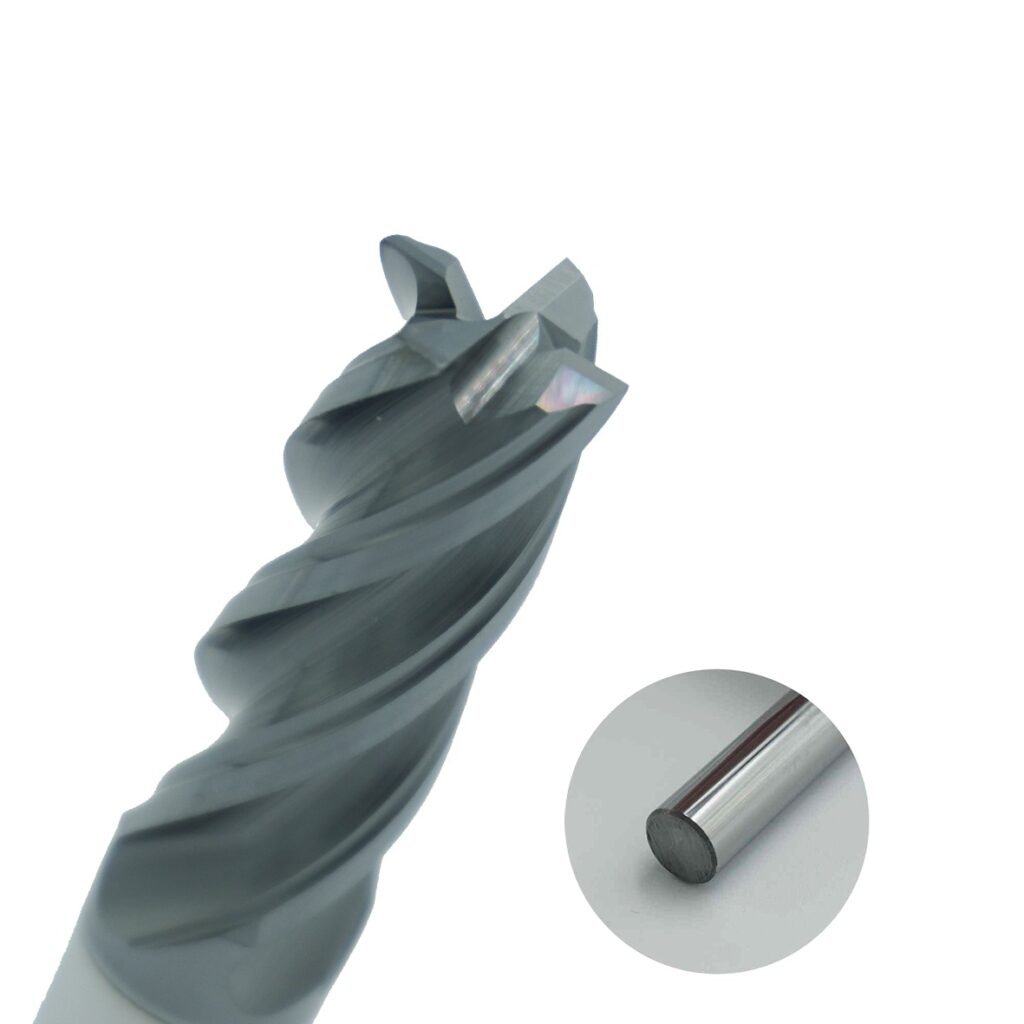
Kyocera’s Z-Carb Series offers 3-flute solid carbide end mills with unequal helix and flute spacing. These features help to suppress the harmonics and thus reduce the vibration in the materials that are hard to work with. They are designed in such a way that they improve the rigidity, make the chip clearance better, and the surface quality higher. Furthermore, the smooth rake angles aid the cutting of the extremely difficult alloys, such as stainless steel and Inconel, without creating heat or hardening of the material.
Korloy comes with its R+ Endmill in variable-pitch geometries and high–helix flute angles so as to vibrate less while working rough with steel alloys. Their carbide substrates, which are micro-optimized, make them strong and highly capable of withstanding heavy cutting loads without loss of accuracy.
For aluminum, Kyocera recommends the use of tools that have polished flutes and low-to-medium helix angles. They facilitate the flow of chips and also prevent chip welding that could occur because of the tool edge. They are usually equipped with corner radius options so that surface gouging, especially in the case of high-speed pocketing, can be avoided.
The A-Star Endmill series of Korloy is unambiguously constructed to be flawless for aluminum. It has single-flute and mirror-finish flute versions. Single-flute tools give high material removal rates with clean evacuation, while multi-flute options support precision profiling and finishing.
Strength of Channel Support
Kyocera has a solid support network across Germany and Eastern Europe, and this is accomplished through the leveraging of the European Headquarters in Esslingen, Germany, and the extensive network of authorized distributors and service partners. The company offers on-site technical support, application engineering, and training programs tailored to regional industrial needs, particularly in medical and aerospace manufacturing.
Korloy is a South Korean company that sells its products in the European market through Korloy Europe GmbH. They have significantly increased their presence in several European countries that are OEM-heavy, such as Poland, Czechia, and Slovakia.
Their service coverage is mainly dependent on distributor networks rather than localized engineering teams. So, customization and response may not be as prompt as expected.
HN Carbide: A Reliable Alternative for Cost-Effective Precision
Manufacturers seeking Korloy’s level of affordability without compromising performance can confidently turn to HN Carbide. Engineered for European machining environments, HN Carbide’s product lines balance price, durability, and technical precision, ideal for automotive components, die/mold tools, and high-volume production lines.
With German DIN-compliant tooling, advanced AlCrN and ZrN coatings, and a growing presence across Europe, HN Carbide offers:
- Competitive tool life for hardened steels and stainless applications
- Responsive supply channels with shorter lead times
- Custom tool options for niche geometries and materials
HN Carbide bridges the gap between economy and engineering excellence, fitting seamlessly into production lines that value both throughput and dimensional control.
Conclusion
Kyocera and Korloy each serve distinct segments. Kyocera excels in high-precision, high-value applications, while Korloy prioritizes cost-efficiency and versatility. Depending on your material and quality demands, either brand offers strong benefits. For manufacturers seeking a balanced, European-ready alternative, HN Carbide delivers proven reliability with performance-driven value.