Is Your Coolant Quietly Destroying Your End Mills? A Practical Guide to CNC Coolant Maintenance
Table of Contents
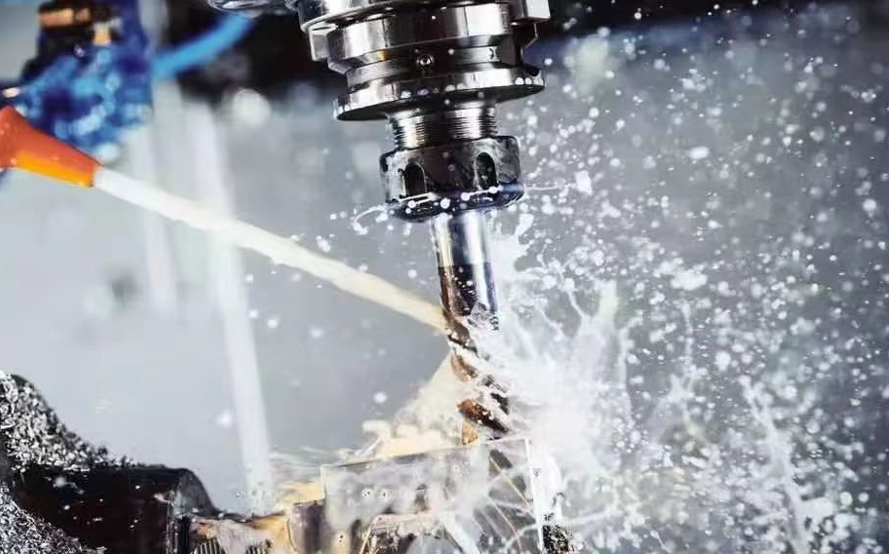
Why Do Good End Mills Fail So Fast in Some Workshops?
If you’ve ever experienced this situation, you’re not alone: you invest in high-quality carbide end mills, choose the right coating, optimize cutting parameters—and yet tool life is inconsistent, surface finish fluctuates, and machining feels unstable. The natural reaction is to question the tool itself. But in many cases, the real issue is much less obvious.
Coolant.
In modern CNC machining, coolant is often treated as a background utility rather than a performance factor. However, in end milling—especially when working with aluminum, stainless steel, or high-temperature alloys—coolant directly controls heat, friction, and chip evacuation. These are not secondary variables. They define how your tool behaves in real cutting conditions.
A well-maintained coolant system can extend tool life significantly and stabilize machining. A neglected one can quietly reduce performance across the entire process, even when everything else appears correct.
What Is CNC Coolant Really Doing During End Milling?
CNC coolant is typically a water-mixed fluid composed of base oil, emulsifiers, and functional additives. Once properly mixed, it performs multiple roles simultaneously. It removes heat from the cutting zone, reduces friction at the tool–workpiece interface, and carries chips away from the cutting edge.
In end milling, especially with multi-flute carbide tools, these roles become highly interdependent. When machining aluminum with 2-flute or 3-flute end mills, effective chip evacuation is critical to prevent re-cutting and built-up edge. When machining stainless steel with 4-flute or 5-flute tools, lubrication and heat control become more important to prevent work hardening and edge wear.
This is why coolant is not just “cooling.” It is actively shaping the cutting environment in which your end mill operates.
How Long Should Coolant Last—and Why Does It Vary So Much?
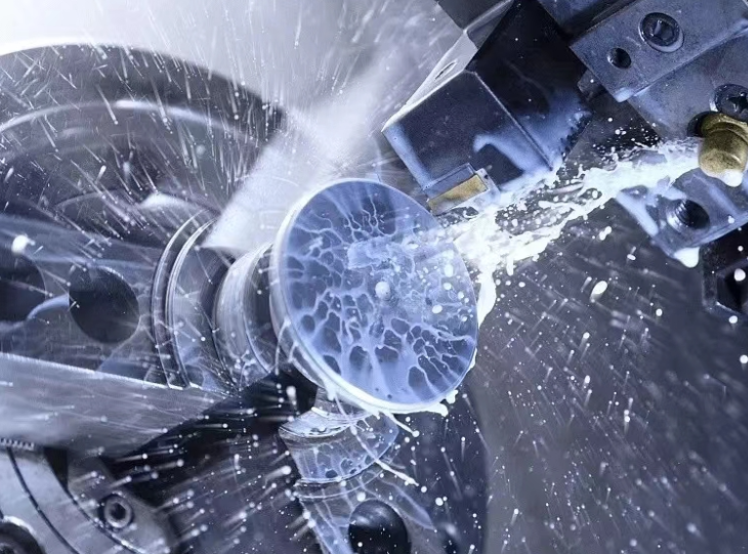
There is no fixed lifespan for CNC coolant, and that’s exactly what makes it misunderstood. In some workshops, coolant fails within weeks. In others, it remains stable for nearly a year. The difference is not the product—it’s the management.
Coolant performance depends heavily on concentration stability, contamination control, and system cleanliness. When concentration drifts outside the recommended range, the balance between cooling and lubrication is lost. Too weak, and lubrication fails. Too strong, and heat transfer efficiency drops while residues begin to form.
This balance is particularly important for carbide end mills with advanced coatings like AlTiN or TiAlN, which rely on controlled thermal conditions to perform optimally.
The following table illustrates how coolant condition typically affects machining outcomes:
Coolant Condition | Tool Life Trend | Surface Finish | Machining Stability |
Poorly maintained | Rapid decline | Rough, inconsistent | Unstable |
Moderately controlled | Acceptable | متوسط | Stable |
Well maintained | Maximum | Smooth, consistent | Highly stable |
What this shows is simple but often overlooked: coolant is not just a consumable—it is a performance variable.

What Actually Happens When Coolant Degrades?
Coolant degradation rarely happens overnight. It is a gradual process, and that is why it often goes unnoticed until the effects become significant.
As coolant ages or becomes contaminated, its cooling efficiency declines. This leads to higher temperatures at the cutting edge, which accelerates wear mechanisms such as coating breakdown, edge chipping, and thermal fatigue. For end mills, especially in high-speed milling, this can dramatically shorten tool life.
At the same time, lubrication performance deteriorates. Increased friction makes chip evacuation less efficient, particularly in slotting operations. Chips begin to adhere to the tool, increasing cutting forces and creating unstable conditions that affect both tool life and surface finish.
Another critical aspect is biological contamination. Bacteria and fungi thrive in poorly maintained coolant systems, forming biofilms that not only produce unpleasant odors but also clog filters and contribute to corrosion inside the machine. This is often accompanied by the well-known “sulfur smell,” a clear indication that the coolant environment is no longer under control.
Why Do So Many Shops Still Mix Coolant Incorrectly?
One of the most basic yet frequently ignored rules in coolant management is how it is mixed.
Coolant should always be prepared by slowly adding concentrate into water. Reversing this process—adding water into oil—may seem harmless, but it destabilizes the emulsion. The result is a fluid that separates more easily, performs inconsistently, and degrades faster.
This detail becomes especially important in precision machining environments. When using high-performance end mills, even small variations in coolant stability can lead to noticeable differences in cutting behavior. Inconsistent lubrication or cooling translates directly into inconsistent results.
For shops aiming at repeatability and quality, automatic mixing systems are increasingly becoming standard, not because they are convenient, but because they eliminate variability.
Why Does Coolant Start Smelling—and Should You Worry?
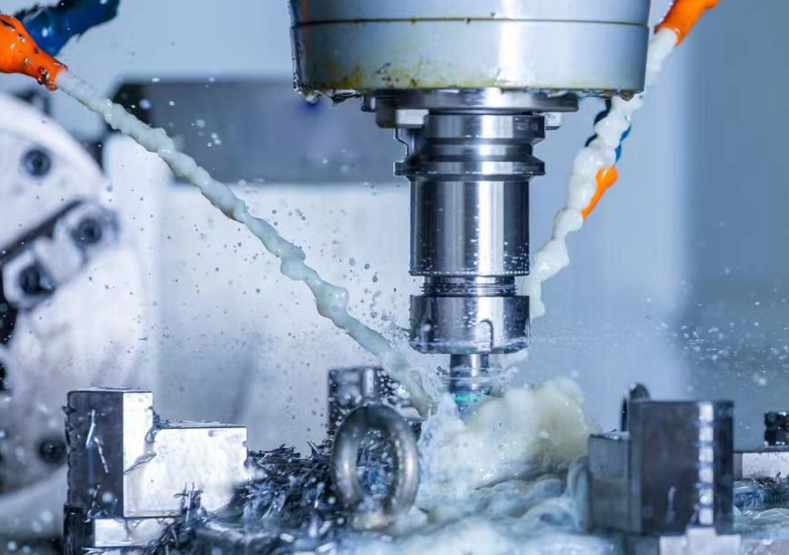
A noticeable odor in coolant is not just unpleasant—it is a diagnostic signal. In most cases, it indicates bacterial activity caused by poor maintenance, incorrect concentration, or the presence of tramp oil.
Tramp oil, which originates from machine lubrication systems, floats on the surface of coolant and blocks oxygen exchange. This creates an ideal environment for anaerobic bacteria, accelerating contamination and shortening coolant lifespan. Over time, this not only affects fluid quality but also contributes to increased smoke, reduced tool life, and poorer surface finish.
Foaming is another symptom that should not be ignored. While it may appear to be a minor issue, excessive foam reduces cooling efficiency and can introduce air into the system, further destabilizing machining conditions.
These issues are not isolated—they are interconnected signs of a system that is drifting out of control.
How Often Should You Replace Coolant—and Can It Be Reused?
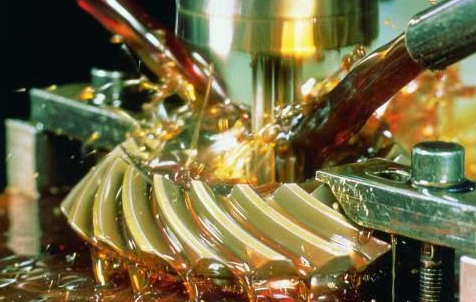
Even with good maintenance practices, coolant eventually reaches a point where replacement is necessary. In most professional environments, a full system cleaning and coolant replacement cycle is performed every 6 to 12 months.
Before introducing new coolant, it is essential to clean the system thoroughly. Running a system cleaner for 24 to 48 hours helps eliminate bacteria, remove sludge, and prepare the machine for fresh fluid. Skipping this step often results in rapid contamination of the new coolant.
Recycling coolant is possible to a certain extent. Filtration systems and oil skimmers can extend usable life by removing contaminants. However, once degradation reaches a certain level, disposal through authorized waste management channels becomes necessary.
How Direct Is the Link Between Coolant and End Mill Performance?
At this point, the connection should be clear—but it is worth stating explicitly.
Coolant condition directly determines how an end mill performs in real machining conditions. It influences cutting temperature, friction levels, chip evacuation efficiency, and cutting stability. These factors, in turn, define tool life, surface quality, and overall productivity.
The relationship can be summarized as follows:
Factor | Poor Coolant | Optimized Coolant |
Tool wear | Rapid | Controlled |
Heat generation | High | Managed |
Chip evacuation | Inefficient | Smooth |
Surface finish | Rough | Consistent |
This is why two shops using the same end mill can achieve completely different results. The difference is often not the tool—it is the environment in which the tool operates.

Conclusion: Coolant Is Not a Cost—It Is a Performance Multiplier
In many machining operations, coolant is still treated as a maintenance item rather than a strategic factor. But as cutting speeds increase and tool geometries become more advanced, this perspective is no longer sufficient.
For manufacturers aiming to improve efficiency, reduce tool costs, and achieve consistent quality, coolant management must be treated as an integral part of the machining process.
Because in the end, no matter how advanced your end mill is, it can only perform as well as the environment it cuts in.