HSS vs. Cobalt vs. Carbide Drill Bits: Which is Best for Industrial Applications?
Table of Contents

Mild steel drilling is not similar to that of cutting into hardened alloys. Most of the shop managers are aware that the selection of bits can either streamline a job or stall it. Material behind the drill bit matters just as much as the machine driving it, where speed, accuracy, and tool longevity are on the line.
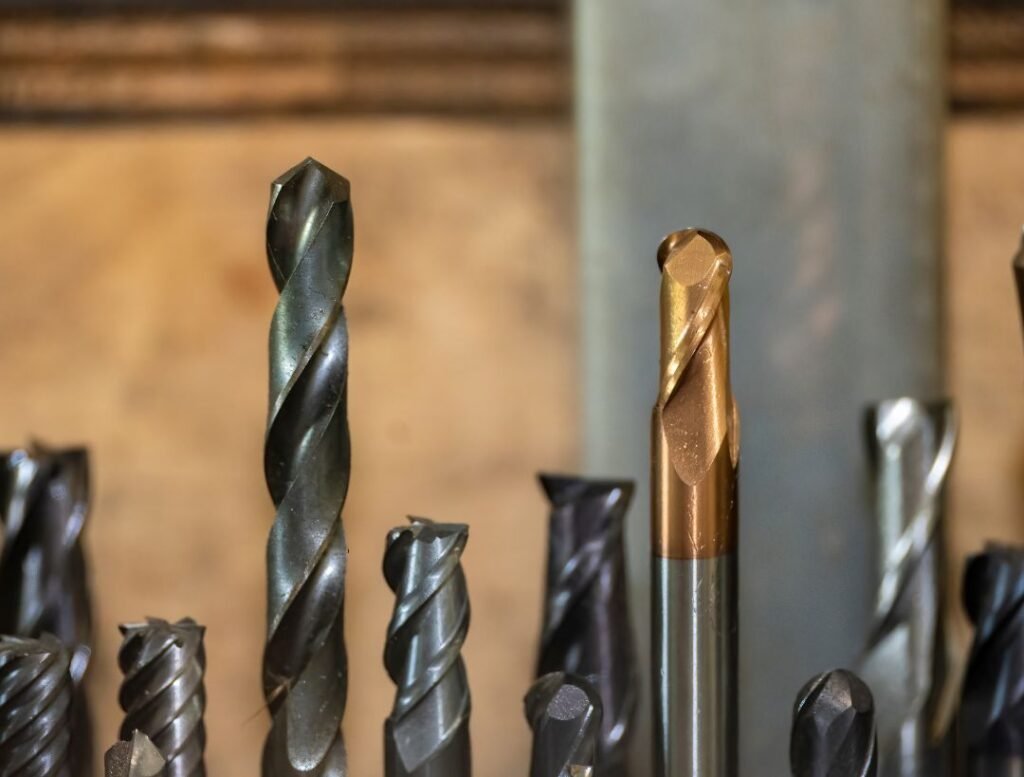
Tooling groups often consider cobalt, carbide, or high-speed steel not because they are pursuing the newest specification but because each one performs quite differently under heat, pressure, and wear.
This guide breaks down:
- Cobalt vs carbide drill bits
- HSS drill bits vs cobalt drill bits
- Carbide vs titanium drill bit
You will learn in a practical way how each type deals with specific materials, their lifespan, and the best places for them on the shop floor.
Let’s start with the basics.
What are High-Speed Steel (HSS) Drill Bits?
High-speed steel is a broad-application material in drill bit manufacturing. It generally finds purpose across a range of softer metals, plastics, and wood. It has earned this name because it can stay pretty much ‘as is’ with the heat that relatively high cutting speeds generate without losing its hardness.
HSS drill bits balance performance with cost. They are tough yet reasonably priced and simple to regrind, making them the drill bit of choice in shops that do not need to cut into very hard or abrasive materials.
Common use cases for HSS bits include:
- Low- to medium-speed drilling in mild steel and aluminum
- Shop maintenance, prototyping, and repair work
- Non-ferrous metals, plastics, and composite boards
- Applications where tool life is secondary to cost
However, HSS has its drawbacks. Exposed to too much friction, or with harder metals such as stainless steel and cast iron, it wears down quickly or loses its sharpness. In such cases, the teams often step up to cobalt or carbide for that increased heat resistance and better durability.
But in everyday drilling applications such as construction, maintenance, and general assembly, HSS is still very functional. It is dependable, user-friendly, and more often than not, the least expensive material at the forefront.
What Are Cobalt Drill Bits?
The cobalt drill bits are actually produced from an alloy steel that contains about 5% to 8% cobalt. This extra material hardens the bit and enhances resistance to the heat that would otherwise make it quite suitable for use in drilling through tougher materials that would otherwise easily wear down ordinary HSS bits.
Cobalt is blended throughout the material. That means even after resharpening, the bit retains its heat-tolerant properties. It proves to be a great advantage in production settings where longevity matters.
Shops that work with harder metals turn to cobalt drill bits for:
- Stainless steel, cast iron, and titanium
- Continuous drilling under high friction
- Jobs that demand extended tool life
- High-temperature applications that HSS can’t handle
While more expensive than HSS, cobalt bits offer a solid return in operations where downtime and tool changes carry real cost. They’re harder than HSS but not as brittle as carbide, making them a reliable middle ground for many industrial teams.
Although ideal in most instances, the hardest composites or ultra-precise CNC work might still be best suited for carbide. In softer materials, cobalt bits can wear unevenly or overcut if not handled carefully.
Cobalt vs. Carbide Drill Bits: Which One Fits Your Operation?
Cobalt bits and carbide bits are built for heavy-duty cutting, but each has different performance characteristics that can be matched to the job, material, and drilling environment.
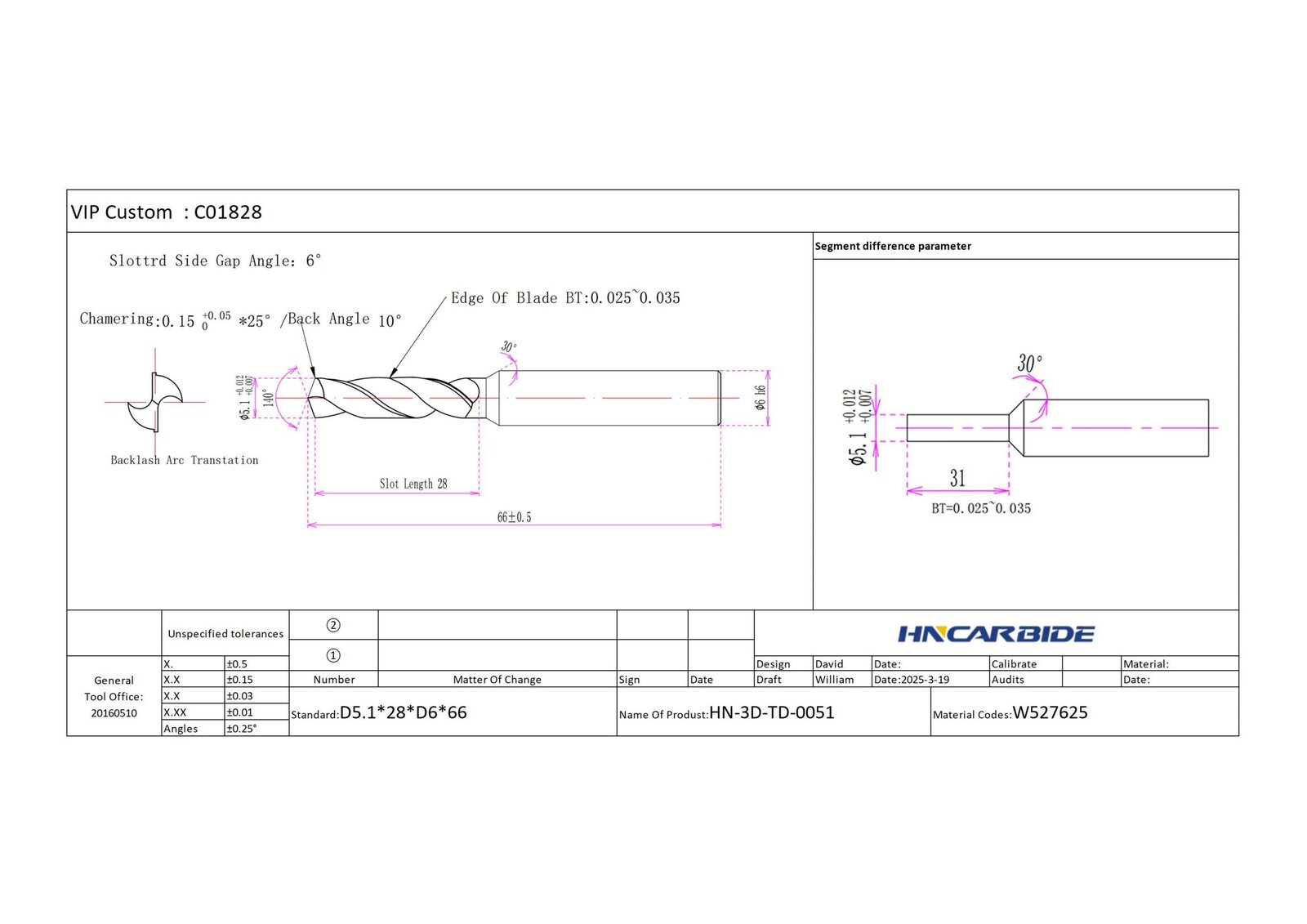
Cobalt drill bits are typically produced from M35 or M42 blends of steel. They perform well in applications that involve high temperatures, where toughness and edge retention ability dominate the requirement for ultimate hardness. Common places of application are fabrication shops, MRO settings, and any task related to metalworking in stainless steel or cast iron. For example, a 3/8 cobalt drill bit is the conventional size for structural steel drilling as well as general heavy-duty purposes.
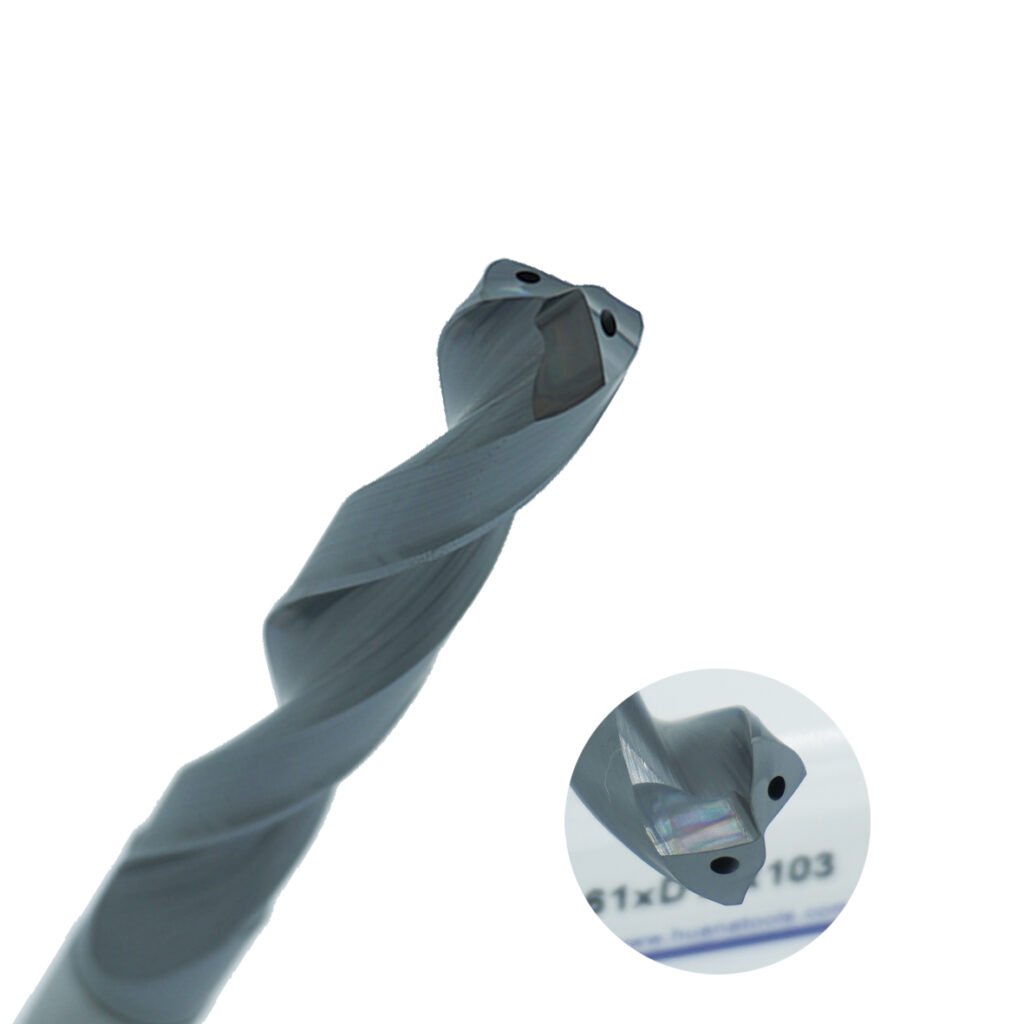
Carbide drill bits provide unparalleled hardness and wear resistance. They maintain sharp edges much longer than cobalt, even in cutting through hardened steel, composites, or abrasive materials. But this increased performance comes with increased brittleness and higher cost, thus better applicable in automated CNC environments where feeds and speeds are controlled.
Here’s a quick breakdown of the carbide vs cobalt drill bit comparison:
Feature | Cobalt Drill Bits | Carbide Drill Bits |
Heat Resistance | Withstands high temperatures well | Maintains hardness at even higher temperatures |
Durability | Tough and forgiving under manual use | Extremely durable, but can chip if misused |
Material Compatibility | Ideal for stainless steel, cast iron, and general tough metals | Suited for hardened steel, fiberglass, and high-nickel alloys |
Cost and Value | Lower upfront cost, regrindable for added value | Higher cost, excellent longevity in consistent operations |
If you’re drilling manually or changing materials often, cobalt offers a safer margin. Carbide earns its keep for precision CNC work or long production runs in abrasive metals.
HSS vs. Cobalt Drill Bits: When Does an Upgrade Make Sense?
High-Speed Steel (HSS) drill bits have long been the standard for general-purpose drilling. They’re affordable, easy to regrind, and work well on softer materials like aluminum, mild steel, and plastics. For light fabrication, maintenance work, or job sites where tool loss is common, HSS bits still make practical sense.
But once drilling moves into tougher territory, like stainless steel, cast iron, or prolonged use at higher RPMs, cobalt drill bits start to pull ahead. The added cobalt content (typically 5% or more) boosts heat resistance and edge retention, helping the bit stay sharp under thermal stress that would quickly wear down standard HSS.
Here’s how the two compare in day-to-day use:
Feature | HSS Drill Bits | Cobalt Drill Bits |
Material Capability | Performs well on mild steel, aluminum, and plastics | Handles stainless steel, cast iron, and tougher alloys |
Tool Life | Shorter lifespan under high heat or friction | Longer edge retention; resists wear in high-temperature drilling |
Cost & Accessibility | Lower cost; widely available | Higher cost but reduces downtime and replacement frequency |
Use Case Fit | Best for general-purpose drilling and light-duty tasks | Ideal for tougher materials and repeated industrial applications |

Many teams transition from HSS to cobalt once tool wear becomes a problem. If a project starts to involve heat build-up, frequent bit changes, or inconsistent hole quality, upgrading to cobalt steel over high-speed steel often pays off.
The selection of cobalt vs HSS drill bits is a matter of anticipated workload, material hardness, and the degree of performance margin one wants to build into the job.
Carbide vs. Titanium Drill Bits
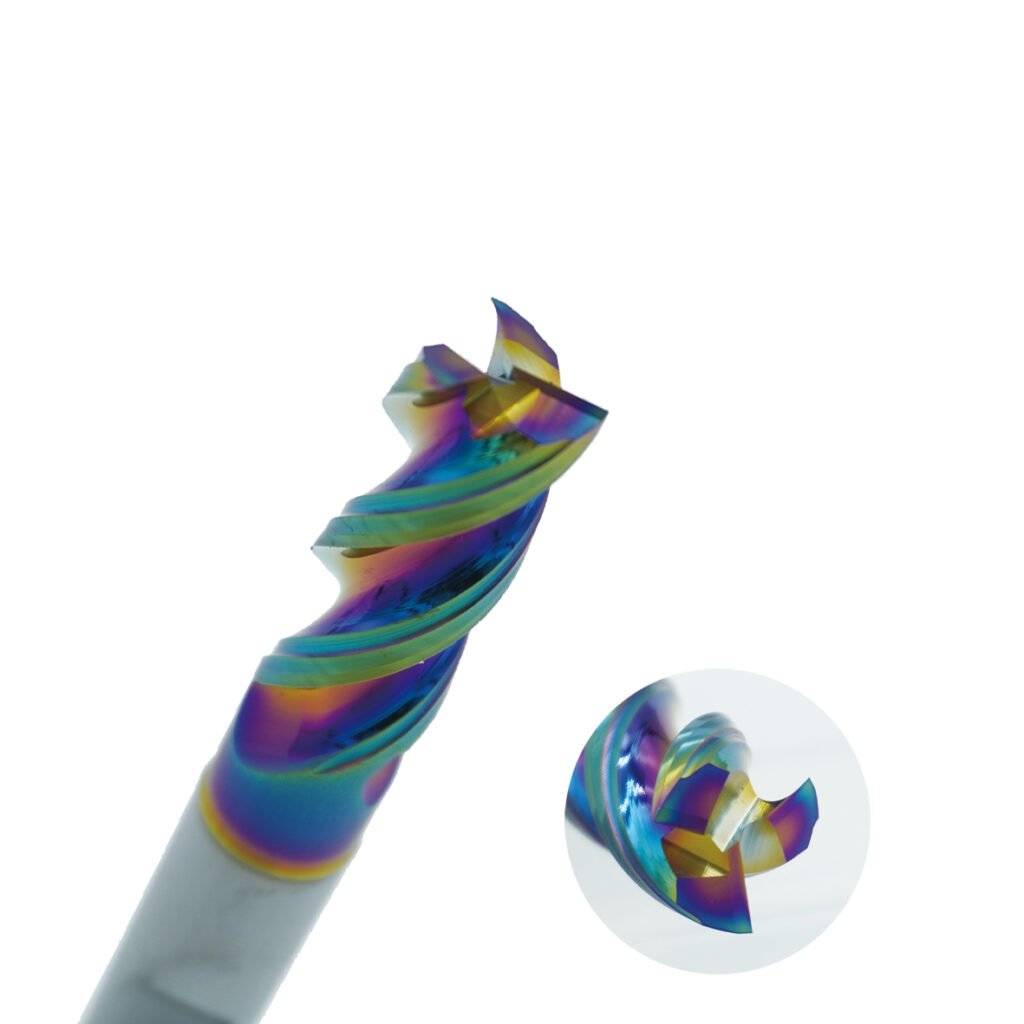
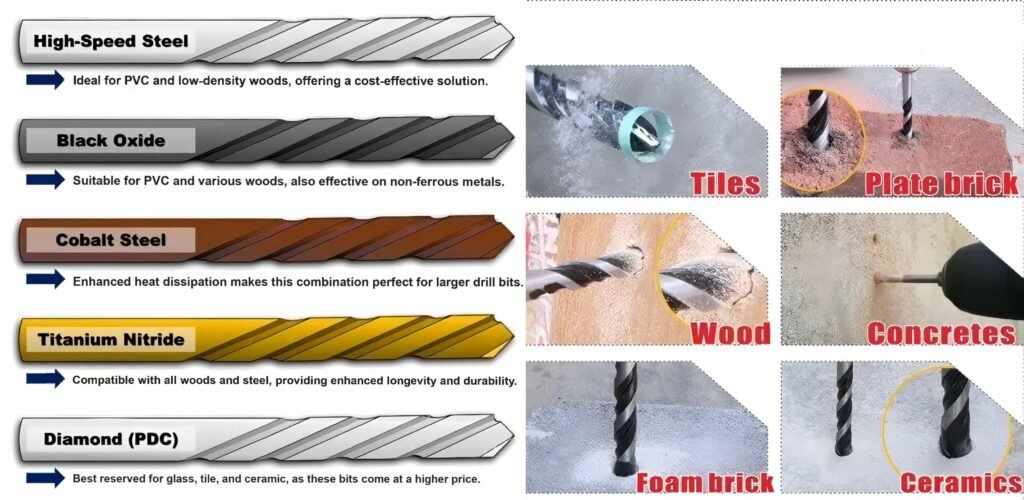
This comparison arises fairly often, but it’s not entirely like comparing apples. Carbide drill bits are made from solid or tip tungsten carbide material, cut for the highest hardness and utmost durability for long-range drilling operations. HSS drill bits, therefore, do refer to titanium bits with a coating of titanium-based (usually titanium nitride or TiAlN) that is applied to enhance surface hardness and decrease friction.
HSS bits do last longer and cut cleaner than the naked steel ones; however, they do not equal the sheer performance of carbide, especially when subjected to heat, loads, or abrasive materials.
Here’s how they compare:
Feature | Carbide Drill Bits | Titanium-Coated HSS Drill Bits |
Material | Solid or tipped tungsten carbide | High-Speed Steel (HSS) with a titanium coating |
Hardness & Wear | Extremely hard; excellent wear resistance | Improved surface hardness, but softens under heavy use |
Material Compatibility | Ideal for hardened steel, composites, and high-temperature alloys | Best for aluminum, mild steel, and non-ferrous metals |
Cost & Longevity | Higher upfront cost; lasts significantly longer when used properly | Lower cost; good for general-purpose, short-run tasks |
Factors to Consider When Selecting a Drill Bit
Picking the right drill bit is more than sheer matching of bit size to hole size. It must match tool performance to material, application, and working conditions. These considerations would facilitate proper selection that forestalls early tool wear, poor hole quality, or expensive rework.
1. Material Being Drilled
Start with the workpiece. Mild steel, aluminum, and plastic don’t require the same performance as hardened steel, titanium, or composite. Softer materials may run fine on high-speed steel; harder or abrasive metals will often require cobalt or carbide to hold up under stress.
2. Operating Conditions
Cutting speed, feed, and temperature affect the performance of a tool. High heat accumulates fast in sustained drilling or high-speed operations, particularly in CNC machines. Tools such as carbide are best applicable in this case, while HSS or cobalt would perform better under manual or intermittent use.
3. Tool Life Expectations
If tooling is constantly changing production outputs, an improved bit shall be more appropriate. Carbide offers the longest life under proper conditions. Cobalt provides a good middle ground, and HSS works well for low-volume or disposable applications.
4. Regrindability
Cobalt and HSS drill bits are suitable for resharpening multiple times, which makes them economical and logical choices for shops with grinding setups. Carbide bits can also be resharpened, but usually need special equipment.
5. Cost vs. Application Value
The most expensive bit is not necessarily the most suitable one. For quick, one-off jobs in a soft material, HSS might be enough. For a high-output, high-heat process, carbide saves more money in the long run, although it is more expensive upfront.
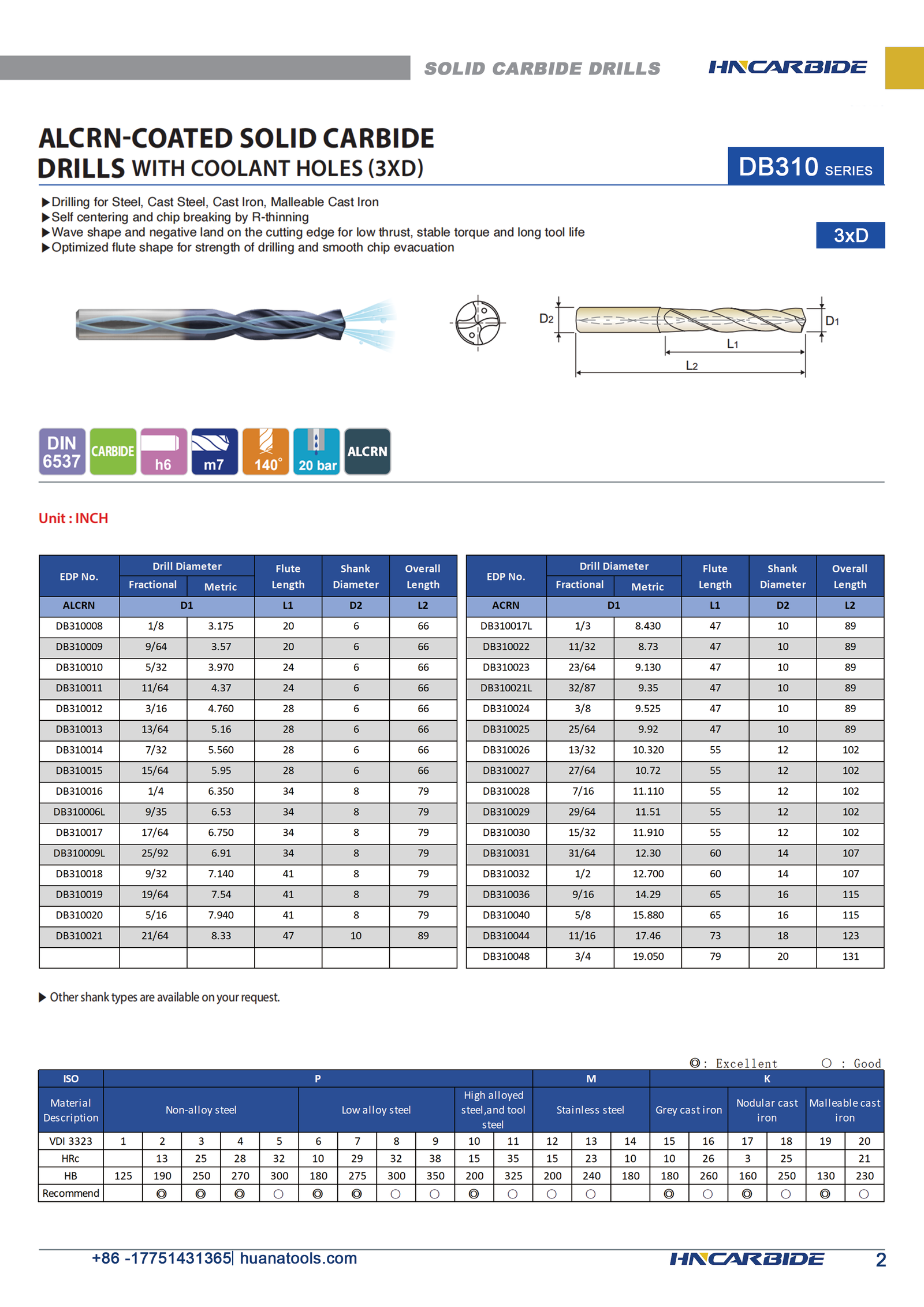
Drill Bit Product
Catalog
Click the button below to view our DIN milling cutters catalog and explore detailed product specifications to make the best choice.

Final Verdict
Drill bits cannot be the same for all applications, especially in industrial settings where every cut counts. Material composition, expected tool life, drilling speed, and job volume factors all influence which type of bit makes sense for your operation.
Here’s a quick reference to help guide the decision:
- Use HSS when control of costs is crucial, the material has medium hardness, and precision requirements are not demanding. Ideal for general fabrication, maintenance, and one-off tasks.
- If you are working on stainless steel, cast iron, or any other frictional material, jobs that require better heat resistance and edge retention, then cobalt is your best choice. It is a practical step up from HSS for most metalworking teams.
- Carbide is especially suitable for high-speed, high-accuracy conditions, such as CNC operations, hardened materials, and abrasive composites. It is good for long runs, repeat accuracy, and short downtime periods.
Each task has its own requirements, and every shop has its own vision of what efficiency means. Selecting your bits according to those realities results in fewer tool changes, improved drill quality, and a more uninterrupted workflow.
Conclusion
Every drilling operation carries its own set of challenges, be it material hardness, heat build-up, hole tolerance, or production volume. Knowing the strengths and tradeoffs of HSS, Cobalt, and Carbide drill bits makes it easier to choose the right tool for the job, reduce tool changes, and protect machines and margins.
Precision and reliability start at the cutting edge. That’s where quality tooling makes all the difference.
If you’re looking to go further, with tools built for performance, efficiency, and durability, HNCarbide is equipped to help you lead.
As a leading CNC tools manufacturer, HN Carbide delivers:
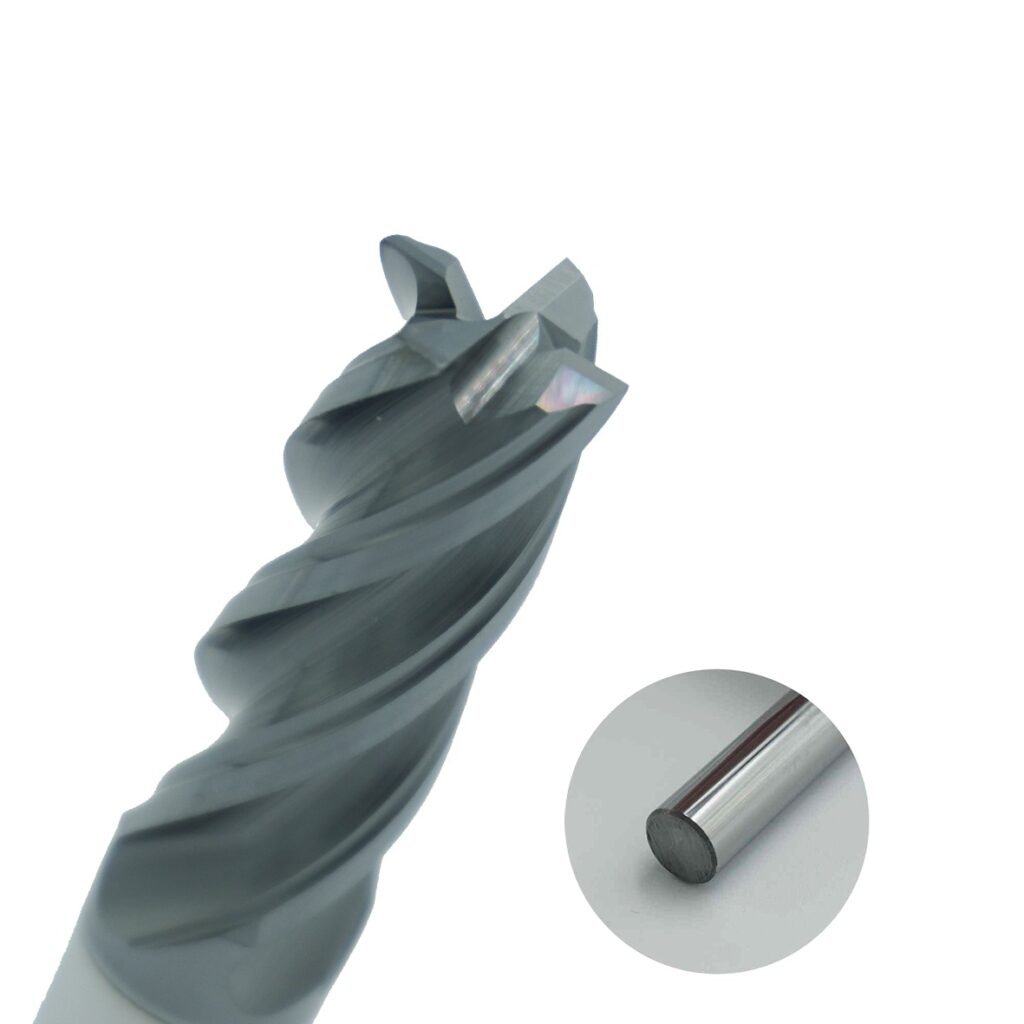
- Carbide drill bitsdesigned for precision and high-speed performance
- Custom toolingbuilt to your specs, starting from just 10 pieces
- Free standard samplesfor hands-on testing before you scale
- Full support across industries of metalworking, woodworking, and specialty machining
With over a decade of expertise, ±0.005mm tolerances, and a defect rate under 0.1%, HN Carbide combines German-standard precision with global reach and local responsiveness.
Let your tools match the quality of your work.
Contact HNCarbide to request samples, get a quote, or discuss custom tool requirements.