German Standards and Applications of HSS End Mills: Common Specifications and Tool Comparisons

High-speed steel end mills remain the backbone of precision machining in Germany, which is also one of the prime contributors to mechanical engineering and highly valued for industrial compliance and subtlety. From car manufacturers in Stuttgart to aerospace developers in Munich, these tools are traditionally relied upon by German manufacturers for their general workings, being cost-effective, and capable of milling many materials. No doubt, carbide end mills have surged in popularity in recent times for high-performance applications, but HSS end mills are still much appreciated for their durability, sharpenability, and multipurpose nature. It is partly because of steely discipline in the management of machining processes that such standards tend to underpin Germany’s perspective in this sphere, and most of the time that may well be attained with proper compliance to the Deutsches Institut für Normung (DIN) codes.
Standards will also assist in achieving uniformity, guaranteed quality, and interoperability in tools such as end mill cutters, as a result being of utmost importance for end mill cutter manufacturers and suppliers in the German market.
This blog relates to the various DIN standards related to HSS end mills, a comparison between DIN specifications, and also wise advice on selecting the right kind of tool suitable for specific applications such as milling steel components and non-ferrous alloys. Understanding these standards may deliver insight that could see your cutting operations improved immeasurably.
Common German Standards for HSS End Mills
DIN standards define the geometry, dimensions, and performance expectations for HSS end mills; following are those most relevant to the tools, providing the technical specifications and practical implications.
DIN 844: Standard Shank End Mills
DIN 844 pertains to one of the most dominant structures of end mills with cylindrical shanks in the German machining shops. It lists dimensions such as shank diameter, cutting length, and overall length to prevent interference when mounted into tool holders or milling machines. These end mills are available in two versions: short (DIN 844-K) and long (DIN 844-L), with their flute configurations extending from 2-flute end mills for slotting to 4-flute end mills for side-and-face cutting. In other specifications, the DIN standard also classifies tools by type; for example, Type N for normal materials and Type H for harder materials, allowing manufacturers to design HSS end mills for certain workpiece characteristics. For instance, a 1/4 end mill under DIN 844 would have a 30° helix and would be composed of cobalt-alloyed HSS (HSS-Co), extending its resistance to temperatures that make machining stainless steel—a frequent material in Germany’s industry—a lot easier.
DIN 845: Ball Nose End Mills
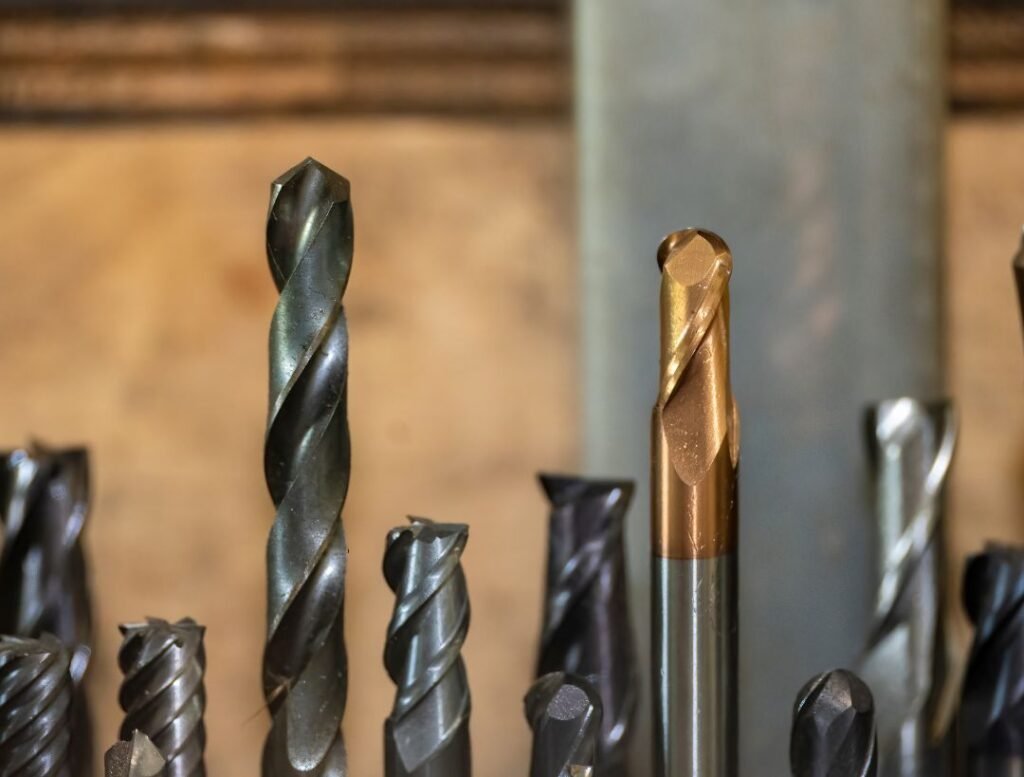
To contour surfaces and 3D milling, ball nose end mills, characterized by spherical tips, DIN 845 defines these tools as particularly adept at finishing operations—smoothly curved profiles in molds or aerospace components. The standard specifies shank tolerances and cutting-edge geometries and guarantees adequate cutting diameter for such sizes as those found in 1/8 or 1 1/2 end mills. In Germany, for instance, ball nose end mills complying with DIN 845 are coated with titanium nitride (TiN) or titanium aluminum nitride (TiAlN) to extend their life. Hence, high-precision industry’s end mill suppliers employ this practice. Cutting complex geometry while maintaining the surface quality level makes them everyday tools found in tool rooms across Hamburg to Bavaria. (Image Suggestion: Close-up of a DIN 845 ball nose end mill convex machined curved surface in aluminum, showing the spherical tip).
DIN 1835: Shank Standards for Milling Tools
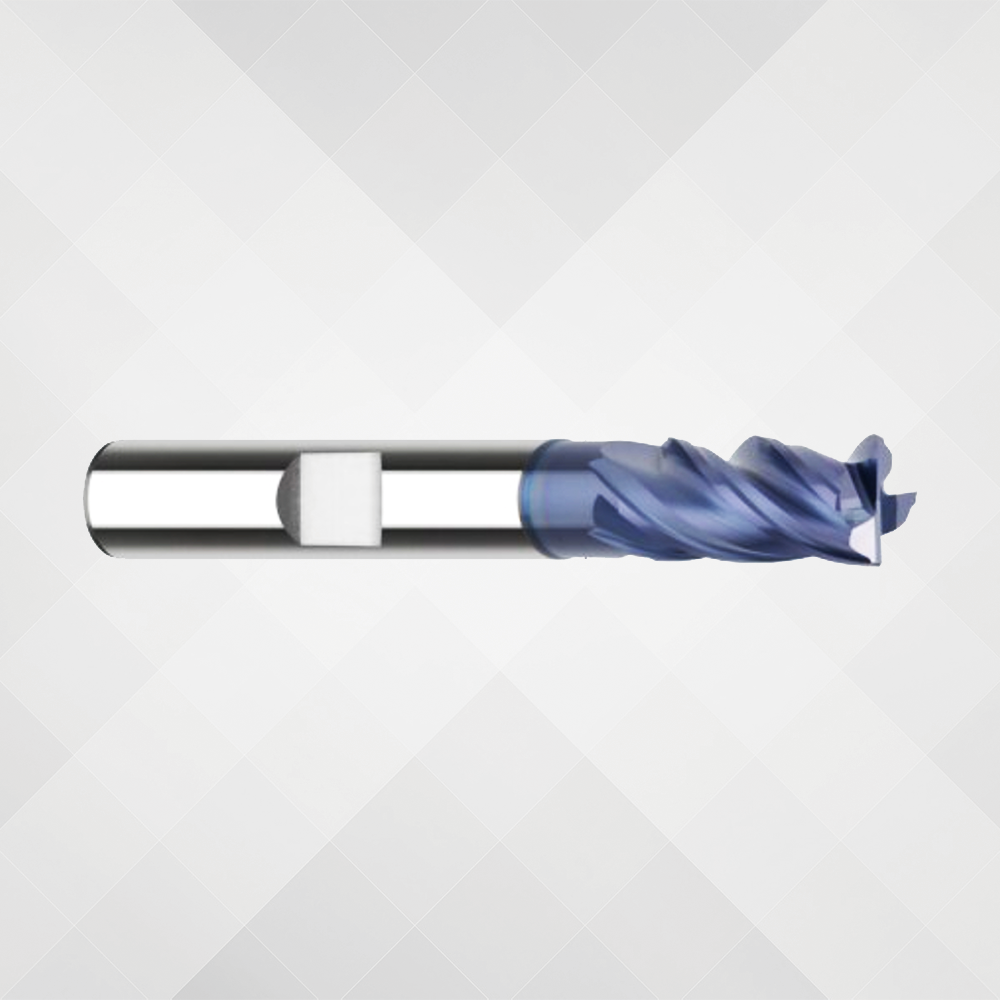
Although specialized towards HSS end mills, DIN 1835 is nevertheless vital to ensure shank compatibility to tool holders. It defines three types: A: plain cylindrical, B: Weldon with a flat, and C: whistle notch. A 1 1/4 end mill having a DIN 1835-B shank is considered to achieve superior gripping strength, thus withstanding slippage during heavy pass milling—which is a priority in German manufacturing with tough alloys. The precision in shank design that this standard enforces helps support Germany’s modular tooling systems, wherein flexibility and repeatability become paramount. To promote seamless integration with CNC setups, end mill suppliers like Gühring and Hartner are perfect adherents to the DIN 1835 standards.
DIN 6527: Long Cutting Edge End Mills
Those covered by DIN 6527 have cutting edges that are often extended and can vary in length. The tools with this standard are mostly used for deep slotting and profiling, with lengths up to 2D. In their working year, HSS end mills in compliance with DIN 6527 offer an economical alternative to this carbide concept for deeper cavity, precision, machining automotive die-making in Germany. The eccentricity here is, therefore, on flute designs and chip evacuation, which greatly affect the performance of the cutting tools in prolonged cuts. A 1-1/2 end mill, according to DIN 6527, may involve the polishing of the flutes for reduced friction during milling of aluminum—a great scope of use from Germany’s light construction industry.
DIN 6581: Roughing End Mills
The motive of the hogging out on forgings or castings gives a sort of roughing end mill prescribed in a German standard called DIN 6581, designed for quick removal of material. Such tools have corkscrew or occasionally serrated flutes that break the chips into small pieces for effective cutting. Assuming the various grades of HSS available, the proposed one also includes grade HSS-E, where tungsten is finally substituted by cobalt, which enables this grade to resist temperature while cutting up to 600°C, which is convenient in case of high tensile steels encountered in the heavy industry of Germany.
Comparison of Different HSS End Mills
Here’s a detailed table comparing HSS end mills based on DIN standards, configurations, and their strengths and trade-offs, as outlined in your request:
Category | DIN 844 (Flat-End) | DIN 845 (Ball Nose) | HSS vs. HSS-Co | DIN 6527 (Long-Cutting) | DIN 6581 (Roughing) | Coated vs. Uncoated |
Geometry | Flat-end, versatile for slotting and peripheral milling | Ball nose, ideal for contouring and finishing | Standard HSS or cobalt-enhanced HSS-Co | Long-cutting design for deep, precise cuts | Roughing profile for fast material removal | Coated (e.g., TiAlN) or uncoated |
Flute Options | 4 flutes: Higher rigidity for steel | 2 flutes: Better chip clearance for aluminum | HSS: 2-4 flutes; HSS-Co: Similar options | Typically 4 flutes for smooth finishes | 3-4 flutes, coarse for volume removal | Varies by base tool |
Material Suitability | Low-to-medium hardness (<700 MPa), e.g., mild steel | Softer materials, e.g., aluminum | HSS: Mild steel, aluminum; HSS-Co: Stainless steel, titanium | Medium hardness, e.g., steel alloys | Broad range, prioritizes speed over finish | Coated: Abrasive materials; Uncoated: General use |
Application | General-purpose milling, slots, profiles | 3D contouring, finishing | HSS: Cost-effective general use; HSS-Co: Tougher materials | Deep slots, precision machining | High-volume roughing, less finishing | Coated: High-speed milling; Uncoated: Light duty |
Strengths | Versatile, widely applicable | Excellent for curved surfaces | HSS: Sharpenable, affordable; HSS-Co: Heat-resistant, durable | Smooth finishes, deep reach | Fast material removal | Coated: Longer life; Uncoated: Easy to regrind |
Trade-Offs | Less effective for contouring | Limited slotting capability | HSS: Less durable in heat; HSS-Co: Higher cost | Slower material removal | Rough finish, needs secondary pass | Coated: Costlier; Uncoated: Shorter life in tough conditions |
Example Size | 1/4″ end mill for profiling | 1/8″ end mill for fine contours | 1/8″ HSS-Co for stainless steel | 1 1/4″ for deep slots | 1 1/2″ for heavy-duty roughing | 1/4″ TiAlN-coated for abrasive milling |
Cost Consideration | Moderate, widely available | Moderate, specialized use | HSS: Low cost; HSS-Co: 20-30% more | Higher due to precision design | Moderate, efficiency-driven | Coated: Higher upfront; Uncoated: Cheaper |
German Context | Stocked for flexibility (e.g., Hoffmann Group) | Common in finishing tasks | HSS-Co for aerospace/medical sectors | Precision-focused German shops | Speed-focused production lines | Coated for high-speed; Uncoated for small shops |
Notes:
- DIN 844 vs. DIN 845: Flat-end (844) suits broader milling tasks, while ball nose (845) excels in finishing and contouring. Flute count adjusts to material—4 for rigidity, 2 for chip clearance.
- HSS vs. HSS-Co: Cobalt (5-8%) boosts performance in Germany’s high-demand sectors like aerospace, though at a higher cost.
- DIN 6527 vs. DIN 6581: Long-cutting (6527) prioritizes precision and finish; roughing (6581) emphasizes speed and volume.
- Coated vs. Uncoated: TiAlN coatings extend life in abrasive or high-speed scenarios, while uncoated tools suit smaller shops with regrinding setups.
DIN Milling Cutters Catalog
Click the button below to view our DIN milling cutters catalog and explore detailed product specifications to make the best choice.
How to Choose the Right HSS End Mill ?
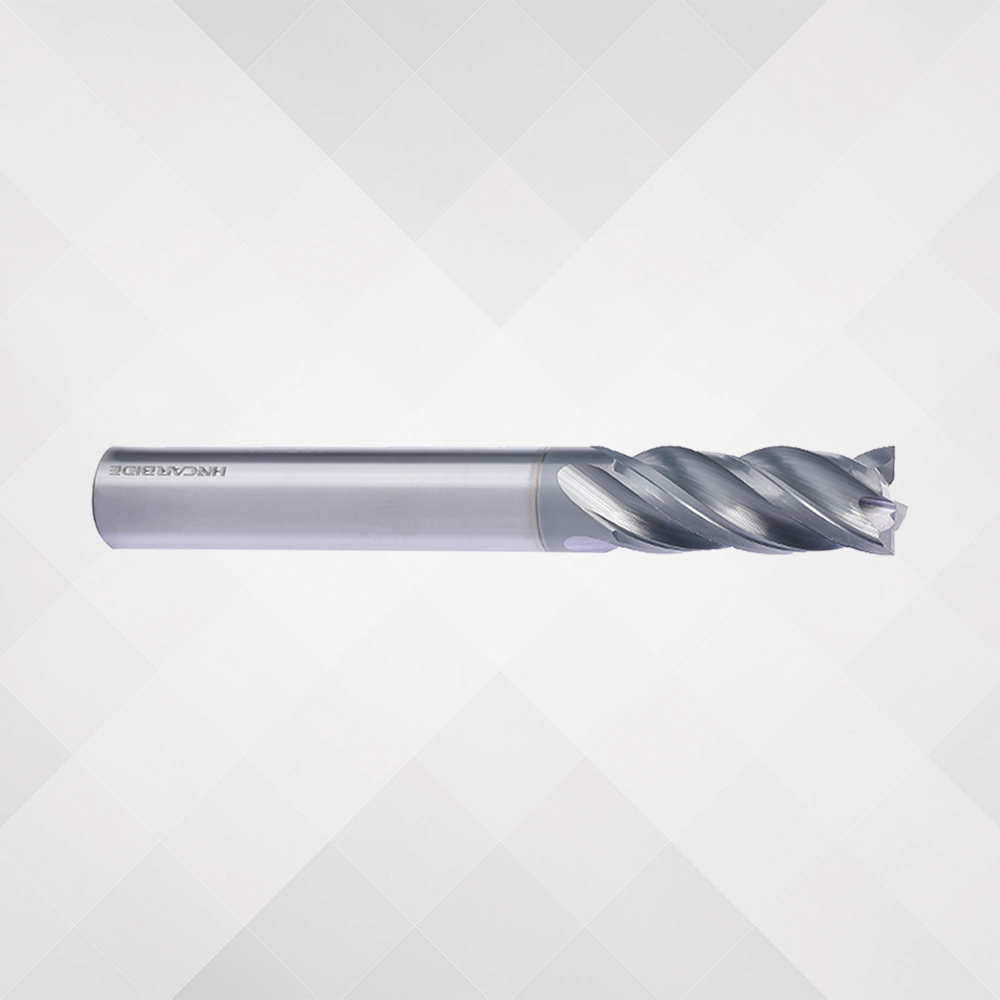
- Material Compatibility: Match the tool to the workpiece. In the case of mild steel, a DIN 844 4-flute end mill in standard HSS will suffice, but when tackling stainless steel or any titanium-based workpiece, apply HSS-Co with a TiAlN coating according to the standard of either DIN 6527 or DIN 6581. This will depend on the cut depth definitions and the needed removal rates indicated in both standards.
- Flutes and Geometry: Opt for 2-flute end mills where chip evacuation ensures open slots or soft materials such as aluminum. In cases of tougher materials or side cutting, use a 4-flute end mill, which is more stable and allows for a much better surface finish. German machinists, mostly, will use 1/8 end mills or 1 1/4 size for the tests on feeds and speeds.
- Type of Application: For roughing, DIN 6581 tools with aggressive flutes will be the best portions, while finishing would require DIN 845 ball-nose mills or DIN 844 flat-end mills. If deep milling is required, use the extended ones of DIN 6527. Cycle time will be weighed with precision—Germany’s automobile industry pays most attention to speed, while aerospace gives that to accuracy.
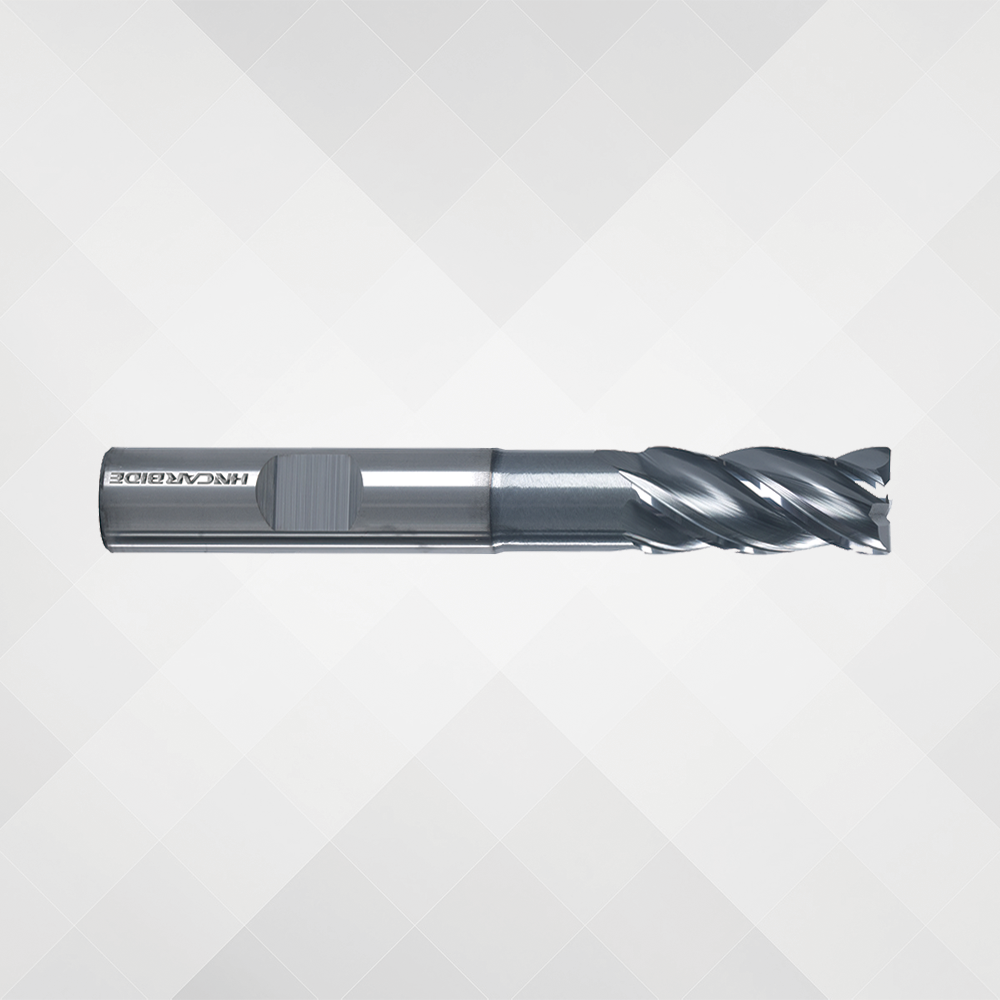
- Machine Capability: Ensure shank compatibility using DIN 1835; give names to every spindle fitting—a 1 1/2 end mill with a Weldon shank-DIN 1835-B fits high torque—CNCs common in German factories, while a plain shank-DIN 1835-A fits lighter setups.
Consider supplier reliability—Gühring or Hartner are reputable end mill suppliers known to comply with DIN and of good quality. Local mill sales companies in Germany often give technical support with selections tailored for specific machines or materials.
Trial cuts are highly important—test a 1 1/4 end mill on a scrap piece whereby vibration, chip formation, and wear assessment are employed before the real production run. This is the course wherewith precision and effectiveness, as promoted by Germany, align.
Conclusion
The High-speed steel end mills directed out of guided German DIN standards, is a mix of traditionier than 500-year buildup in quotation of engineering excellence; thus it involves all forms, following shank end mills of DIN 844, to what one can call very tough concrete roughing tool prepared under DIN 6581. The engineering of those standards shows how the end mill bits could be used for purposes of general works, cutting out a standard range of stock to works having an accuracy of the finest finish that exists today. It defines Angela and Luisa’s specimen model-like balance into this project for the practical use of the HSS end mill: alignment of functional specifications with selected production targets.
Be it major end mill manufacturers whom the sourcing is being done with or the collaboration with the mills: sales companies, assured performance claims, or the credit certified by Germany. The focus has shifted largely toward carbide. Nevertheless, they will not in the least hesitate to proclaim that end mills of HSS, despite incurring a sway from firmly inserted carbides, still have their niches.”
Now, HSS end mills built on DIN standards by Germans ensure precision and adaptability, which complement the legendary German manufacturing process. The relevant standards include DIN 844 for shank end mills and DIN 6581 for roughing tools, which set out the parameters of construction to allow end mill cutters competitive with a 1/4 end mill or a 1 1/2 end mill, for example, whereby certain performance has gravitated through different uses. The contrast in flute designs allows machinists to appreciate the 2 flute end mills for chip clearance against the 4 flute end mills, usually, more stable in design that allow higher feed rates, thus a very wide scope of work for hss end mills from fast stock removal right to finishing.
With respect to the German industries, selecting the right end mill cutter is done through tool specification matching to production requirements, a task made easier through collaboration with trusted end mill manufacturers or mill sales companies. In this period of aggressive carbide dominism over just about everything, HSS can stand its ground as the most viable, low-cost performing metal cutting tools that still perform to meet the ridiculously high standards demanded by Germany.