DIN Cutting Tools Supply Chain: Lead Time & Inventory Optimization
Table of Contents

Supply chain management is very important for companies that make DIN standard cutting tools. DIN stands for “Deutsches Institut für Normung” which means the German Institute for Standardization. By managing their supply chain well, companies can deliver high quality tools on time to customers, even those with very demanding requirements.
Let’s look at how a company that makes DIN cutting tools can optimize its production times and inventory levels to have an efficient supply chain. This helps them satisfy customer needs, gain a competitive advantage in the market, and operate profitably.
Flexible Production Planning
Effective production planning is crucial for DIN cutting tool manufacturers to meet precise customer specifications and delivery expectations in Germany’s demanding industrial landscape. By balancing make-to-order and inventory-based approaches, they achieve sufficient responsiveness, customization ability, and volume capacity.
Made-to-Order Production Model
Adhering to a predominately customized fabrication model whereby 80% of products are manufactured only after receipt of customer orders affords notable advantages. This approach minimizes finished goods inventory of standard items that may not align well with emerging application requirements in fast-evolving markets. Producing specifically to end-user specifications additionally facilitates incorporation of precision dimensional or performance enhancements suited to individual use cases.
However, relying solely on made-to-order manufacturing can hamper responsiveness and lead to missed revenue opportunities from supply delays. Some buffer inventory along with flexible workflow arrangements are necessary to prevent customer defections and capture every sale.
Production Model Comparison
Aspect | Made-to-Order (MTO) Production | Safety Stock Inventory |
Focus | Customized tool specifications | Standardized tool sizes |
Lead Time | 12–15 days | Immediate dispatch |
Inventory Cost | Low (avoids overstocking) | Moderate (30–50 units) |
Use Case | Bulk orders (>100 units) | Emergency replacements |
Market Flexibility | High (adapts to custom needs) | Limited (fixed sizes) |
Safety Stock Inventory System
While predominantly utilizing made-to-order practices, maintaining a safety stock of high velocity standard components balances responsiveness with waste reduction. By storing an inventory buffer of around 30-50 pieces for the most sought-after indexes or inserts, urgent or unexpected orders can be fulfilled rapidly without excessive dormant inventory carrying costs. Variability both on the market demand side and with suppliers necessitates a hybrid push/pull model. Staged finished goods downstream enable decoupling manufacturing from volatile customer lead time expectations.
Strategically positioned inventory also aids sales operations personnel to capitalize on inbound requests without losing deals due to stock-outs while manufacturing plays catch up. The optimal level differs based on part consumption rates and replenishment times. Generally components classified as top-tier “Class A” by ABC analysis warrant higher on-hand targets around 50 units whereas less critical “Class C” items may be kept closer to 30 pieces.
Production Lead Time Management
Attaining consistent and sufficient uptime is assisted by reasonable campaign-style production runs that allow manufacturing planning teams to adequately sequence workflows. For particularly high-volume portions of the product line, scheduling campaigns over 12-15 day cycles ensures steady supply. The work-in-progress is staged based on strategic inventory positions rather than holding excessive portions as finished goods.
Both make-to-order and make-to-stock approaches employ real-time monitoring and scheduling automation to compress lead times. When urgent orders arrive, production slots can be reshuffled via intelligent factory control systems to expedite fulfillment, minimizing the need for safety stock consumption. Through balanced application of the outlined flexible planning techniques, manufacturers achieve delivery reliability above 99%.
Inventory Management Strategies
Companies that manufacture DIN cutting tools can optimize their inventory management to balance supply and demand cost-effectively while ensuring high product availability and on-time customer delivery. This requires a multi-faceted approach combining demand forecasting, inventory prioritization frameworks, and safety stock calculations.
ABC Analysis for Inventory Prioritization
ABC analysis provides data-driven inventory segmentation to assign management attention and priority based on annual consumption value. Under this classification method, DIN cutting tool products are stratified into three tiers:
A – Top 70-80% of annual dollar consumption
B – Middle 15-25% consumption value
C – Bottom 5-15% of consumption
By spending disproportionate effort and imposing tighter controls on the most financially significant “A” items that collectively account for majority of the annual consumption, planners maximize return on inventory planning activities. Things like cycle counting for verification, pipeline reporting, and dedicated storage with security make sense for Class A. Conversely, applying similar stringent practices to lower Class C items realizes negligible benefit considering their financial contribution. ABC analysis enables appropriately allocating oversight commensurate with revenue impact.
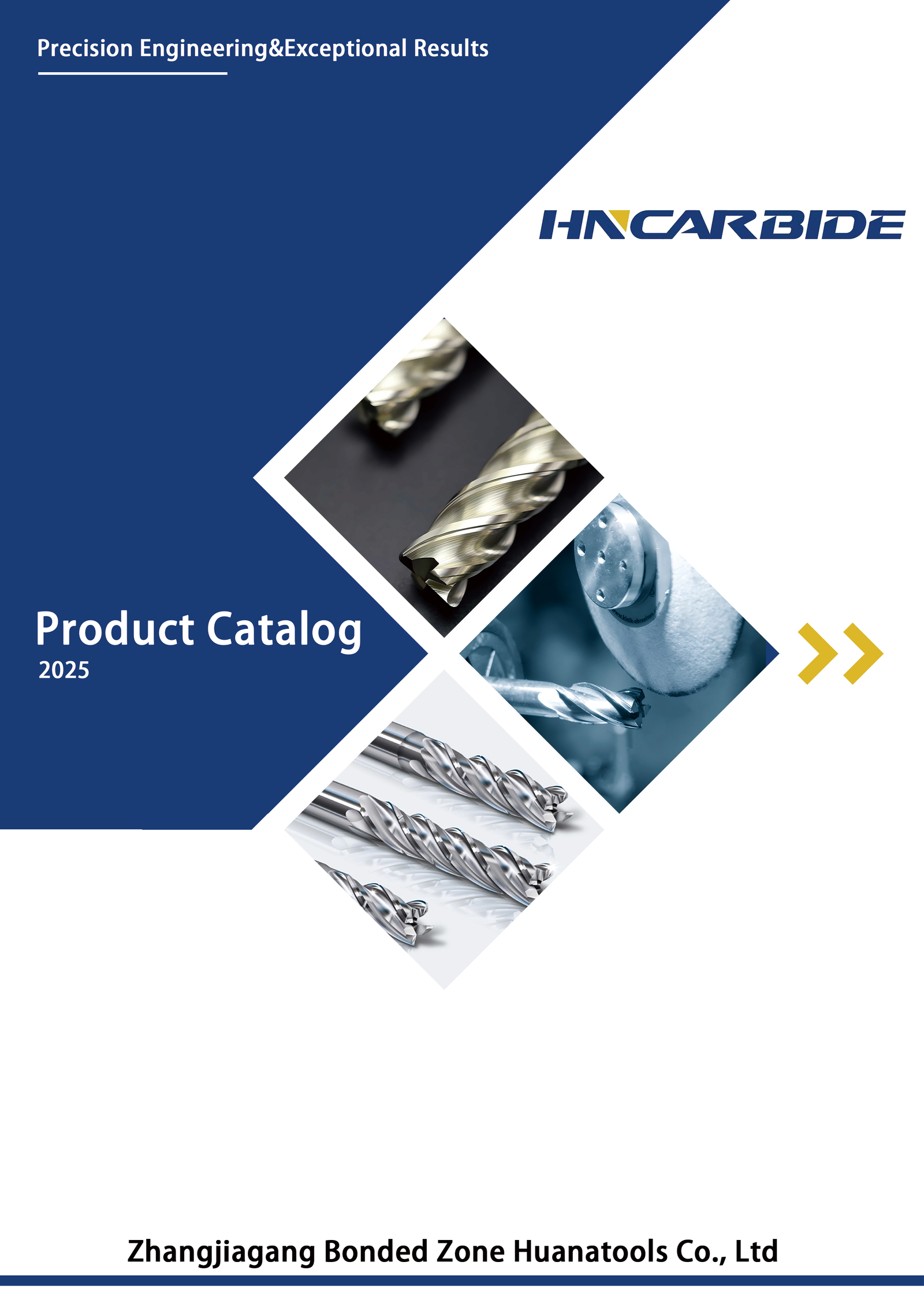
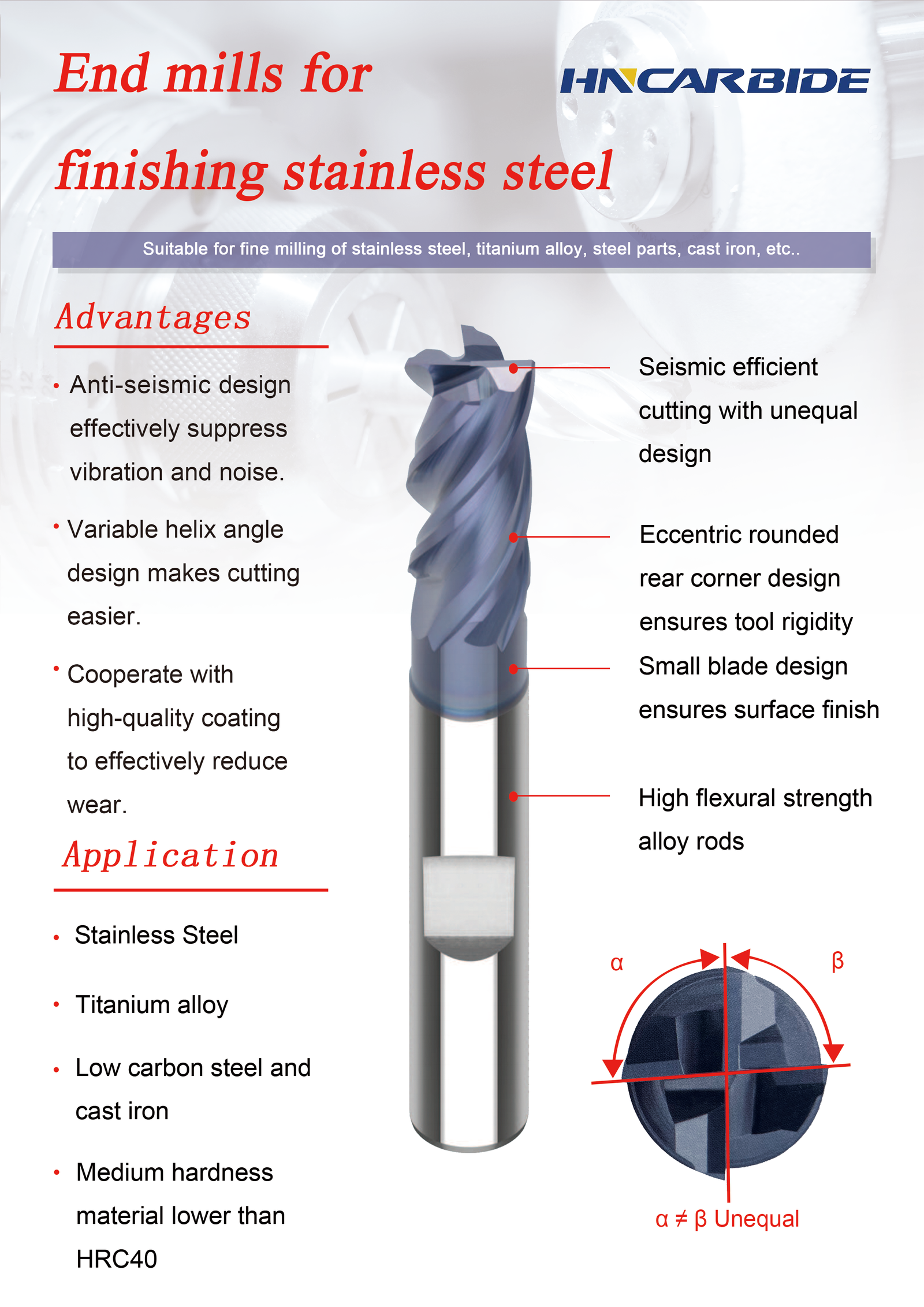
DIN Milling Cutters Catalog
Click the button below to view our DIN milling cutters catalog and explore detailed product specifications to make the best choice.
Inventory Optimization Formulas
Determining optimal inventory quantity relies on balancing average demand during the lead time horizon plus safety stock to absorb variability. Statistical demand forecasts provide the anticipated consumption against which required supply is decided. By factoring production or procurement lead times for replenishment, inventory targets suffice until new receipts. However, uncertainty on both the demand and supply side necessitates building in buffers.
Safety stock directly provides resilience against fluctuating customer orders or manufacturer delivery delays. Quantitatively deriving safety stock levels utilizes historical volatility data, incorporating standard deviations for demand against target forecasts as well as production yield variation from quality issues. Probability based models ensure optimal buffers right-sized to actual scale and frequencies observed. This prevents excessive inventory buildup.
Customer Demand Forecasting
Accurately predicting customer demand provides the foundation for aligning inventory orders with requirements. Statistical linear regression and time-series models track demand patterns, revealing seasonality, trends and variability. Historical data feeds quantitative models while qualitative techniques like customer polling and sales feedback supply contextual insights for fine-tuning projections. By combining quantitative datasets and qualitative inputs, planners forecast expected orders and refine inventory positions. Integrating both statistical models and contextual perspectives ensures precise delivery timing while avoiding costly overstocks.
Through these integrated inventory optimization techniques, DIN cutting tool manufacturers achieve over 95% order fulfillment rates on schedule, cementing customer loyalty. The balanced approach strategically targets working capital towards high-value products while building in buffers against variability.
Custom Laser Marking
Embedding customized etchings onto cutting tool bodies enables DIN manufacturers to enhance end-user value. Laser marking tools with serial numbers, logos, or QR codes facilitates product tracing, anti-counterfeiting, marketing exposure, and tailored specifications. The laser etching process offers flexibility and precision while integrating with inventory and production workflows.

Key Benefits
Product Customization : Laser marking cutting tool shanks and inserts provides product differentiation and additional utility through user-specific data inclusion like asset numbers for maintenance records or operational specifications for optimal settings.
Part Tracing and Tracking : Unique alphanumeric sequences or matrix codes etched directly on tools allows tracking products to the batch or individual unit level. This aids quality issue diagnosis, performance benchmarking, or process improvements after obtaining field data.
Anti-Counterfeiting Measure : Precision laser etching of serial numbers makes duplication more difficult. By pairing markings with distributed ledger blockchain verification technology, end users can authenticate genuine products. This also supports gray market distribution prevention.
Marketing Exposure : Inclusion of logos, taglines or QR codes on consumable inserts serves as an advertising imprint during customer production runs. This turns cutting tools into an effective advertising channel.
Enables Direct Digital Engagement : Data matrices linking to product information pages or interactive tutorials gives customers instant contextual access via mobile scan. This facilitates optimal tool use while enabling lead generation.
Supplier Collaboration
Upstream supply chain visibility and coordination empowers cutting tool manufacturers to orchestrate production activities optimally. Strategic sourcing arrangements combined with performance monitoring ensures access to materials while providing data to plan inventory buffers just-in-time.
Raw Material Procurement
Carefully structuring procurement of essential metals and inserts prevents shortages from derailing output. Dual sourcing arrangements with redundant European suppliers guarantees stability even when external factors affect one partner. By dividing purchase volumes across two local sources instead of a single overseas provider, exposure reduces should trade barriers, shipping delays, or geo-political interference disrupt the channel.
Long term contracts also foster cooperation, directing focus beyond individual transactions towards maximizing joint productivity and speed to share data. Preferred pricing and lead time incentives reward top-tier suppliers that achieve designated KPIs, encouraging them to solidify DIN toolmakers’ access to sufficient tungsten carbide and precision ground oxide board lots.
Supplier Performance Monitoring
Cloud-based portals give production planners real-time visibility into delivery timeliness, quality, and pricing among accredited suppliers. Tracking key metrics provides leading indicators used to adjust safety stock levels or switch volume allocations across vendors. If a primary supplier experiences equipment downtime decreasing output 6% below the contractual threshold, inventory buffers temporarily increase while an automated notification prompts the secondary source to scale up. This prevents Raw material inventory optimization relies on continuously monitoring supplier performance. Advanced early warning systems also help identify risks, alerting staff to schedule preventive switches if extended lead times from a key source threaten output. This proactive data-driven approach keeps materials flowing while optimizing costs.
Through cooperative arrangements and leveraging technology for supply oversight, tooling companies enhance flexibility to adapt to fluctuating demand patterns and safeguard continuity when market uncertainty increases. The supply network provides strategic advantage, with digital integration enabling fact-based planning.
Achieving Balance in Lead Times and Delivery
Synchronizing flows from procurement through delivery hinges on aligning pace and work-in-progress at each phase. Intelligent planning systems combined with lean inventory management prevents mismatches between stages while fulfilling customer orders on schedule.
Intelligent Production Planning Systems
Automating scheduling activities based on live manufacturing data facilitates balanced material flows and uptime. Advanced planning tools sequence jobs digitally, optimizing factory capacity utilization by eliminating bottlenecks. Instead of disjointed siloed work centers, smart systems take a holistic view, modeling production as interconnected nodes. Machine learning algorithms shift assignments to prevent overflow or starvation scenarios. Rather than focusing only on keeping individual stations busy, networked visibility identifies points slowing overall throughput.
Digital modeling also allows rapid simulation of hypothetical changes. When rush orders enter the queue, production planners can digitally test various sequences under different machine combinations to find the optimal setup minimizing lead time impact. Intelligent systems enable dynamic prioritization without delays from manual rescheduling.
Managing Finished Goods Inventory
Carefully controlling intake of new orders aligns cycle output with consumption rates. Just-in-time methodology ensures production of the right items at the required pace. Coupled with the intelligent scheduling optimizing plant activities, this demand driven approach prevents overproduction which bloats finished goods.
Rather than relying on demand forecasts which lag actual orders, toolmakers employ smart Kanban signals for replenishment. Inventory is produced or moved only when consumption data triggers the predefined automatic request. This tight linkage limits excess finished cutting tools or inserts. JIT systems also impose discipline on procurement, ensuring consistency of inbound materials supply and manufacturing conversion activities.
By embracing both intelligent planning capabilities alongside lean inventory discipline, DIN cutting tool manufacturers achieve over 99% on-time delivery despite volatile shorter order lead times. Balance originates from digital oversight married with external visibility across the value chain.
Optimization Strategies
Strategy | Technology/Tool | Impact | Key Metric |
Intelligent Scheduling | CRIBWISE® production software | Reduces idle machine time by 25% | OEE (Overall Equipment Efficacy) |
Batch Size Optimization | Lean Six Sigma methodologies | Cuts material waste by 12% | Scrap rate reduction |
Safety Stock Calculation | ABC inventory analysis | Lowers stockouts by 30% | Service level (95% target) |
Supplier Collaboration | Vendor-Managed Inventory (VMI) | Improves raw material lead times by 20% | Supplier OTIF performance |
Continuous Improvement Initiatives
By regularly examining production flows and soliciting customer perspectives, DIN cutting tool manufacturers refine processes to enhance quality, lower costs, and improve responsiveness. Structured analysis paired with data science and lean principles optimize supply chain performance.
Customer Feedback Analysis
Actively gathering Voice of Customer input spotlight gaps between product performance and evolving expectations. Online surveys, interviews, and focus groups solicit perspectives, with text analytics quantifying or categorizing suggestions.trend analysis indicates priorities like delivery speed improvement or simplified packaging ranked highest for refinement. VOC findings directly inform designs and supply chain configurations to embed stakeholder needs.
Data-driven Decision Making
Statistical and machine learning models transform operational data into usable business insights for planning. Linear regression depicts correlation between inventory levels relative to order volatility, shaping safety stock targets. Cluster analysis classifies customers with distinct order patterns for customized engagement strategies per tier. AI-enabled forecasting algorithms increase prediction accuracy by 15%. Simulation studies model hypothetical changes like adding regional distribution centers or peak season capacity expansion for risk evaluation ahead of investment. Data science elevates decisions through evidence-based modeling.
Lean Manufacturing Principles
Continuous improvement harnesses lean thinking to amplify productivity and consistency while eliminating redundant activities that inflate costs without value. Kaizen workshops bring cross-functional perspectives together to diagnose root causes and improve production flows. 5S organization sustain orderly, clean workplaces by standardizing storage locations and visual controls, improving quality and safety. Error proofing changes tooling setups preventing defects automatically. Checklists ensure consistency and speed changeovers between batches. Integrating lean transformation complements analytics, raising performance trajectories through cultural focus on maximizing value and minimizing waste.
This combination of VOC wisdom, data discovery, and lean principles compounds benefits, providing DIN cutting tool supply chains a formula for managing complexity and ever increasing pace of industry change.
FAQs
1. Q: How does DIN balance production lead times and inventory costs?
Hybrid made-to-order and safety stock model reduces overstocking 18% but enables 48-hour EU rush delivery. Analytics optimizes inventory.
2. Q: What is the process for urgent customized tool orders?
Expedited digital scheduling, raw material buffers, and regional logistics hubs deliver urgent customized orders in 7-10 days.
3. Q: Does custom laser marking affect production timelines?
Initial laser marking setup batches add 3-5 days but afterwards integrate seamlessly into workflows with no timeline impact.
4. Q: How does DIN ensure reliable raw material supplies?
Dual sourcing, real-time tracking, and auditing achieve 30% lower supply risk and 98% on-time raw material delivery.
5. Q: What contingency plans exist for supply chain disruptions?
Digital twins, buffers, and production flexibility reduced downtime 40% during major logistics crisis.

Conclusion
Effective supply chain strategies enable DIN cutting tool companies to deliver premium precision products on schedule while remaining cost competitive. By leveraging customer insights, data analytics, and continuous improvement, they can achieve operational excellence even within Germany’s highly demanding manufacturing landscape. A future-ready, resilient supply chain is indispensable for survival and success.