Coated Cutting Tool Materials and Types: A Practical Guide for CNC Machining
Table of Contents
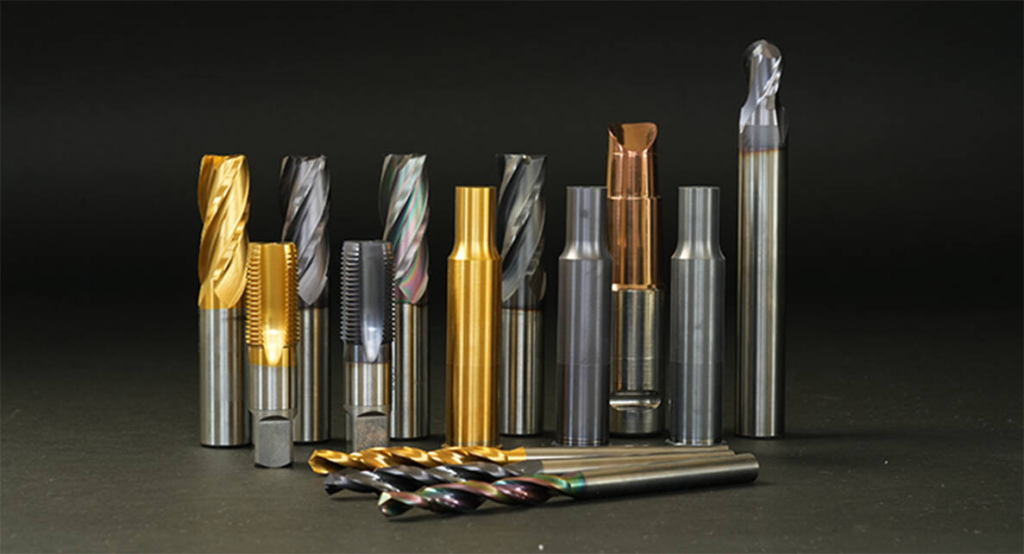
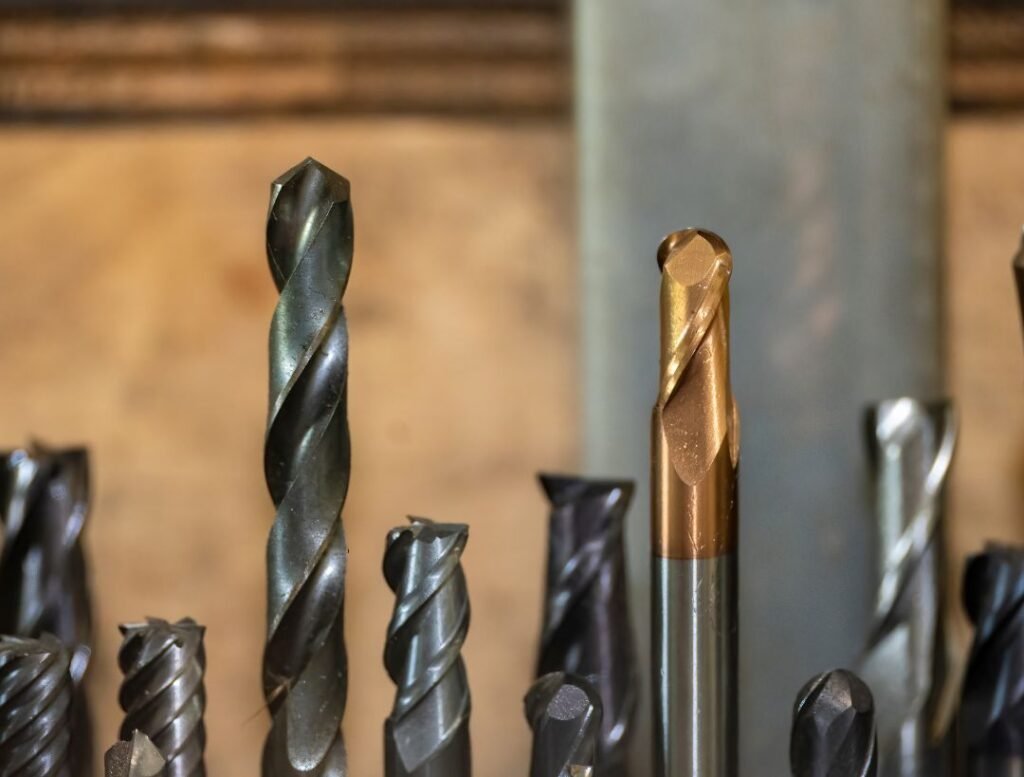
Coating is one of the easiest features to notice on a cutting tool, but it is also one of the easiest to oversimplify. A gold drill is not automatically the right drill. A dark violet AlTiN end mill is not automatically better than a TiN-coated tool. A CVD-coated insert may run beautifully in a steel turning operation and still be a poor match for a sharp-edge micro end mill.
In real machining, the coating only works when it fits the substrate, tool geometry, workpiece material, cutting speed, coolant strategy and machine condition. The purpose is not decoration. A good coating lets a tough tool body carry a surface that is harder, more wear-resistant, more chemically stable, or better at handling heat and friction.
This guide explains the common coating materials and coating types used on carbide and high-speed steel cutting tools. It is written for CNC shops, production engineers and tooling buyers who need to choose tools with fewer trial-and-error cycles.
Why Cutting Tools Are Coated
The basic problem is familiar: the tool edge needs toughness and wear resistance at the same time. A very hard material may resist abrasion but chip under impact. A tougher material may survive interrupted cutting but wear too quickly at high speed. Coating technology helps manage that conflict by separating some surface functions from the bulk material.
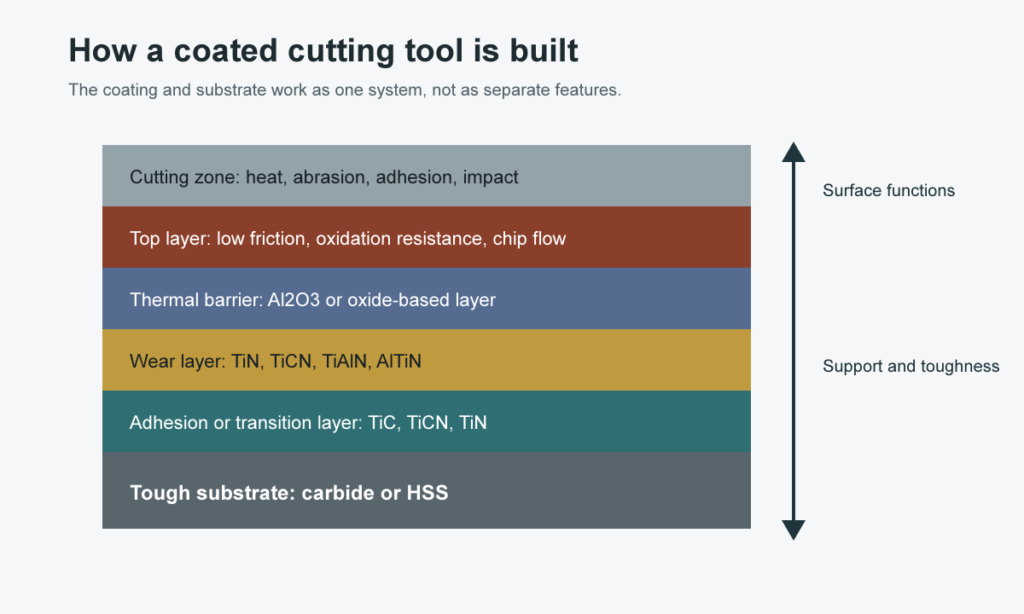
In most coated tools, the substrate supplies strength, toughness and shape stability. The coating is a thin engineered layer, often only a few microns thick, that changes the contact between tool, chip and workpiece.
Depending on the coating system, it can help:
- slow flank wear and crater wear;
- reduce friction and built-up edge;
- limit chemical reaction between tool and work material;
- reduce heat entering the tool body;
- improve oxidation resistance in dry or high-speed cutting;
- extend tool life when cutting parameters are already reasonably controlled.
Coating is not a cure for poor rigidity, excessive runout, wrong geometry or unstable chip evacuation. If a coated drill fails from chip packing, a more expensive coating may only delay the same failure. That is why coating selection should start with the machining condition, not with color.
Main Substrate Materials for Coated Tools
Coated cutting tools are usually built on high-speed steel, cemented carbide, cermet, ceramic, cubic boron nitride, or diamond-related substrates. For everyday CNC manufacturing, the two most common bases are high-speed steel and cemented carbide.
High-speed steel remains useful for taps, form tools, drills, reamers and lower-speed operations where toughness and cost matter. It is commonly paired with PVD coatings such as TiN, TiCN or TiAlN because PVD runs at a lower process temperature than traditional CVD and is less likely to distort finished HSS tools.
Cemented carbide is the dominant substrate for modern inserts, end mills, drills and high-productivity cutting tools. It offers much higher hot hardness and compressive strength than HSS. Carbide tools can use PVD coatings for sharper edges and interrupted cuts, or CVD coatings for thicker, highly wear-resistant layers on turning and milling inserts.
Ceramic, CBN and diamond tools may also be coated, but they are more specialized. In a purchasing discussion, the substrate should always be part of the coating conversation. Asking for “AlTiN coating” without specifying the carbide grade, tool geometry and application leaves too much room for a poor match.
CVD vs. PVD Coated Cutting Tools
The two major coating methods are chemical vapor deposition and physical vapor deposition.
CVD coatings are formed by chemical reactions at high temperature. Traditional CVD temperatures are high enough that the process is mainly associated with cemented carbide inserts rather than finished HSS tools. CVD can produce relatively thick, uniform coatings such as TiCN and Al2O3. These layers are valuable in steel turning, cast iron machining and other applications where heat and abrasive wear are severe.
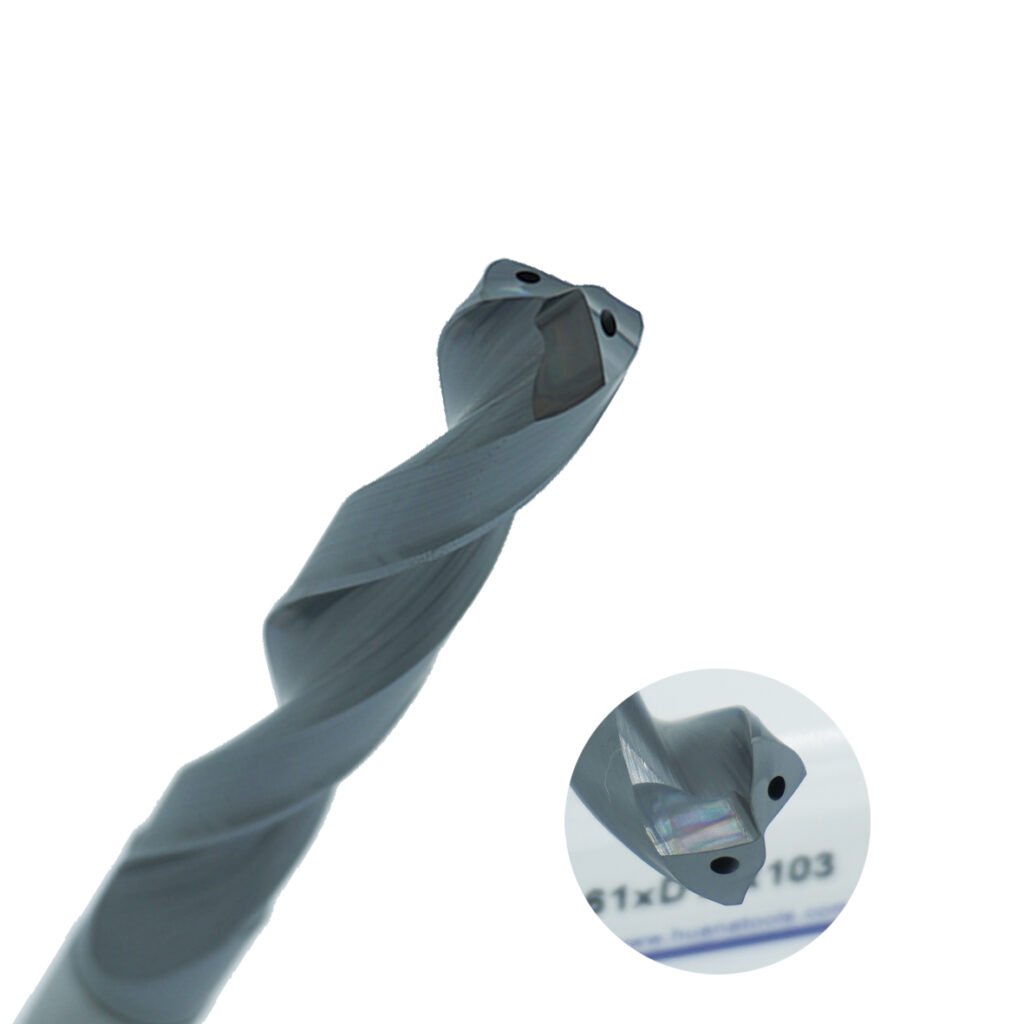
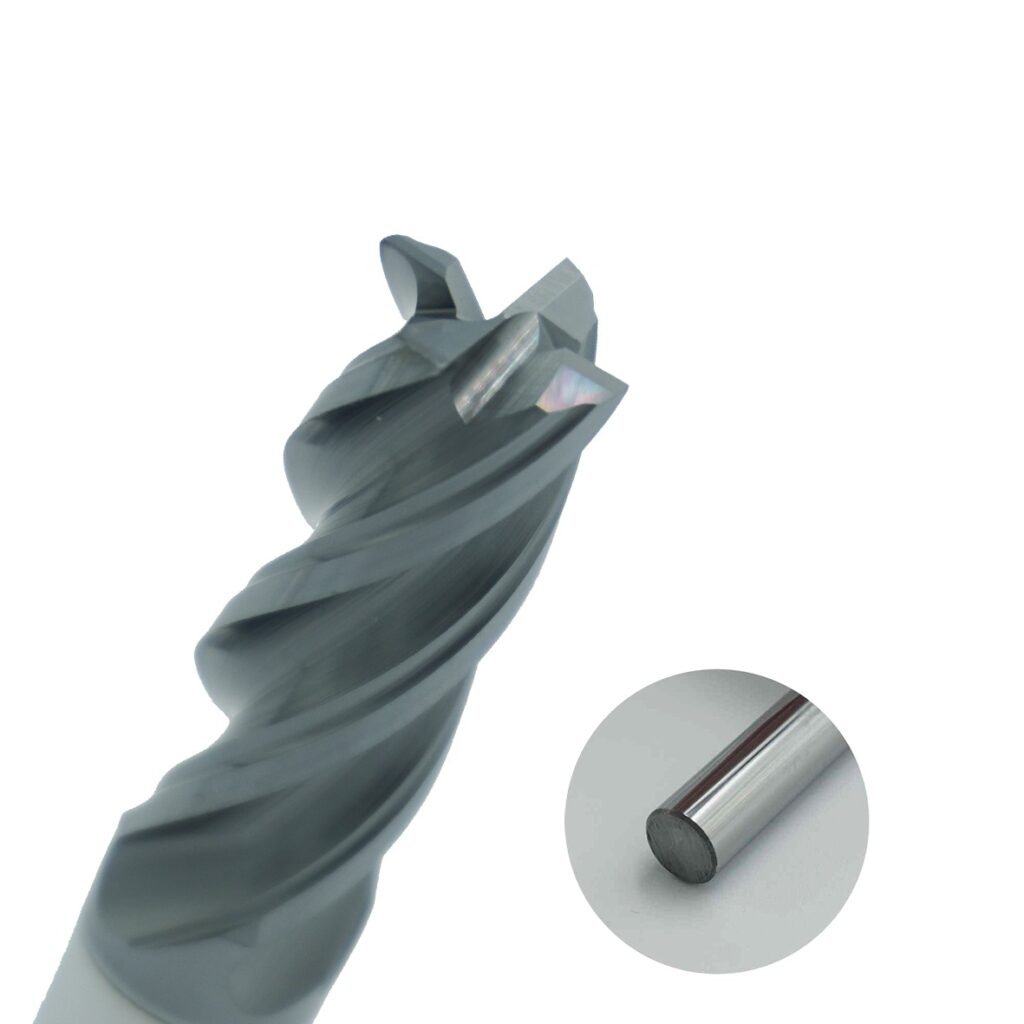
PVD coatings are deposited by physical vapor processes at lower temperatures. PVD is widely used on solid carbide end mills, drills, taps and HSS tools because it can preserve sharper cutting edges and reduce thermal effect on the substrate. PVD coatings are often thinner than CVD coatings, which can help in applications with impact, tight edge requirements or small tool diameters.
Neither method is universally better. A CVD-coated insert may be the right choice for high-speed continuous turning of steel. A PVD-coated carbide end mill may be better for milling hardened steel, drilling, tapping or interrupted cuts where edge toughness and coating stress matter.
Coating method | Typical tool use | Main strengths |
CVD | Carbide turning and milling inserts | Thick wear layers, good heat and crater wear resistance, strong performance in steel and cast iron |
PVD | Solid carbide tools, HSS tools, taps, drills, end mills | Lower process temperature, sharper edges, good adhesion, good for multilayer and high-performance coatings |
Multilayer systems | Inserts, drills, end mills and special tools | Combines adhesion, wear resistance, thermal barrier and low friction in one stack |
Common Coating Materials and What They Do
TiN coating
Titanium nitride, usually seen as a gold coating, is one of the best-known cutting tool coatings. It offers higher surface hardness than uncoated HSS, relatively low friction and good chemical stability. Its thermal expansion behavior is compatible with HSS, which helps explain why TiN became common on drills, taps and general-purpose tools.
TiN is not the newest coating, but it remains useful in moderate cutting conditions, threading, drilling and general shop use. It can help reduce friction and improve wear life without creating the cost or application sensitivity of more advanced coatings.
TiCN coating
Titanium carbonitride is harder and usually more wear-resistant than TiN. It is often used where abrasive wear is a concern and where cutting temperatures are not so high that oxidation resistance becomes the deciding factor. TiCN can work well in milling and turning of steels, stainless steels and some cast irons, depending on grade and coolant use.
The practical caution is temperature. In hot, dry, high-speed cutting, TiCN may not be the first choice compared with TiAlN or AlTiN systems.
TiAlN coating
Titanium aluminum nitride is widely used for solid carbide end mills, drills and high-speed tools. Its value comes from hot hardness, oxidation resistance and relatively low thermal conductivity. Under high cutting temperature, the aluminum component helps form a protective oxide layer on the coating surface, which can improve resistance to oxidation and diffusion wear.
TiAlN is often a strong choice for dry or near-dry cutting, high-speed milling, alloy steels, hardened steels and applications where heat is concentrated near the cutting edge. It is not automatically ideal for every aluminum operation because adhesion and built-up edge may become the bigger issue.
AlTiN coating
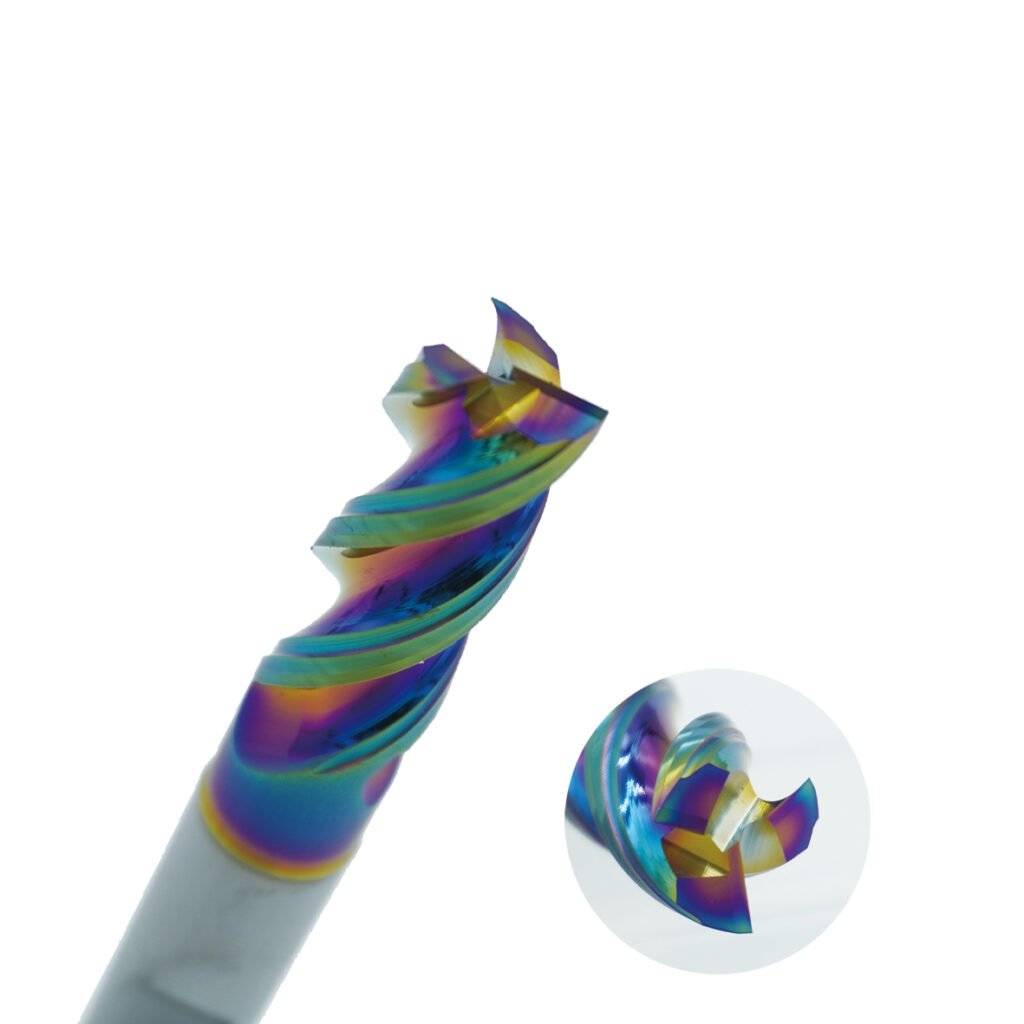
AlTiN is closely related to TiAlN but contains a higher aluminum ratio. In many tool catalogs, AlTiN is positioned for high-temperature, high-speed and hardened-material applications. It can maintain hardness at elevated temperature and is commonly used on carbide end mills for hard milling, die and mold work, and dry machining.
The benefit is strongest when the cut actually reaches the thermal range where the coating works. In slow, gummy, low-temperature cutting, the same tool may not outperform a different coating and geometry. With AlTiN, cutting speed, chip load and rigidity still matter.
Al2O3 coating
Aluminum oxide is mainly seen in CVD coating systems on carbide inserts. It is chemically stable and works as a thermal barrier, reducing heat transfer into the carbide substrate. This makes Al2O3 valuable for high-speed turning of steel and cast iron, where crater wear and thermal damage can limit insert life.
Al2O3 is often used with TiCN, TiN or other intermediate layers because the full coating stack needs both adhesion and thermal performance. In rough turning or interrupted cutting, the insert grade and edge preparation may matter as much as the coating material.
Diamond, DLC and soft solid-lubricating coatings
Diamond coatings and DLC-type coatings serve different needs from TiN or TiAlN. They are often selected for non-ferrous and abrasive materials such as graphite, carbon-fiber composites, high-silicon aluminum and some plastics. They can offer extremely low friction or high abrasion resistance, but they are not general-purpose steel-cutting coatings. Diamond reacts poorly in many ferrous cutting conditions at high temperature.
Soft or lubricating coatings such as MoS2-type layers are used where friction reduction is the main goal. They can help in selected dry or low-load applications, but they are not a substitute for a hard wear layer in severe metal cutting.
Coating material | Typical strengths | Common applications |
TiN | Low friction, general wear improvement, good on HSS | Drills, taps, reamers, general machining |
TiCN | Higher hardness and abrasive wear resistance | Steels, stainless steels, cast iron in moderate heat |
TiAlN | Hot hardness, oxidation resistance, heat control | Dry milling, alloy steel, hardened steel, carbide end mills |
AlTiN | High-temperature hardness and wear resistance | Hard milling, high-speed machining, dry cutting |
Al2O3 | Thermal barrier and crater wear resistance | CVD-coated carbide inserts for steel and cast iron |
Diamond / DLC | Very low friction or extreme abrasion resistance | Graphite, CFRP, aluminum alloys, non-ferrous materials |
Single-Layer, Multi-Layer and Nano Coatings
A single coating layer is simple to understand, but many modern cutting tools use multi-layer or composite coatings. The reason is practical: one layer rarely solves every cutting problem.
For example, a carbide insert may use a TiC or TiCN layer near the substrate to support adhesion and wear resistance, an Al2O3 layer for thermal protection, and a TiN top layer for lower friction or wear indication. The exact naming varies by manufacturer, but the logic is similar. The inner layers help the coating stay attached. The middle layers take wear and heat. The outer layer affects chip contact and surface interaction.
Nano-layer coatings use very thin alternating layers to improve hardness, crack resistance or oxidation behavior. They can be useful, but the word “nano” should not be treated as a guarantee. What matters is whether the coating design matches the workpiece material and failure mode.
Coating thickness also matters. A thicker coating can improve wear resistance in stable continuous cutting, but it may increase edge radius and internal stress. Thin coatings often perform better in interrupted cutting, small-diameter tools and sharp-edge applications because they preserve the cutting edge and reduce the risk of cracking or flaking.
Coating Selection by Machining Condition
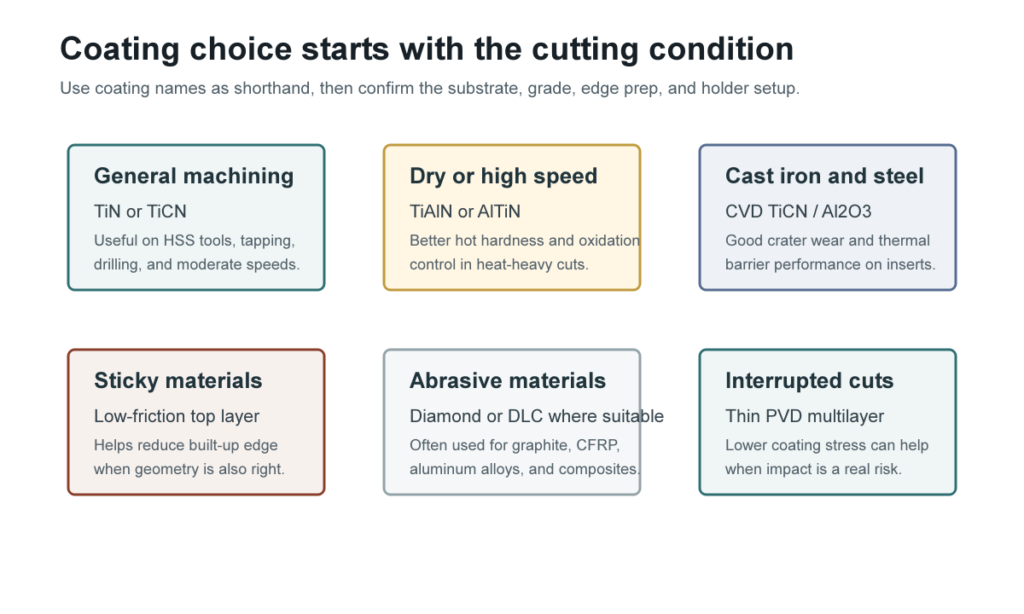
The right question is not “Which coating is the best?” It is “Which coating helps with the current limiting failure?”
If an insert is failing from crater wear in steel turning, a CVD TiCN/Al2O3 system may be a sensible direction. If a carbide end mill is wearing quickly in dry hard milling, TiAlN or AlTiN may be worth testing. If a tap is galling in stainless steel, a low-friction coating, better lubricant and thread geometry may matter more than maximum coating hardness. If a drill chips at the margin, runout, holder quality, point geometry and chip evacuation should be checked before blaming the coating.
Machining condition | Coating direction to consider | Why it may help |
Dry milling of alloy steel | TiAlN or AlTiN PVD | Oxidation resistance and hot hardness |
Steel turning at high speed | CVD TiCN/Al2O3 multilayer | Crater wear and heat resistance |
Tapping or drilling with HSS | TiN, TiCN or suitable PVD coating | Lower friction and better wear life |
Cast iron machining | CVD multilayer or wear-resistant PVD | Abrasive wear and thermal stability |
Aluminum alloy machining | DLC, diamond where suitable, or polished uncoated carbide | Low adhesion and chip welding control |
Hardened steel milling | AlTiN or advanced TiAlN PVD | Hot hardness and dry cutting performance |
Dry Cutting and Thermal Control
Dry cutting puts more responsibility on the coating. Without coolant removing heat, the tool must resist oxidation, maintain hardness and avoid transferring too much heat into the cutting edge. This is why TiAlN and AlTiN became so important in high-speed dry machining.
Al2O3 also plays a key role in many insert coatings because it is an effective thermal barrier. In suitable turning operations, it helps keep the cutting edge from softening or deforming under heat.
However, dry cutting is not simply “use a heat-resistant coating and turn off coolant.” Chips must leave the cut quickly. The toolpath must avoid rubbing. The machine must be rigid enough to prevent vibration. In drilling, blind holes and deep holes may still need coolant or air assistance because chip evacuation can be the limiting factor.
Troubleshooting Coated Tool Failures
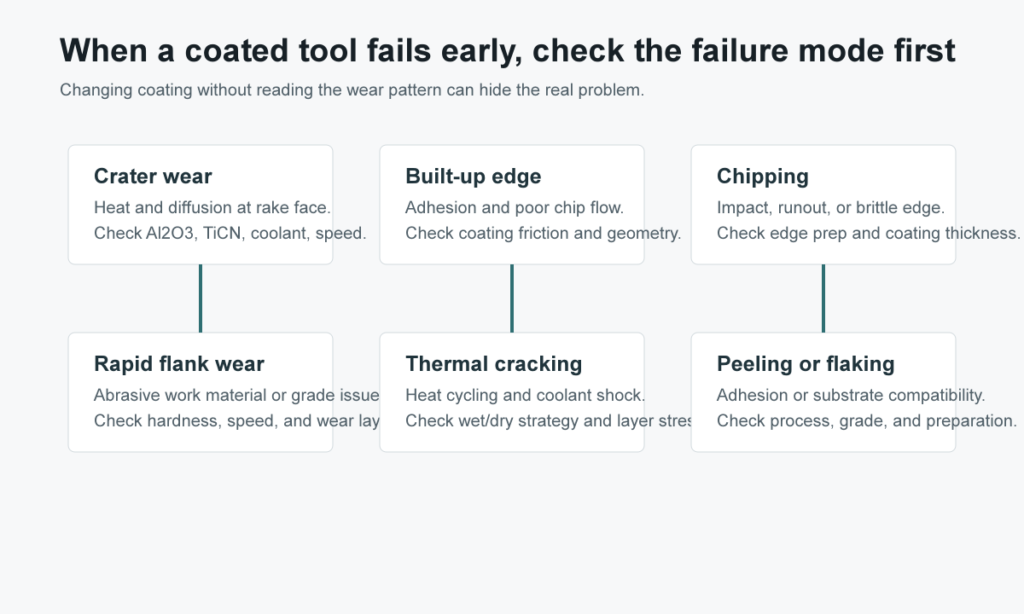
When a coated tool fails early, look at the wear pattern before changing suppliers or coating names. The visible damage usually points to the real bottleneck.
Crater wear on the rake face points toward heat, chemical wear or diffusion. Built-up edge points toward adhesion, friction, speed, lubrication or geometry. Chipping points toward impact, unstable fixturing, excessive edge sharpness, runout or a coating/substrate combination that is too brittle for the cut. Thermal cracks suggest heat cycling, especially when coolant is applied inconsistently in high-temperature cuts.
Coating flaking or peeling deserves special attention. It may come from poor adhesion, unsuitable substrate preparation, wrong edge preparation, excessive coating thickness, or a cutting condition that exceeds the coating design. In that case, buying the same coating name from a different source may not solve the problem unless the full coating process and tool grade are reviewed.
What B2B Buyers Should Specify
For tooling buyers, coating selection becomes easier when the request includes enough application detail. A useful RFQ should not only say “coated carbide end mill” or “TiAlN insert.” It should include the workpiece material, hardness, operation type, machine condition, coolant method, target tool life and current failure mode.
Ask the supplier what substrate grade and coating process are being used, whether the coating is PVD or CVD, the approximate coating family, the recommended cutting data, and the failure mode the tool is designed to resist. For critical production jobs, request test data on similar materials rather than relying on coating color or catalog claims alone.
For custom tools, coating should be selected after geometry. Flute count, rake angle, clearance, edge preparation and chip space often decide whether the coating can perform. A strong coating on the wrong geometry is still the wrong tool.
Conclusion
Coated cutting tools work best when the coating, substrate and machining condition are treated as one system. TiN and TiCN still have a place in general machining. TiAlN and AlTiN are strong choices for hot, dry and high-speed carbide tools. Al2O3 is valuable in CVD insert systems where thermal barrier performance matters. Diamond and DLC coatings are powerful for selected non-ferrous and abrasive materials, but they are not universal steel-cutting solutions.
For production machining, the practical path is simple: identify the failure mode, match the coating to that problem, then confirm the substrate, geometry, holder and cutting data. HNCarbide can support carbide tool selection and coating discussions for milling, drilling, turning and custom cutting tool applications where tool life and process stability matter more than coating color.