Skip to content
Carbide End Mills for Stainless & Hardened Steel: How to Stop Burning Tools and Start Running Stable
Table of Contents
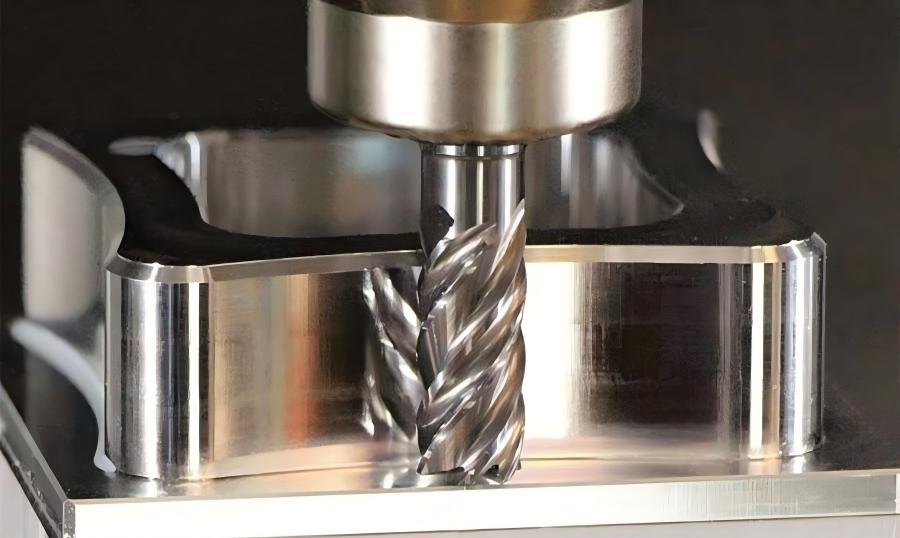
When stainless steel squeals, edges chip, or a hardened die kills a brand-new tool in minutes, it’s easy to blame the machine. In reality, the main issue is usually tool choice and cutting parameters, not the spindle.
Stainless steel and hardened steels are two of the toughest materials you’ll ever put a carbide end mill into:
- Stainless has low thermal conductivity and work-hardens if you let the tool rub.
- Hardened tool steels (45–70 HRC) are extremely abrasive and demand a very wear-resistant cutting edge and coating.
This article gives you a practical framework for choosing and applying the right solid carbide end mill for these materials:
- How to read hardness (HRC / HB) and pick the right carbide grade
- What flute count and geometry to use in stainless vs. hardened steel
- Which carbide end mill coatingsactually help
- Realistic starting carbide end mill cutting parameters(SFM, feed per tooth)
- How to build a focused mini carbide end mill setfor tough materials
I’ll also highlight product-level details like flute count, corner radii, and typical size ranges (e.g. 3/8 carbide end mill, 10mm carbide end mill, 1/2 inch carbide end mill) that actually matter on the shop floor.
Know What You’re Cutting: Stainless vs. Hardened Steel
Before you pick any carbide end mill cutter, you need to know the hardness range and steel type—not just “it’s stainless” or “it’s hard.”
Typical Hardness & Behavior
Material Type | Typical Hardness | Machining Behavior | What the Tool Must Handle |
Austenitic stainless (304, 316) | ~200–250 HB | Work-hardens easily, low thermal conductivity | Heat at the cutting edge, tendency to smear, long chips |
Pre-hardened mold steel (P20, H13 pre-hard) | ~30–40 HRC | Medium hardness, still abrasive | Needs tougher grade and coating; good chip evacuation |
Hardened tool steel (45–55 HRC) | 45–55 HRC | “Hard machining” but still roughable | Strong edges, stable setup, good coating |
High-hardness tool steel (55–65+ HRC) | 55–65/70 HRC | Very abrasive, mostly finishing | High-hardness carbide, nano-coatings, light step-over |
Key point: “Stainless” around 200–350 HB behaves very differently from a 60 HRC die insert, so they cannot share the same tool design or parameters.
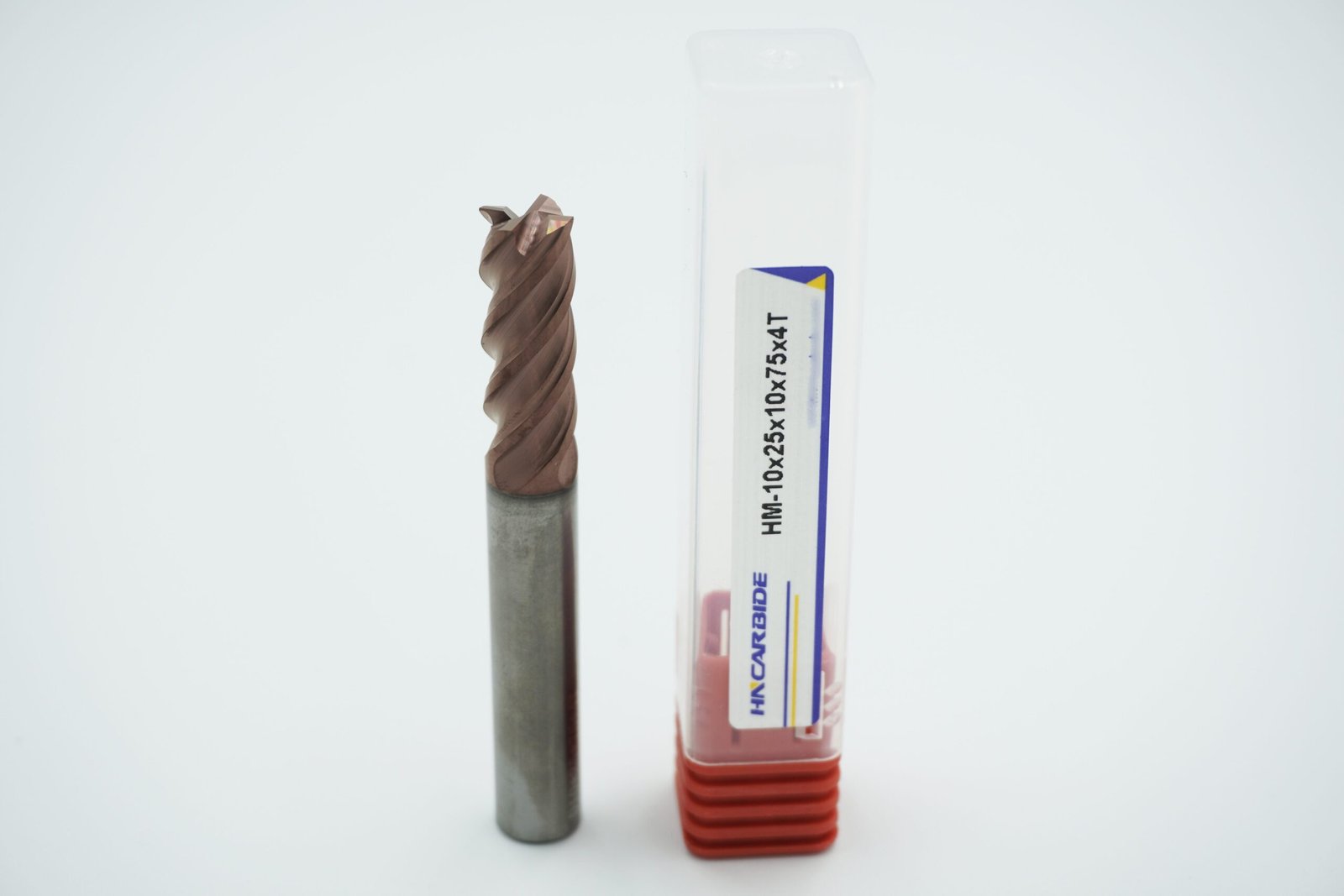
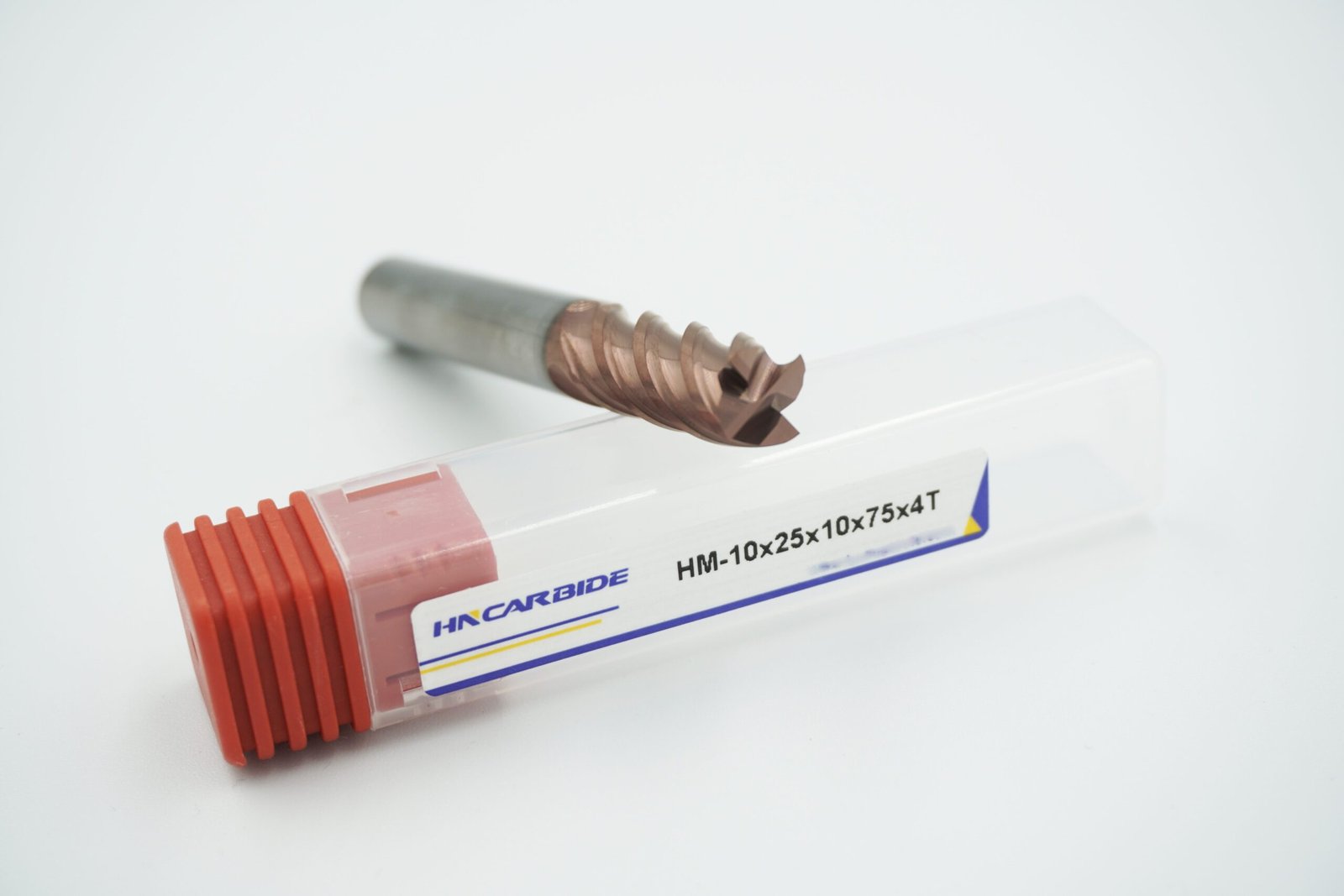
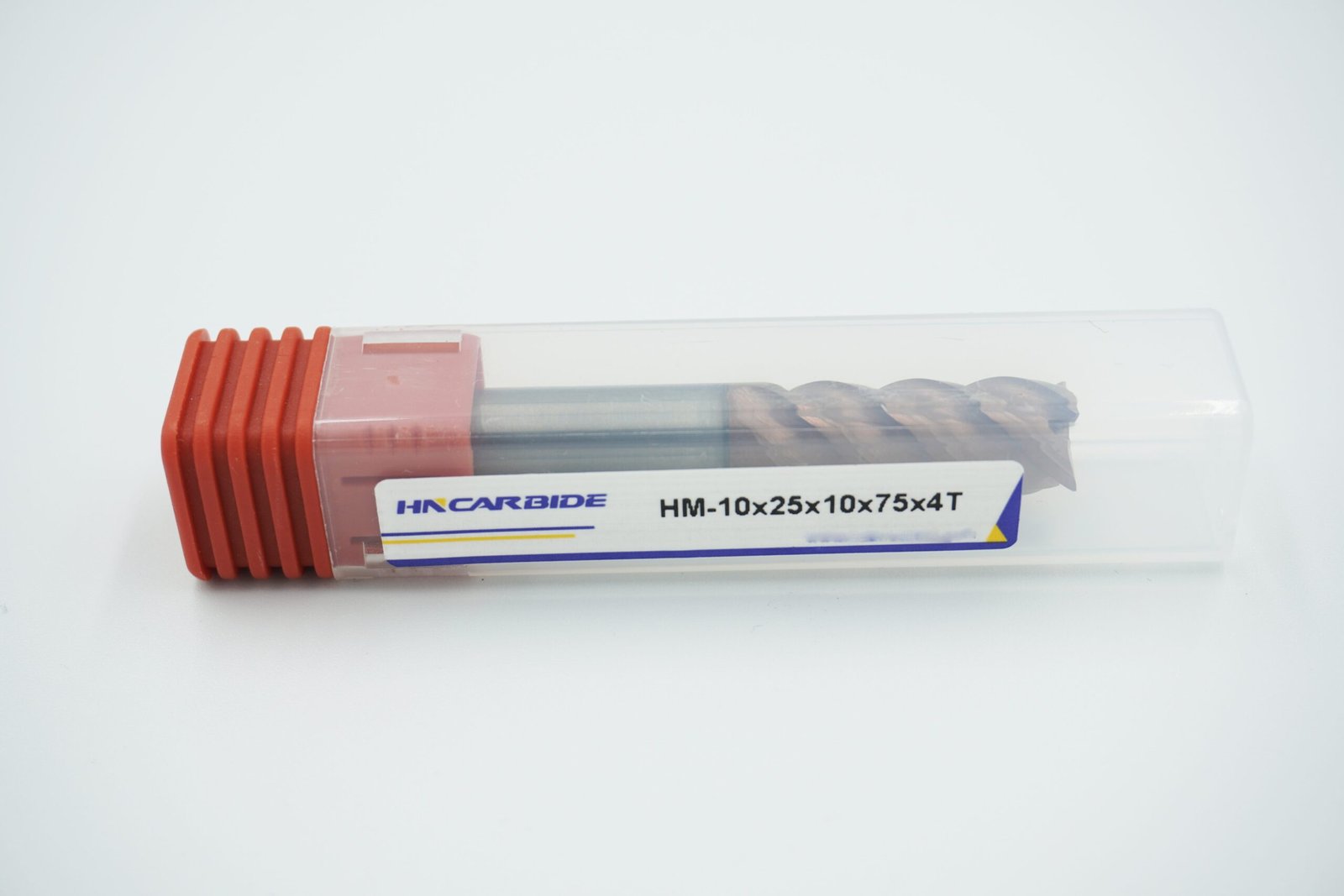
HM Series 4 Flutes Carbide End Mill Cutter Flat

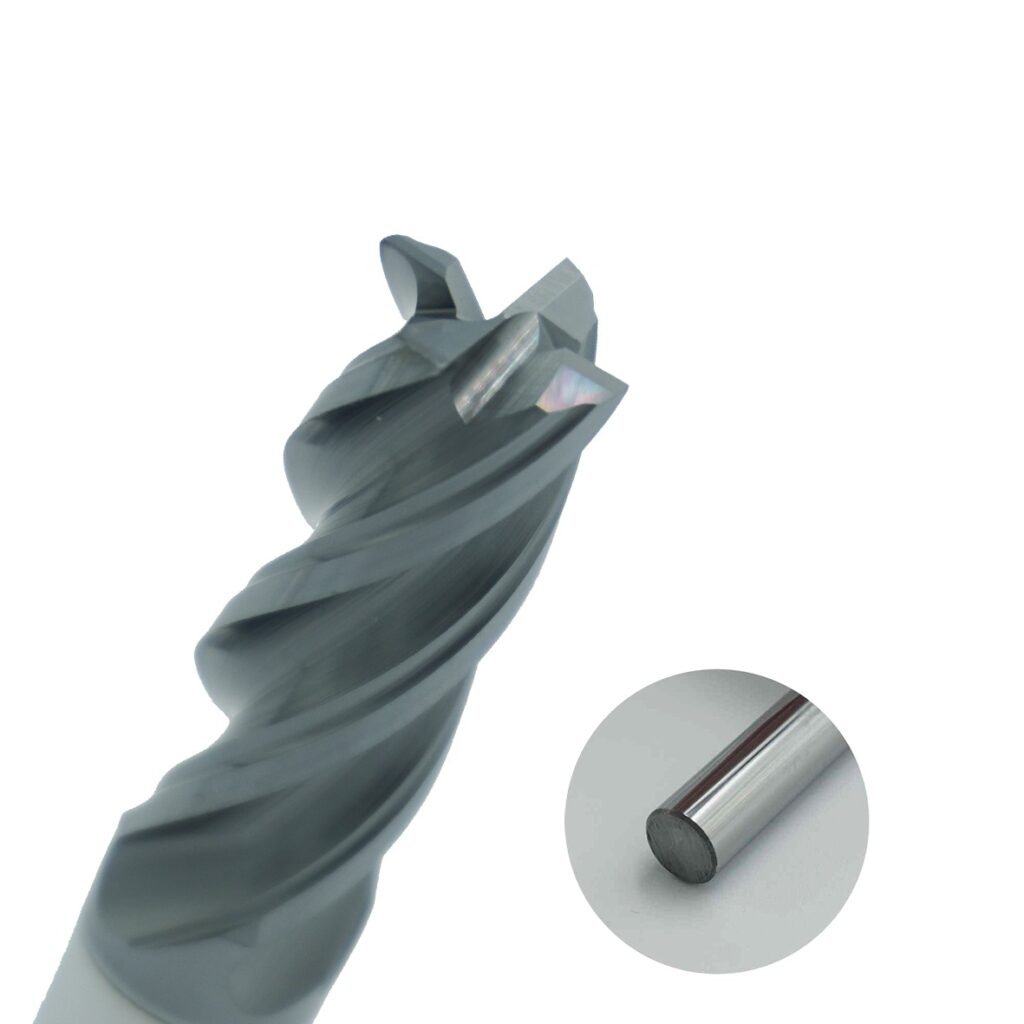
HM Series 4 flutes carbide end mill cutter flat from HNCarbide is designed for high-efficiency finishing and semi-finishing of alloy steel, carbon steel and pre-hardened steel. Produced from premium micro-grain substrate and finished on advanced CNC grinding lines, this solid carbide end mill cutter delivers accurate dimensions, clean surface quality and reliable tool life in stable and light interrupted cutting.
COATING
| Scientific name | Composition | Physical properties | Features | Typical applications |
|---|---|---|---|---|
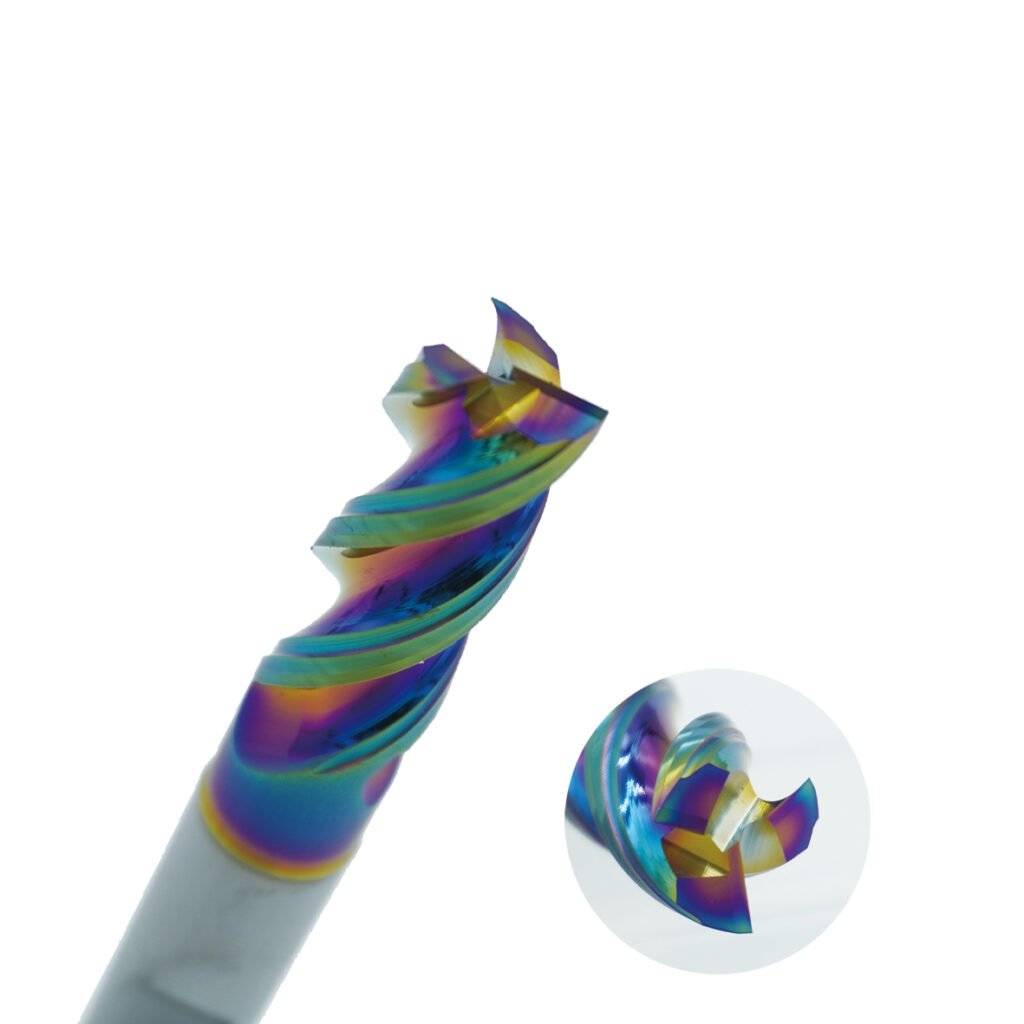
| AlCrSiN | Aluminium–chromium–silicon nitride coating containing Si | Hardness: not clearly specified, but the presence of Si significantly increases hardness and toughness (estimated HV>3500). | Si forms a denser nanostructure, improving wear resistance and high-temperature stability. | Specially designed for drills, end mills and ball-nose mills and other shank-type tools. Suitable for machining high-hardness materials (such as quenched workpieces) and materials after heat treatment. |
FAQ
HNCarbide provides carbide end mill cutter tools for a wide range of materials: carbon steel, alloy steel, stainless steel, cast iron, tool steel, hardened steel, aluminum and non-ferrous alloys. Different series are optimized for specific hardness ranges (e.g. 55HRC, 60HRC, 65HRC) and applications such as roughing, semi-finishing and finishing. By choosing the right grade, geometry and coating, one end mill carbide cutter can deliver stable performance on multiple materials in your CNC shop.
Flute number is directly related to chip evacuation and rigidity. 2-flute carbide end mill cutter designs are ideal for aluminum and non-ferrous materials where larger chip pockets are needed. 3-flute and 4-flute end mill carbide cutter tools offer higher rigidity and more cutting edges per revolution, which is better for steel, stainless steel and hardened steel. For slotting or roughing you may use fewer flutes; for finishing and side milling, higher flute counts often provide better surface finish.
For distributors and regular customers, we can offer a structured carbide end mill cutter price list based on series, coating and order quantity. For new users, carbide end mill cutter price is usually quoted according to size range, material grade and customization level. Most standard items have low MOQ and we can provide sample pieces for testing before bulk order, helping you verify performance in your own CNC machining conditions.
Yes. We can produce non-standard tools according to your drawings, samples or machining requirements (material, coating, size, tolerance and application). Our engineers will evaluate and provide a quotation and lead time.
For serious buyers and distributors, we can offer free standard samples if in stock. Usually you only need to cover the freight cost. For customized tools, a sample fee may apply, which can be refunded or deducted in bulk orders.
Yes.
- OEM:Your logo and brand on tools, labels and boxes, with agreed MOQ.
- ODM:We work with you to design or optimize tools for your market. NDAs can be signed to protect your projects and drawings.
Yes, for qualified distributors we provide a complete support package:
1.Market protection
Regional or customer protection based on sales targets, avoiding price wars among our partners.
2.Marketing support
Catalogs, brochures, product photos, technical data sheets, online materials.
For key partners, joint promotion, exhibitions and digital marketing support.
3.Stable supply
Safety stock for fast-moving items and forecast-based production.
Priority production and regular shipments to reduce stock-out risk.
4.Worry-free after-sales
Clear quality warranty policy, quick response to claims.
Replacement, credit or other solutions after confirmation of issues.
5.Technical support
Tool selection and cutting parameter advice.
Problem analysis for different materials and machines.
Online training, documents, and when possible, on-site support for key accounts.
Choosing the Carbide Grade and HRC Rating
Most premium tools for these jobs use micro grain carbide end mill substrates—very fine grain size for a good balance of toughness and wear resistance.
For your catalog or selection, it’s useful to think in HRC bands:
Table: Carbide Grade vs. Application
Tool “Series” (Example) | HRC Range | Typical Application | Notes |
HRC45–55 solid carbide series | 45–55 HRC | Pre-hardened mold steels, moderate hard steels | Good for roughing + semi-finishing |
HRC55–65 solid carbide series | 55–65 HRC | Mold cores, dies, tool steels in finishing | Needs strong, wear-resistant edge and coating |
HRC65–70 / HRC70 carbide end mill | 65–70 HRC | Ultra-hard tools, die repair, hardened inserts | Narrow operating window, mainly finishing |
- For stainless steel, especially 304/316, you want toughness first. A premium tungsten carbide end mill cutterwith slightly lower hardness but higher fracture toughness is safer.
- For hardened steels above ~55 HRC, prioritize hardness and wear resistance– that’s where your HRC55–65 and hrc70 carbide end millproducts live.
In product copy, it’s natural to describe these like:
“Our HRC65 series solid carbide end mills are engineered for hardened steels up to 65 HRC, using a nano-coated micro-grain substrate for long tool life in high-speed finishing.”
That’s real, verifiable language aligned with how leading solid carbide end mill manufacturers position their hard-machining lines.
Geometry for Stainless vs. Hardened Steel
The same solid carbide end mill won’t work optimally in both stainless and 60 HRC tool steel. Geometry is where you tune the tool to the job.
Geometry for Stainless Steel
Stainless is “gummy,” work-hardening, and keeps heat at the cutting zone.
For a carbide end mill for stainless steel, look for:
- 3–4 flutes
- A 3 flute carbide end millis ideal in smaller diameters or on less rigid machines.
- A 4 flute carbide end millis great when the setup is solid and you want higher feed per revolution.
- High or variable helix (35–45°+)
- Helps lift chips out of the cut and smooth cutting forces.
- A variable helix carbide end millreduces chatter in long-stick-out situations.
- Corner radius or bull nose
- A small radius or bull nose carbide end milldistributes stress better than a sharp corner and improves tool life in profiling and pocketing.
Typical sizes you’ll see in a stainless package:
- Metric: 6mm carbide end mill, 8mm carbide end mill, 10mm carbide end mill, 12mm carbide end mill
- Inch: 3/8 carbide end mill, 1/2 inch carbide end mills.
Geometry Comparison Table
Feature | Stainless Steel Tooling | Hardened Steel Tooling |
Flute count | 3–4 flutes | |
Helix | High / variable (35–45°) | Medium / variable, tuned to stability |
Edge form | Corner radius, bull nose | Corner radius, ball nose |
Length | Standard or reduced; avoid unnecessary overhang | Stub length wherever possible |
Chip control | Large flute space, polished flutes helpful | Serrated roughers for roughing; smooth finishers |
Coating Selection: Making Heat Work for You
Uncoated tools will survive light cuts, but in stainless and hardened steels they lose edge quickly. Most modern “hard machining” and stainless tools rely on advanced PVD coatings like TiAlN, AlTiN, or AlCrN.
Coating Options for Carbide End Mills
Coating Family | Best For | Key Benefits in Stainless & Hardened Steels |
TiAlN | General hard steels, some stainless | Good hot hardness; performs well at elevated temperature |
AlTiN / AlTiN nano | Hard machining, stainless, tool steels | Higher Al content → better heat resistance; can run with air blast, often dry in finishing |
AlCrN | High-temp alloys, stainless, hardened steels | Excellent oxidation resistance; strong Al₂O₃ layer at heat |
Advanced nano-layer coatings | HRC60+ hard milling | Extreme wear resistance and heat stability in continuous cutting |
For your product line, you can legitimately describe:
- Stainless-optimized line: carbide end mill for stainless steelwith AlTiN or AlCrN, 3–4 flutes, high helix.
- Hardened-steel line: carbide end mill for hardened steelwith nano-layer AlTiN/AlCrN, 4–6 flutes, stub length, HRC55–70 rating.
These are exactly the types of combinations shown in current catalogs and technical guides.
Speeds, Feeds and Cutting Parameters That Actually Work
Even the best tool will fail if carbide end mill cutting parameters are wrong.
Two key points for these materials:
Never let the tool rub – keep a minimum chip load to avoid work hardening and edge chipping.
Use the toolmaker’s data first, then adjust. Most suppliers publish carbide end mill speeds and feeds charts or a carbide end mill speeds and feeds calculator tuned to their geometry.
Example: Starting Parameters (Finishing Side Cut)
The table below shows typical ranges for a 10 mm, 4-flute solid carbide end mill (or a 3/8″ 4 flute solid carbide end mill) in stainless vs hardened steel on a rigid machining center. Use them as a ballpark only and always confirm with the specific tool’s datasheet.
Material | Surface Speed (Vc) | Approx. RPM (10 mm) | Feed per Tooth (fz) | Comment |
304/316 Stainless | 80–120 m/min | 2,500–3,800 rpm | 0.02–0.04 mm/tooth | Generous coolant, 3–4 flutes |
17-4PH Stainless (harder) | 60–90 m/min | 1,900–2,800 rpm | 0.02–0.05 mm/tooth | High-performance coating recommended |
Hardened steel 50–55 HRC | 40–70 m/min | 1,300–2,200 rpm | 0.01–0.03 mm/tooth | Light radial engagement, 4–5 flutes |
Hardened steel 60–65 HRC | 25–40 m/min | 800–1,300 rpm | 0.005–0.02 mm/tooth | Mostly finishing; 4–6 flutes, small step-over |
If your customers think in imperial, you can present similar data in SFM for a 3/8″ or 1/2 inch carbide end mill. These ranges align with published “carbide end mill sfm” charts for stainless and hardened steels.
Setup, Coolant and Tool Life
Once geometry and parameters are right, the last big lever is setup quality. Poor holding will ruin even the best carbide end mill bits.
- Use rigid holders– shrink-fit, hydraulic, or high-quality ER collets with minimal overhang.
- Minimize stick-out; a stub-length solid carbide end mill cutterwill always out-perform a long one in hard materials.
- For stainless, rich coolant flow improves chip evacuation and temperature control.
- For hard-milling, many toolmakers recommend running coated tools with air blast instead of flood coolant to let the coating work at high temperature and avoid thermal shock.
Get these right, and you dramatically extend carbide end mill tool life and reduce chipping at the corners.