Skip to content
Carbide End Mill Coatings: How to Choose TiN, TiCN, TiAlN, AlTiN, AlCrN and Diamond
Table of Contents
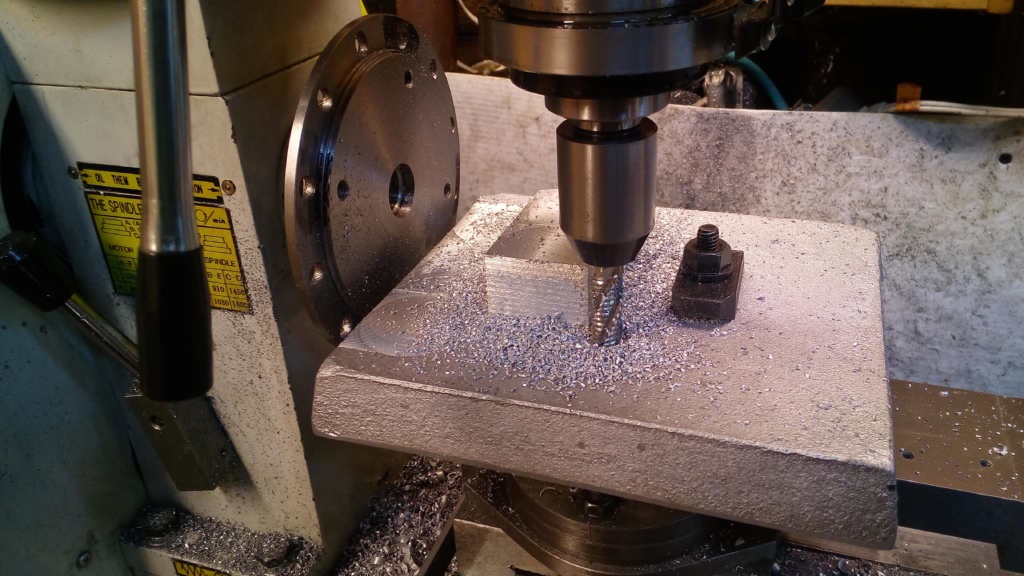
Coating choice looks simple until the same end mill behaves very differently in two jobs. A dark AlTiN-coated cutter may last well in pre-hardened steel, then load up badly in gummy aluminum. A TiN-coated tool may look old-fashioned, yet still make sense for moderate-speed work or general-purpose HSS tooling. Diamond coating can be outstanding in graphite and high-silicon aluminum, but it should stay away from steel.
For a CNC shop, the coating is not a decorative finish. It changes what happens at the contact zone between the cutting edge, chip and workpiece. That zone decides how much heat enters the tool, how fast flank wear grows, whether material welds onto the flute, and whether the edge survives long enough to justify its price.
This guide explains the common coatings used on tungsten carbide end mills and related cutting tools. The focus is practical: what each coating does, where it works, where it can disappoint, and how buyers can specify coated tools without turning the purchase into guesswork.
Why coating matters on carbide end mills
Solid carbide already gives an end mill high hardness, compressive strength and hot hardness. The coating adds a thin working surface, usually only a few microns thick, that helps the carbide survive a harsher cutting condition.
The best coating for a job usually improves one or more of these areas:
- Surface hardness, so abrasive wear develops more slowly.
- Heat resistance, so the edge keeps hardness as cutting temperature rises.
- Lubricity, so chips slide away instead of dragging across the rake face.
- Oxidation resistance, so the coating does not break down too early in dry or high-speed cutting.
- Anti-adhesion behavior, so workpiece material is less likely to weld onto the edge.
Coating does not fix every cutting problem. If the tool is too long, runout is high, chips cannot leave the slot, or the cutting data is far outside the tool’s range, a better coating may only make the failure more expensive. Start with rigidity, tool geometry, coolant strategy and chip evacuation. Then choose the coating.
The coating properties that affect tool life
Hardness gets the most attention because it is easy to compare. A harder coating can reduce abrasive flank wear, especially in cast iron, hardened steel, abrasive aluminum alloys and composite materials. Diamond coatings sit at the top of the hardness range, which explains their strong performance in graphite and other non-ferrous abrasive materials.
Wear resistance is broader than hardness. In real milling, wear can come from abrasion, adhesion, diffusion, oxidation, micro-chipping or a mixture of several mechanisms. A coating that resists abrasion may still fail if it reacts with the workpiece or loses adhesion under interrupted cutting.
Lubricity affects heat and built-up edge. When friction is high, chips scrape across the rake face and carry more heat into the cutting zone. In aluminum, copper alloys and other non-ferrous materials, poor anti-adhesion behavior can create built-up edge. Once material starts welding to the cutting edge, it changes the effective geometry and can pull small pieces from the coating or carbide.
Oxidation temperature matters when milling at high speed or running dry. TiAlN and AlTiN coatings are widely used on carbide tools because they can form a stable aluminum oxide layer at elevated temperature. That layer helps keep heat in the chip rather than pushing it into the tool body. This is one reason TiAlN or AlTiN can outperform TiCN in hotter steel milling, even when TiCN looks competitive at room-temperature hardness.
PVD and CVD: why the process matters
Most coated carbide end mills use PVD coatings. Physical vapor deposition runs at lower temperatures than traditional CVD and can preserve a sharper cutting edge. That makes it suitable for solid carbide end mills, drills, taps and many high-speed steel tools. PVD coatings are also common in multilayer and nanolayer systems where the coating stack is tuned for adhesion, toughness, heat resistance and low friction.
CVD coatings are formed through chemical reactions at higher temperature. They can create thicker and highly wear-resistant layers, which is why CVD is common on carbide inserts for turning steel, cast iron and other production applications. For solid carbide end mills, especially small diameters and sharp-edge tools, PVD is usually the more familiar route.
There are exceptions. CVD diamond-coated carbide end mills are used for graphite, metal-matrix composites, high-silicon aluminum and abrasive non-ferrous materials. The key word is non-ferrous. Diamond reacts poorly in steel cutting because heat and chemical interaction can damage the coating system.
Coating process | Common use on carbide tools | Strengths | Practical caution |
PVD | Solid carbide end mills, drills, taps and HSS tools | Sharp edges, lower process temperature, good coating choices for milling | Usually thinner than CVD; performance depends heavily on edge prep and adhesion |
CVD | Carbide inserts and selected diamond-coated carbide tools | Thick wear layers, strong thermal and abrasive wear resistance | High process temperature; not ideal for every sharp-edge end mill geometry |
Multilayer PVD | High-performance carbide end mills | Can combine adhesion, hardness, toughness and heat resistance | More layers do not automatically mean longer life; the stack must fit the work material |
Common carbide end mill coatings
TiN coating
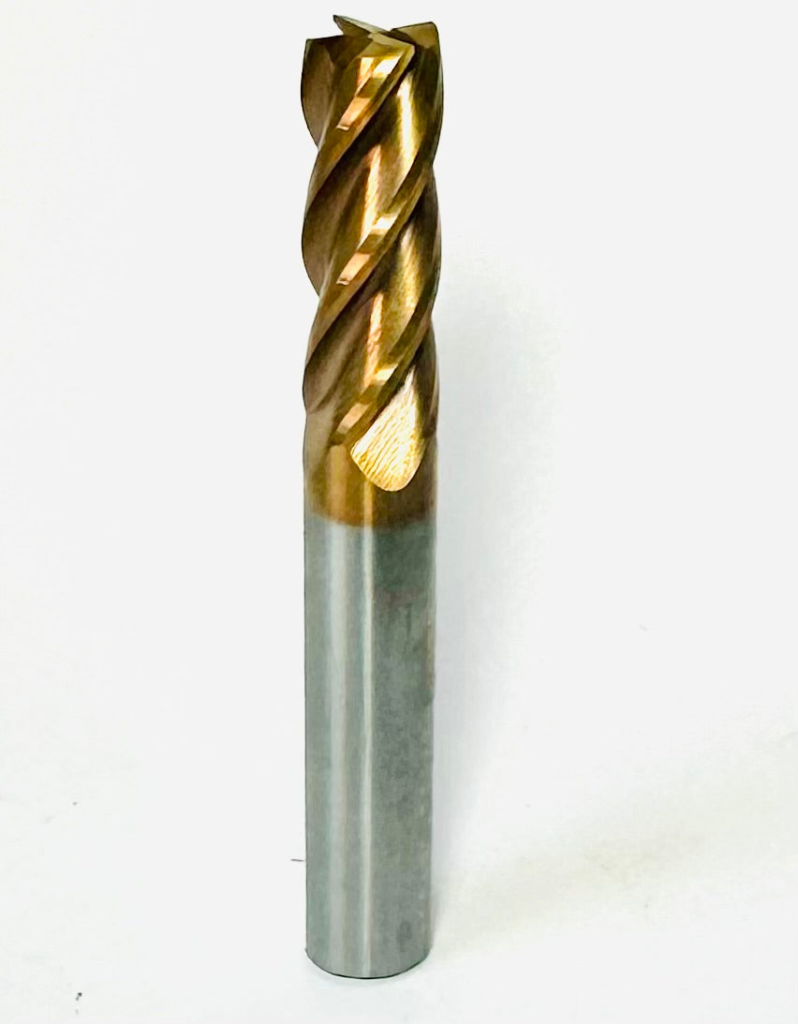
Titanium nitride is the classic gold coating. It increases surface hardness and reduces friction compared with an uncoated tool. TiN is still useful for general-purpose cutting, moderate speeds, HSS drills, taps, reamers and form tools.
For carbide end mills, TiN is not usually the first choice for hard milling or dry high-speed steel milling. Its value is consistency and cost control in less extreme work. Shops sometimes overlook it because newer coatings sound more advanced, but TiN can still be a sensible option when heat is moderate and the cutting edge needs a smoother surface.
TiCN coating
Titanium carbonitride adds carbon to the coating system, increasing hardness and improving wear resistance. TiCN often performs well in steels, stainless steels and cast irons where abrasion is a concern and where the cutting temperature stays within its comfort zone.
Its weakness appears in hot, dry or high-speed applications. If the main problem is thermal softening or oxidation, TiAlN or AlTiN usually moves ahead. TiCN is better viewed as a wear-focused coating than a high-heat coating.
TiAlN and AlTiN coatings
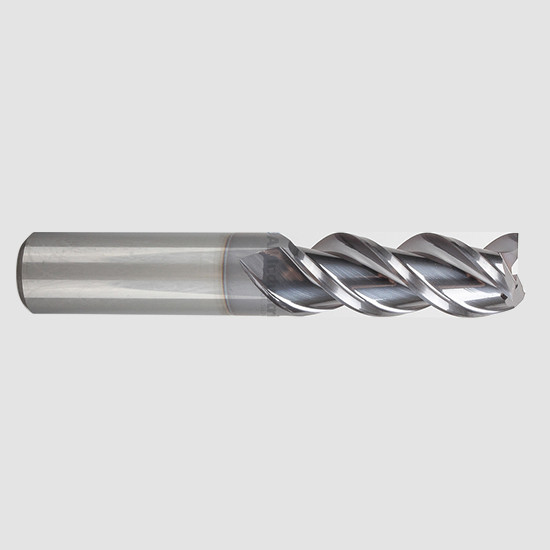
TiAlN and AlTiN are workhorse coatings for carbide end mills. They are widely used in steel, alloy steel, tool steel, stainless steel and hardened materials. Their main advantage is high-temperature stability. In hot cutting, aluminum in the coating can form an aluminum oxide layer that helps protect the edge.
The difference between TiAlN and AlTiN often comes down to the aluminum-to-titanium ratio and the coating supplier’s process. AlTiN generally has higher aluminum content and can offer higher hot hardness and oxidation resistance. TiAlN may be more forgiving in some interrupted or general-purpose conditions. The exact result depends on coating architecture, edge preparation and substrate grade, so do not buy by name alone.
These coatings often work best in dry or semi-dry milling of steel because heat can leave with the chip. In heavy flood coolant, thermal cycling can sometimes work against the coating if the cut alternates between very hot and rapidly cooled conditions.
AlCrN coating
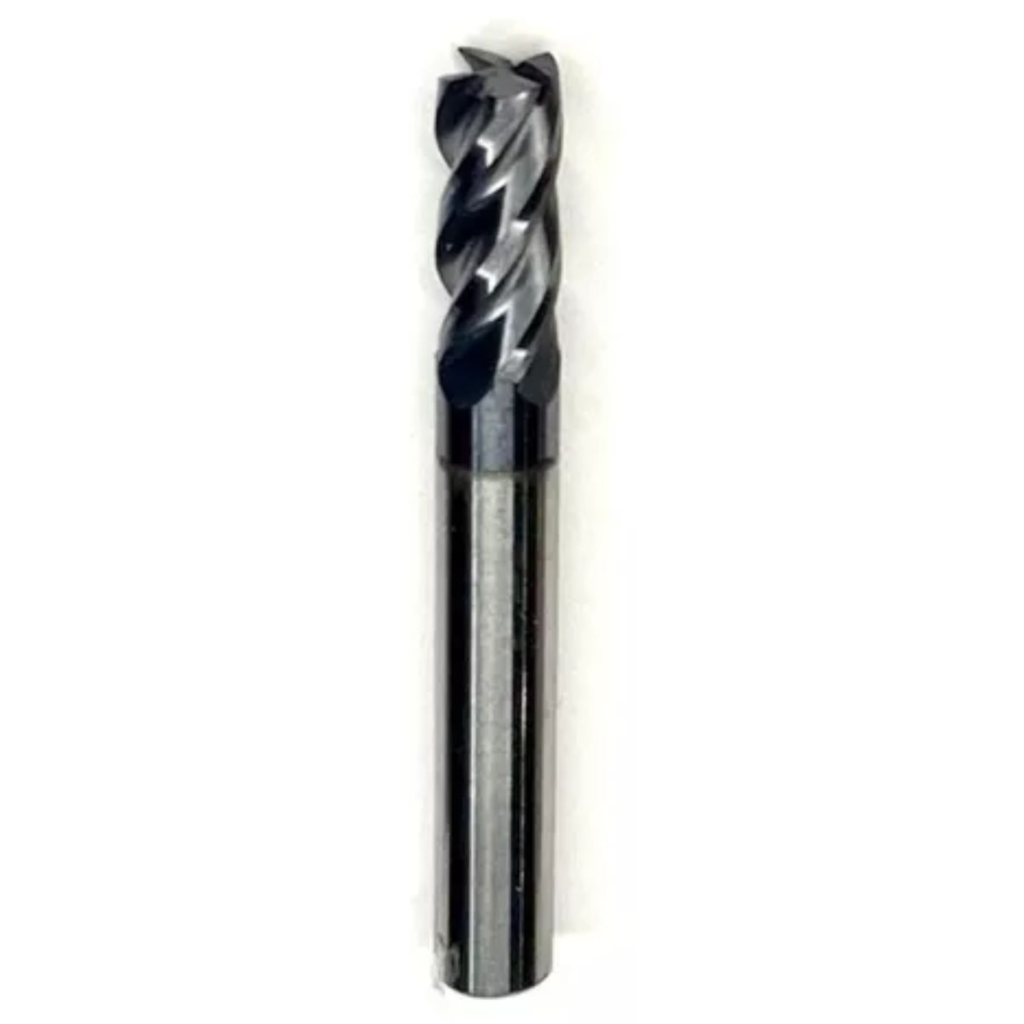
Aluminum chromium nitride is known for oxidation resistance and strong anti-adhesion behavior. It can be a good choice for stainless steel, titanium alloys, nickel alloys and jobs where built-up edge or workpiece adhesion is a problem. AlCrN also appears in applications where shops need high heat resistance but want a coating that is less prone to sticking than some titanium-based systems.
For end mills, AlCrN is worth considering when the material is sticky, the operation is semi-dry, or coolant concentration is not perfectly controlled. It is not magic. If chip evacuation is poor in a deep slot, adhesion may still appear. The coating simply gives the edge a better chance.
Diamond coating
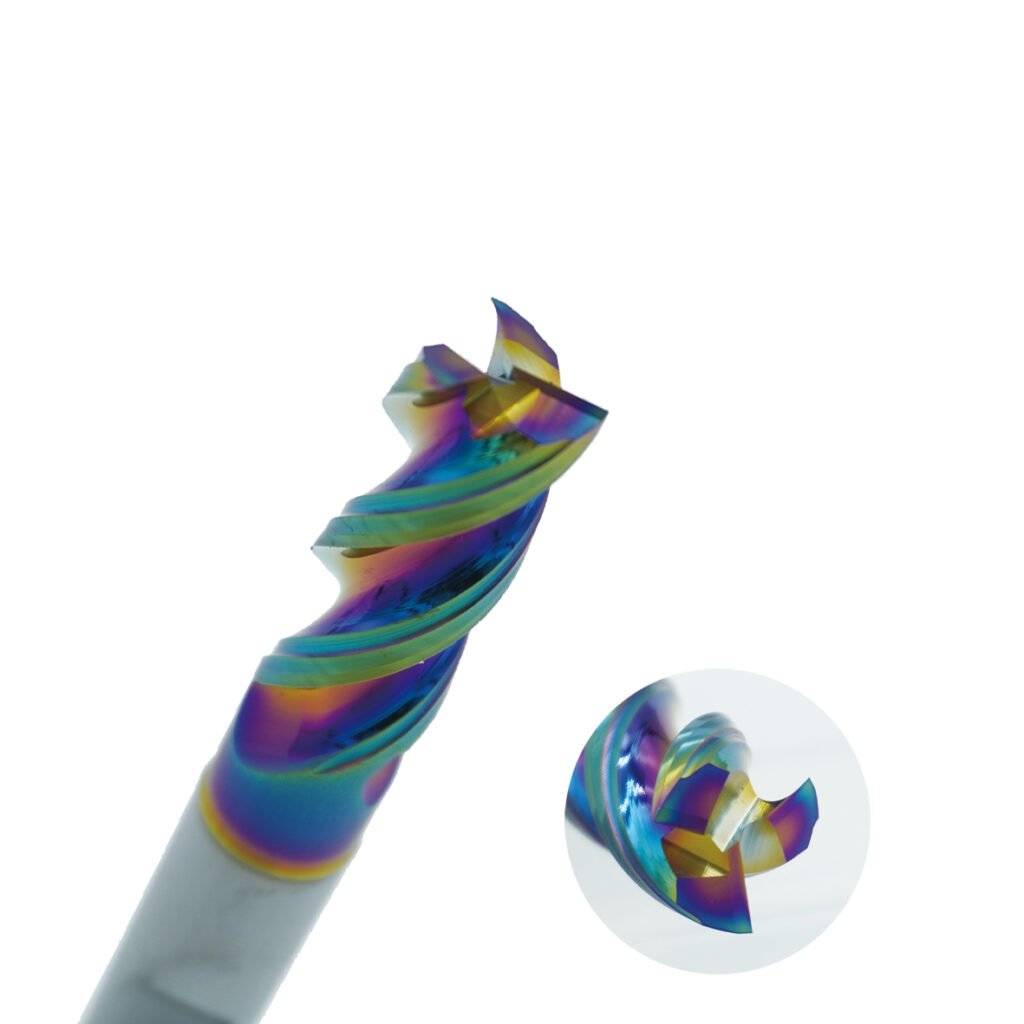
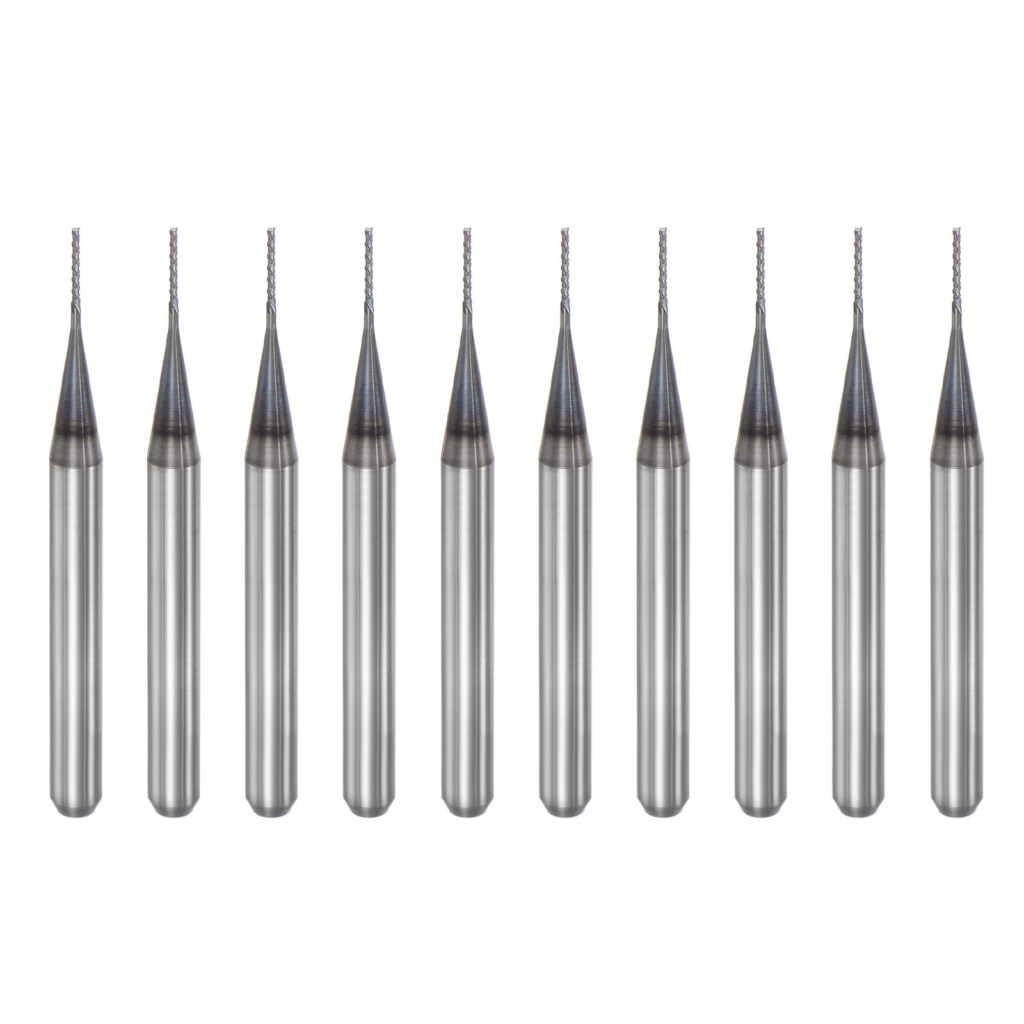
CVD diamond coating is a special-purpose choice, not a universal upgrade. It can give excellent tool life in graphite electrodes, carbon fiber composites, metal-matrix composites, green ceramics and high-silicon aluminum. These materials are abrasive, and diamond’s hardness is a real advantage.
Do not use diamond-coated carbide tools for steel. At steel-cutting temperatures, carbon in the diamond coating can react with iron, and the heat can damage the coating bond. For steel milling, use TiAlN, AlTiN, AlCrN or another coating designed for ferrous materials.
Matching coating to workpiece material
Workpiece material is the first filter. The same coating can perform well in one alloy group and poorly in another because the failure mechanism changes.
Workpiece material | Common coating direction | What the coating needs to handle | Notes for carbide end mills |
Carbon steel and alloy steel | TiAlN, AlTiN, multilayer PVD | Heat, crater wear, flank wear | Good fit for dry or semi-dry milling when the setup is stable |
Stainless steel | AlCrN, TiAlN, selected multilayer PVD | Adhesion, work hardening, heat | Keep the edge sharp enough and avoid rubbing |
Hardened steel | AlTiN, TiAlN, high-performance multilayer PVD | Hot hardness, abrasion, edge stability | Use short overhang and stable toolpaths |
Aluminum and copper alloys | Uncoated polished carbide, DLC, ZrN, AlCrN in some cases | Built-up edge, chip welding, chip evacuation | Avoid coatings that promote adhesion; geometry matters as much as coating |
Graphite and composites | CVD diamond, diamond-like systems where appropriate | Severe abrasion | Use dust control and confirm tool geometry for the material |
Cast iron | TiAlN, AlTiN, CVD on inserts, selected PVD on end mills | Abrasion, heat, edge wear | Dry cutting is common, but dust and machine protection matter |
For aluminum, many shops get better results from polished uncoated carbide or coatings designed for low adhesion rather than from a very hard steel-milling coating. For stainless, the coating must resist heat and adhesion while the toolpath prevents rubbing. For graphite, coating hardness and edge integrity dominate the discussion.
Coating, coolant and cutting speed should agree
A coating chosen for high-temperature strength needs enough cutting speed to work in its intended range. If the tool runs too slowly and rubs, the coating may never help. If it runs too fast in an unstable setup, the edge may chip before the coating has a chance to show its wear resistance.
Coolant also changes the decision. Flood coolant can help aluminum and stainless by reducing adhesion and moving chips away. In hard steel milling, dry or air-blast cutting is often preferred with TiAlN or AlTiN because the coating is designed for heat, and the chip should carry heat out of the cut. The wrong coolant strategy can create thermal shock on the edge.
Chip evacuation deserves plain attention. A coated end mill trapped in packed chips will fail. Slots, pockets and deep cavities need enough flute space, air blast or coolant flow, and a toolpath that avoids recutting chips. Coating helps at the contact surface; it does not clear a clogged flute.
Troubleshooting coating-related failures
When a coated carbide end mill fails early, look at the wear pattern before changing suppliers. The coating may be wrong, but the pattern usually tells a more precise story.
Problem seen on the tool or part | Likely coating-related cause | What to check before changing tools |
Built-up edge on aluminum or copper alloy | Coating has poor anti-adhesion behavior for the material | Use polished geometry, improve coolant or air blast, consider uncoated, DLC or non-stick coating options |
Rapid flank wear in abrasive material | Coating hardness or thickness is not enough for the abrasive load | Check material grade, speed, chip evacuation and whether diamond coating is suitable |
Edge chipping with coating flaking near the cutting edge | Coating stress, poor adhesion, too-sharp edge or unstable cutting | Check runout, toolholder, overhang, entry strategy and edge preparation |
Crater wear in steel at high speed | Heat and chemical wear exceed coating capability | Consider TiAlN, AlTiN or multilayer coating; review speed and coolant strategy |
Tool life drops when flood coolant is added | Thermal cycling may be damaging the edge | Compare dry, air blast and controlled coolant use; check chip evacuation |
Do not judge the coating only by color. Different suppliers can produce very different TiAlN or AlCrN coatings. Layer design, thickness, pretreatment, edge rounding, substrate and post-polishing all affect performance.
Buyer checklist for specifying coated carbide end mills
For repeat orders, document the actual cutting condition instead of asking only for a coating name. A supplier can give a better recommendation when the request includes the workpiece material, hardness, operation type, tool diameter, depth of cut, coolant condition and machine rigidity.
Specification point | Why it matters | Useful detail to provide |
Workpiece material and hardness | Coating selection starts with the wear and adhesion mechanism | Alloy grade, HRC/HB if relevant, cast or wrought condition |
Operation type | Slotting, finishing and trochoidal milling load the edge differently | Roughing, finishing, side milling, deep slotting, pocketing |
Coolant strategy | Coatings respond differently to dry, air blast, MQL and flood coolant | Dry, flood, through coolant, air blast, coolant concentration |
Tool geometry | Coating cannot compensate for the wrong flute or edge design | Flute count, helix, corner radius, neck length, edge prep |
Failure mode | The previous tool’s wear pattern points to the right correction | Built-up edge, flank wear, crater wear, chipping, poor finish |
Target result | Tool life, cycle time and finish may require different compromises | Pieces per tool, surface finish, tolerance, cycle time target |
For carbide end mills, the best coating is rarely the one with the biggest hardness number. It is the coating that fits the heat level, chip behavior, material chemistry and edge load of the job.
Conclusion
TiN, TiCN, TiAlN, AlTiN, AlCrN and diamond coatings all have a place in CNC milling. TiN and TiCN still suit moderate or wear-focused applications. TiAlN and AlTiN are strong choices for heat and steel milling. AlCrN is useful where adhesion and oxidation resistance matter. Diamond coating belongs in abrasive non-ferrous materials, graphite and composites, not steel.
If you are sourcing carbide end mills for production, treat coating as part of a full tool design. Substrate, geometry, edge preparation and coating need to work together. HNCarbide can support coated carbide end mill selection for steel, stainless, aluminum, graphite and other application groups, with light customization based on your machining conditions and tool life targets.