4-Flute, 6-Flute, or 8-Flute End Mills? Choose by Chip Evacuation First
Table of Contents
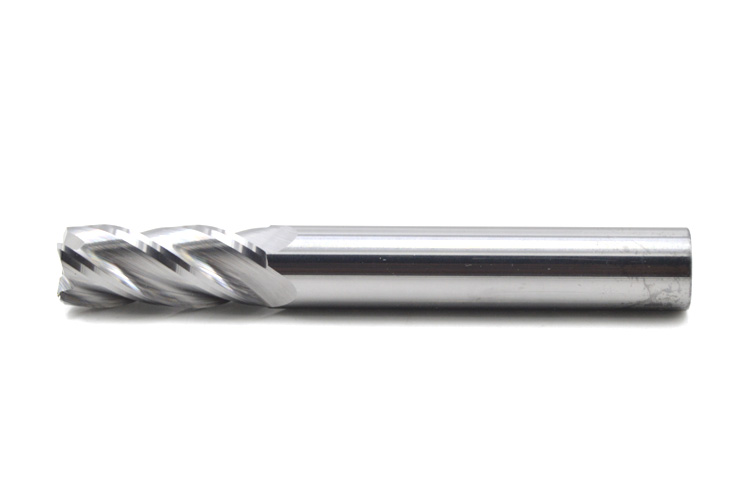
When a milling job goes wrong, the flute count is rarely the first thing people blame. Shops usually check the feed rate, spindle speed, coolant, holder runout, coating, or workholding. Those checks matter, but the number of flutes can quietly decide whether the cut has enough room to breathe.
The basic tradeoff is simple. More flutes put more cutting edges around the same tool diameter. That can raise productivity and improve stiffness, especially in finishing. The cost is chip space. Every added flute takes away some room from the gullets that carry chips out of the cut.
That is why a higher flute count is not automatically better. A 6-flute or 8-flute carbide end mill may be excellent in a light finishing pass on steel. Put the same tool into a deep full-width slot in aluminum, and the narrow flutes may pack with chips before the cutting edges ever show their real strength.
For practical tool selection, start with one question: how much chip volume will this cut produce, and how hard will it be to get those chips out?
What changes when flute count goes up
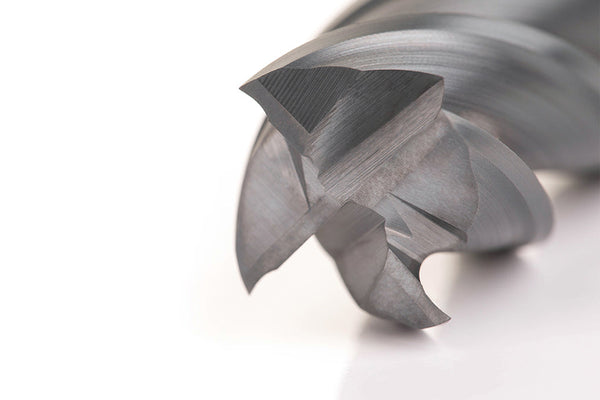
An end mill has a fixed circumference. If that circumference is divided among fewer cutting edges, each flute can be wider and deeper. If it is divided among more cutting edges, each flute gets less space. The tool designer can adjust helix angle, core diameter, flute form, and edge geometry, but the tradeoff never disappears.
A 2-flute or 3-flute end mill usually has large chip gullets. That makes it useful for aluminum, plastics, slotting, and heavy roughing where chip volume is high. The same open geometry also means less carbide in the core, so the tool is not as stiff as a dense multi-flute cutter of the same diameter.
A 4-flute end mill sits in the middle. It has enough chip space for many general milling jobs and enough core strength for side milling, profiling, and moderate finishing. This is why 4-flute tools are so common in steel and general-purpose carbide end mill catalogs.
A 6-flute or 8-flute end mill shifts the design toward rigidity, edge count, and surface finish. The core is stronger. The cut can feel smoother because each tooth removes less material at a given feed rate. The tool can also support higher table feed when chip load per tooth remains appropriate. The price is narrower chip evacuation.
Chip evacuation is not a small detail
Chip evacuation sounds like a secondary issue until it fails. When chips cannot leave the cutting zone, they rub between the cutter and the workpiece. Some chips get cut again. Others weld to the edge, scratch the wall, or jam into the flute. The result may look like a cutting parameter problem, but the root cause is often that the tool geometry does not have enough room for the chip volume being produced.
In slotting, this risk is high because the cutter is surrounded by material. Chips have fewer escape paths. In deep pockets, coolant may not reach the bottom of the cut effectively. In aluminum, long or sticky chips can pack quickly. In stainless steel and high-temperature alloys, heat and work hardening can make chip evacuation even less forgiving.
The damage is not only cosmetic. Recut chips can dull the cutting edge quickly. Packed chips can increase spindle load, push the tool off line, chip the corner, or break a small-diameter end mill. A shop may respond by lowering the feed, but that can make the process hotter if the edge starts rubbing instead of shearing. The cleaner fix is often a tool with fewer flutes, a better flute form, stronger air blast, or a toolpath that reduces engagement.

Why finishing often favors more flutes
The argument for more flutes becomes stronger when chip volume drops. In finishing, the radial stock and axial stock are usually small. The cutter is no longer trying to carry a pocket full of chips out of a deep slot. At that point, stiffness, vibration control, and surface consistency become more important.
More flutes usually mean a larger core diameter. A stronger core helps the tool resist deflection, which matters when the drawing calls for a straight wall, accurate step, or consistent size over a long reach. Multi-flute tools also spread cutting work across more teeth. With the right chip load per tooth, each edge takes a smaller bite, and the cut can become quieter and more stable.
This is why 6-flute and 8-flute carbide end mills are common in high-efficiency finishing of steel, hardened steel, and some stable side-milling operations. They are not chosen because the extra flutes magically improve every cut. They work because finishing leaves enough chip room, while the added rigidity helps hold size and surface finish.
There is a feed-rate detail worth watching. If you replace a 4-flute tool with an 8-flute tool and keep the same spindle speed and feed rate, the chip load per tooth is cut in half. That may push the edge into rubbing. To use the extra flutes properly, the feed rate often needs to rise so each tooth still takes a real chip. The machine, holder, workholding, and part geometry must be able to support that increase.
A practical flute-count comparison
The table below is a starting point, not a substitute for the toolmaker’s data. It shows the direction of the tradeoff.
Flute count | Chip space | Tool rigidity | Best-fit operations | Watch-outs |
2 flutes | Very large | Lower | Aluminum slotting, plastics, deep chip evacuation, rough pocketing | Less core strength; may chatter in harder materials if overextended |
3 flutes | Large | Medium | Aluminum roughing and high-efficiency milling where chip clearance still matters | Not always the best finish choice in steel |
4 flutes | Balanced | Good | General steel milling, profiling, side milling, moderate roughing and finishing | Can pack chips in full-width aluminum slots or deep pockets |
5 flutes | Medium-small | High | Stable steel roughing, trochoidal milling, semi-finishing | Needs controlled engagement and good chip evacuation |
6 flutes | Small | Very high | Steel finishing, hardened steel finishing, light radial engagement | Poor choice for heavy slotting unless the tool is designed for it |
8 flutes | Very small | Very high | Light finishing, high-feed side milling with small chip volume | Easy to rub or clog if chip load and engagement are not managed |
The important line in this table is not one specific flute count. It is the movement from open flute space to stronger core. Roughing leans toward chip space. Finishing leans toward rigidity.
Match flute count to material and operation
Material changes the answer because different workpieces produce different chip shapes and cutting temperatures.
Aluminum often benefits from fewer flutes, polished flutes, sharp edges, and strong chip evacuation. A 2-flute or 3-flute end mill is common for slotting because aluminum chips can be bulky and prone to welding. A 4-flute aluminum-specific tool can work well in side milling or high-efficiency toolpaths, but the flute geometry has to be designed for aluminum, not borrowed from a steel-finishing cutter.
Carbon steel and alloy steel give more room for 4-flute and 5-flute tools. In stable profiling or adaptive roughing, a 5-flute end mill can raise productivity while keeping enough chip space because radial engagement is controlled. For finishing, 6 flutes can make sense when the setup is rigid and the remaining stock is light.
Stainless steel rewards stability but punishes rubbing. A multi-flute tool may improve finish, but chip load must stay high enough to cut under the work-hardened skin. Coolant strategy matters as well. If chips linger in the cut, the extra flutes will not save the edge.
Hardened steel usually produces smaller chips in finishing operations, so 6-flute and 8-flute tools can be effective. The setup must be rigid, overhang should be short, and radial engagement should be modest. In this work, a dense multi-flute cutter is often chosen for deflection control and surface quality, not for open chip evacuation.
Workpiece and operation | Good starting flute count | Selection priority | Practical note |
Aluminum full slotting | 2-3 | Chip evacuation | Use air blast or high-flow coolant; avoid dense steel-finishing geometry |
Aluminum side milling | 3-4 | Chip clearance plus feed capacity | Aluminum-specific 4-flute tools can work when radial engagement is controlled |
Carbon steel general milling | 4 | Balance | A 4-flute carbide end mill is often the first trial tool |
Steel adaptive roughing | 4-5 | Controlled engagement | More flutes can work if toolpath keeps chip volume predictable |
Steel finishing | 5-6 | Rigidity and surface finish | Raise feed rate as flute count rises to maintain chip load |
Hardened steel finishing | 6-8 | Stiffness and vibration control | Best with light stock, short overhang, and stable holders |
Slotting, side milling, and finishing are different problems
The same cutter can behave very differently depending on engagement.
In full slotting, the tool cuts on both sides. Chips have to move upward through the flutes while new material enters continuously. This is the worst case for chip evacuation. Choose fewer flutes unless the tool is specifically designed for dense-flute slotting and the operation has strong coolant or air assistance.
In side milling, chips have a clearer escape path. If radial engagement is moderate, a 4-flute or 5-flute tool may work well, especially in steel. With lighter radial engagement, the process can support more flutes because each flute carries less chip volume.
In finishing, the tool removes a small amount of stock. Here, flute count can increase without creating a chip-packing problem. The stronger core helps hold size, and the higher edge count can improve surface consistency. This is the natural home for 6-flute and 8-flute tools.
Do not ignore chip load per tooth
Flute count changes feed calculations. The common formula is:
`feed rate = spindle speed x flute count x chip load per tooth`
If spindle speed and chip load stay the same, more flutes allow a higher table feed. That is one reason multi-flute end mills can improve productivity in the right application.
The mistake is to increase flute count without recalculating chip load. For example, moving from a 4-flute tool to an 8-flute tool at the same programmed feed rate cuts chip load per tooth by 50 percent. The machine may sound calmer, but the edges may be rubbing. Tool life can drop even though the process looks less aggressive.
The reverse problem also happens. A shop may switch from 6 flutes to 3 flutes for better chip evacuation but forget to reduce feed rate. Now each tooth carries twice the chip load, which can chip the edge or overload a small cutter.
Flute count and feed rate should be adjusted together. This is where many tool trials become misleading. The cutter is judged, but the chip load was never corrected.
Troubleshooting by symptom
When a milling process has trouble, the symptoms often point back to the chip-space and rigidity tradeoff.
Symptom | Likely flute-count issue | What to try |
Chips pack in the flutes during slotting | Too many flutes or flute gullets too small | Drop to fewer flutes, use air blast, reduce radial engagement, or choose aluminum-specific geometry |
Edge chips during heavy roughing | Chip load too high per tooth, recutting chips, or poor evacuation | Check feed per tooth after flute-count changes; improve chip evacuation |
Wall taper or size drift | Tool deflection from low rigidity or long overhang | Try a stiffer 4-flute to 6-flute tool, reduce stickout, or reduce radial load |
Chatter in finishing | Tool lacks rigidity or engagement is unstable | Use a stronger core, shorter holder, lighter radial stock, or suitable multi-flute finisher |
Shiny surface but fast wear | Chip load too low, edge rubbing | Increase feed per tooth or reduce flute count if feed rate cannot rise |
Poor finish with visible chip scratches | Recut chips or chip welding | Improve evacuation, coolant direction, coating, and flute geometry |
Buyer notes for carbide end mills
For purchasing teams and shop owners, flute count should not be treated as a catalog checkbox. Ask how the cutter will be used.
A general-purpose 4-flute end mill is a sensible inventory item because it covers a wide range of steel and mixed jobs. It is not the best answer for every cut, but it gives a stable baseline.
For aluminum-heavy work, keep dedicated 2-flute and 3-flute tools in the tool crib. Look for polished flutes, sharp cutting edges, and geometry designed to move chips cleanly. Using a dense steel-finishing cutter in aluminum slotting is a common way to save a little on tooling and lose much more in broken tools or scrapped parts.
For hardened steel finishing, die and mold work, and accurate side walls, evaluate 6-flute and 8-flute carbide end mills. Focus on runout control, holder quality, stickout, coating, and recommended chip load. Multi-flute tools are less forgiving of poor setup because the chip space is already tight.
If one operation has to rough and finish, a 4-flute or 5-flute cutter may be the compromise. If the job repeats often, splitting the process into a roughing tool with better chip evacuation and a finishing tool with higher rigidity usually gives better tool life and more predictable part quality.

Conclusion
The right flute count is not the highest number available. It is the number that leaves enough room for the chips while giving the cutter enough stiffness for the accuracy and finish required.
For roughing, slotting, aluminum, and deep pockets, chip evacuation usually comes first. For finishing, hardened steel, light radial engagement, and high-precision walls, rigidity becomes more important. Four flutes remain the practical middle ground for many steel jobs, while 6-flute and 8-flute tools earn their place when chip volume is controlled.
HNCarbide supplies carbide end mills for roughing, general milling, and finishing applications. If you are comparing flute counts for a production part, start with the material, engagement, chip load, and required finish. The flute count will make much more sense after that.