Skip to content
The Science Behind HSS Tool Performance: How Heat Treatment Determines the Real Life of Drill Bits, Turning Tools and Milling Cutters
Table of Contents
Why does one drill bit last 3× longer than another made from the same steel?
Why can a 67 HRC cutter fail faster than a 64 HRC tool?
Why do some milling cutters maintain edge stability under red-hot cutting conditions while others chip prematurely?
The answer lies not only in steel grade — but in heat treatment.
Heat treatment is the most decisive stage in high-speed steel (HSS) tool manufacturing.
It controls:
- Hardness
- Hot hardness
- Toughness
- Wear resistance
- Dimensional stability
- Residual stress distribution
In this in-depth guide, we examine the heat treatment of:
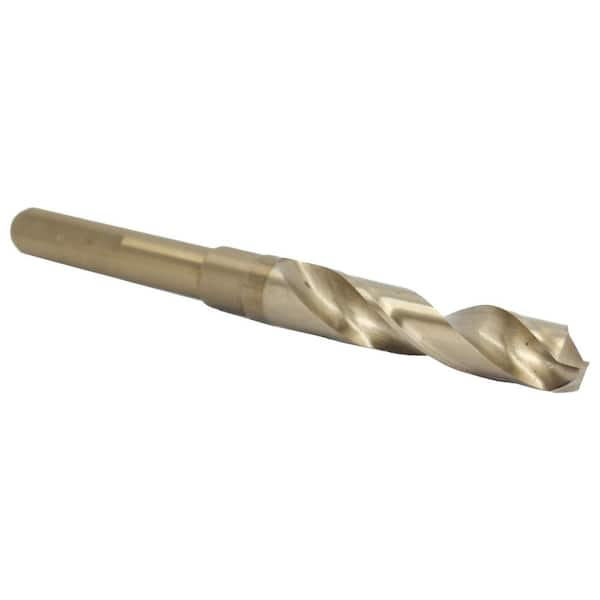
- HSS Drill Bits
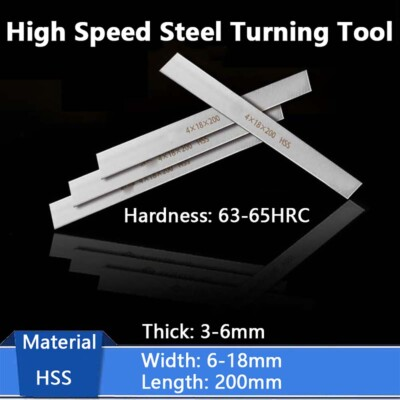
- HSS Turning Tools
- HSS Milling Cutters
- Slitting Saw Cutters
with real parameters, comparative data, and performance logic.
Why Must Drill Bits Achieve a Precise Balance Between Hardness and Toughness?
Drill bits operate under some of the harshest thermal conditions in metal cutting.
During high-speed drilling:
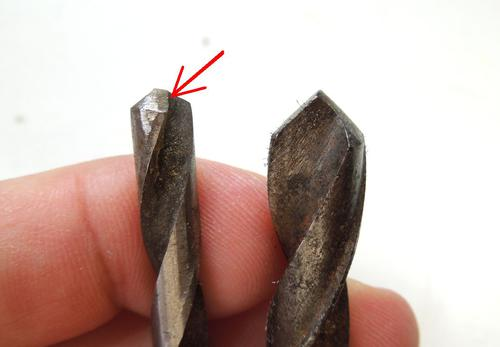
- The drill tip may glow red.
- Cutting temperatures exceed 600°C locally.
- Flank wear develops rapidly.
- Chip evacuation becomes difficult in deep holes.
Failure modes vary by size.
Typical Failure Modes of HSS Drill Bits
Drill Type | Diameter Range | Primary Failure Mode | Secondary Risk |
Standard Twist Drill | ≥3 mm | Flank wear | Thermal softening |
Deep Hole Drill | ≥10 mm | Heat softening | Edge chipping |
Micro Drill | <3 mm | Fracture | Wear-induced breakage |
Because of this, drill heat treatment must deliver:
- 63–66 HRC hardness
- Strong red hardness
- Controlled retained austenite
- Adequate toughness
Too much hardness increases brittleness.
Too little hardness accelerates wear.
Which HSS Grades Perform Best in Drill Applications?
The most widely used grades include:
Common HSS Grades for Drill Manufacturing
Grade | International Equivalent | Key Feature | Typical Application |
W6Mo5Cr4V2 | M2 | Balanced carbide distribution | General drilling |
W18Cr4V | T1 equivalent | High tungsten content | Heavy-duty drilling |
M33 / M34 | Co-HSS | Excellent red hardness | Deep hole drilling |
T15 | High V + Co | Superior wear resistance | Hard materials |
Field data shows cobalt HSS (M33/M34) deep-hole drills can achieve 2–3 times tool life compared with M2 in high-temperature cutting.
This is not only due to composition — but optimized heat treatment parameters.
What Are the Critical Heat Treatment Parameters?
For M2 (W6Mo5Cr4V2):
- Austenitizing temperature: 1210–1230°C
- Staged salt bath cooling: 450–620°C
- Tempering: 560°C × 3 cycles
For W18:
- Austenitizing temperature: 1260–1280°C
Lower staged cooling (450–550°C) has shown better tool life than traditional 580–620°C cooling due to finer martensitic transformation.
Final hardness: 63–66 HRC
Why Does Excess Hardness Reduce Drill Life?
When hardness exceeds 67 HRC:
- Carbide networks may form.
- Micro-chipping increases.
- Fracture resistance drops.
Optimal life often occurs at 64–65 HRC — not maximum hardness.
Why Do Micro Drills Fail More by Fracture Than Wear?
Micro drills (<3 mm) behave differently.
More than 70% of failures occur due to breakage, not wear.
Therefore:
- Hardness is slightly reduced (62–65 HRC).
- Toughness becomes critical.
- Air cooling may replace oil quenching.
- Vacuum heat treatment improves dimensional control.
Vacuum treatment sequence example:
1.750°C preheat
2.850°C second preheat
3.1050°C third preheat
4.1205–1210°C austenitizing
5.Nitrogen cooling
Vacuum processing reduces:
- Surface decarburization
- Distortion
- Oxidation
Should Turning Tools Prioritize Hardness or Hot Hardness?
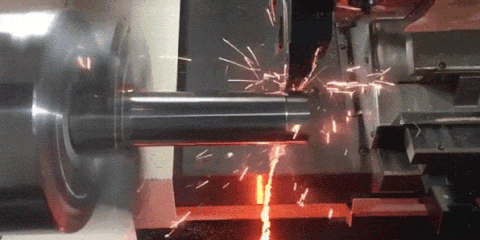
Turning tools work under varying cutting conditions.
Property Priorities in Turning Operations
Cutting Type | Dominant Requirement |
Finishing | High hardness |
Roughing | High hot hardness |
Interrupted cut | Toughness |
Unlike drills, turning tools may experience higher continuous heat concentration at the cutting edge.
Why Are Turning Tool Quenching Temperatures So High?
Turning tools use the highest austenitizing temperatures among HSS tools.
For M2:
- ≤9×9 mm section: 1235–1245°C
- 9×9 mm section: 1240–1250°C
For W18:
- ≤9×9 mm section: 1290–1300°C
- 9×9 mm section: 1300–1310°C
High temperature dissolves fine carbides, increasing red hardness.
But risks include:
- Grain coarsening
- Overheating
- Reduced toughness
Strict soaking time control is essential.
Can Cryogenic Treatment Improve Turning Tool Life?
Yes.
Sub-zero treatment (-80°C to -190°C):
- Reduces retained austenite
- Increases dimensional stability
- Improves wear resistance
Deep cryogenic treatment is particularly beneficial for finishing tools requiring tight tolerance.
Why Are Milling Cutters More Demanding Than Drills?
Face milling cutters experience:
- Continuous cutting
- Large contact area
- High thermal load
- Repeated mechanical stress
Priority ranking:
1.Wear resistance
2.Hot hardness
3.Dimensional stability
Example: Optimized Heat Treatment Route for M2 Milling Cutters
Improved Japanese process:
- 700°C stress relief (30 min)
- 1210–1230°C austenitizing
- 540°C staged cooling
- 280°C secondary hold
- 540°C tempering ×3
Lower staged cooling temperature refines structure and improves life compared to 600°C cooling.
Powder Metallurgy HSS – Is It Worth the Cost?
Powder grades such as ASP60 can achieve:
- 69–70 HRC
- Uniform carbide distribution
- Superior wear resistance
Used for:
- High-speed machining
- Long production cycles
- Hard alloy steels
However, heat treatment precision remains critical.
Why Does Slightly Lower Hardness Produce Longer Life?
Slitting saw cutters are:
- Thin
- Large diameter
- Interrupted cutting tools
Standard hardness requirements:
- ≤1 mm thickness: 62–65 HRC
- 1 mm thickness: 63–66 HRC
Field trials comparing quench temperatures:
Effect of Quenching Temperature on Slitting Saw Life
Quench Temp | Hardness | Average Cutting Length |
1230°C | 67 HRC | 1000 mm |
1215°C | 63–65 HRC | 3100 mm |
1200°C | 63–64 HRC | 3700 mm |
Conclusion:
Lower quenching temperature reduced chipping and improved real cutting life.
Distortion Control – The Hidden Production Challenge
Thin saw blades (300–350 mm diameter, 2 mm thickness) require:
- Hardness 63–66 HRC
- Flatness <0.5 mm
Distortion solutions include:
- Short isothermal quenching
- Pressure flattening
- Multi-stage tempering
Combining quenching and pressure correction can achieve 95% qualification rate.
What Happens When HSS Is Overheated?
Overheating may cause:
- Local melting
- Formation of coarse ledeburite
- Severe brittleness
- Premature failure
Causes include:
- Contact with salt bath electrodes
- Improper spacing
- Excessive temperature
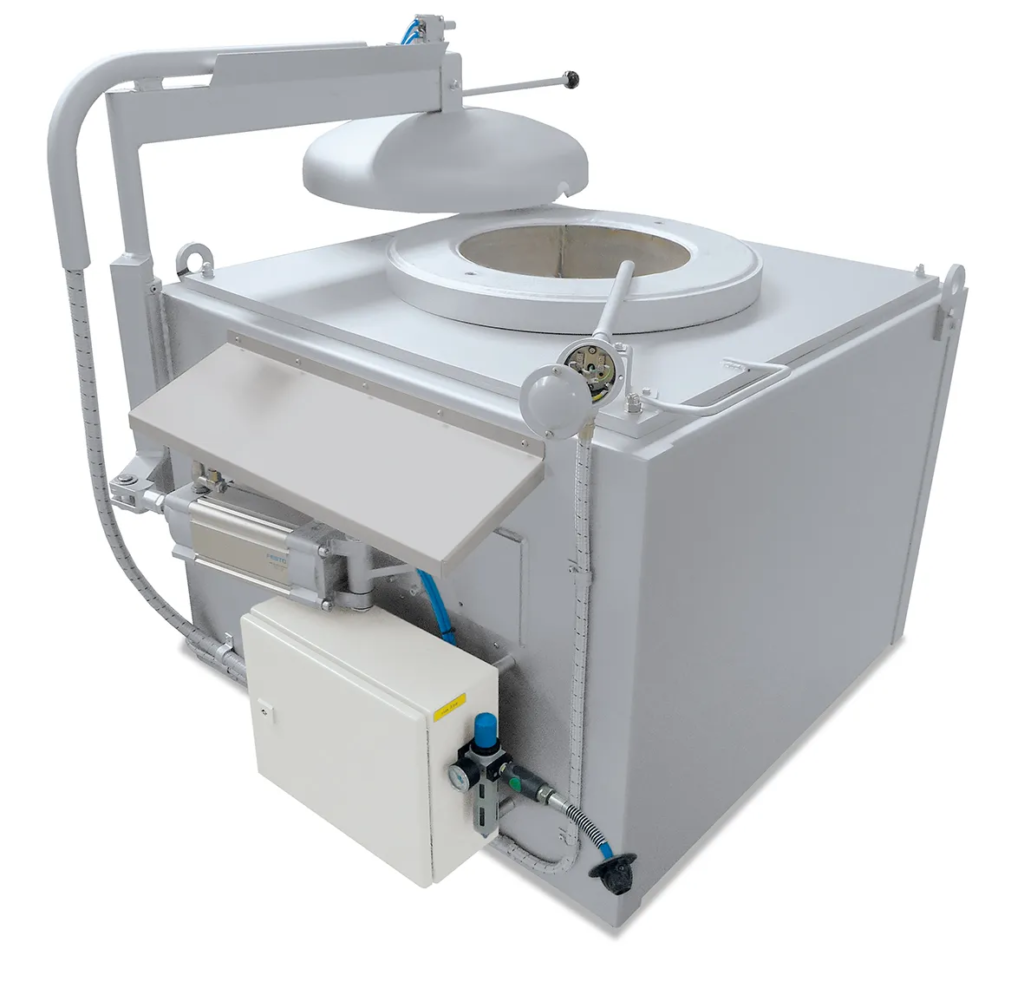
Strict furnace control prevents catastrophic defects.

Conclusion
What Truly Determines HSS Tool Performance?
Not just:
- Steel grade
- Coating
- Nominal hardness
But:
- Accurate austenitizing temperature
- Controlled soaking time
- Optimized staged cooling
- Correct tempering cycles
- Distortion management
- Optional cryogenic treatment
The longest-lasting HSS tools are not the hardest.
They are the most precisely heat-treated.