Skip to content
Mastering Hardened Steel: How Carbide Drill Bits Conquer the Heat and Deliver Precision
Table of Contents
Why Hardened Steel Is Hard to Drill
Drilling into hardened steel presents a unique set of challenges, requiring specialized tools and techniques. Hardened steel, often used in industries like automotive, aerospace, and tooling, has undergone a heat treatment process to increase its hardness, typically exceeding 60 HRC (Rockwell Hardness Scale). This makes the material tough to drill, often resulting in tool wear, poor hole quality, or even tool failure if the wrong methods are used.
Problems of Heat, Work Hardening, and Tool Wear:
When you drill into hardened steel, friction between the drill bit and the material generates a significant amount of heat. This heat can cause several problems:
- Work Hardening:As the material is exposed to heat, its surface becomes harder and more resistant to further machining. This phenomenon, known as work hardening, increases the cutting forces needed to continue drilling.
- Tool Wear:The heat generated during drilling accelerates the wear of the tool. High-speed steel (HSS) bits, which are often used for general drilling, cannot withstand this level of stress for long. Carbide drill bits, however, are engineered to handle these extreme conditions, making them more suitable for hardened materials.
Limits of HSS Drill Bits:
While HSS drill bits are common and reliable for softer materials, they struggle when faced with hardened steel. HSS bits can lose their cutting edge quickly under heat, leading to slower cutting speeds, poor surface finishes, and potentially more tool replacements.
Why Use Carbide Drill Bits for Hardened Steel
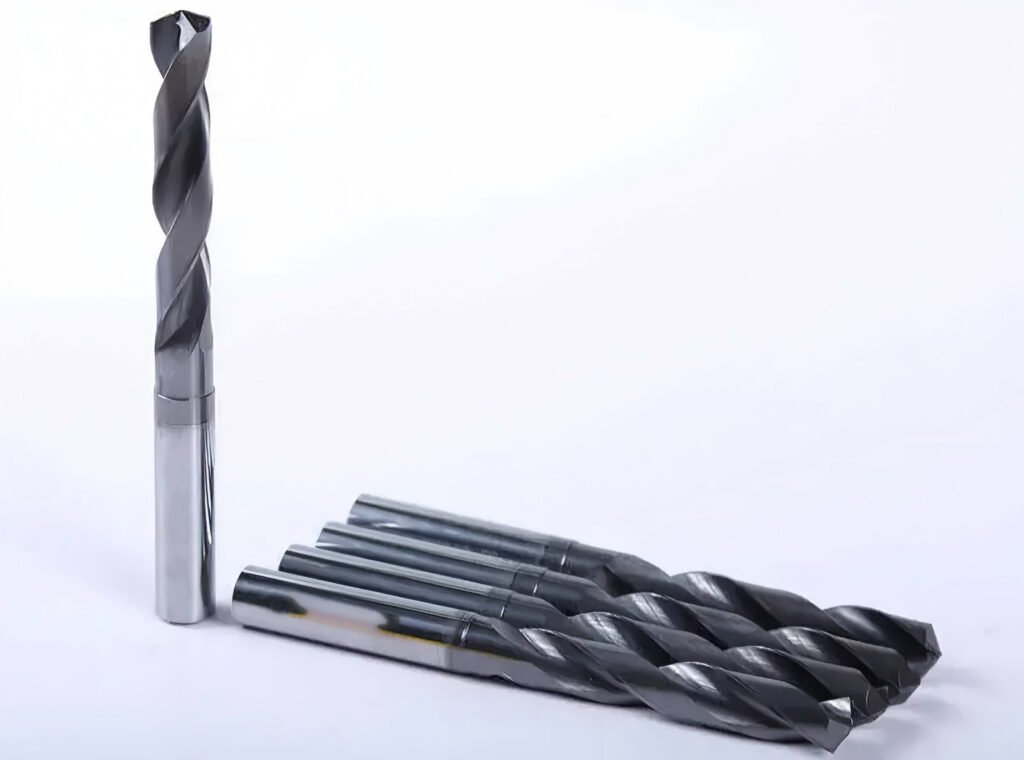
Carbide drill bits are designed to withstand the extreme conditions of drilling into hardened steel. Their superior hardness, wear resistance, and thermal stability make them an ideal choice for these tough materials.
Benefits of Carbide Drill Bits for Hardened Steel:
Carbide, which is made from a combination of tungsten and carbon, is one of the hardest materials available. Carbide drill bits can handle higher cutting speeds and feeds than HSS drill bits, ensuring greater efficiency and precision during the drilling process.
- Hardness:Carbide bits are much harder than HSS and can retain their sharpness much longer.
- Heat Resistance:Carbide drill bits can withstand temperatures exceeding 1,000°C (1,832°F) without losing their strength, making them ideal for high-speed, high-heat applications.
- Longer Tool Life:Due to their exceptional hardness and wear resistance, carbide drill bits can last much longer than HSS bits, which translates to fewer tool changes and reduced downtime.
Carbide Drill Speeds and Feeds for Hardened Steel
When it comes to drilling hardened steel, choosing the correct speeds and feeds is critical. Carbide drills perform best when used at higher speeds than HSS bits, but the feed rates need to be controlled to avoid excessive force that could cause tool failure.
Practical Starting Values for Carbide Drill Speeds and Feeds:
The correct speed and feed rate depend on the material hardness and the size of the drill bit. The table below offers starting values for carbide drill speeds and feeds when working with hardened steel.
Material | Carbide Speed (RPM) | Carbide Feed (IPR) |
Hardened Steel (60-65 HRC) | 1000-1500 RPM | 0.003-0.005 IPR |
Hardened Steel (50-60 HRC) | 1200-2000 RPM | 0.005-0.008 IPR |
Tool Steel (50-55 HRC) | 800-1200 RPM | 0.004-0.006 IPR |
- Speeds: Carbide drill bits perform best at higher speeds compared to HSS, but it’s crucial to monitor heat buildup to avoid excessive wear. For harder steels, speeds of around 1000-1500 RPM are a good starting point.
- Feeds: The feed rate should be kept in check to avoid excessive pressure on the drill bit. The starting feed rates listed above are optimal for carbide bits, but depending on the hardness of the steel and the depth of the hole, they may need to be adjusted.
Why Speeds and Feeds Matter:
Getting the speeds and feeds right is vital to prevent the drill bit from becoming too hot, which can lead to premature wear and work hardening. If the feed is too high, the bit may overheat and break, while too low a feed rate may lead to poor hole quality and excessive cutting time.
Choosing the Best Carbide Drill Bits for Hardened Steel
Selecting the best carbide drill bits for hardened steel involves considering several factors, including the geometry, coating, and substrate of the bit.
Key Factors to Consider:
- Geometry:For hardened steel, drill bits with a point angle of 135°-140° and a strong web design are ideal. These provide better cutting stability and precision when working with hard materials.
- Coating:Carbide drill bits can be coated with materials like TiN (Titanium Nitride) or TiAlN (Titanium Aluminum Nitride) to further enhance their durability. These coatings help reduce friction and heat buildup, extending tool life.
- Substrate:The quality of the carbide material itself is crucial. Fine-grain carbide with a high density will provide better wear resistance and strength under extreme conditions.
Feature | Ideal for Hardened Steel | Less Ideal |
Geometry | Point angle of 135°-140° | Shallow point angle |
Coating | TiN, TiAlN | Uncoated carbide |
Substrate Quality | Fine-grain carbide | Coarse-grain carbide |
Choosing the Right Bit:
When selecting a carbide drill bit for hardened steel, look for bits with reinforced points and high-quality coatings. A properly coated carbide bit can last much longer, reducing the number of tool replacements needed during production.
Small and Medium Sizes in Hardened Steel
For drilling hardened steel, small and medium-sized carbide drill bits are commonly used due to their precision and ability to drill accurately without excessive force. Specific sizes like the 3/16″, 5/16″, and 5/32″ bits are ideal for drilling hard materials without compromising hole quality.
3/16 Carbide Drill Bit:
The 3/16″ carbide drill bit is commonly used for precision holes in hardened steel. Its smaller diameter makes it suitable for tasks requiring accurate and detailed drilling without causing damage to the material.
5/32 Carbide Drill Bit:
With a slightly smaller diameter than the 3/16″ bit, the 5/32″ carbide drill bit is perfect for small-hole applications, where high precision is critical, such as in molds, dies, and automotive components.
5/16 Carbide Drill Bit:
The 5/16″ carbide drill bit is ideal for drilling medium-sized holes in hardened steel. Its robust structure makes it well-suited for applications requiring a balance of cutting power and precision.
Step-Drilling Strategy and Coolant
Step-Drilling Strategy:
One effective technique when drilling hardened steel is step drilling. This involves starting with a smaller pilot hole and gradually increasing the hole size. By using a smaller bit initially, the amount of heat generated is reduced, thus minimizing the risk of work hardening. Step drilling also allows for better chip removal, as the smaller bits can evacuate chips more effectively than larger ones.
Coolant Type and Delivery:
The application of the right coolant can significantly impact the efficiency and tool life when drilling hardened steel. A high-quality coolant reduces the friction between the drill bit and the material, helping to dissipate heat. Types of coolant to consider include water-soluble cutting fluids or synthetic oils that are specifically designed for high-temperature applications. Applying the coolant directly to the cutting edge and using through-tool coolant systems can also improve results by ensuring constant temperature control.
Checklist Before You Start Drilling
Before you start drilling into hardened steel, follow this quick checklist to ensure optimal results:
- Check Drill Geometry: Ensure the drill bit has the right geometry for the material you are working with.
- Confirm Coating: Select carbide bits with a coating like TiN or TiAlN for longer tool life.
- Verify Speeds and Feeds: Set the right speeds and feeds based on material hardness and tool size.
- Step Drill if Necessary: Consider using a step-drilling technique for deeper holes.
- Coolant Application: Use the right coolant to manage temperature and extend tool life.
By following these guidelines, using the proper carbide drill bits, and maintaining correct speeds, feeds, and coolant application, you can ensure successful drilling of hardened steel. This will help you achieve clean, precise holes while prolonging the life of your tools and equipment.