Skip to content
DIN-Precision End Mills vs. Global Alternatives: What Machinists Gain
Table of Contents

If you’ve ever swapped a DIN-standard end mill into a high-speed pocketing routine and watched chatter drop while surface finish improved, you’ve already felt what this article is about.
German DIN standards don’t just define shapes and sizes—they lock in repeatability that pays off in cycle time, tool life, and part quality. Below, we break down the most common DIN callouts you’ll see on end mills, how they compare to ISO/ANSI, what that means for holders and tolerances, and where DIN-coded tools shine in real jobs.
We’ll also share practical recommendations you can apply today with end mills, solid carbide options, roughers, 2-flute aluminum tools, 4-flute finishers, and more.
Introduction: Why DIN matters in milling
DIN (Deutsches Institut für Normung) standards exist to make tools and interfaces consistent—dimensions, shanks, lengths, and fits—so machinists can predict performance across brands and batches. The result: fewer setup surprises, cleaner run-in data for your speeds and feeds, and holders that clamp exactly the way the CAM model expected.
Unlike ANSI—rooted in inch conventions—and even unlike ISO—broader and sometimes looser in application—DIN conventions for end mills are tightly written around metric dimensions and high repeatability, especially for shanks and overall lengths. That rigor is why many CNC shops running shrink-fit or HSK spindles gravitate to DIN-coded end mill carbide and HSS tools for critical surfaces and tight-tolerance features.
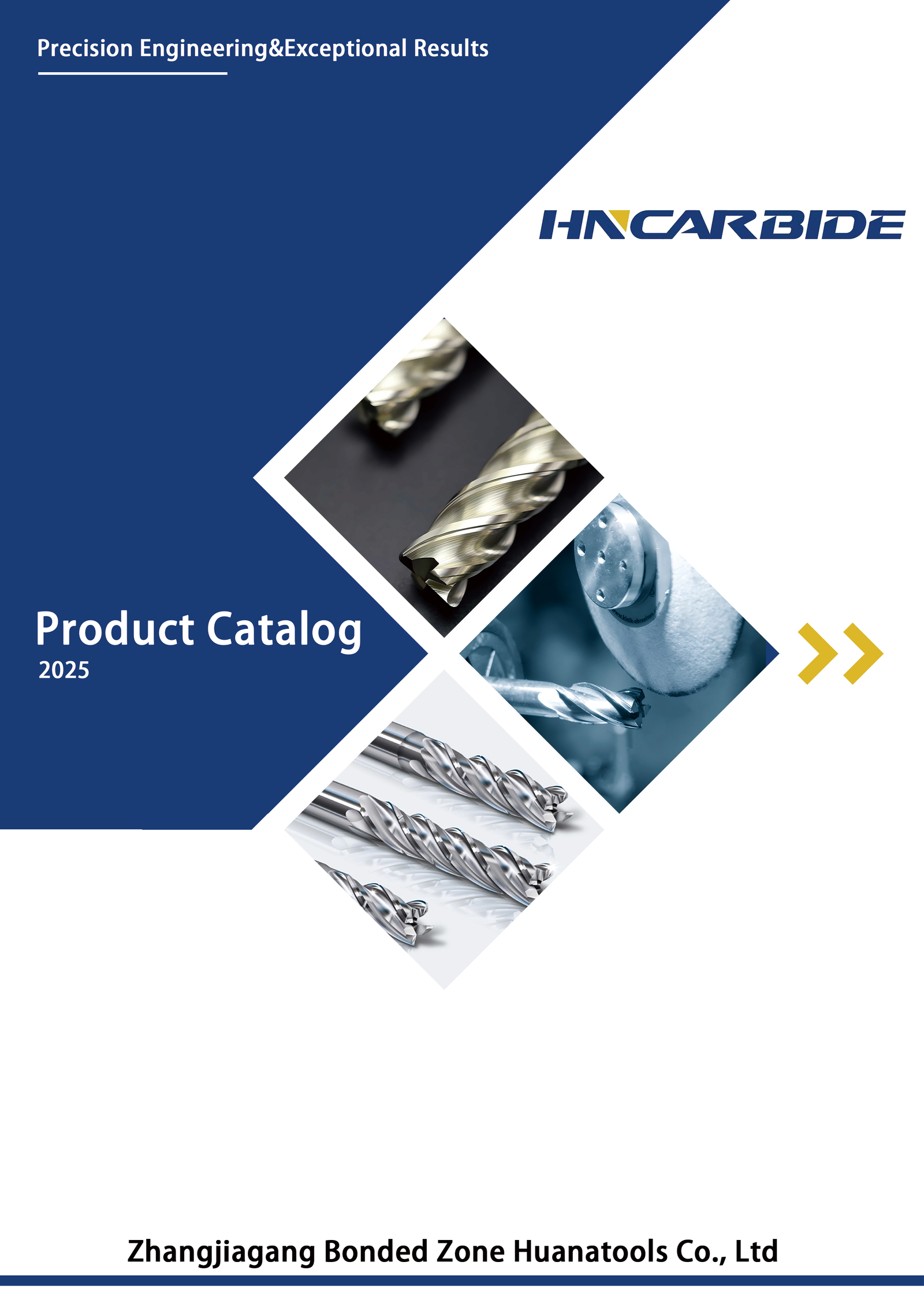
DIN Milling Cutters Catalog
Click the button below to view our DIN milling cutters catalog and explore detailed product specifications to make the best choice.
Understanding the core DIN standards you’ll see on end mills
Below are the three callouts you’ll encounter most:
- DIN 844– A dimensional standard for HSS/HSS-E and carbide end millswith straight shanks in short/long variants. It specifies lengths, diameters, and cutting lengths so that, for a given nominal size, tools from different makers sit the same in your holder and reach the same depth.
- DIN 6527– A solid-carbide end-mill standard (plain/stepped parallel shanks) supplied in short (S)and long (L) overall lengths. The letter suffix you’ll often see (e.g., “DIN 6527 L”) is about reach, not geometry; your helix, flute count, and coatings are manufacturer choices on top of the DIN envelope.
- DIN 1835– Defines shank forms, the most relevant being Form B (Weldon flat)used with Weldon end-mill holders and many modular systems. Correct identification (e.g., “DIN 1835-1 Form B”) ensures proper anti-pullout clamping and axial positioning.
Common German DIN Standards for End Mills
DIN Standard | What it Covers | Typical Tool Type | Practical Takeaway |
DIN 844 | Metric diameters, overall & cutting lengths for straight-shank mills | HSS/HSS-E, carbide end mills (2-flute to 4-flute, roughers/finishers) | Consistent gauge length and reach across brands. |
DIN 6527 (S/L) | Dimensional envelope for solid-carbide end mills; short/long versions | End mill solid carbide finishers, roughers, slotters | Predictable stick-out choices (S vs L) with matching shank spec. |
DIN 1835 (Form A/B/E) | Shank forms: A (plain cyl.), B (Weldon flat), E (Whistle-notch) | Square end mill, roughing end mill, drills, reamers | Choose Form B for Weldon holders; match your holder to the shank. |
DIN vs. ISO vs. ANSI—what really differs on the shop floor?
While ISO is global and metric, ANSI remains predominantly imperial in sizes and fits. DIN and ISO often align conceptually, but actual equivalence is not guaranteed—especially for shank fits and length series—so mixing standards can throw off stick-out, clamping force, and balance assumptions in high-RPM work.
DIN vs ISO vs ANSI at a glance
Feature | DIN (Germany/Europe) | ISO (Global) | ANSI (USA) |
Dimension base | Metric throughout | Metric | Imperial (inch) dominant |
Typical shank fit | Tight metric fits (e.g., h6 common for high-precision holders) | Metric; fit varies by product family | Inch shanks (e.g., 1/4, 3/8, 1/2) with system-specific fits |
Interchangeability | High within DIN ecosystems (tools/holders/HSK) | Broad intent, but specifics vary by ISO doc | Strong within inch-based systems |
Implication for CNC | Excellent repeatability for model-to-machine length and clamping | Good, but check the exact ISO document | Watch conversions—stick-out and torque can shift |
Typical use | Precision machining | General/global use | General and heavy-industrial (inch) |
Why h6 matters: many shrink-fit and HSK-E chucks explicitly require h6 tool shanks to achieve balance (e.g., G 2.5 @ 25,000 rpm) and clamp consistency at speed. Using a looser shank risks slippage, runout growth, or poor balance.
Material and manufacturing quality: carbide, heat treat, and grind
DIN doesn’t dictate carbide grain size or coatings, but German toolmakers often pair the standard with uniform fine-grain carbide, precise relief/edge prep, and tight shank tolerances to unlock stable cutting at higher chip-loads. You’ll see that in catalog specs—helix angles, unequal flute spacing, and coatings tuned for steel, stainless, or superalloys—built on top of the DIN envelope (e.g., DIN 6527L tools with specific helix and weldon/cylindrical shanks).
- Carbide & heat treat: Solid-carbide end mills deliver hardness and hot-strength for long tool life at high SFM, especially in stable holders.
- Precision grinding: Tight roundness and low runout (helped by h6 shanksand balanced holders) reduce vibration, extend edge life, and improve dimensional control in end milling.
Why DIN-standard end mills often excel
Better repeatability, less vibration. Because DIN nails the basics—diameter, length, and shank form/fit—your CAM lengths and holder models line up with reality. That means cleaner entry moves, more reliable end mill feed rate targets, and less time re-probing stick-out.
Holder compatibility. Whether you run Weldon holders (DIN 1835 Form B) for torque-heavy roughing or shrink-fit/HSK-E for high-speed finishing, DIN keeps the interface predictable—no guessing at a shank’s true size or flat height.
Metric clarity. Metric lengths and **H6/**h6 shank fits (widely used in Europe) simplify decision-making for speeds and feeds and reduce conversion errors when you’re jumping between 1/4 end mill bit, 1/2 inch end mill bit, and 12 mm end mill jobs.
Applications and recommendations
Below, we map common jobs to DIN callouts and tool styles you can standardize on. Use this as a buying and programming shortcut when selecting center cutting end mill tools, roughers, or finishers.
Aerospace & high-value 3-axis finishing
- Tooling: DIN 6527 Send mill solid carbidefinishers, 4–6 flutes, unequal pitch, 35–45° helix; h6 shank in shrink-fit/HSK.
- Why: maximum balance + minimal runout = superior wall finish in 15-5/17-4, Inconel, Ti-6Al-4V.
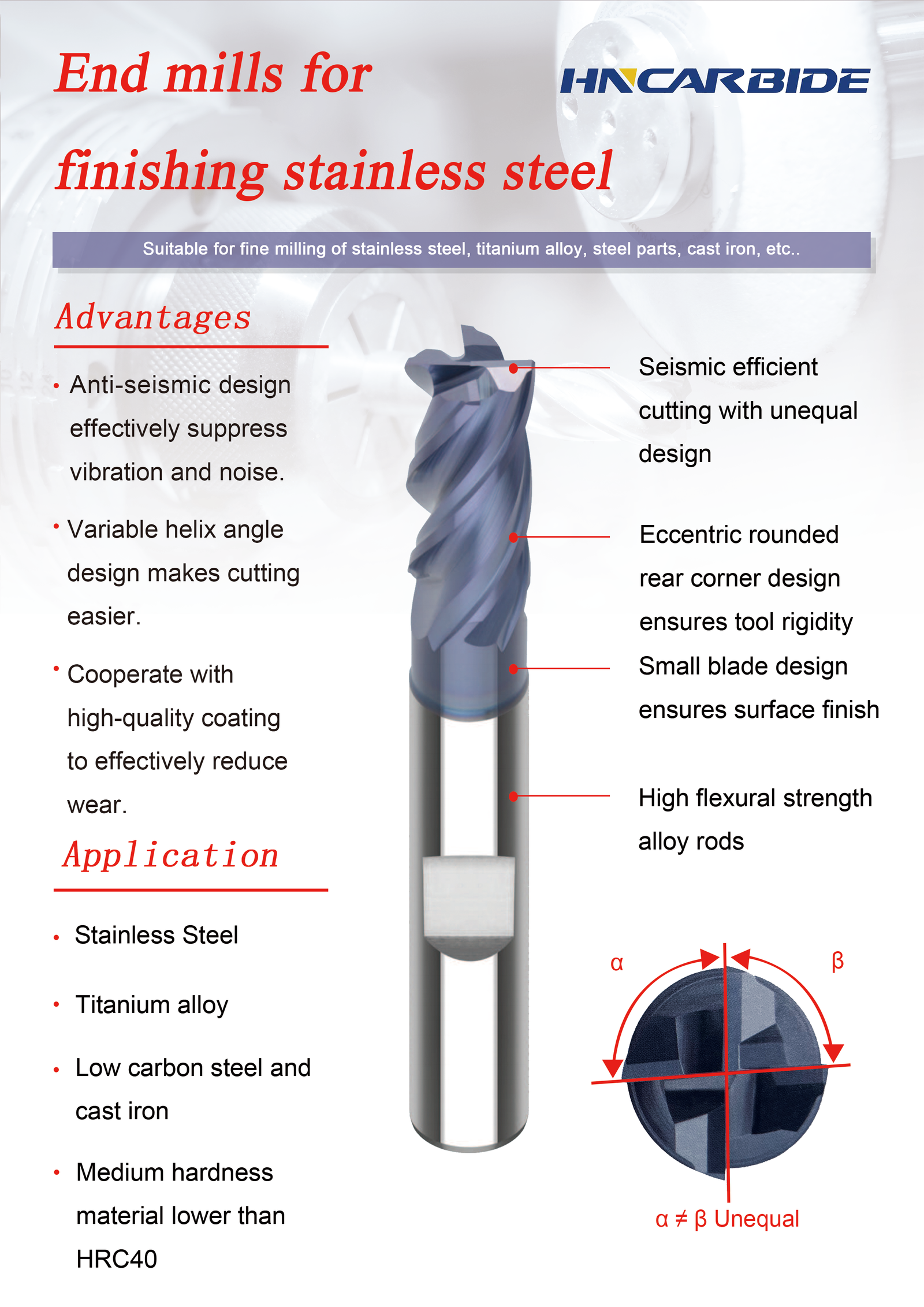
- HNCarbide: 4-flute square end millseries for steels and stainless with AlTiN or AlCrN coating; stocked in DIN 6527 S/Llengths for reach control.
Die & mold rough-to-finish in P20/H13
- Tooling: DIN 844roughing end mill(HSS-E/Co for interrupted cuts or pre-hardened) followed by DIN 6527 L 5–7 flute finishers for low-vibration semi-finishing.
- Why: the DIN envelope keeps your stepdown/stepover programming stable when swapping brands or re-ordering sizes.
Automotive aluminum (6061/6082) pocketing and slotting
- Tooling: 2 flute end mill for aluminum(polished, high-shear, 30–45° helix), DIN 6527 S; consider 1/4 end milland 12 mm end mill staples for fixture plates and housings.
- Why: center-cutting edges, plus consistent stick-out, allow aggressive ramp entries and clean chip evacuation.
Tough steels (4140/4340) high-torque roughing
- Tooling: DIN 1835 Form B (Weldon) shankroughers to prevent pull-out; 3-flute “power” roughers for deep slotting.
- Why: Weldon flats maintain torque transfer; pair with secure end-mill holders for reliability under heavy radial loads.
Practical tables you can use in programming & purchasing
Quick selector for DIN-coded end mills
Job Type | Recommended DIN | Typical Geometry | Holder Interface | Notes |
Aluminum pocketing & slotting | DIN 6527 S | 2 flute polished, center cutting | Shrink-fit/HSK-E (h6) or ER collet | High chip-evac; great for 1/4 end mill and 1/2 end mill carbide staples. |
Steel roughing (4140/4340) | DIN 844 (HSS-E rougher) or DIN 6527 S (carbide rougher) | Chip-breaker or variable pitch | DIN 1835 Form B (Weldon) | Anti-pullout security in heavy radial cuts. |
Stainless finishing (304/316) | DIN 6527 L | 4–6 flute, unequal pitch, AlCrN | Shrink-fit/HSK-E (h6) | Longer reach with low chatter; balance matters. |
Die & mold semi-finish | DIN 6527 L | 5–7 flute, 35–40° helix | Shrink-fit or hydraulic | Stable walls, reduced cusp height. |
General-purpose finishing | DIN 844 | 4-flute, center cutting | ER/hydraulic | Bread-and-butter end mill for steels. |
Holder and shank fit notes you shouldn’t skip
- Shrink-fit/HSK-E systemsexpect h6 shanks—that’s the tolerance that yields reliable friction grip and balance at speed (G 2.5 @ 25k typical). If a tool’s shank is looser than h6, expect axial creep or runout growth at high rpm.
- Weldon (DIN 1835-B)remains the safest bet for torque-intense slotting and roughing; match shank form to holder spec to avoid fretting and axial pull-out.
Programming tips (feeds/speeds & setup)
- Model the real stick-out. With DIN 6527 S vs L, you can lock a program to a specific overall length and get the same deflection model across replenishment orders.
- Use a conservative DOC “rule of thumb”for long-reach L-series tools: start at 0.5–0.75×D axial at 8–12% radial in steel, then tune up using your end mill speeds and feeds calculator.
- Exploit unequal pitchtools (common in premium DIN 6527L geometries) to climb-mill thin walls with less chatter, then finish with a spring pass.
FAQs we hear from buyers and programmers
Q: Are DIN and ISO end mills interchangeable?
A: Often, but don’t assume exact match for length series, shank specifics, or tolerance class. Always check the datasheet and holder requirement (e.g., h6).
Q: Where does ANSI fit?
A: ANSI tools are typically inch-based (e.g., 1/8 end mill, 1/4 ball end mill, 1/2 carbide end mill) and great when your fixtures, prints, and holders are inch-native. Mixing inch tools in metric holders is fine, but keep an eye on stick-out and torque.
Q: Is Weldon obsolete in high-speed machining?
A: Not at all. Use Weldon (DIN 1835-B) for roughing security; shift to shrink-fit/hydraulic for finishing where balance/runout dominate.
Conclusion: The measurable edge of DIN
When you buy DIN-coded end mills, you’re not just picking a size—you’re buying predictability: the right reach every time (DIN 6527 S/L), shanks that clamp the way your model expects (h6 for shrink-fit), and holder interfaces that won’t surprise you (DIN 1835-B for Weldon). In practice that means less vibration, better surface finish, longer tool life, and fewer edits after first article.
Explore HNCarbide’s German-standard series—from 2-flute end mill for aluminum to 4-flute square end mill finishers and high-torque roughers—all built on the DIN foundation that modern CNCs and holders expect. If you want help mapping SKUs to your jobs or converting from inch to metric, we’re happy to recommend a DIN-based kit with the right end mill feeds and speeds starting points for your materials.