Skip to content
China End Milling Cutters vs Global Brands: The Real QC & Consistency Story
Table of Contents
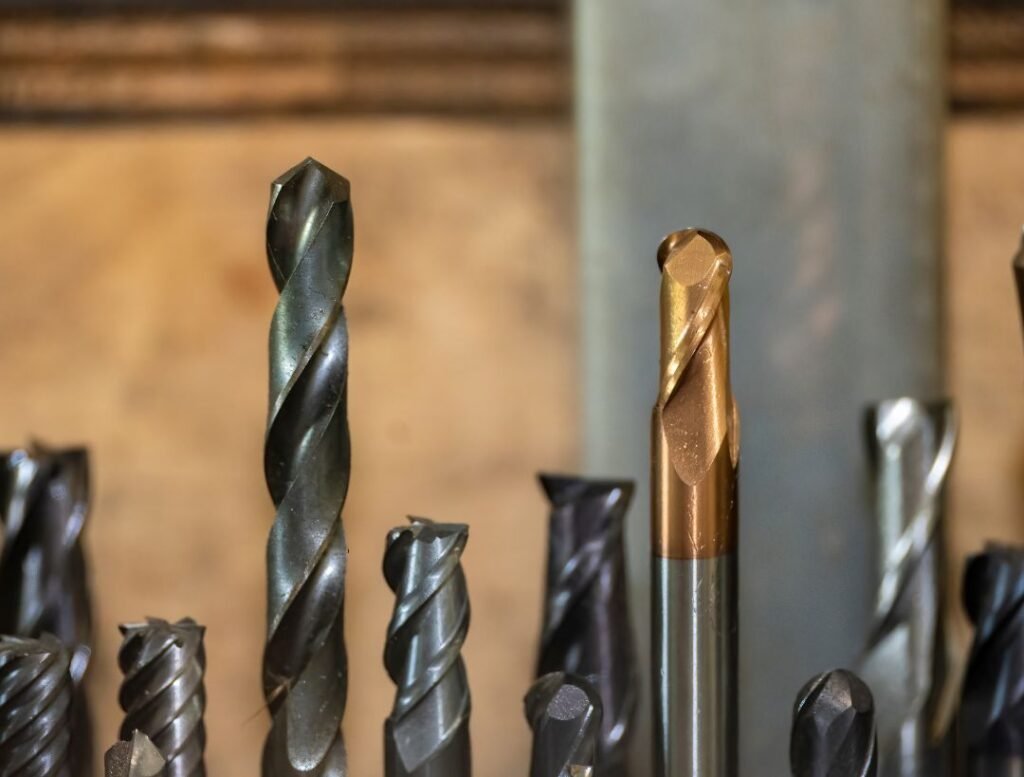
When an end mill milling cutter fails—chips early, leaves poor finish, or suddenly runs undersize—the first instinct is to blame the program: feeds, speeds, stepovers, CAM settings. In reality, many “mystery failures” are supply-chain failures: inconsistent geometry, unstable edge prep, variable coating, or runout that changes from batch to batch.
That’s why the China-vs-global debate is often framed the wrong way. The practical question isn’t where an end milling cutter is made—it’s whether the supplier can deliver repeatable performance at scale, with traceability, inspection discipline, and predictable variation. Global brands often “feel stable” because their product systems (design control, inspection, batch control, service feedback loops) are mature. But a well-run Chinese manufacturer can absolutely hit industrial-grade consistency—while a poorly controlled factory anywhere can’t.
This article gives you a checkable, shop-floor way to compare QC, consistency, and value—especially if you buy for distribution, OEM production, or process engineering.
What is an end milling cutter
What is an end milling cutter?
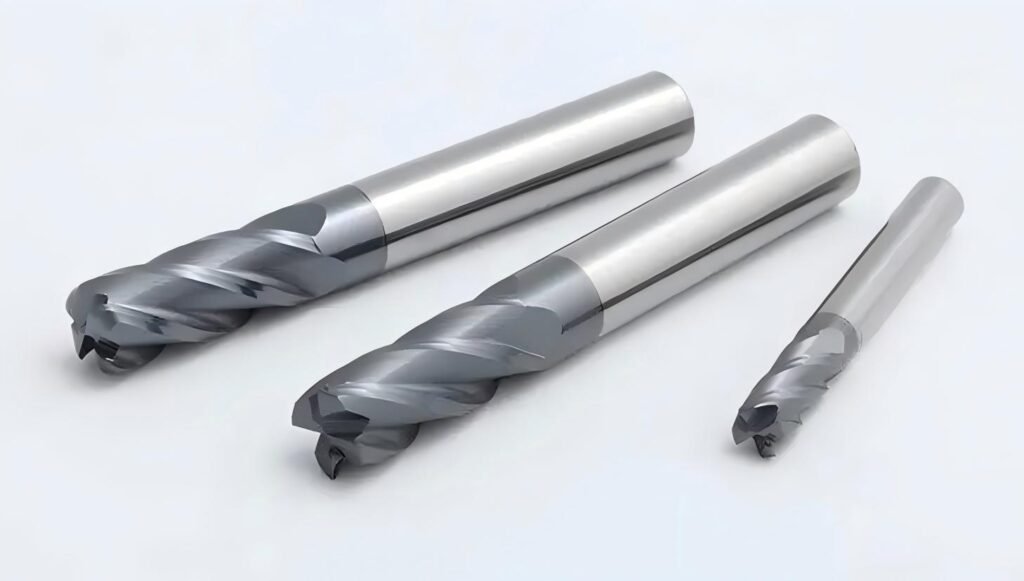
It’s a rotary cutting tool used primarily for milling operations—slotting, profiling, pocketing, facing, and finishing—on CNC machining centers and milling machines. Unlike a drill, an end mill can cut sideways as well as axially (depending on geometry).
What is end milling cutter used for (use of end milling cutter)?
- Roughing stock removal (high MRR)
- Semi-finishing to control size and form
- Finishing for surface quality and dimensional accuracy
- Specialty operations (chamfering, corner radius, micro features)
If your milling machine end mill cutter setup is stable, tool performance is dominated by:
1.tool geometry + edge prep
2.substrate & coating
3.runout and rigidity in the toolholding system
4.process settings and chip evacuation
What “good” looks like: performance metrics to compare
A fair comparison needs measurable outcomes—otherwise “brand vs China” becomes opinion.
Core metrics
- Tool life(minutes in cut, parts per edge, or cutting length)
- Edge chipping / breakage rate
- Surface finish(Ra/Rz trends, not just “looks ok”)
- Size holding(diameter drift, taper, corner wear growth)
- Runout sensitivity(how quickly life collapses when runout rises)
Practical metrics and how to measure them (fast, repeatable)
Metric | What it tells you | Simple way to measure | Why it matters for consistency |
Tool life | Wear resistance + edge stability | “Parts per tool” at fixed program | Best single KPI for supplier comparison |
Chipping rate | Edge prep + carbide toughness | Count failures per 50–200 tools | Highlights brittle batches/coating issues |
Surface roughness | Geometry stability + vibration | Ra trend per batch (same cut) | Inconsistent helix/edge prep shows up fast |
Size drift | Wear + coating thickness + runout | Measure feature size over tool life | Predictable drift = controllable process |
Runout | Tool + holder + clamping quality | Dial indicator at gauge length | Runout kills tool life and finish |
Runout note (non-negotiable): Runout is a silent multiplier. Even a premium cutter can perform badly with poor holders or dirty tapers. Conversely, a “good China” end mill can look world-class if runout is controlled. Industry guidance emphasizes runout as a major driver of tool life and finish problems.
Manufacturing & QC: where differences usually come from
This is where “global brand stability” is typically earned: process capability + control loops.
Substrate (carbide grade) control
A solid carbide end milling cutter’s behavior is heavily driven by carbide microstructure and binder balance.
The real difference is often not “carbide vs carbide,” but:
- whether the carbide grade is stable over time
- whether incoming material lots are controlled
- whether toughness vs hardness is matched to the series (general steel vs stainless vs hardened)
Grinding process and geometry repeatability
Geometry is not just flute count—it’s helix control, core thickness, rake/relief angles, gash geometry, margin behavior, and edge prep.
Two tools can look similar on a spec sheet but behave differently if:
- grinding wheel wear compensation is weak
- in-process inspection is light
- edge prep is done “by feel” instead of defined standards
Coating process stability
Coating is not simply “AlTiN.” Process details matter:
- deposition method (arc-PVD vs sputtering variants)
- adhesion and cleanliness control
- thickness control and edge rounding effects
- consistency over tool batches
Advanced PVD methods such as HiPIMS are widely discussed for producing dense, smooth coatings and improved cutting-edge stability, though performance depends on the whole tool system.
Inspection and documentation discipline
A mature end milling cutter manufacturer can usually produce:
- runout inspection method definition (where measured, gauge length, fixture/holder)
- OD and shank tolerances by diameter range
- coating batch records
- traceability (batch codes connected to production lots)
And yes—ISO 9001 is often used as a baseline quality management framework (it’s a QMS standard, not a “tool quality guarantee”).
Geometry & edge prep differences
If you’ve ever swapped between suppliers and thought, “This one just feels calmer,” you’re usually seeing geometry and edge prep stability, not magic.
Key variables inside “end milling cutter geometry” that change the experience:
- Helix angle stability(affects cutting smoothness and chip flow)
- Core thickness(strength vs vibration behavior)
- Rake/relief consistency(forces and heat)
- Flute polish & chip gullet shape(chip evacuation, BUE behavior)
- Edge prep(hone/chamfer) consistency (chipping resistance vs sharpness)
Edge prep is the hidden differentiator.
A too-sharp edge can cut beautifully but chip early in steels. Too heavy a hone can survive but rub, heat, and smear. Global brands tend to control edge prep by series more consistently; strong Chinese suppliers do too—weak ones vary from lot to lot.
Coating & substrate: HSS vs carbide in brand offerings
Most modern comparisons focus on solid carbide (and they should). But HSS milling cutter end mill still has a role.
When HSS still makes sense
Choose HSS (or cobalt HSS) when:
- machine rigidity is low (older machines, light-duty setups)
- spindle speed is limited
- shock loads are high (interruptions, poor fixturing)
- you need cost-effective tools for low-volume work
When solid carbide dominates
Solid carbide end milling cutters win when:
- speeds are high and heat must be resisted
- production volume makes tool life critical
- you need reliable size holding and finish
“Nano” coatings and modern PVD
Many suppliers market “nano coated” end mills. Practically, it often means nanoscale multilayer/nanocomposite structures to improve hardness, heat resistance, and wear behavior. Technical resources describe “latest generation” AlTiN variants mixed with silicon for nanocomposite behavior.
Research literature continues to explore newer coating architectures and their wear/surface integrity effects under demanding conditions.
Price vs total cost: how to compare fairly
End milling cutter price is easy to compare. Cost per good part is the metric that matters.
Your true cost includes:
- tool purchase price
- tool change time (labor + machine downtime)
- scrap/rework risk when a tool batch is unstable
- finishing time if surface finish is inconsistent
Example total cost comparison
Scenario | Tool price | Avg parts per tool | Tool-change time cost per change | Scrap cost impact | Cost per good part (relative) |
Low price, unstable batch | Low | Low/variable | High (more changes) | Medium–high | Often worst |
Mid price, consistent “qualified China” | Mid | Mid–high | Medium | Low–medium | Often best value |
Premium global brand | High | High | Low–medium | Low | Best for critical ops |
This is why wholesale end milling cutter buyers (distributors/OEM) should segment purchasing:
- premium tools where risk is expensive (hard materials, tight tolerance finishing, unmanned runs)
- value tools where the process is forgiving and consistency is proven
Buying checklist for distributors & OEMs
If you distribute or private-label, your job is to filter suppliers by repeatability, not by brochure claims.
Here’s a short checklist that works for both global and China sources:
Sampling & validation
- Test 3 batches, not 1 (prototype success can be a fluke)
- Use the same program, same holder type, same gauge length
Batch consistency and traceability
- Ask how batches are coded and how complaints map back to lots
- Require inspection reports that show OD, shank, runout method, coating batch reference
Inspection method definition (especially runout)
- Runout must specify whereit’s measured and in what setup; runout problems are common, and guidance stresses its effect on outcomes.
Certificates (useful, but don’t worship them)
- ISO 9001 indicates a structured QMS approach, but it’s not proof of “best tools.” Use it as a baseline filter, then rely on performance data.
Packaging and labeling
- Every box should support traceability (batch code, size, series, coating, date code)
- Packaging damage control reduces edge chipping before first cut
If you’re buying china end mill milling cutter supply for distribution, the biggest win is building a closed-loop: incoming inspection + periodic re-validation + clear rejection standards.
Conclusion: a practical strategy that actually works
The smartest purchasing strategy is layered:
1.Critical operations (hard materials, finishing, tight tolerance):
Buy the most consistent tool system you can—often premium global brands or top-tier qualified suppliers—because the cost of instability (scrap, downtime) is high.
2.Standard production and general machining:
Use a qualified, validated supplier (often excellent value from China) once batch consistency is proven across multiple lots.
3.Non-critical, low-volume, prototypes:
Use economical tools, but keep expectations realistic and use them where risk is low.
If you’re building your own product line, don’t sell “country of origin.” Sell defined series behavior (substrate + geometry + coating + inspection targets) with documentation and repeatability.
FAQ
1) What is end milling cutter used for (use of end milling cutter)?
For milling slots, pockets, profiles, and finishing surfaces on CNC and manual mills. It removes material in multiple directions, not just axial drilling.
2) How do I evaluate an end milling cutter manufacturer?
Ask for: batch traceability, runout measurement method, real inspection reports, defined edge prep standard by series, and multi-batch sample validation. Treat ISO 9001 as a baseline indicator of a structured QMS, not a guarantee of performance.
3) How is end milling cutter price determined?
Price reflects carbide grade cost, grinding time/precision, coating process cost, inspection level, packaging, and service support. A cheap tool can become expensive if tool life variation drives downtime and scrap.
4) HSS milling cutter end mill: when should I choose it?
Choose HSS when rigidity is low, spindle speed is limited, or shock loads are high. Choose solid carbide when speed, heat resistance, and repeatable size holding matter most.
5) What geometry matters most for tool life (end milling cutter geometry)?
Edge prep consistency and core strength are often decisive. Helix/rake influence cutting forces and heat; flute polish and gullet shape influence chip evacuation; all must be stable batch-to-batch.
6) What runout level is “acceptable” for end mills?
It depends on diameter and operation, but the key is controlling runout consistently and measuring it the same way every time. Runout is widely recognized as a tool life killer when uncontrolled.
7) Are “nano coated” end mills worth it?
They can be—especially in steels and demanding applications—because nanocomposite/nanolayer coating structures are designed to improve hardness and heat resistance. But the benefit only shows if the whole system (holder/runout, geometry, process) is controlled.
8) What should I request when buying wholesale end milling cutter lots?
Require batch-coded packaging, inspection reports per lot, and a defined complaint response process. Validate performance across multiple lots before scaling.