4-Flute, 6-Flute, or 8-Flute End Mills? Choose by Chip Evacuation, Not Flute Count Alone
Table of Contents
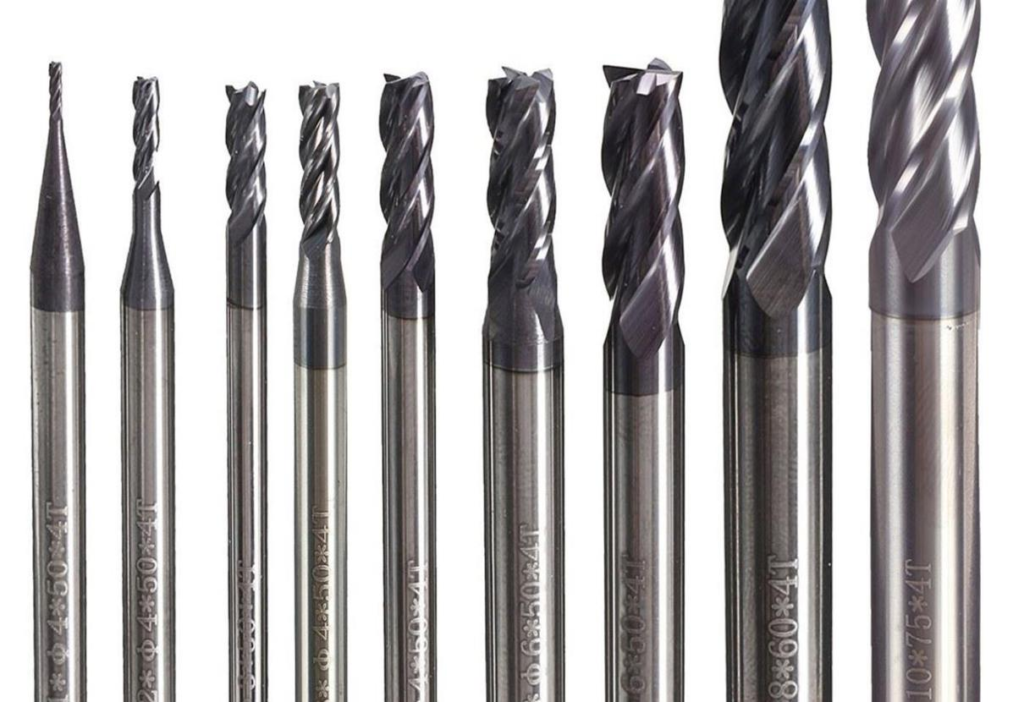
When a milling cutter breaks in a slot, leaves a smeared wall, or starts making a rough sound halfway through a pocket, many shops first look at speed, feed, coating, or coolant. Those factors matter. But in many cases the problem started earlier, when the flute count was chosen.
More flutes can look like the safer choice. More cutting edges suggest higher productivity, stronger geometry, and a finer finish. That is only true when the chips have enough space to leave the cut. If the flute valleys are too small for the chip volume being produced, the extra edges do not help. They turn into more surfaces rubbing against trapped chips.
For carbide end mills, flute count is really a tradeoff between chip evacuation and tool rigidity. Fewer flutes leave more open space for chips. More flutes leave a thicker tool core and more cutting edges in contact with the workpiece. The best choice depends on material, operation, radial engagement, axial depth, machine stability, and finish requirement.
What changes when flute count increases?
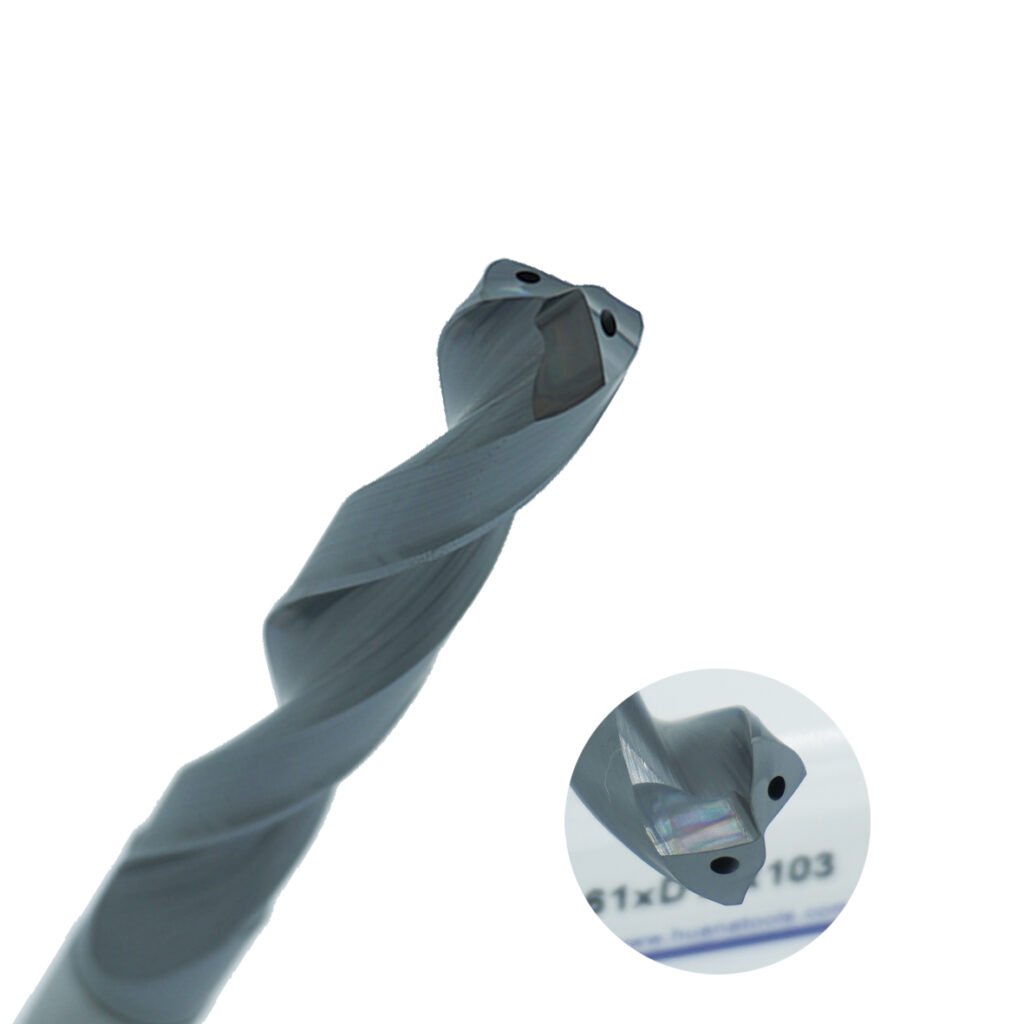
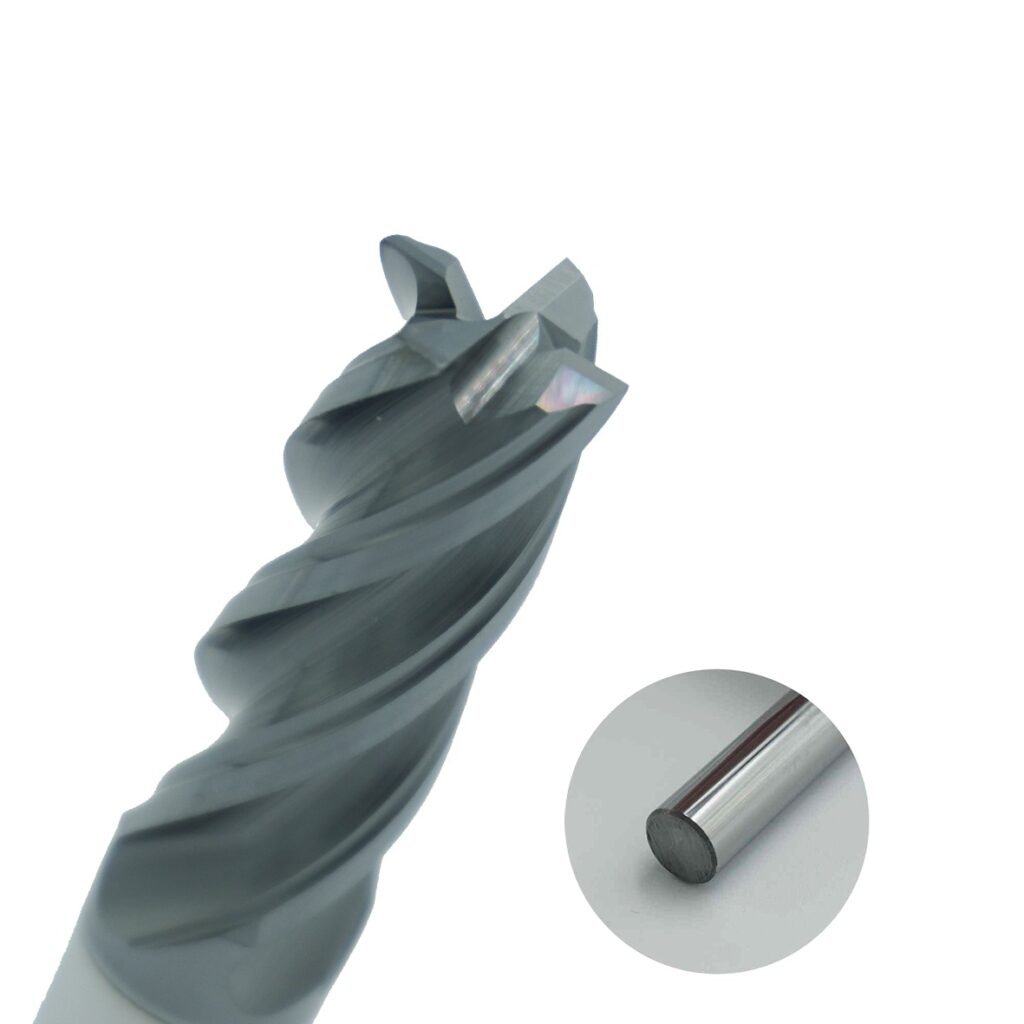
An end mill has only so much circumference. When the number of flutes increases, each cutting edge receives a smaller share of that circumference. The chip gullets become narrower, while the center core of the cutter becomes thicker.
That geometry shift creates two very different effects.
First, chip space decreases. A 2-flute or 3-flute end mill has large valleys that can carry bigger chips out of a slot or deep pocket. A 6-flute or 8-flute end mill has much less open space between edges. It can work extremely well when chip thickness is small, but it is easy to overload in heavy slotting or soft gummy materials.
Second, rigidity improves. More flutes usually mean a larger core diameter. A thicker core resists bending, reduces deflection, and helps the cutter stay stable in finishing cuts. It also spreads cutting load over more edges when the toolpath is suited to the geometry.
This is why flute count should not be selected by a simple “more is better” rule. The right question is: can the flute valleys carry the chips generated by this material and cut condition while the cutter remains rigid enough for the accuracy target?
Chip evacuation is the first limit in roughing
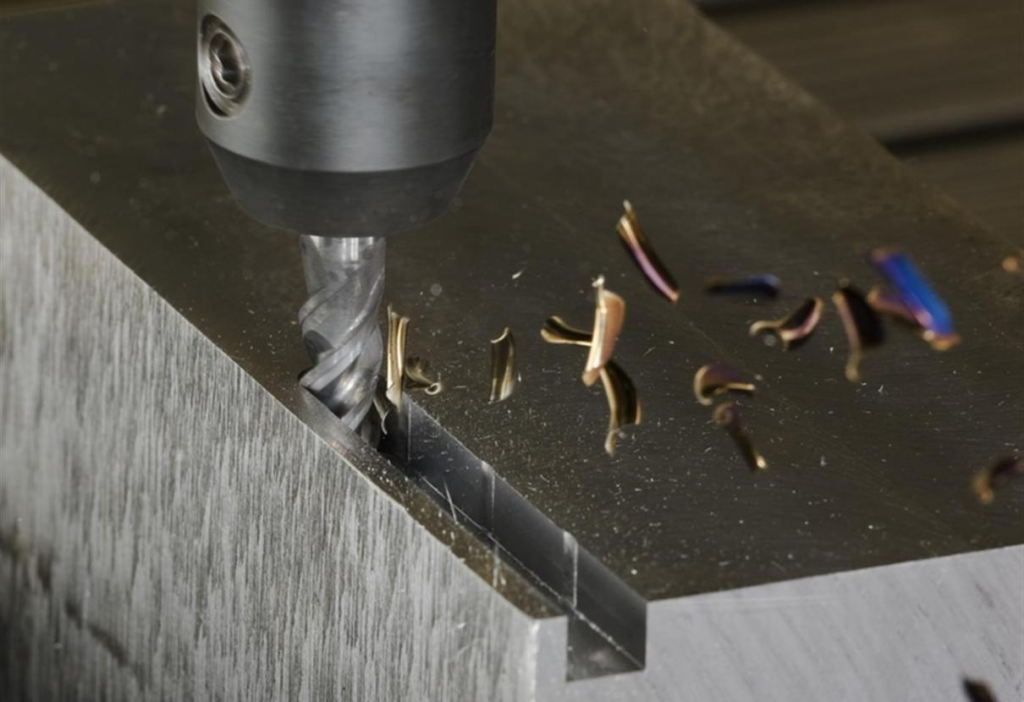
Roughing produces chip volume. Slotting, pocket opening, full-width engagement, deep axial cuts, and high material removal operations all push chips into the flute valleys. If chips cannot escape quickly, they are recut between the cutting edge and the workpiece.
That creates several visible problems. Surface finish becomes torn or smeared. Spindle load becomes uneven. The cutter may sound harsh even when feed and speed seem reasonable. Chips can weld to the cutting edge in aluminum or stainless steel. In harder materials, trapped chips can chip the edge or snap a small-diameter cutter.
The most damaging part is recutting. A carbide end mill is designed to shear fresh material, not chew through its own chips again and again. Recut chips create heat, abrasion, and impact. Tool wear accelerates quickly, and the operator may wrongly blame coating quality or carbide grade when the root problem is insufficient chip room.
Why finishing often favors more flutes
Finishing is different. The stock allowance is usually small, radial engagement is lighter, and chip thickness is controlled. In that situation, chip evacuation is still important, but it is no longer the main constraint.
Now rigidity becomes more valuable. A 6-flute or 8-flute carbide end mill can resist deflection better than a low-flute tool of the same diameter. That matters when the shop is holding tight wall tolerance, finishing a shoulder, machining hardened steel, or trying to improve surface texture without slowing the program too much.
More flutes also reduce the load on each individual cutting edge when feed is adjusted correctly. The cut can feel smoother because each tooth removes a smaller chip. Vibration is often lower, the finish marks are finer, and dimensional control improves, especially in side milling and semi-finishing.
There is a catch: a high-flute tool still needs the right engagement. It is not a good full-slot rougher just because it is stiff. It shines when the toolpath produces smaller chips and gives them a clear exit path.
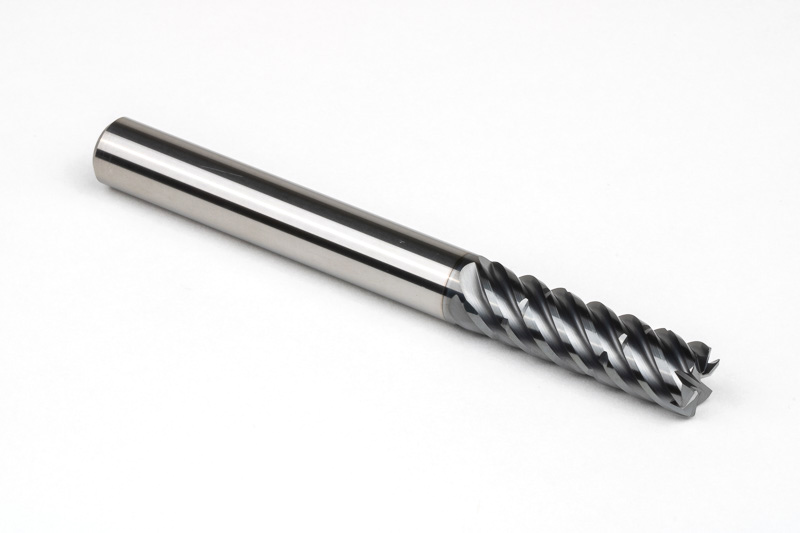
Flute count comparison for common CNC milling work
The table below gives a practical starting point. It is not a substitute for tool supplier data, but it helps explain why the same cutter can perform beautifully in one operation and fail quickly in another.
Flute count | Chip space | Rigidity | Typical best use | Watch out for |
2 flutes | Very large | Lower | Aluminum, plastics, deep slotting, rough pocket entry | More deflection in hard materials or long-reach finishing |
3 flutes | Large | Moderate | Aluminum roughing and finishing, non-ferrous general milling | Can still overload in very deep slots without strong chip evacuation |
4 flutes | Balanced | Good | General steel milling, side milling, shallow slotting, mixed shop use | May clog in aluminum or high-chip-volume slotting |
5 flutes | Moderate-small | High | Dynamic milling, semi-finishing, productivity in steel | Needs controlled radial engagement and proper feed per tooth |
6 flutes | Small | Very high | Finishing, high-efficiency milling, hardened steel, stable side cuts | Poor choice for heavy full-slot roughing unless conditions are tightly controlled |
8 flutes | Very small | Very high | Light finishing, hard milling, fine surface work, small radial cuts | Chip packing, heat, and rubbing if chip load or engagement is too high |
Match flute count to material
Material behavior changes the answer. Aluminum can produce large, continuous, sticky chips. Plastics can soften and clog if heat is not removed. Low-carbon steels create manageable chips but still need enough space in slotting. Stainless steels add heat and work-hardening risk. Hardened steels usually produce smaller chips, but cutting edges see high pressure.
That is why low flute counts remain common in aluminum even when the machine is rigid. A 2-flute or 3-flute aluminum end mill with polished flutes can evacuate chips better than a dense 6-flute cutter. In a deep aluminum pocket, that open gullet geometry can matter more than theoretical edge count.
Steel is more balanced. A 4-flute carbide end mill is widely used because it provides useful chip clearance and enough core strength for everyday milling. For side milling, semi-finishing, and high-efficiency toolpaths, shops often move to 5-flute or 6-flute tools if chip thickness is controlled.
Hardened steel, die steel, and stable finishing operations often justify 6-flute or 8-flute tools. The chip volume is smaller, the finish requirement is higher, and tool deflection becomes a real cost. In these jobs, extra flutes can improve surface finish and extend useful tool life when paired with suitable coating and machine rigidity.
Workpiece material | Practical flute-count direction | Why it works | Common mistake |
Aluminum and non-ferrous alloys | 2 or 3 flutes for roughing; 3 or selected 4 flutes for finishing | Large flute valleys help clear bulky chips and reduce built-up edge | Using a dense steel-finishing cutter in a deep aluminum slot |
Plastics and composites | 1, 2, or specialized geometry | Heat and chip control are more important than edge count | Rubbing instead of cutting because chip load is too light |
Carbon steel and alloy steel | 4 flutes for general work; 5 or 6 for controlled engagement | Balanced chip space and rigidity | Treating a 6-flute finisher like a full-slot rougher |
Stainless steel | 4 or 5 flutes for many operations; 6 for stable finishing | Stronger core helps, but heat and work hardening must be controlled | Allowing chips to pack and dwell in the cut |
Hardened steel | 4, 6, or 8 flutes depending on allowance | Small chips and high cutting pressure favor rigidity | Taking too much radial engagement with a dense-flute tool |
Roughing, slotting, and pocketing: give chips a way out
If the cutter is buried in material, flute count should be conservative. A full slot gives chips fewer escape paths than an open side cut. Deep pockets trap chips more easily than shallow profiles. Even a good carbide grade cannot compensate for a flute valley that is packed solid.
For slotting, 2-flute, 3-flute, or suitable 4-flute tools are usually safer than 6-flute or 8-flute designs. The exact choice depends on material. Aluminum typically wants fewer flutes and sharp geometry. Steel may accept 4 flutes when the depth is reasonable and coolant or air blast keeps chips moving.
Pocket roughing can change the decision if the CAM strategy avoids full-width engagement. Trochoidal or high-efficiency toolpaths use lighter radial engagement and consistent chip thickness. That can make 5-flute or 6-flute tools productive in steel because chip volume per flute is controlled. Still, the toolpath must be honest. If the cutter suddenly enters a tight internal corner at high engagement, chip packing can return immediately.
Side milling and finishing: use rigidity where it pays
In side milling, especially with a light radial depth of cut, the cutter is not trying to carry a full slot of chips. The operation asks for stability, wall accuracy, and finish. This is where 4-flute, 5-flute, 6-flute, and sometimes 8-flute tools make sense.
A multi-flute end mill can reduce tool deflection on a tall wall. It can also keep cutting pressure more consistent, which helps when the machine, holder, or workholding is close to its stability limit. For mold components, die blocks, precision steps, and finishing passes in harder steels, that added stiffness can be the difference between a wall that measures correctly and one that springs away from the cutter.
Feed adjustment is critical. If a shop changes from a 4-flute to a 6-flute tool but keeps the same spindle speed and feed rate, feed per tooth drops. Too little chip load can cause rubbing, heat, and premature wear. To use the extra flutes properly, the programmed feed usually needs to rise, or the cutting strategy needs to be adjusted around the manufacturer’s recommended chip load.
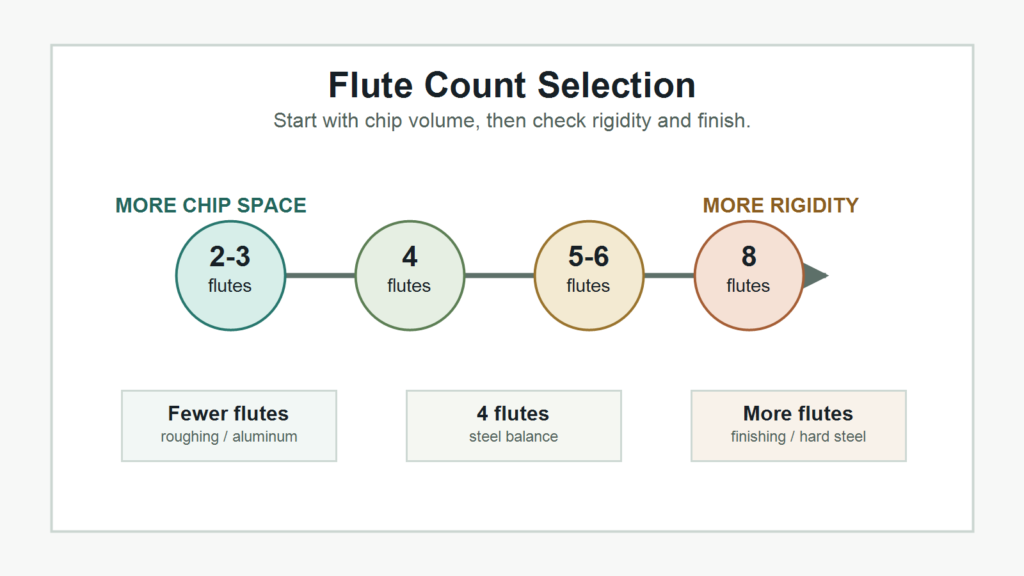
A simple shop-floor decision method
Start with the chip, not the catalog page. Ask how much chip volume the operation will create. Full-width slotting, deep pocketing, soft aluminum, and aggressive roughing all point toward more flute space. Light side finishing, hardened steel, small stock allowance, and tight tolerance point toward more rigidity.
Then check the setup. A short tool in a rigid holder can use more flute count aggressively than a long-reach tool in a flexible setup. A weak fixture, long overhang, or thin wall may benefit from a stiffer multi-flute tool, but only if the cut is light enough to keep chips moving.
Finally, match feed per tooth to the chosen cutter. Extra flutes do not automatically increase productivity. They give the programmer a different way to distribute load. The tool must still make a real chip. If it rubs, it heats. If it clogs, it fails. The winning setup is the one that keeps chips controlled while holding size and finish.
Machining symptom | Likely flute-count issue | Practical correction |
Chips pack in the slot and finish becomes smeared | Too many flutes or too little chip space for the operation | Use fewer flutes, reduce engagement, add air blast/coolant, or change pocket strategy |
Cutter breaks during deep slotting | Chip evacuation is overloaded, especially in soft or sticky material | Move to 2 or 3 flutes, use peck/stepdown strategy, and clear chips more aggressively |
Finished wall is tapered or out of size | Tool deflection is too high | Use a shorter tool, improve holder rigidity, reduce radial load, or consider more flutes for finishing |
Surface finish shows vibration marks | Tool, holder, or engagement is unstable | Try variable pitch or higher flute count for finishing, reduce overhang, and tune feed/speed |
Tool wears fast with blue/dark chips | Heat is trapped in the cutting zone | Improve chip evacuation, use appropriate coolant, reduce rubbing, and verify chip load |
How to think about 4-flute, 6-flute, and 8-flute choices
A 4-flute end mill is the practical middle ground. It is widely used in steel because it gives acceptable chip space and good rigidity. For a shop running mixed work, a quality 4-flute carbide end mill often covers profiling, shoulder milling, light slotting, and general pocketing.
A 6-flute end mill is a productivity and finishing tool when the cut is controlled. It is a strong option for side milling, high-efficiency milling, small radial engagement, and finishing in steels, stainless steels, cast iron, and harder materials. It is less forgiving when chip volume rises.
An 8-flute end mill is more specialized. It can produce excellent finish in hard milling, light finishing, and stable high-speed machining, but the flute valleys are small. The toolpath must keep engagement low and chips small. In the wrong roughing cut, an 8-flute cutter can fail faster than a cheaper, more open tool.

Bottom line
Flute count is not a status symbol. It is a geometry decision. Fewer flutes give chips room to escape. More flutes give the cutter a stronger core and more stable edge contact. Roughing, slotting, aluminum, and high chip volume usually ask for flute space. Finishing, hard materials, precision walls, and light engagement usually reward rigidity.
For tooling buyers and production teams, the best approach is to build a small, logical tool set instead of forcing one flute count into every job: open-flute cutters for chip-heavy work, balanced 4-flute tools for general milling, and 6-flute or 8-flute carbide end mills for controlled finishing and high-efficiency strategies.
HNCarbide supplies carbide end mills for roughing, finishing, hard milling, and application-specific CNC work. If your current cutter choice is causing chip packing, chatter, or unstable finish, reviewing flute count alongside material and toolpath strategy is often the fastest place to start.