CNC Milling Cutter Selection Guide: Reamers, Barrel Cutters, T-Slot Cutters, Chamfer Mills, Drills, Form Cutters, and Ceramic Tools
Table of Contents
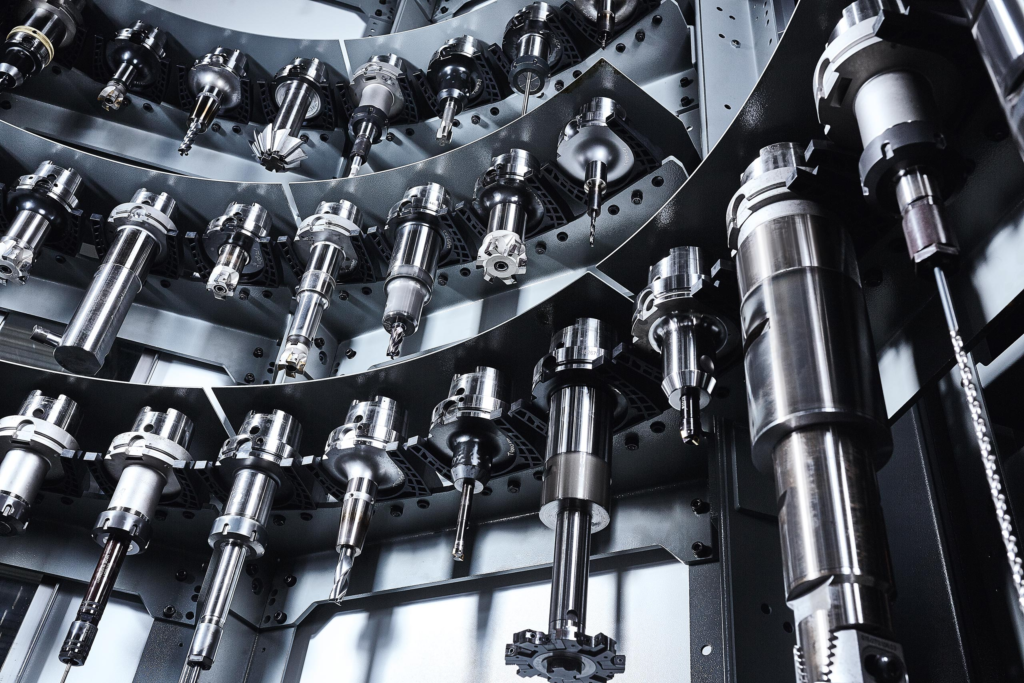
A machining center rarely runs on end mills alone. Square end mills, ball nose cutters, corner radius cutters, and indexable mills do much of the daily roughing and finishing, but many part features need more specialized tools. A hole may need H7 accuracy after drilling. A mold surface may take too long with a ball nose cutter. A fixture plate may need a T-slot. A medical or aerospace part may include small chamfers, undercuts, dovetails, or shaped grooves that standard tools cannot finish efficiently.
This guide covers seven tool families that often sit just outside the “main cutter” discussion: reamers, circle segment barrel cutters, T-slot cutters, chamfer mills, drills, form cutters, and ceramic cutting tools. The goal is not to memorize tool names. It is to understand when each tool earns its place in a CNC process, what it can and cannot correct, and what buyers should check before ordering.
Quick Comparison: What Each Tool Is Really For
Tool type | Main job | Best-fit features | Key caution |
Reamer | Finish an existing hole to size and surface quality | Dowel holes, locating holes, close-fit bores | It is not a drill. It needs a correct pre-hole and steady feed. |
Circle segment / barrel cutter | Finish large curved or ruled surfaces efficiently | Aerospace surfaces, blades, molds, shallow 3D surfaces | Needs reliable CAM and accurate tool-axis control. |
T-slot cutter | Machine T-slots and undercuts | Fixture slots, machine table slots, side recesses | Long reach and thin neck make chatter and collision risk high. |
Chamfer mill | Break edges and create lead-in chamfers | Deburring, bolt entry chamfers, cosmetic edges | Depth control changes chamfer width quickly. |
Drill | Create the starting hole | Through holes, blind holes, pilot holes, pre-ream holes | Drill type must match diameter, depth, tolerance, coolant, and material. |
Form cutter | Cut a repeated custom profile | Dovetails, thread milling, special radii, profile grooves | Profile accuracy depends on tool design, grinding, and setup rigidity. |
Ceramic tool | Run very high cutting speed in hot, hard materials | Hardened steel finishing, cast iron, nickel alloys | Brittle tools dislike vibration, impact, and sudden thermal shock. |
Reamers: Finishing Holes After Drilling
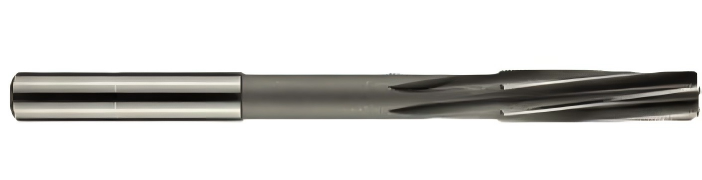
A reamer is a hole-finishing tool. It does not create the hole from solid material, and it should not be used as a slow drill. Its job is to remove a thin, controlled allowance from an existing hole and bring the diameter, roundness, and surface finish closer to the drawing requirement.
In many shops, a drilled hole may be acceptable for clearance screws, light-duty fastening, or non-critical passages. But a locating hole, press-fit hole, dowel hole, bushing bore, or precision assembly feature often needs more. A normal drilled hole may land around a loose drilling tolerance, with visible tool marks and some position or roundness error from the previous operation. Reaming is commonly used when the process target is closer to H7, and in well-controlled conditions can support even tighter work.
The reamer works by cutting a very small radial allowance, often around 0.1 to 0.2 mm on diameter depending on hole size, material, and tool design. The cutting edges shave the wall rather than evacuating heavy chips. That is why the pre-hole matters so much. If the drilled hole is badly out of round, bell-mouthed, misaligned, or undersized by too much, the reamer will follow the error, overload, or produce a poor surface.
Good reaming practice starts before the reamer touches the part. Use a sharp, stable drill or a boring operation to prepare the hole. Leave enough stock for the reamer to cut cleanly, but not so much that it has to behave like a roughing tool. Run lower spindle speed than drilling, keep the feed consistent, and use cutting fluid unless the material and tool supplier recommend a specific dry process. Stopping, dwelling, or hand-feeding unevenly can leave rings or oversize results.
The most common shop mistake is treating a reamer like a drill with better accuracy. High speed, insufficient coolant, poor pre-hole quality, or an oversized allowance will not make a precision hole. It usually makes a hot, rough, and oversized one.
Circle Segment Barrel Cutters: High-Efficiency Finishing for 5-Axis Work
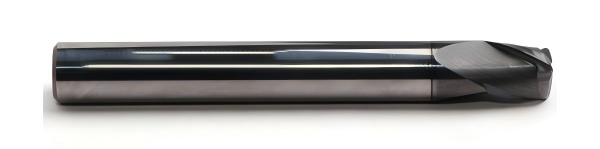
Circle segment cutters are also called barrel cutters, drum cutters, or in some local markets, “super chord” cutters. The cutting profile is not a simple flat end or spherical ball. It is a large-radius arc ground into the tool geometry. Common effective radii may be far larger than the physical tool diameter, which is the reason these tools can finish some surfaces much faster than a ball nose end mill.
The problem with ball nose finishing is familiar to mold and aerospace programmers. To get a fine surface, the stepover must be small enough to control scallop height. On large shallow surfaces, that can mean many tool paths and long cycle time. Near the tool center, a ball nose cutter also has very low cutting speed, so the contact condition can become less favorable.
A circle segment cutter changes the contact. The large arc engages the surface over a longer effective profile, allowing a wider stepover while keeping residual height under control. In the right application, the surface can be finished with fewer passes, better use of the cutting edge, and less time spent rubbing at the tool tip.
These cutters are especially useful for five-axis or precise 3+2 machining of aerospace structural parts, turbine and impeller features, molds, dies, and large shallow surfaces. The machine, CAM system, postprocessor, tool library, and collision checking all matter. Tool-axis angle is not a detail here. A small programming or setup error can shift the effective radius, cut the wrong contact zone, or leave unexpected marks.
The limitation is just as important as the benefit. A barrel cutter is not a roughing tool for heavy stock removal. Many designs are long and slender, and the finishing edge is built for controlled engagement. Buyers should confirm the tool form, effective radius, usable cutting length, shank style, material group, CAM support, and whether the supplier can provide accurate tool geometry data for simulation.
T-Slot Cutters: Slots and Undercuts That End Mills Cannot Reach
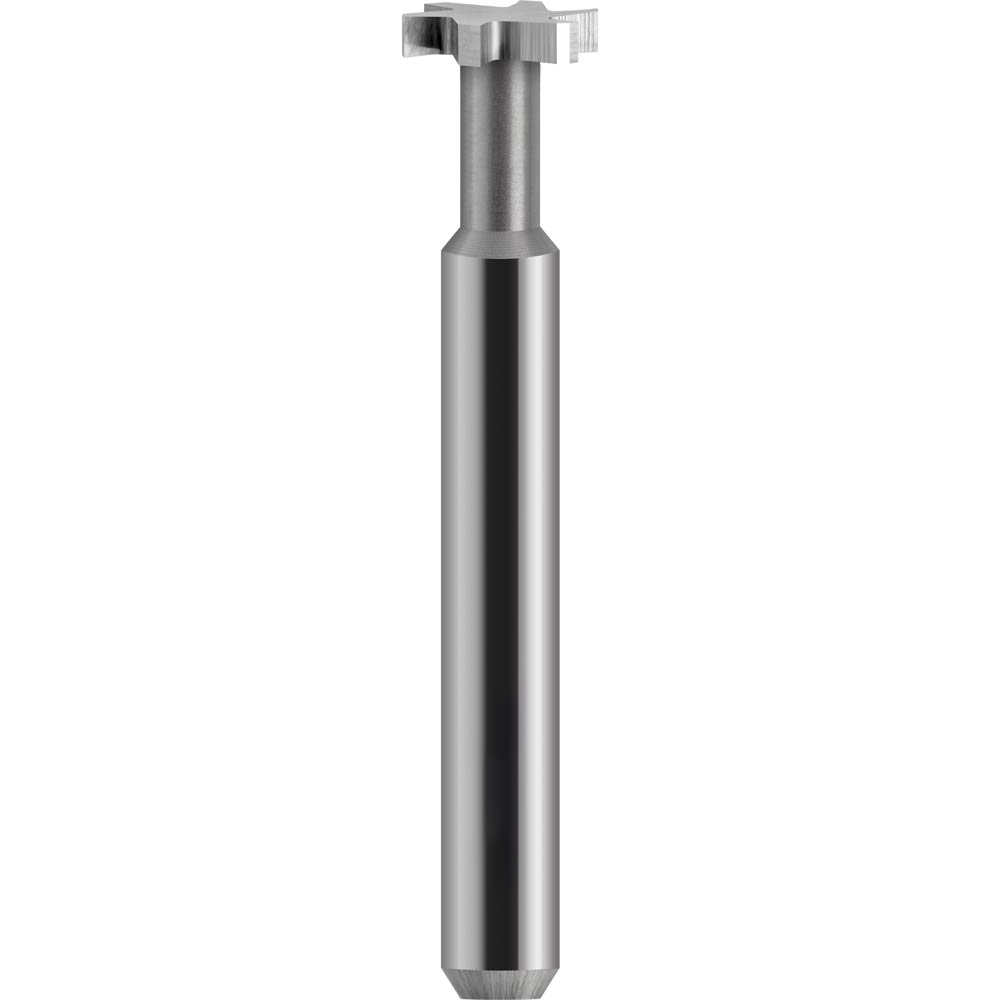
A T-slot cutter has a simple visual logic: a smaller shank or neck and a wider cutting head. The wider head cuts the lower shoulders of a T-shaped groove after the access slot has already been opened. It is used for machine table slots, fixture plates, special key features, and side undercuts where a regular end mill cannot reach.
The tool shape also creates risk. The head is wider than the neck, so the tool can enter a feature but cannot move freely in every direction. CAM paths must account for the cutter head, neck clearance, entry location, and side-wall collision. A safe toolpath usually starts with a pre-machined straight slot, then feeds the T-slot cutter from the centerline of the access slot into the undercut operation.
Cutting data should be conservative compared with a standard end mill. The neck is slender, overhang is often long, and side cutting can load the tool unevenly. As a practical starting point, many shops reduce feed to a fraction of normal end milling conditions and listen carefully for chatter. Full-width engagement, aggressive feed, or poor chip evacuation can quickly break the neck or damage the slot wall.
If the part uses T-slots for clamping, the drawing may also specify bottom clearance, bolt head space, or nut fit. Do not select the cutter only by top slot width. Check head diameter, head thickness, neck diameter, corner radii, tooth count, coating, and whether the tool is meant for steel, aluminum, cast iron, or stainless steel.
Chamfer Mills: Deburring, Edge Breaking, and Assembly Lead-Ins
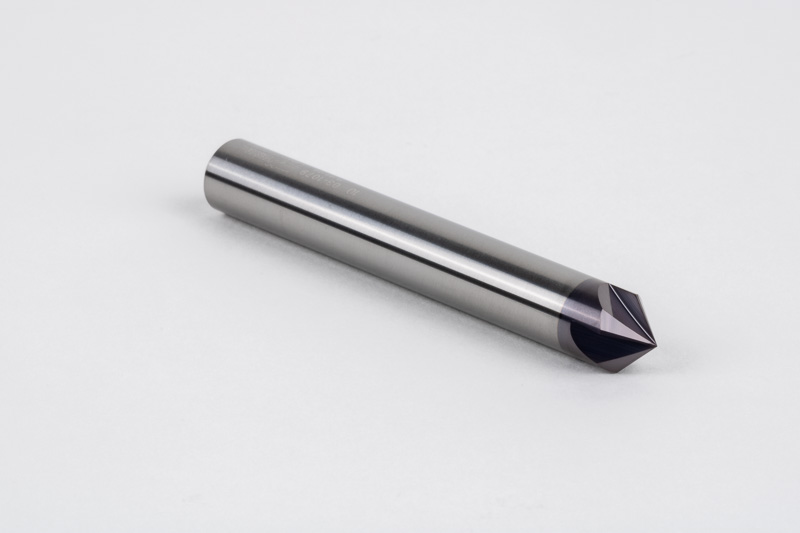
Chamfering looks like a small operation until it becomes a quality complaint. Burrs can cut operators, interfere with assembly, damage seals, trap chips, or stop a mating component from seating properly. Chamfer mills remove those sharp edges and create controlled lead-ins on holes, pockets, and outside profiles.
Common included angles include 30 degrees, 45 degrees, 60 degrees, and 90 degrees, depending on how the tool is described and measured. In procurement, it is worth confirming whether the supplier lists the included angle or the side angle, because a misunderstanding can double the intended geometry. For CNC edge breaking, 45-degree chamfers are common because they are easy to inspect and program. For countersinks, screw head geometry drives the angle.
Depth control matters. With a chamfer mill, a small Z-depth change produces a visible change in chamfer width. Tool runout, an uneven part surface, or a shifted work offset can create inconsistent edges. For high-volume parts, a dedicated chamfer program with probing or stable workholding is usually better than leaving edge breaking to a manual bench operation.
Chamfer mills are also useful for hole entry. A small chamfer helps bolts, pins, dowels, or bushings start cleanly. For reamed holes, the chamfer should be planned so it helps assembly without damaging the finished diameter or creating a burr at the hole mouth.
Drills: HSS, Solid Carbide, Indexable, and Replaceable-Tip Options
Drilling is the first hole-making process in many CNC routings, but “use a drill” is not a complete tooling decision. Diameter, depth-to-diameter ratio, tolerance, material, coolant, machine power, and production volume all change the best drill type.
High-speed steel twist drills remain useful for low-cost, general-purpose work. They are inexpensive, easy to resharpen, and forgiving in manual or less rigid setups. They are a practical choice for maintenance work, small batches, and non-critical holes in mild steel or aluminum. The tradeoff is lower cutting speed, lower stiffness, and less predictable accuracy in production.
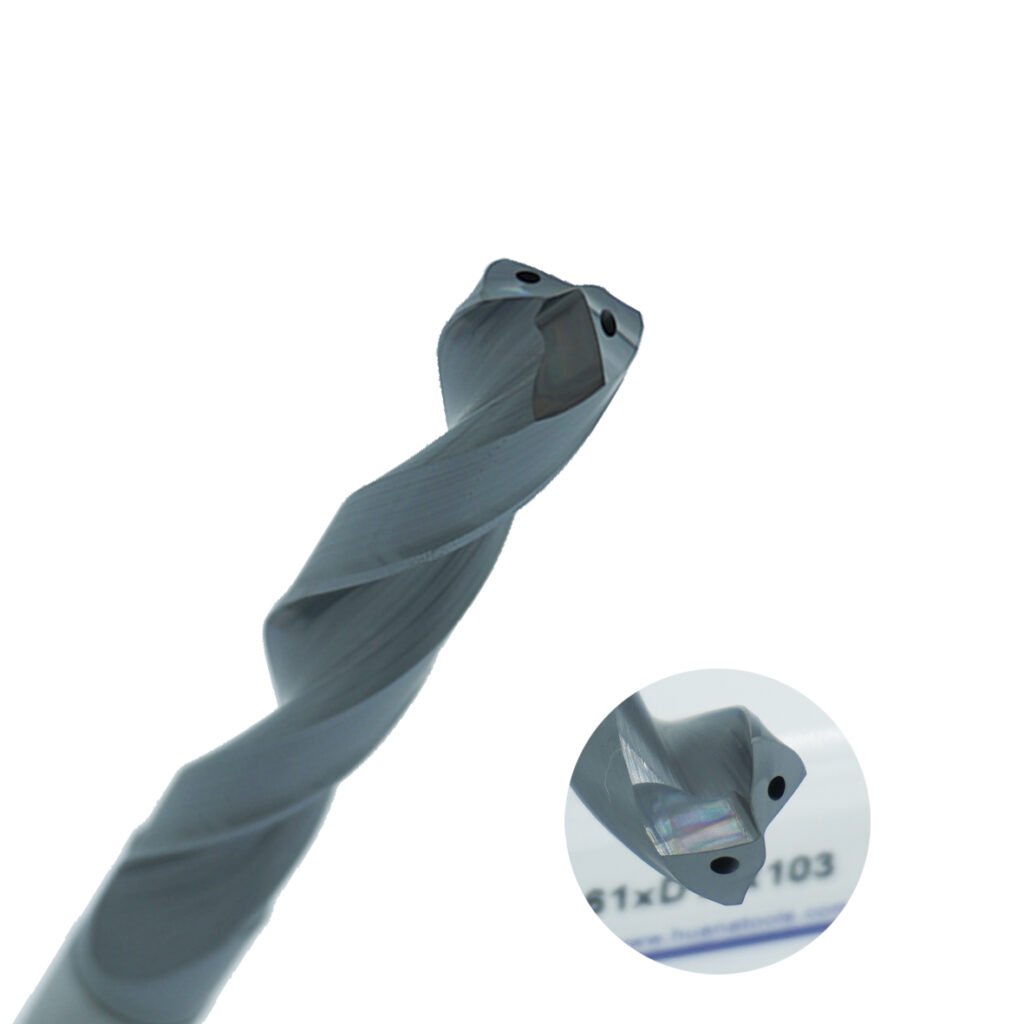
Solid carbide drills cost more, but they bring higher stiffness, better edge retention, and much higher cutting speeds when the setup is rigid. For small-diameter production holes, carbide drills often reduce cycle time and improve repeatability. Internal coolant versions become important as depth increases, especially beyond about five times diameter, because chip evacuation and temperature control start to dominate hole quality.
Indexable drills, often called U-drills in many shops, use replaceable inserts. They are attractive for larger diameters, through holes, and high-volume rough drilling because insert change is fast and feed rates can be much higher than HSS drilling. Their limitation is flexibility. Each drill body is tied to a diameter range, and the hole finish and accuracy may still require boring or reaming when the drawing is tight.
Replaceable-tip drills sit between solid carbide and indexable drills. The drill body is reused while the cutting tip is replaced. They are often chosen for production holemaking where shops want better repeatability than a conventional indexable drill, good centering, and lower long-term cost than replacing an entire solid carbide drill. They can be strong options for mold steel, stainless steel, cast iron, aluminum, and some high-temperature alloys when matched to the right grade and geometry.
Hole requirement | Practical drill choice | Why it fits | Follow-up operation |
Small holes under 12 mm in production | Solid carbide drill | High speed, good stiffness, repeatable size | Ream or bore if tolerance is tighter than drilling can hold |
Larger through holes above 16 mm | Indexable drill / U-drill | Fast rough holemaking and replaceable inserts | Bore, chamfer, or ream depending on drawing |
Deep holes above 5xD | Internal-coolant carbide or replaceable-tip drill | Better chip evacuation and heat control | Pecking strategy or gun drilling may be needed for extreme depth |
Precision locating holes | Drill, then ream or bore | Drilling creates the hole; finishing controls size | Reaming, boring, or honing depending on tolerance |
Low-volume general holes | HSS twist drill | Low cost and easy resharpening | Deburr or chamfer as needed |
Form Cutters: When the Profile Is the Tool
Form cutters are used when the cutter geometry matches the final shape of the feature. Instead of roughing a profile with many passes from a standard end mill, the tool carries the shape directly. This can save cycle time, improve consistency, and reduce programming complexity when the same profile repeats across many parts.
Common examples include dovetail cutters, thread mills, radius cutters, corner-rounding cutters, special chamfer combinations, concave or convex cutters, and custom profile mills. Some of these are standard catalog tools. Others are ground to a customer’s print and may require a drawing, tolerance discussion, coating selection, and sample approval.
Thread milling is a good example of why form tools matter. For larger threads, difficult materials, or parts where tap breakage is unacceptable, a thread mill can cut internal or external threads with controlled chip evacuation. If a thread mill breaks, it is usually easier to remove than a broken tap. The same tool may also cover multiple diameters if the pitch is the same, depending on the design and program.
Dovetail cutters are another common case. They machine angled undercut profiles for slides, guides, fixture details, and mechanical locking features. The access path, clearance, and tool rigidity must be planned carefully, much like T-slot machining.
For custom form cutters, buyers should avoid ordering by a vague name. Send the part drawing, workpiece material, tolerance, expected batch size, machine type, holder style, coolant condition, and whether the tool is for roughing, finishing, or both. A form cutter that is perfect for brass may be too weak or incorrectly coated for hardened steel.
Ceramic Cutting Tools: Speed With Strict Conditions
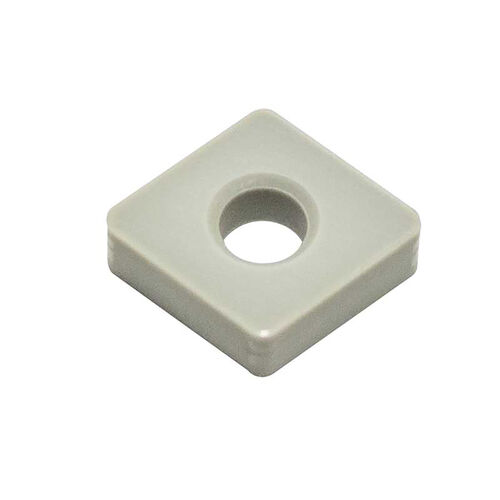
Ceramic cutting tools use alumina-based, silicon nitride, or whisker-reinforced ceramic materials. Compared with cemented carbide, ceramics can maintain hardness at much higher temperatures, which allows very high cutting speeds in selected materials. In the right operation, ceramic tools can remove metal quickly and run dry, turning heat into a controlled part of the cutting process.
The best-known applications include high-speed milling or turning of cast iron, finishing hardened die steel above about HRC 55, and roughing or semi-finishing nickel-based alloys such as Inconel 718 with grades designed for that work. The attraction is speed. Ceramic tools may run several times faster than carbide in suitable applications, although the exact multiplier depends heavily on material, grade, geometry, machine rigidity, and engagement.
Ceramic tools are also brittle. They do not tolerate chatter, unstable workholding, interrupted cuts, excessive overhang, or sudden temperature changes. If a ceramic insert is running hot and then sees coolant shock, cracking can occur. Many ceramic operations are run dry or with carefully controlled air blast, but supplier guidance should always override habit.
Machine condition is part of the tool selection. A ceramic cutter needs spindle power, rigidity, short overhang, stable clamping, and a toolpath that avoids impact. If the setup is light, the part has interruptions, or the machine has visible vibration, a tougher carbide grade may be slower but more reliable.
Conclusion
Specialized CNC cutters are not accessories. They are process decisions. A reamer can turn a drilled hole into a controlled assembly feature, but only if the pre-hole is right. A circle segment cutter can reduce finishing time on five-axis surfaces, but only when the CAM and tool-axis strategy are mature. A T-slot cutter or form cutter can reach geometry that an end mill cannot, but clearance and rigidity decide whether the cut is clean or expensive.
For tooling buyers, the practical rule is simple: start from the feature, not the catalog page. Define the material, tolerance, surface finish, depth, access, machine condition, and production volume first. Then match the tool family to the work it is actually expected to do.
HNCarbide supports CNC shops and industrial buyers with carbide drills, milling cutters, custom cutting tools, and application-focused tooling guidance. If your part includes precision holes, undercuts, special profiles, or difficult materials, a short review of the feature and process plan can prevent a costly tooling mismatch.