Skip to content
Machining Titanium Alloys: How to Control Heat, Tool Wear, and Part Accuracy
Table of Contents

Titanium alloys win work because they solve problems that ordinary steels cannot. They are strong for their weight, resist corrosion, and fit demanding aerospace, medical, energy, and high-performance automotive parts. The same properties that make titanium attractive on a drawing can make it rough on the shop floor.
The usual complaint is simple: tools do not last long enough. A new end mill cuts well for a short time, then the edge starts to notch, chips weld to the flute, the wall springs away, and the finish goes dull. The machine may not be underpowered. The setup may not be careless. In many titanium jobs, the real enemy is heat.
Titanium does not conduct heat away from the cutting zone well. Instead of flowing into the workpiece or leaving with the chip, much of the heat stays around the cutting edge. That small hot zone changes everything: tool wear accelerates, built-up edge becomes more likely, and the part surface can lose integrity even when the measured size looks acceptable.

Why titanium feels harder to machine than the cutting force suggests
Titanium does not always create extreme cutting force compared with a steel of similar hardness. That point can mislead process planners. If the force looks manageable, it is tempting to treat titanium like a slightly more difficult stainless steel and adjust only the speed. The cutting physics are different.
Most titanium alloys conduct heat far more poorly than steel and aluminum. In practical terms, the tool edge carries more of the thermal load. Once the edge loses sharpness, friction rises. More friction adds more heat. More heat speeds up wear. A job that looked stable for the first few parts can turn unstable quickly once that loop starts.
The second issue is elasticity. Titanium tends to spring away from the cutting edge, especially in thin walls, rings, pockets, and long overhangs. The tool may rub instead of cut cleanly. Rubbing adds heat, and the local surface may work-harden or smear. On thin parts, the wall can deflect during the cut and return after the tool passes, leaving taper, chatter marks, or stock that is hard to remove in finishing.
The result is a material that punishes dull tools, uncertain coolant delivery, and intermittent engagement. A titanium process needs to be built around heat control from the start.
What heat does to the tool and part
High cutting temperature affects both sides of the process. On the tool side, it promotes flank wear, crater wear, notch wear at the depth-of-cut line, and built-up edge. Built-up edge is especially frustrating because the welded material may tear away part of the coating or cutting edge when it breaks off.
On the part side, heat can damage surface integrity. For aerospace and medical components, this matters more than cosmetic finish. Excessive heat, rubbing, or a dull edge can leave tensile residual stress, smeared material, microstructural change, or a hardened layer. These are the kinds of issues that show up later as fatigue risk, poor fit, or unstable finishing.
Heat-related symptom | Likely cause | Practical response |
Rapid flank wear | Cutting speed too high, edge too dull, coolant not reaching the cut | Reduce speed first, inspect coolant direction, replace the tool before failure |
Notch wear at depth-of-cut line | Work-hardened surface, repeated contact at same line, high temperature | Vary depth of cut when possible, use a tougher grade and sharp geometry |
Built-up edge | Heat plus chemical affinity between titanium and tool material | Improve coolant flow, keep edge sharp, avoid rubbing and very light chip loads |
Chatter on thin walls | Elastic deflection, weak fixturing, excessive radial force | Reduce radial engagement, use positive geometry, support the wall, finish with light but real chip load |
Poor surface finish after initial good cut | Tool edge has rounded or material is smearing | Shorten tool life target, check runout, adjust feed so the tool cuts instead of polishes |
Start with tool geometry, not speed
For titanium, a sharp positive cutting geometry is usually the first requirement. Positive rake reduces cutting force and helps the tool shear material instead of pushing it. That reduces heat generation and lowers the chance of deflecting thin features.
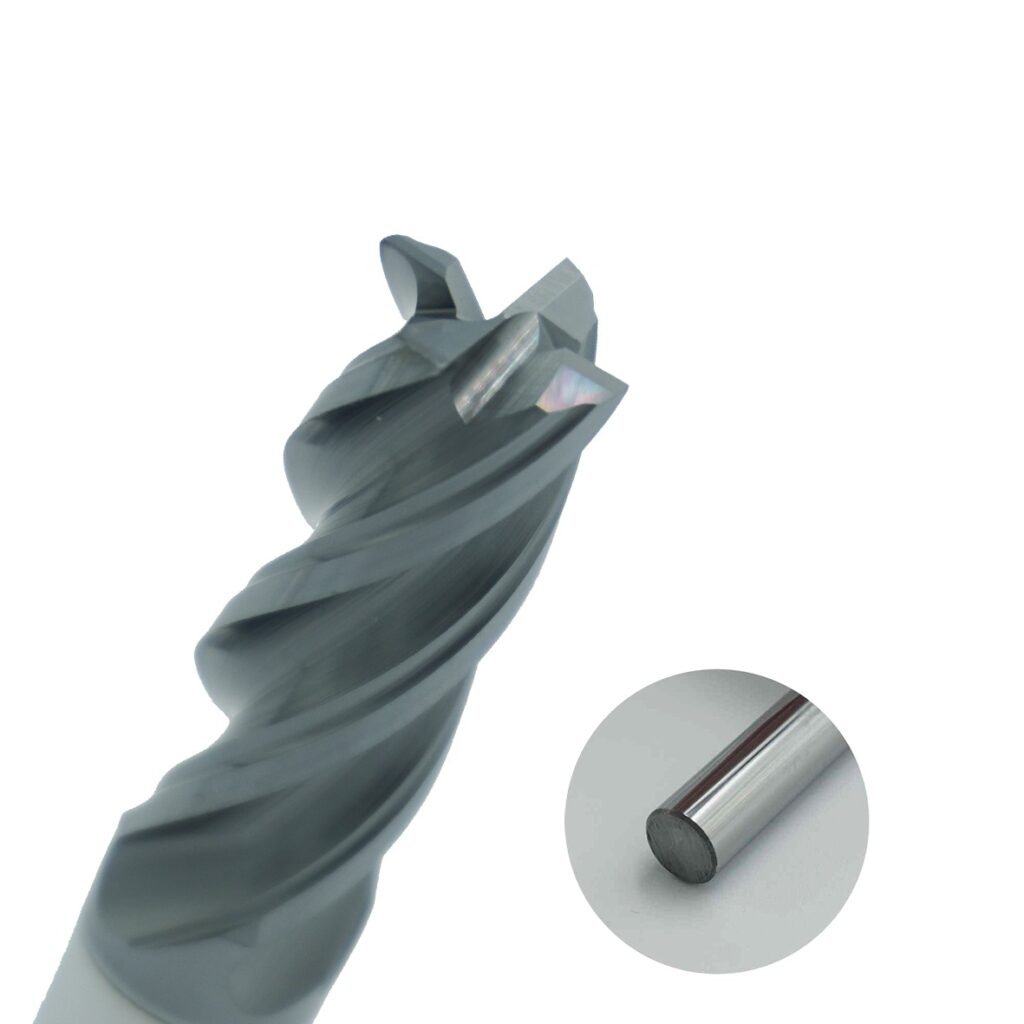
This does not mean the weakest edge is the best edge. Titanium can still chip an overly delicate cutting edge, especially in interrupted milling. The goal is a controlled sharp edge with enough support behind it. For solid carbide end mills, that often means a geometry designed for titanium or high-temperature alloys: polished flutes, strong core, controlled edge prep, and enough clearance to avoid rubbing. For indexable tools, look for insert grades and chipbreakers meant for heat-resistant alloys rather than general steel machining.
Coolant must reach the cutting edge
Coolant is not a formality in titanium machining. Flood coolant that looks strong from the outside may still miss the actual cutting zone. Chips can block the stream, the tool body can shield the edge, and deep pockets may trap heat.
High-pressure, high-volume coolant helps when the machine and toolholder support it. The aim is to remove heat, break chips, and prevent chip recutting. Through-tool coolant is especially useful in drilling and deep pocket milling because it delivers fluid where an external nozzle cannot. In milling, well-aimed nozzles can still work, but they need to be checked at the actual tool length and angle used in the job.
Dry cutting titanium is risky for most production work. Minimum quantity lubrication may be useful in specific setups, but it should not be treated as a direct substitute for strong coolant delivery when heat and chip evacuation are the limiting problems.
Milling titanium: keep engagement stable
Milling titanium rewards consistency. The tool should stay in a controlled cut, with chip thickness high enough to avoid rubbing but not so high that the edge overloads.
A common starting point is to keep radial engagement modest, often around 20-35% of tool diameter for roughing depending on tool design, rigidity, and toolpath strategy. Lower radial engagement allows more flute contact time for cooling and can support higher axial depth when the setup is rigid. Trochoidal or dynamic toolpaths can work well because they avoid full-width slotting and sudden load spikes.
Slotting is much harder. When the tool is buried, chips have fewer ways out and heat rises fast. If slotting cannot be avoided, reduce speed, strengthen coolant delivery, and use a tool with flute space and core strength suited to the cut.

| Operation | What to prioritize | Notes for titanium |
| Rough milling | Controlled radial engagement, chip evacuation, edge toughness | Avoid sudden full-width engagement. Watch corner entries and exits. |
| Finish milling | Sharp edge, low runout, stable wall support | Use a real chip load. Rubbing a thin wall often makes finish worse. |
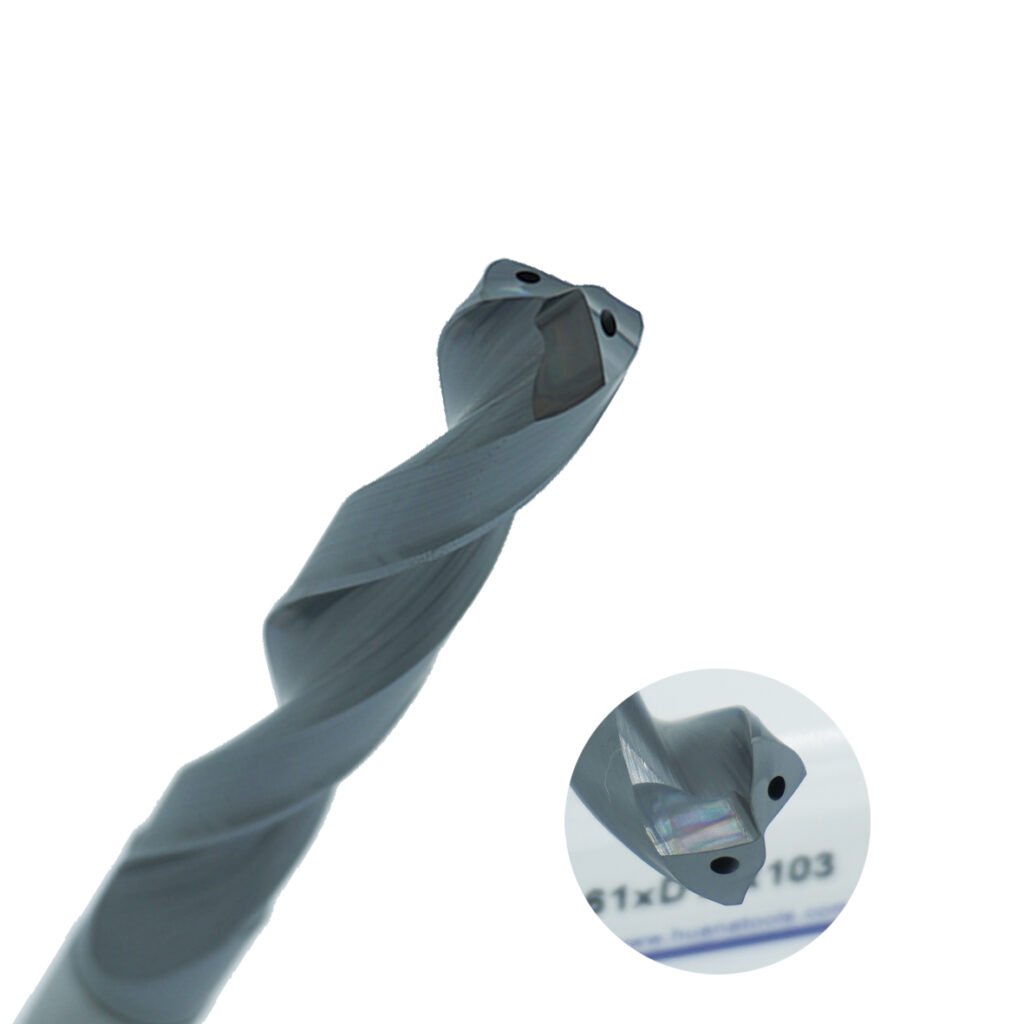
| Drilling | Through-tool coolant, peck strategy, drill geometry for titanium | Heat and chip packing can break drills quickly. |
| Turning | Positive inserts, secure clamping, directed coolant | Depth-of-cut line notching is common; monitor edge condition. |
| Thin-wall machining | Sequencing, support, light radial pressure | Leave support stock where possible and finish after stress is balanced. |
Cutting speed has the strongest effect on tool life
In titanium milling, cutting speed often has the biggest effect on tool life. If the edge fails suddenly, reducing speed is usually a better first move than cutting feed until the tool rubs. Too little feed can be just as damaging because it turns cutting into friction.
Feed should stay steady. Pauses, dwell marks, and hesitant entries are bad news in titanium. The tool needs to keep making chips. When programming corners, entries, and exits, avoid toolpaths that spike engagement or let the tool dwell against the material.
Depth of cut also matters, but not in isolation. Axial depth, radial engagement, flute count, coolant access, tool overhang, holder rigidity, and part stiffness work together. A parameter sheet from a tool supplier is a starting point, not a guarantee. The first production run should include planned tool inspections so the shop can identify whether the failure mode is wear, chipping, notching, built-up edge, or thermal cracking.
Thin walls and rings need a different mindset
Thin-wall titanium parts are where the material’s elasticity becomes obvious. The tool pushes the wall away, the wall springs back, and the cutter may rub on the return path. If the local deformation becomes plastic, the material near the cut can harden and become more difficult to finish.
Good sequencing helps. Leave temporary support where possible. Rough both sides in a balanced way instead of removing all stock from one side first. Use sharp tools, short overhang, and light radial pressure. On finishing passes, do not make the chip so thin that the tool burnishes the surface. A small but stable chip is usually better than a barely touching pass.
Fixturing also deserves attention. Soft jaws, vacuum fixtures, potting, sacrificial support, or custom nests may look expensive until the scrap rate and inspection time are counted. For high-value titanium parts, workholding is part of the cutting strategy.
Choose carbide tools around the failure mode
There is no single best carbide tool for every titanium job. Tool choice should follow the failure mode.
If the edge wears evenly but too quickly, speed and coolant are the first suspects, followed by grade and coating. If the edge chips, look at interrupted contact, rigidity, runout, and edge strength. If built-up edge dominates, improve coolant delivery and choose geometry that shears cleanly. If the part chatters, reduce radial force before assuming the tool material is wrong.
Tool selection point | Why it matters in titanium | What to check before buying |
Rake and clearance | Lower cutting force and less rubbing reduce heat | Is the geometry made for titanium or heat-resistant alloys? |
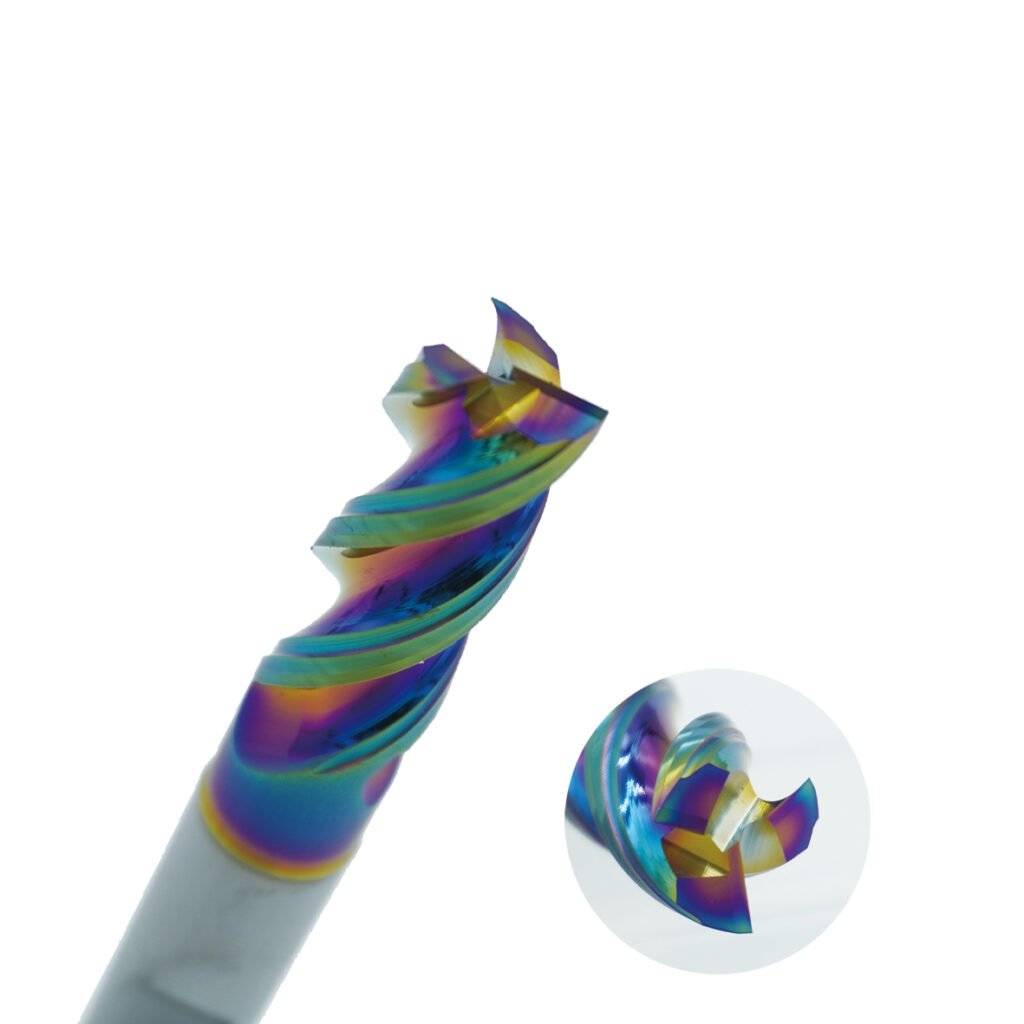
Coating | Helps resist heat and wear when the edge stays stable | Does the supplier recommend it for Ti-6Al-4V or similar alloys? |
Flute design | Chip evacuation controls recutting and heat buildup | Is there enough flute space for the programmed chip volume? |
Edge preparation | Too sharp may chip; too rounded may rub | Does the tool match roughing, finishing, or interrupted cutting? |
Coolant access | Heat must leave the cutting zone | Can the holder, tool, and machine deliver coolant to the edge? |

A practical setup checklist
Before cutting titanium, review the process as a thermal system. That sounds abstract, but the questions are concrete.
Is the tool sharp and suitable for titanium? Can coolant reach the edge at the programmed tool length? Is runout low enough that one flute will not do most of the work? Does the toolpath avoid burying the cutter in corners? Is the feed high enough to form a chip? Is the fixture stiff enough to stop the part from moving away from the cutter?
For a new job, do not wait for a tool to fail completely before inspecting it. Pull the tool after a short trial, look at the wear pattern, and adjust based on evidence. A small notch, a welded chip, or a polished flank tells you more than a long debate over catalog numbers.
Conclusion
Titanium alloy machining is difficult because heat stays where the process can least afford it: at the cutting edge and near the finished surface. The answer is not simply to slow everything down. A good titanium process uses sharp positive geometry, strong coolant delivery, stable engagement, careful workholding, and realistic tool life targets.
For shops cutting aerospace, medical, or precision industrial titanium parts, the best results usually come from matching the carbide tool to the actual failure mode. HNCarbide can support that selection with carbide end mills, inserts, and application guidance for difficult materials where tool life and part quality both matter.