Skip to content
Why Are Your Cutting Tools Wearing Out Too Fast?
Table of Contents
Introduction: Is Tool Wear Really a Tool Problem?
Premature tool wear is one of the most persistent challenges in modern machining. It directly impacts production cost, dimensional accuracy, and process stability.
However, in many cases, the immediate reaction is to replace the cutting tool or switch to a different brand. This approach often fails to address the root cause.
A more critical question should be asked:
Is the tool failing—or is the machining system limiting its performance?
Tool life is not determined by the insert alone.
It is the result of a complex interaction between:
- Tool material and coating
- Toolholding system accuracy
- Cutting parameters
- Coolant delivery
- Workpiece material behavior
This article provides a structured, engineering-focused analysis of tool wear and offers practical methods to improve tool life through system optimization.
What Defines Normal vs. Abnormal Tool Wear?
Understanding wear mechanisms is the first step in diagnosing tool life issues.
Common Tool Wear Modes
Wear Type | Mechanism | Primary Cause | Engineering Implication |
Flank Wear (VB) | Abrasive wear on flank face | Friction with workpiece | Predictable, acceptable |
Crater Wear | Diffusion wear on rake face | High temperature | Indicates thermal load |
Built-Up Edge | Material adhesion | Low speed / poor lubrication | Causes instability |
Edge Chipping | Mechanical fracture | Vibration / impact | Indicates instability |
Thermal Cracks | Fatigue cracking | Thermal cycling | Coolant inconsistency |
Diagnostic Insight
- Uniform flank wear→ Stable process
- Localized chipping or breakage→ Mechanical or thermal instability
- Adhesion (BUE)→ Incorrect cutting speed or lubrication
In practice, abnormal wear is more often caused by process conditions, not tool defects.
Toolholding System: The Hidden Source of Tool Failure
Why Runout Matters
Runout is one of the most underestimated factors affecting tool life.
Even minimal deviation leads to:
- Uneven load distribution across cutting edges
- Cyclic mechanical impact
- Accelerated localized wear
Recommended Runout Limits
Application | Runout Requirement |
General machining | ≤ 0.01 mm |
Precision machining | ≤ 0.005 mm |
High-speed machining | ≤ 0.003 mm |
A runout increase of just 0.01 mm can reduce tool life by up to 50%.
Toolholder Selection Comparison
Toolholder Type | Accuracy | Rigidity | Typical Use |
ER Collet | Medium | Medium | General machining |
Hydraulic Chuck | High | High | Finishing operations |
Shrink Fit | Very high | Very high | High-speed cutting |
Weldon Holder | Low | High torque | Roughing |
Engineering Recommendation
For high-performance carbide tools, especially in finishing and high-speed operations, hydraulic or shrink-fit holders are strongly recommended.
Cutting Parameters: Are You Running Your Tools Efficiently?
The Balance Between Heat and Load
Cutting parameters directly determine:
- Heat generation
- Cutting force
- Wear rate
Parameter Effects on Tool Life
Parameter | Too Low | Optimal Range | Too High |
Cutting Speed (Vc) | Built-up edge | Stable thermal condition | Diffusion wear |
Feed Rate (fz) | Rubbing, friction | Efficient cutting | Edge chipping |
Depth of Cut (ap) | Work hardening | Stable engagement | Overload |
Key Observation
Running tools at overly conservative parameters often results in:
- Increased friction
- Higher localized temperature
- Faster wear
Cutting must occur as a controlled shearing process, not sliding contact.
Coolant Strategy: Is Your Cooling System Effective?
Beyond Temperature Control
Coolant serves three essential functions:
1.Heat dissipation
2.Lubrication
3.Chip evacuation
Failure in any of these leads to accelerated tool wear.
Common Coolant-Related Issues
Issue | Technical Consequence |
Insufficient pressure | Chip accumulation and re-cutting |
Incorrect nozzle direction | Ineffective cooling at cutting edge |
Lack of internal coolant | Heat concentration |
Intermittent coolant flow | Thermal shock and cracking |
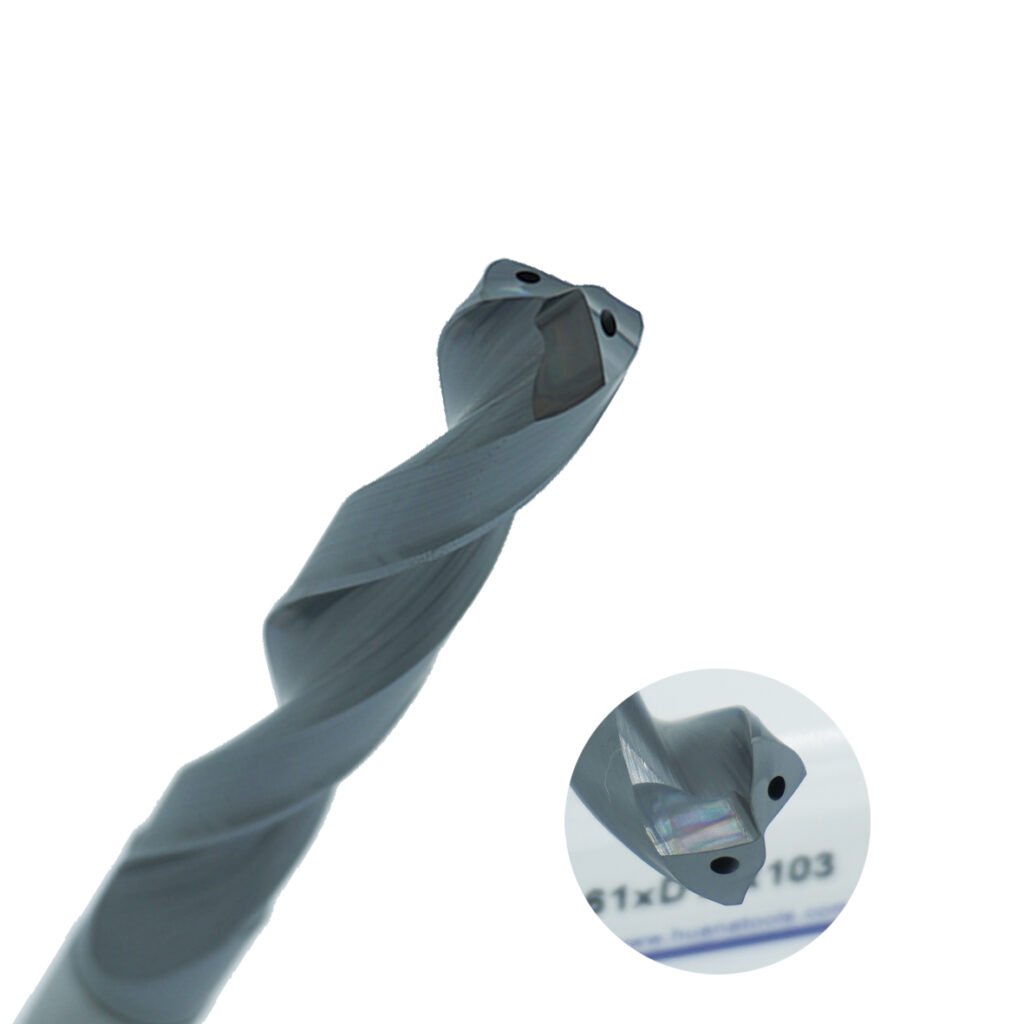
Deep Hole Machining Consideration
In deep hole drilling, inadequate coolant pressure can:
- Prevent chip evacuation
- Cause tool breakage
- Reduce tool life by more than 50%
High-pressure through-coolant systems are essential for stable performance.
Workpiece Material: Are You Matching the Tool to the Material?
Challenges in Difficult Materials
Certain materials significantly accelerate tool wear:
- Austenitic stainless steel (e.g., 1.4435)
- Titanium alloys
- Nickel-based alloys
Material Behavior and Its Impact
Material Property | Effect on Tool |
Work hardening | Increased cutting force |
Low thermal conductivity | Heat concentration at cutting edge |
Chemical affinity | Adhesion and BUE formation |
Recommended Tooling Strategy
Material | Tool Geometry | Coating Recommendation |
Stainless Steel | Sharp edge, positive rake | TiAlN / PVD |
Titanium Alloy | High toughness geometry | AlTiN |
Alloy Steel | Balanced geometry | CVD or PVD |
Tool Life Management: Why Data Matters More Than Catalog Values
Limitations of Supplier Recommendations
Catalog tool life values are based on:
- Controlled test conditions
- Ideal machine stability
- Standard materials
Actual production environments differ significantly.
Practical Tool Life Optimization Method
A systematic approach should include:
1.Set an initial conservative tool life
2.Monitor:
- Surface finish
- Dimensional accuracy
- Wear pattern
3.Adjust tool life incrementally
4.Validate across multiple production batches
5.Optimize within ±5–10% range
Tool Life vs Production Risk
Strategy | Risk Level | Cost Impact |
Overextended tool life | High scrap risk | High |
Conservative tool life | High tool cost | Medium |
Optimized tool life | Balanced | Lowest |
Practical Methods to Extend Tool Life
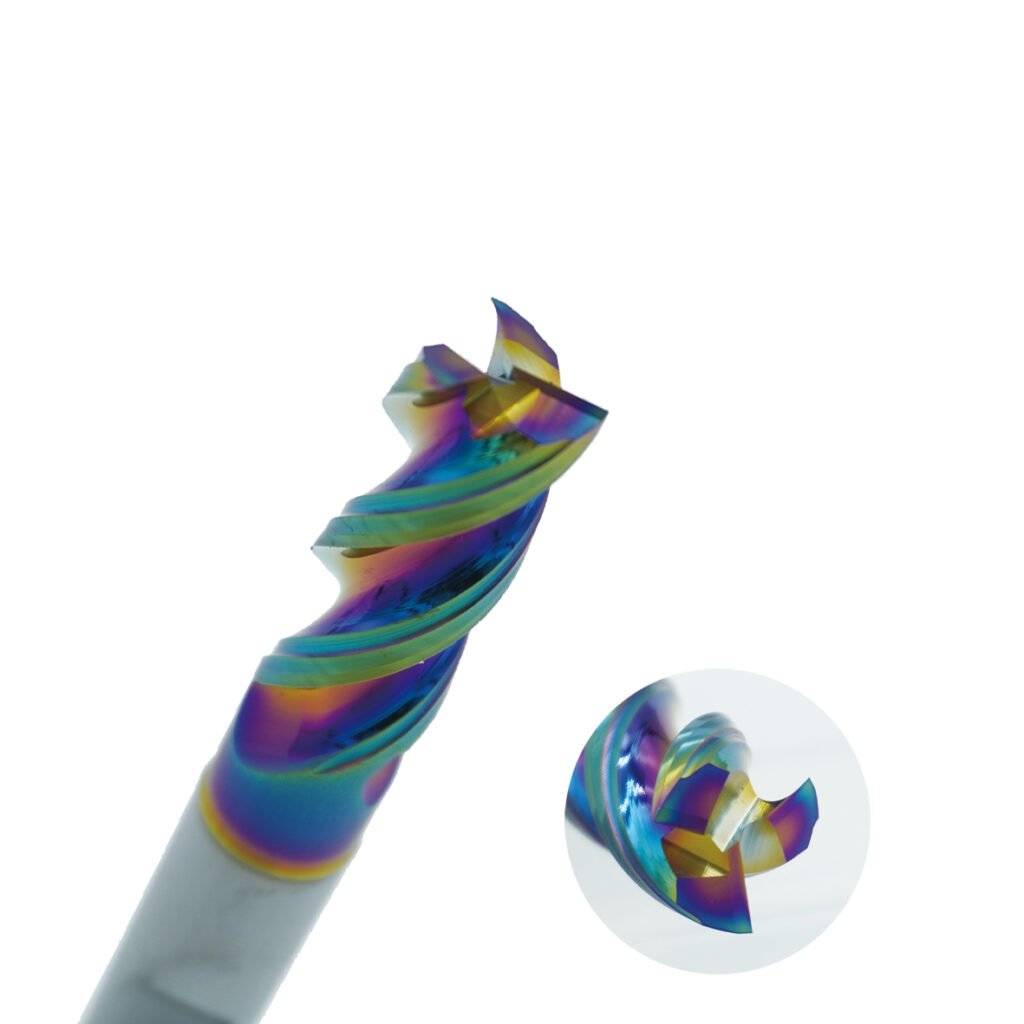
Coating Selection Based on Application
AlTiN
High oxidation resistance, suitable for high-speed cutting
TiAlN
Better toughness, suitable for unstable conditions
PVD coatings
Sharper edges, ideal for finishing and stainless steel
Process Monitoring Techniques
Acoustic Monitoring
Changes in cutting sound often indicate wear progression.
Chip Analysis
Chip Color | Temperature Level | Interpretation |
Silver | Low | Inefficient cutting |
Light yellow | Optimal | Stable process |
Blue/black | High | Excessive heat |
Importance of Toolholder Quality
High-precision toolholders provide:
- Improved concentricity
- Reduced vibration
- More stable cutting conditions
This alone can extend tool life by over 20%.
System-Level Optimization: The Key to Long Tool Life
Tool performance should always be evaluated as part of a complete machining system.
Integrated Factors
- Tool geometry and coating
- Machine rigidity
- Toolholder accuracy
- Coolant delivery
- Cutting parameters
Key Engineering Principle
Improving a single variable rarely solves tool wear issues.
System stability determines tool life.
Conclusion: Optimize the Process Before Changing the Tool
Premature tool wear is not simply a tooling problem.
It is a result of:
- Mechanical instability
- Thermal imbalance
- Improper parameter selection
- Inadequate cooling
Before replacing inserts or switching brands, a systematic evaluation of the machining process is essential.
In many cases, optimizing the existing setup can:
- Double tool life
- Reduce production cost
- Improve machining stability
Looking to Improve Tool Life in Your Application?
If your operation involves:
- Stainless steel machining
- Deep hole drilling
- High-speed milling
A tailored tooling and process solution can significantly improve performance.
Contact us to explore optimized carbide tooling solutions designed for your specific application.