How Are Aluminum Engraving End Mills Designed? A Complete Guide to Tool Geometry, Materials and Inspection
Table of Contents
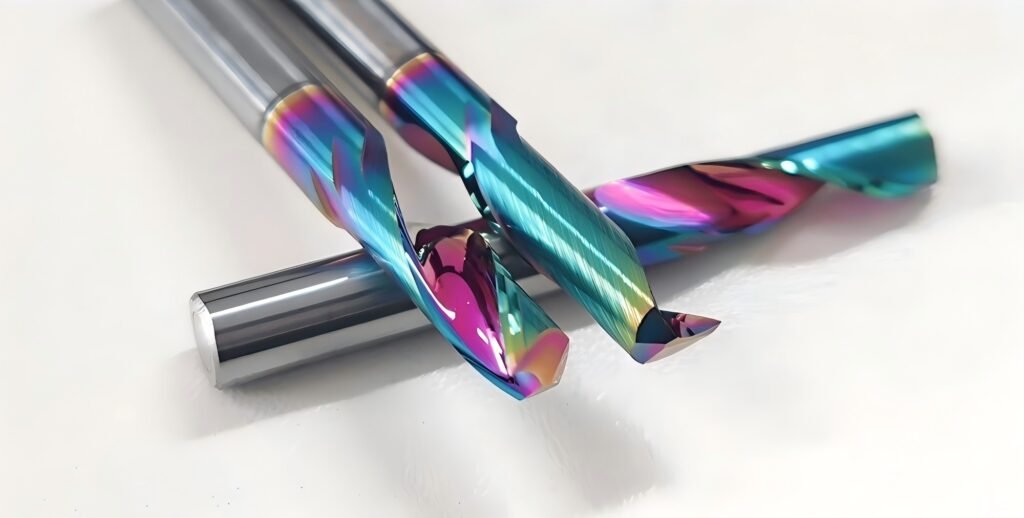
Aluminum alloys are among the most widely machined materials in modern manufacturing. From aerospace structural components to consumer electronics housings and precision molds, aluminum requires machining tools capable of delivering high surface quality, high cutting speeds, and stable chip evacuation.
But aluminum is not as easy to machine as many people assume.
Its low hardness, high ductility, and strong tendency to adhere to cutting edges can lead to built-up edge formation, unstable cutting, and poor surface finish.
This is why aluminum engraving end mills—usually small-diameter milling tools below 8 mm—must be carefully designed and tested.
So what makes a good aluminum engraving tool?
How should tool geometry be optimized?
And what inspection processes ensure machining accuracy?
This article provides a complete technical overview of aluminum engraving tool design and inspection, covering:
- Tool materials
- Geometry optimization
- Surface treatment
- Cutting parameters
- Precision inspection methods
Why Do Aluminum Engraving Tools Require Special Design?
Unlike steel machining tools, aluminum cutting tools must address several material characteristics:
- High thermal conductivity
- Low hardness but strong adhesion
- Long, continuous chips
- Elastic recovery during cutting
These properties mean that tool design must focus on:
- Reducing cutting forces
- Improving chip evacuation
- Preventing built-up edge
- Maintaining sharp cutting edges
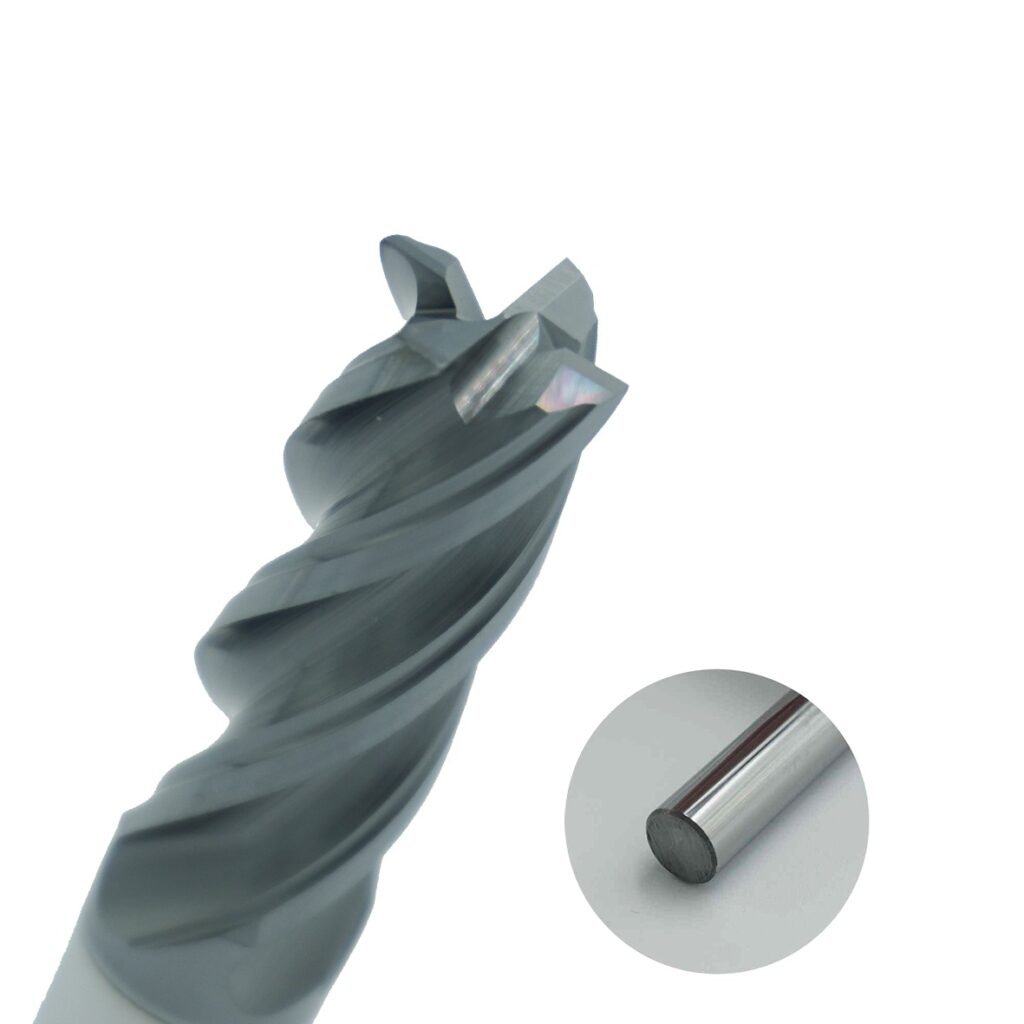
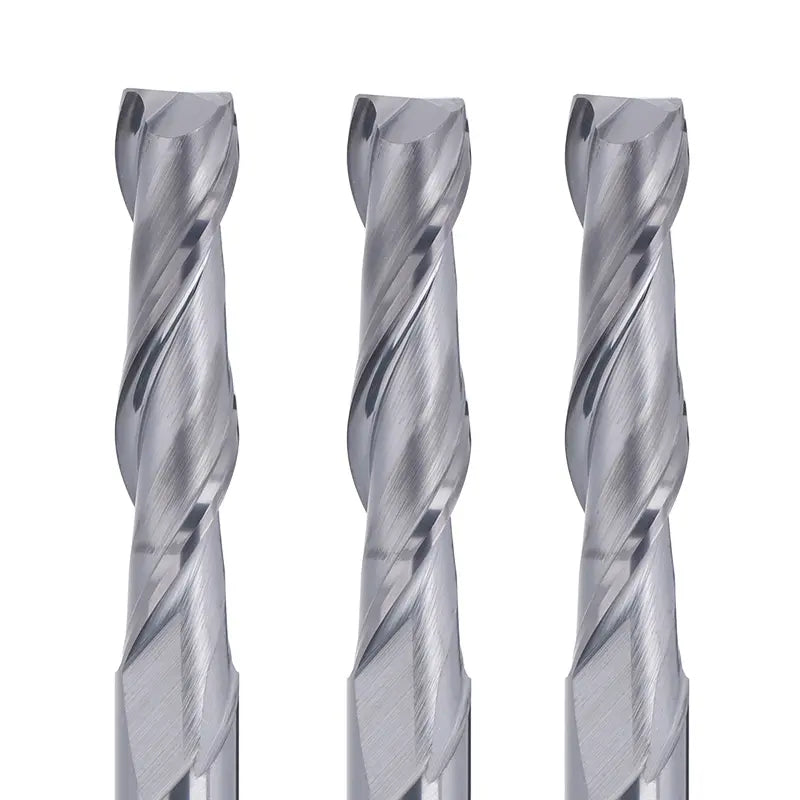
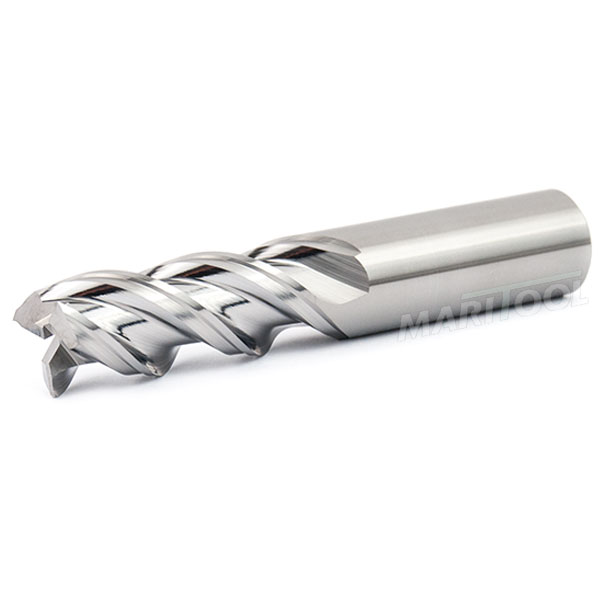
Most aluminum engraving tools are two-flute or three-flute carbide end mills, designed with large rake angles and polished chip flutes.
Typical Aluminum Engraving End Mill
These tools are widely used in:
- CNC engraving
- Precision mold manufacturing
- 3D surface machining
- Thin-wall aluminum components
- Electronic housing machining
What Materials Are Best for Aluminum Engraving End Mills?
Tool material selection determines tool life, wear resistance, and machining stability.
The most commonly used materials include HSS, cemented carbide, PCD, and DLC-coated tools.
Comparison of Tool Materials for Aluminum Machining
Tool Material | Hardness | Key Advantages | Typical Applications |
High Speed Steel (HSS) | ~63 HRC | Good toughness, low cost | Low-speed machining |
Cemented Carbide | 1600–2000 HV | High wear resistance, high rigidity | Most CNC aluminum machining |
PCD (Polycrystalline Diamond) | ~10000 HV | Extremely low friction, ultra wear resistant | High-silicon aluminum alloys |
DLC Coated Carbide | Very low friction | Excellent anti-adhesion performance | Precision aluminum machining |
Why Are Carbide Tools the Industry Standard?
Most aluminum engraving tools today use ultrafine grain tungsten carbide, such as YG6X-type carbide.
Benefits include:
- High hardness
- Excellent thermal stability
- Good edge retention
- Suitable for high-speed machining
How Does Tool Geometry Affect Aluminum Machining Performance?
Tool geometry plays a decisive role in cutting performance.
The most important parameters include:
- Rake angle
- Relief angle
- Helix angle
- Core thickness
- Cutting edge preparation
Why Is a Large Rake Angle Important for Aluminum Cutting?
Aluminum alloys have high plasticity and low cutting resistance, but they easily stick to the cutting edge.
A large rake angle reduces friction and helps chips flow smoothly.
Typical values include:
Machining Type | Recommended Rake Angle |
Rough Milling | 12° – 15° |
Finishing Milling | 15° – 20° |
A larger rake angle helps:
- Reduce cutting force
- Prevent built-up edge
- Improve surface finish
How Much Relief Angle Is Needed?
Because aluminum has a relatively low elastic modulus, the material tends to rebound after cutting.
This increases contact between the flank face and the workpiece surface.
Therefore, aluminum tools require larger relief angles.
Machining Stage | Relief Angle |
Rough Cutting | 8° – 10° |
Finishing | 10° – 12° |
High Precision Finishing | 15° – 20° |
Why Do Aluminum End Mills Use Large Helix Angles?
The helix angle strongly affects chip evacuation and radial cutting forces.
A high helix angle (35°–50°) offers several advantages:
- Reduced vibration
- Improved chip flow
- Lower radial cutting forces
- Better surface finish
Recommended Helix Angle for Aluminum End Mills
Tool Type | Helix Angle | Characteristics |
Roughing Aluminum End Mill | 40° – 50° | Fast chip evacuation |
Finishing End Mill | 25° – 30° | Higher rigidity |
High-Performance Aluminum Cutter | 45° – 50° | Best surface quality |
Why Is Chip Flute Design Critical?
Aluminum generates long continuous chips that can easily clog tool flutes.
Therefore, aluminum engraving tools require:
- Large flute volume
- Polished flute surfaces
- Reduced friction
Typical design guidelines include:
- Core thickness: 45%–50% of tool diameter
- Flute surface roughness: Ra ≤ 0.4 μm
For example:
A 6 mm end mill typically has a core thickness of about 3 mm.
Should Aluminum Tools Have Coatings?
Many steel cutting tools use TiAlN coatings, but these coatings are not ideal for aluminum machining.
Why?
Because aluminum tends to adhere to Ti-based coatings, causing rapid tool wear.
Instead, the following coatings are recommended:
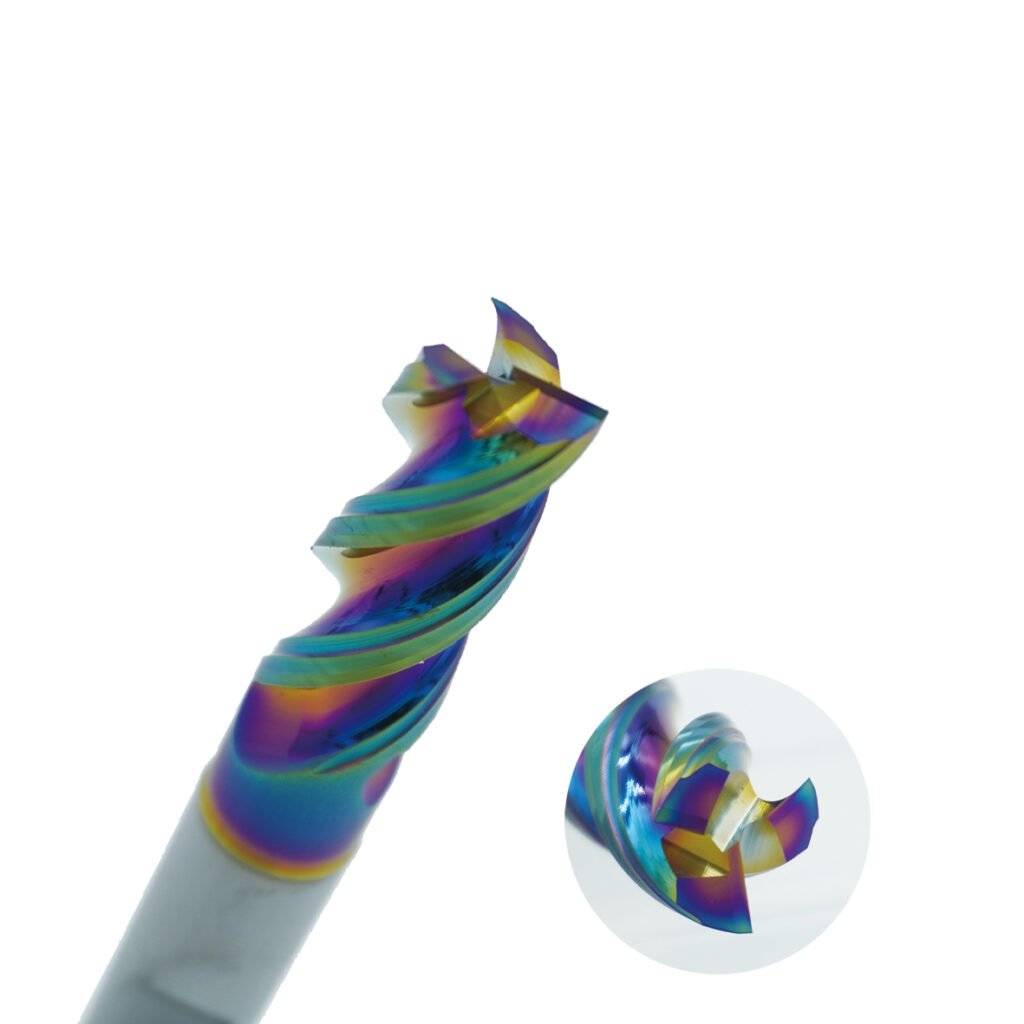
DLC (Diamond-Like Carbon)
Advantages:
- Extremely low friction coefficient
- Excellent anti-adhesion properties
- Reduced cutting force
Research shows DLC coatings can reduce axial cutting force by up to two-thirds.
Diamond Coatings
Diamond coatings offer:
- High thermal stability
- Superior wear resistance
- Excellent performance when machining high-silicon aluminum alloys
What Cutting Parameters Work Best for Aluminum Engraving?
Aluminum machining typically benefits from high spindle speeds and moderate feed rates.
Recommended Cutting Parameters for Aluminum End Mills
Tool Diameter | Spindle Speed | Feed per Tooth | Depth of Cut |
3–6 mm | 16000 – 24000 rpm | 0.03 – 0.15 mm/z | ≤ 0.5D |
8–12 mm | 12000 – 18000 rpm | 0.08 – 0.20 mm/z | ≤ 0.8D |
16–25 mm | 8000 – 12000 rpm | 0.15 – 0.30 mm/z | ≤ 1D |
For thin-wall aluminum components:
- Reduce depth of cut
- Increase spindle speed
- Maintain stable chip evacuation
How Are Aluminum Engraving Tools Inspected?
Precision inspection ensures that the tool meets dimensional accuracy and cutting performance requirements.
Tool inspection usually includes:
1.Appearance inspection
2.Dimensional measurement
3.Geometry verification
4.Surface roughness measurement
5.Dynamic accuracy testing
What Does Appearance Inspection Check?
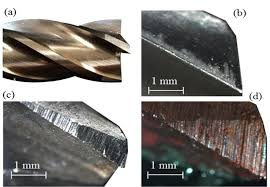
Visual inspection ensures that tools are free from defects such as:
- Surface cracks
- Burrs
- Scratches
- Oxidation
- Heat marks
- Edge chipping
All non-cutting edges should be properly chamfered.
How Are Tool Dimensions Measured?
Important dimensional parameters include:
- Tool diameter
- Shank diameter
- Tool length
- Cutting edge length
- Core thickness
Typical instruments include:
- Vernier calipers
- Micrometers
- Laser tool measurement systems
Shank diameter tolerance usually follows h6 standards.
How Are Tool Geometry Parameters Measured?
Key geometry measurements include:
- Rake angle
- Relief angle
- Helix angle
- Edge radius
Advanced inspection equipment includes:
- Tool measuring machines
- Optical microscopes
- Surface profilometers
Measurement resolution can reach 0.01° for angles and 0.0002 mm for edge radius.
Why Is Radial Runout Control Important?
Radial runout affects:
- Tool life
- Surface finish
- Cutting stability
When the tool is mounted in the tool holder, radial runout should typically remain below:
0.01 – 0.02 mm
Precision tool presetters are used to measure and adjust runout before machining.
Final Thoughts: What Defines a High-Quality Aluminum Engraving Tool?
A high-performance aluminum engraving tool must combine:
- Optimized tool materials
- Large rake and helix angles
- Polished chip flutes
- Proper coatings
- Strict dimensional inspection
When properly designed and manufactured, these tools deliver:
- Higher machining efficiency
- Superior surface quality
- Longer tool life
- More stable machining processes
For industries requiring high-precision aluminum machining, selecting the right engraving end mill is critical for achieving reliable and cost-effective production.