What Is a Drill Bit Really Made Of — and How Do You Choose the Right One for Your Application?
Table of Contents
Drilling is often considered a basic machining operation.
But in modern manufacturing, drilling is one of the most demanding cutting processes—both for the tool and for the machine.
Why does one drill last ten times longer than another?
Why does the same drill work well in mild steel but fail quickly in stainless steel?
And how do material, geometry, coating, and coolant strategy really influence performance?
This article provides a comprehensive, application-driven guide to industrial drill bits, helping you select the right tool for maximum productivity and lowest cost per hole.
What Are Drill Bits Made Of — and Why Does Material Matter?
The drill material defines its hardness, toughness, heat resistance, and wear behavior.
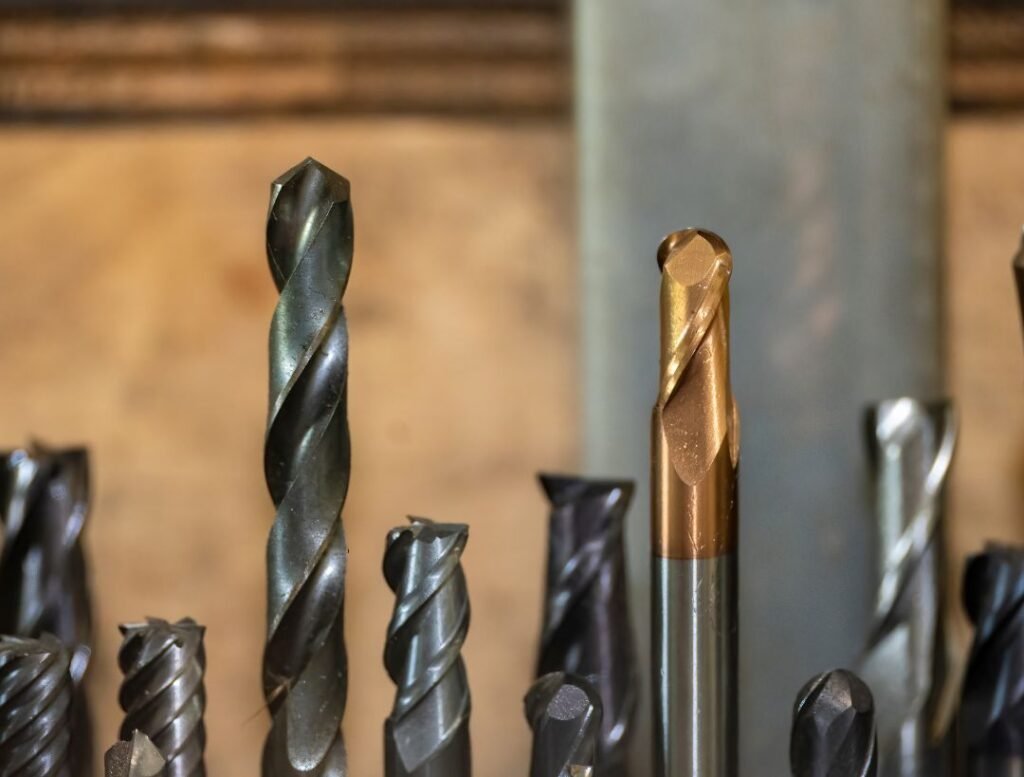
In industrial metal cutting, most drill bits fall into three main categories.
High-Speed Steel (HSS): The General-Purpose Solution
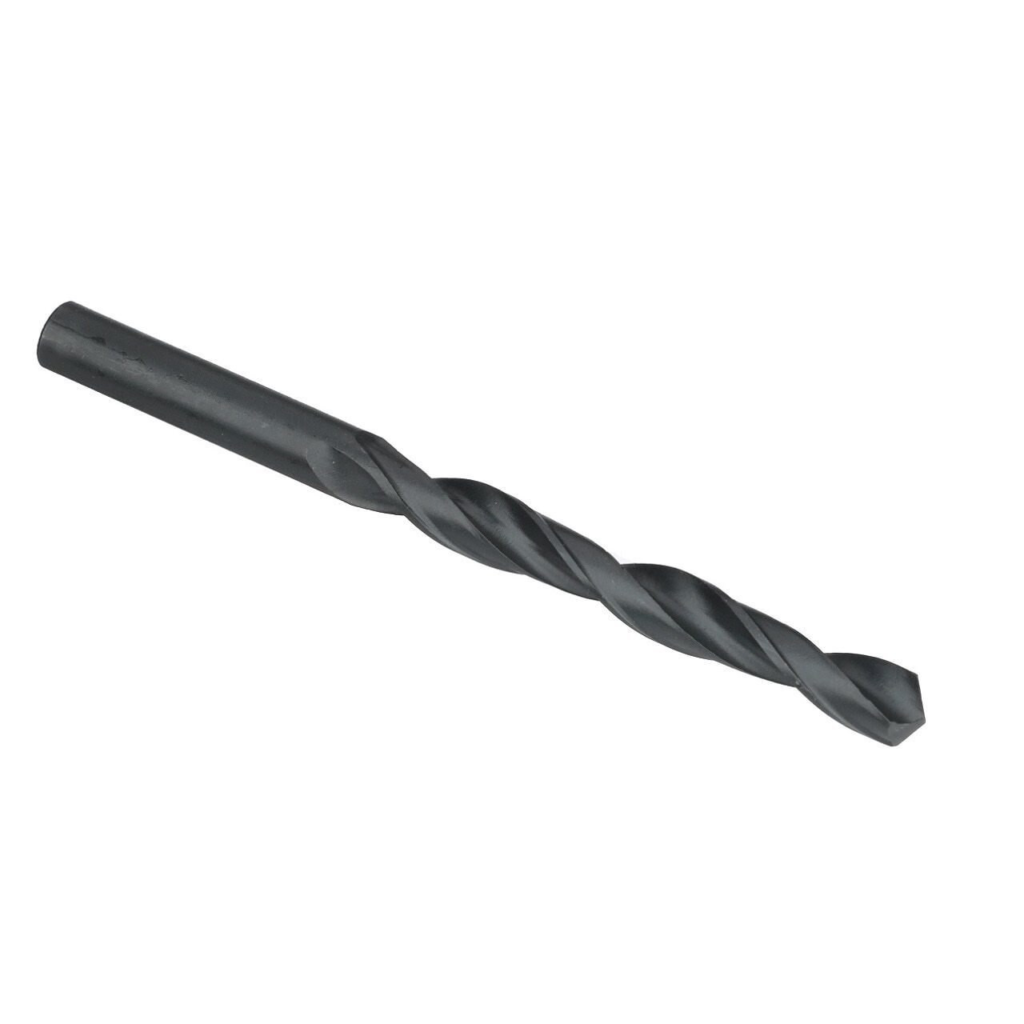
HSS drill bits remain widely used due to their good toughness and affordability.
Typical applications
- Mild steel and low-carbon steel
- Aluminum and non-ferrous metals
- Plastics and composite materials
Advantages
- Excellent toughness
- Easy to regrind
- Low tool cost
Limitations
- Limited heat resistance
- Shorter tool life in harder materials
Cobalt High-Speed Steel (HSS-Co): Better Performance Under Heat
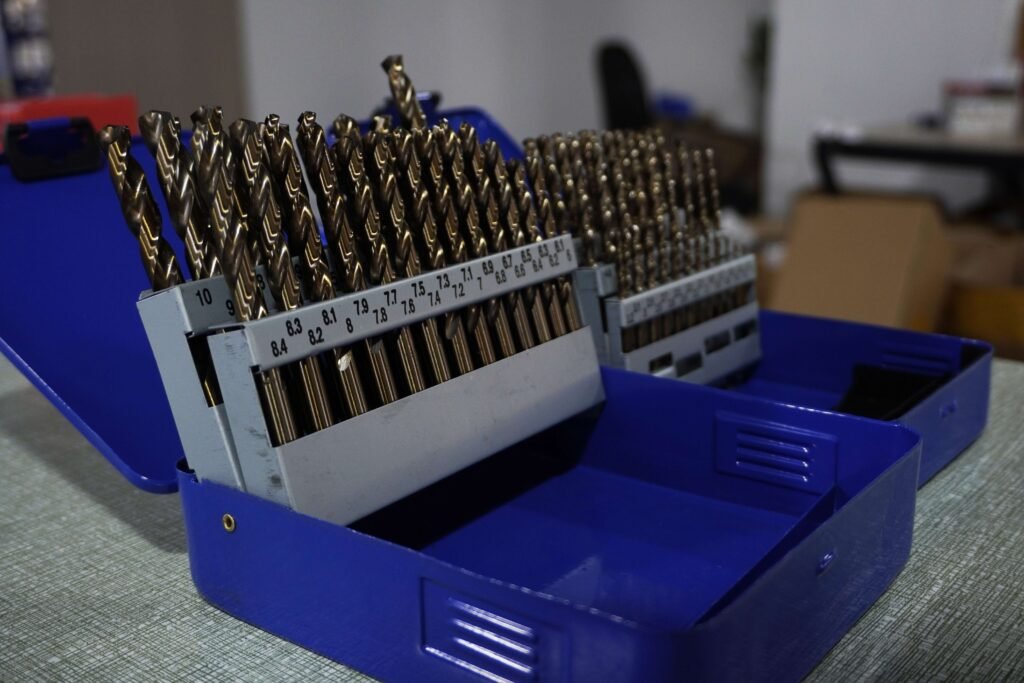
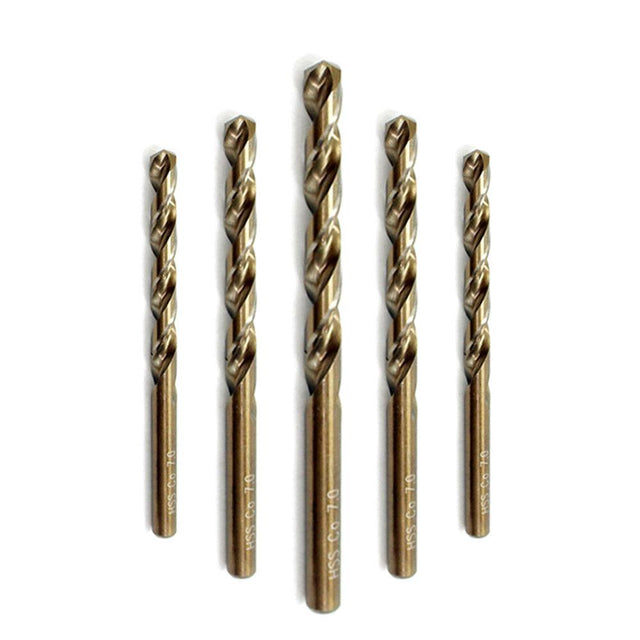
HSS-Co drills contain 5–8% cobalt, significantly improving hot hardness and wear resistance.
Best suited for
- Stainless steel
- Alloy steel
- Cast steel
- Titanium alloys
Why choose HSS-Co?
- Higher red hardness than standard HSS
- Improved edge stability at elevated temperatures
- Still more forgiving than solid carbide
Solid Carbide: Maximum Performance for Demanding Applications
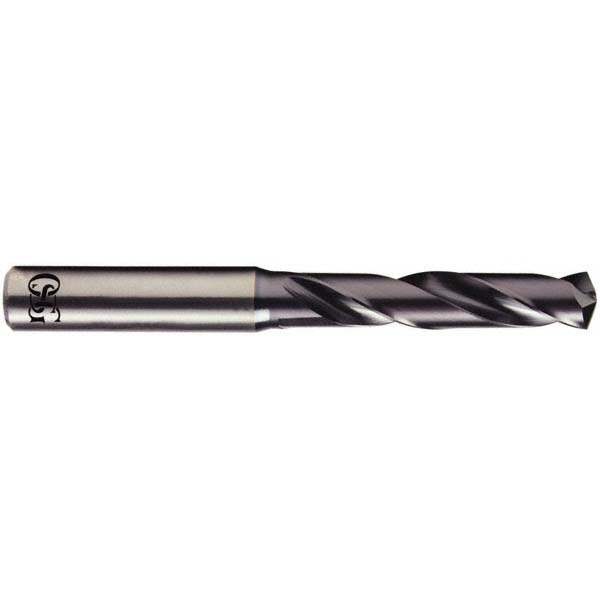
Solid carbide drill bits provide exceptional hardness and wear resistance, making them ideal for high-speed and high-volume production.
Typical applications
- Stainless steel
- Cast iron
- High-temperature alloys
- Hardened steel
Key advantages
- Long tool life
- Excellent dimensional accuracy
- High cutting speeds
Considerations
- Higher cost
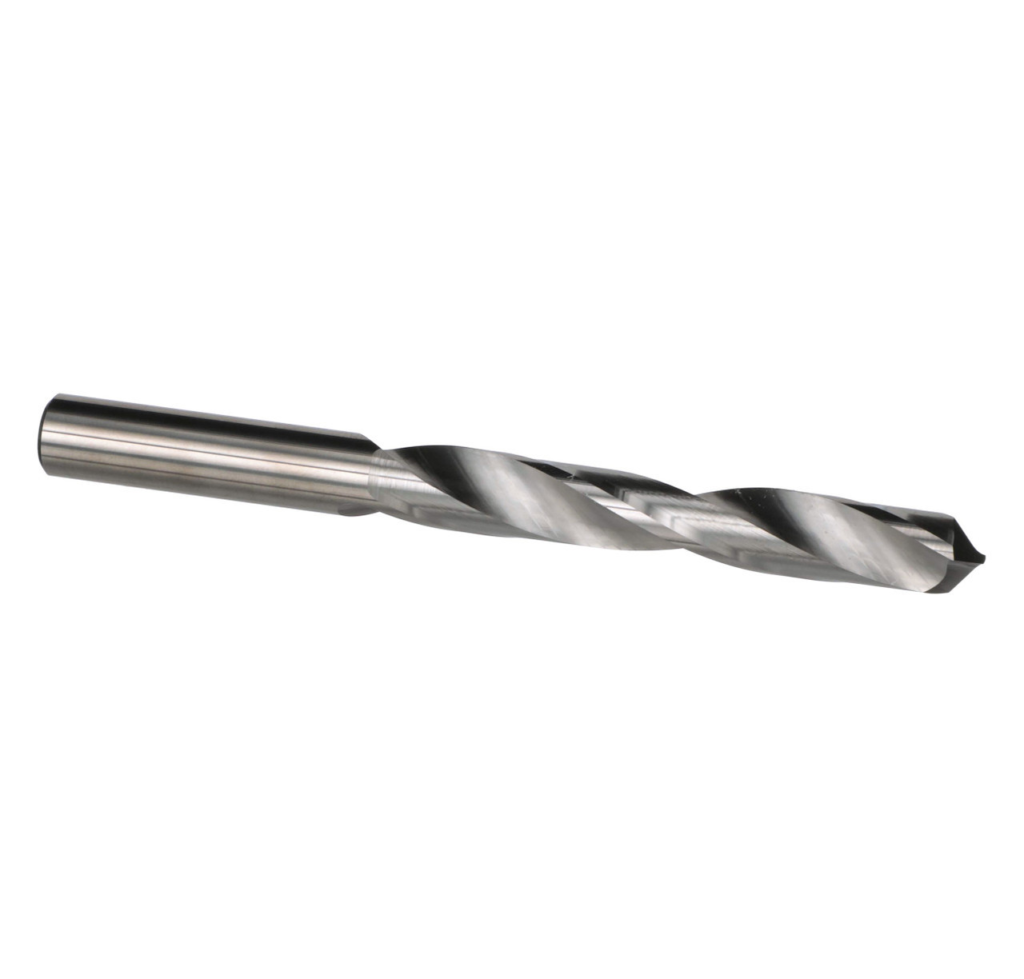
- More brittle than steel-based drills
- Requires rigid machines and secure clamping
Drill Material Comparison
Drill Material | Hardness | Toughness | Heat Resistance | Typical Applications |
HSS | Medium | High | Low | Mild steel, aluminum |
HSS-Co | High | Medium | Medium–High | Stainless steel, alloys |
Solid Carbide | Very High | Low | Very High | Hard materials, high speed |
Why Do Drill Length Standards Matter More Than You Think?
Although drill bits can be manufactured in almost any length, standardized drill lengths exist to optimize rigidity and accuracy.
Common Drill Length Types
- Jobber Length– The most common general-purpose drill
- Screw Machine Length– Shorter, stiffer, higher accuracy
- Machine Length– Reduced flute length for rigidity
- Long Series / Extra-Long– Deep-hole drilling
- Taper Length– Intermediate length
Rule of thumb:
Always select the shortest drill that meets the required drilling depth.
Shorter drills reduce deflection, improve hole straightness, and significantly lower the risk of breakage.
How Does Drill Geometry Control Performance?
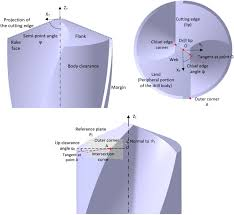
Drill geometry directly affects chip formation, cutting forces, heat generation, and hole quality.
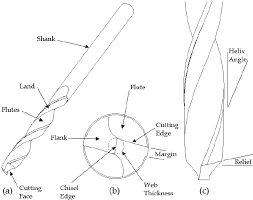
Key Geometric Elements
- Point angle
- Cutting edges
- Chisel edge
- Flute profile
- Margin (guide land)
Even small changes in geometry can result in dramatically different performance.
What Is the Role of the Point Angle?
The point angle determines how the drill enters the material.
- 118°– Good centering, suitable for softer materials
- 130–140°– Stronger cutting edge, lower heat concentration, preferred for stainless steel
A properly selected point angle reduces thrust force and improves tool life.
How Does the Helix Angle Affect Chip Evacuation?
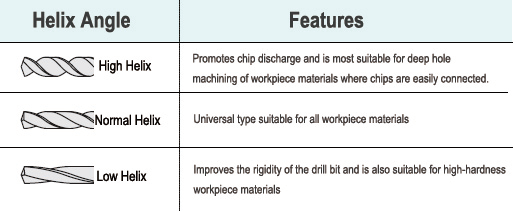
The helix (rake) angle controls chip shape and evacuation efficiency.
Typical helix angles range from 18° to 45°, with 30° as the industry standard.
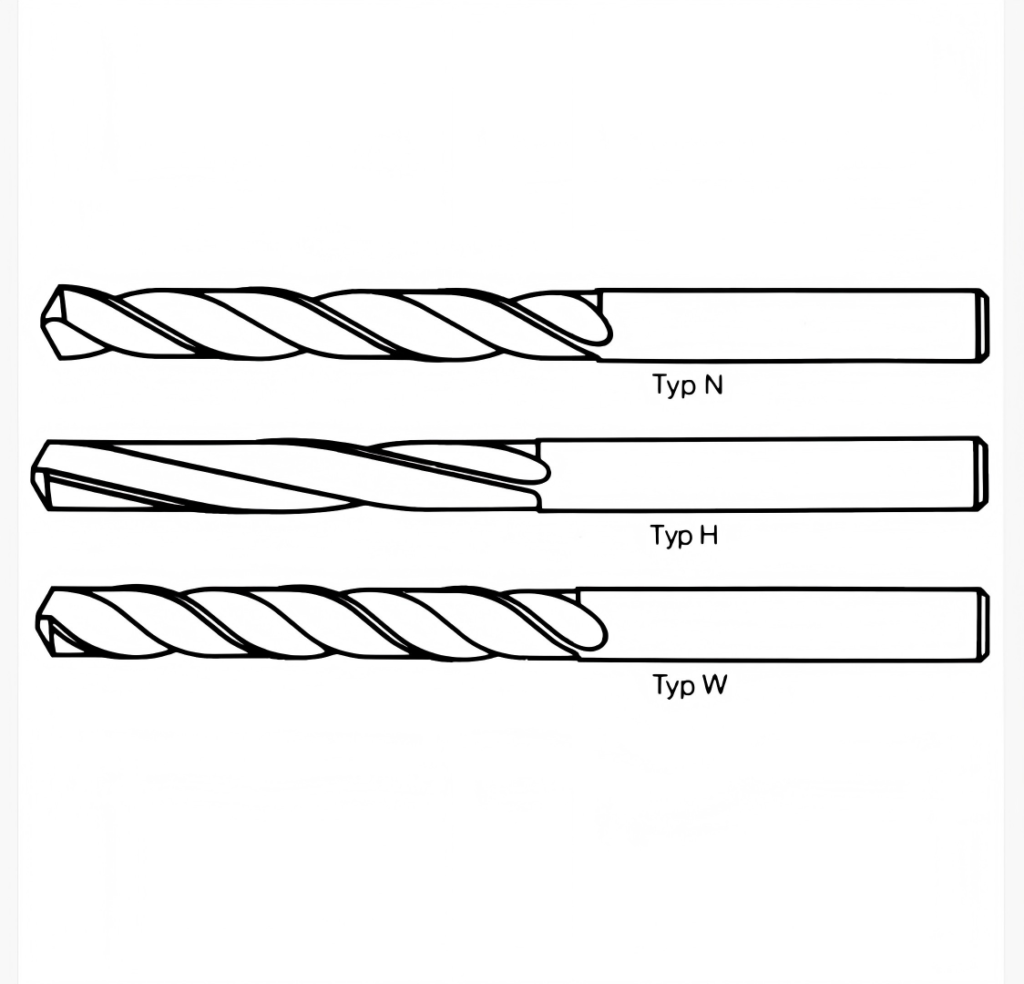
DIN 1836 helix classifications
Helix Type | Characteristics | Recommended Materials |
N-type | Normal helix | Cast iron, non-ferrous metals |
H-type | Long helix | Steel, brittle materials |
W-type | Tight helix | Soft metals, plastics |
Why Are Drill Coatings Critical in Modern Machining?
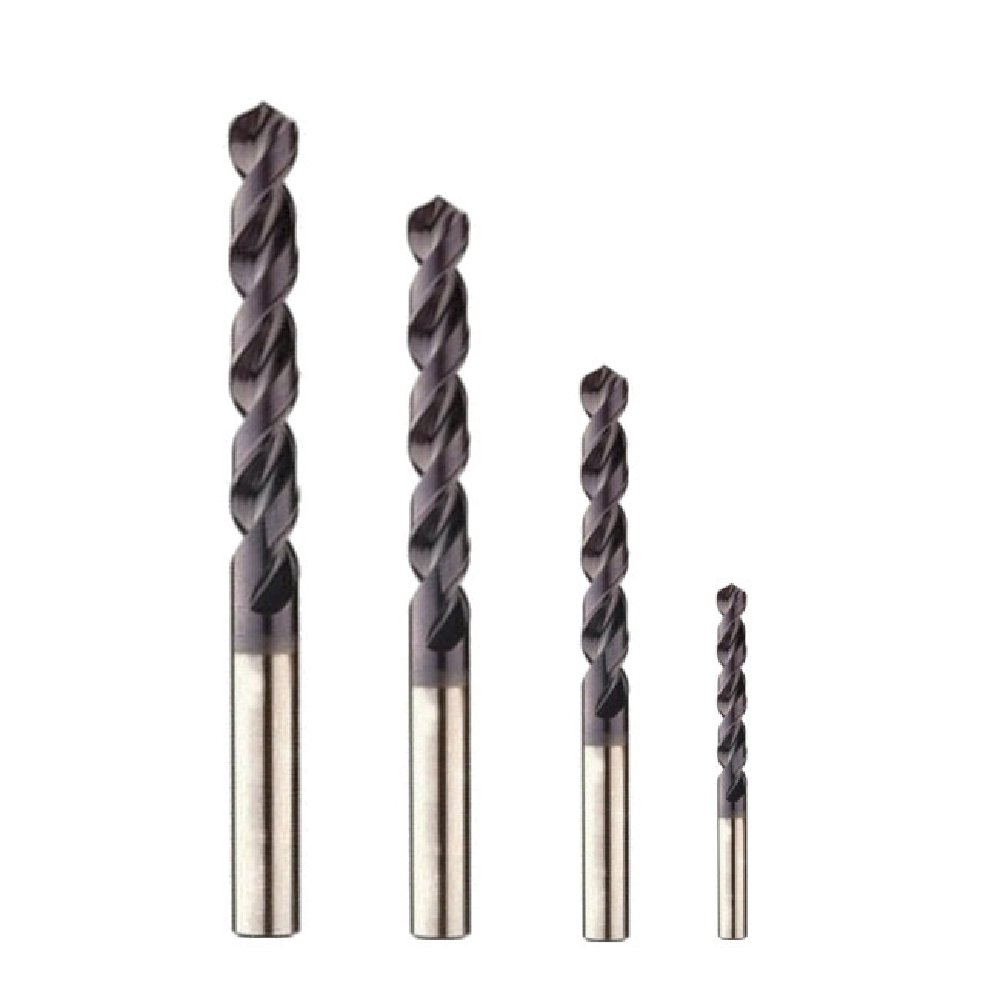
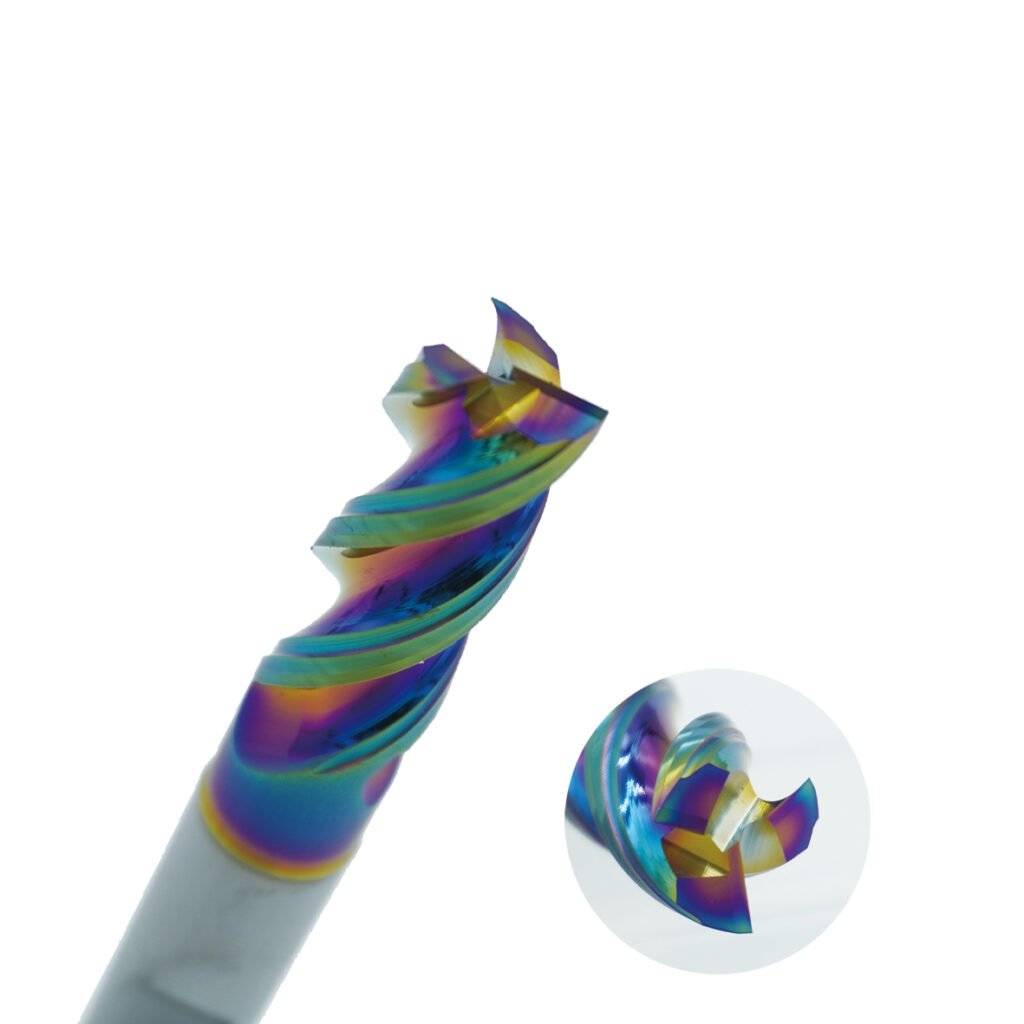
Advanced PVD coatings significantly improve drill performance by reducing friction and protecting the cutting edge from heat and wear.
Common Drill Coatings
- TiN– General-purpose coating, 2–4× tool life
- TiAlN– Excellent thermal stability, ideal for stainless steel
- TiCN– Very high hardness, suitable for copper and nickel alloys
- AlTiN– Extreme heat resistance for abrasive materials
Drill Coating Selection Guide
Coating | Heat Resistance | Wear Resistance | Best Applications |
TiN | Medium | Medium | General drilling |
TiAlN | High | High | Stainless steel |
TiCN | Medium | Very High | Copper, nickel alloys |
AlTiN | Very High | High | High-temperature alloys |
Note:
Some coated drills cannot be re-sharpened without damaging the coating.
Internal vs External Coolant — Does It Really Make a Difference?
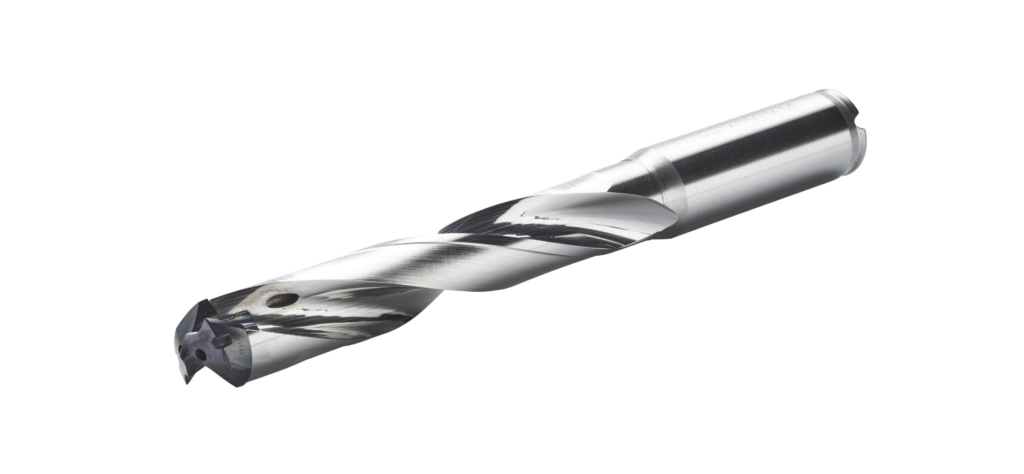
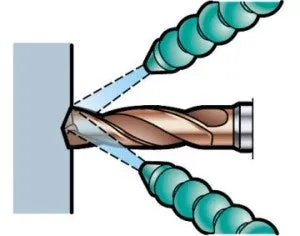
Yes—coolant delivery is critical in drilling because most cutting energy is converted directly into heat.
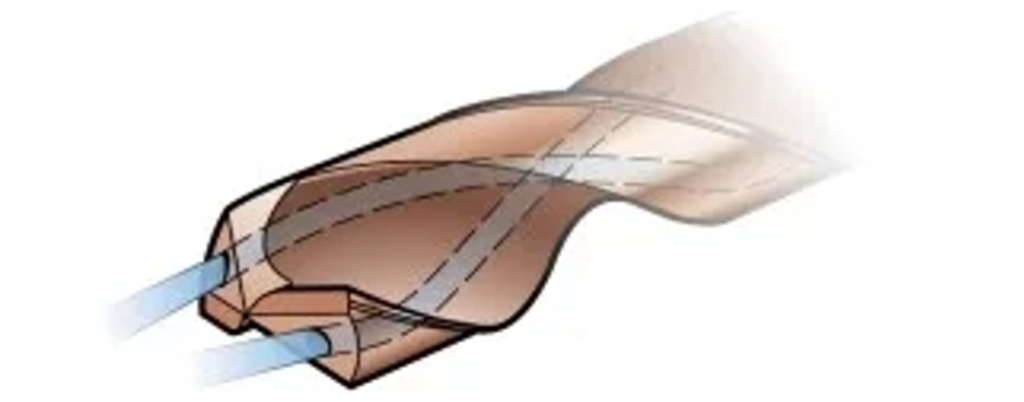
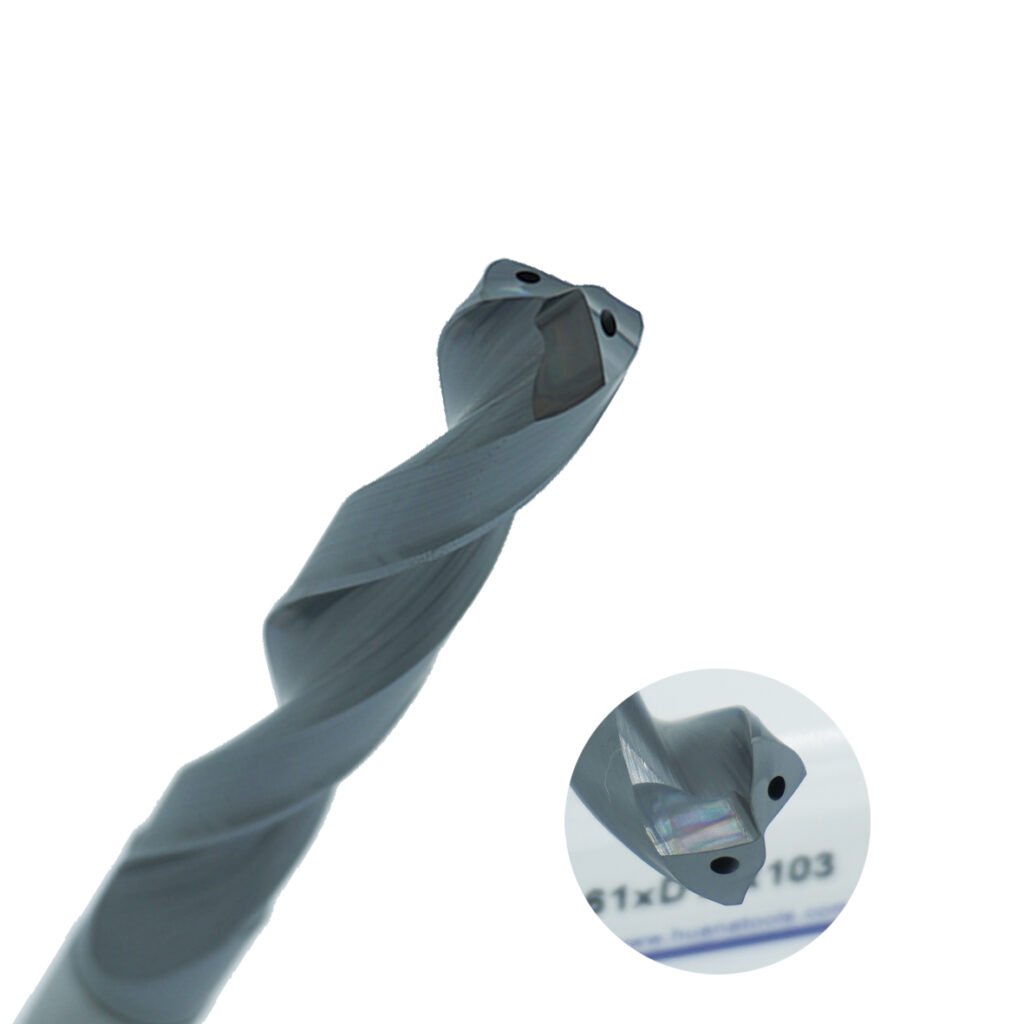
Internal Coolant (Highly Recommended)
- Coolant reaches the cutting edge directly
- Improves chip evacuation
- Essential for stainless steel and deep holes
External Coolant
- Lower cost
- Limited effectiveness in deep holes
- Recommended drilling depth: ≤ 3×D
When using external coolant, reduce cutting speed by approximately 20%.
What Are the Most Common Drilling Problems — and How Can You Prevent Them?
Drill Breakage
- Excessive speed or feed
- Chip accumulation in blind holes
- Inappropriate point geometry
Excessive Tool Wear
- Incorrect coating selection
- Insufficient coolant delivery
- Mismatch between tool and material
Common Drilling Issues and Solutions
Problem | Likely Cause | Recommended Action |
Drill breakage | Chip clogging | Use internal coolant |
Rapid wear | Wrong coating | Match coating to material |
Poor hole quality | Runout | Improve tool holding |
Long chips | Low feed | Increase feed slightly |
Practical Drilling Tips That Improve Productivity
- Use self-centering drill geometries
- Reduce feed by 30–50%at exits and cross holes
- Drill pilot holes for deep drilling (>16×D)
- Clamp stacked materials tightly
- Prioritize stability over maximum speed
How Do You Choose the Best Drill for Your Application?
Selecting the right drill is not about choosing the most expensive tool—it is about achieving the lowest cost per hole.
Key factors include:
- Workpiece material
- Hole depth and diameter
- Machine rigidity
- Coolant capability
- Target production volume
When material, geometry, coating, and coolant strategy are aligned, drilling becomes a highly efficient and predictable process.
Final Thoughts: Drilling Deserves Strategic Attention
Drilling should be treated with the same importance as milling and turning.
With the right drill selection, manufacturers can achieve:
- Longer tool life
- Better hole quality
- Higher productivity
- Lower overall machining costs