Skip to content
China Solid Carbide Drill Bits: The Proof-First Factory Evaluation Checklist
Table of Contents
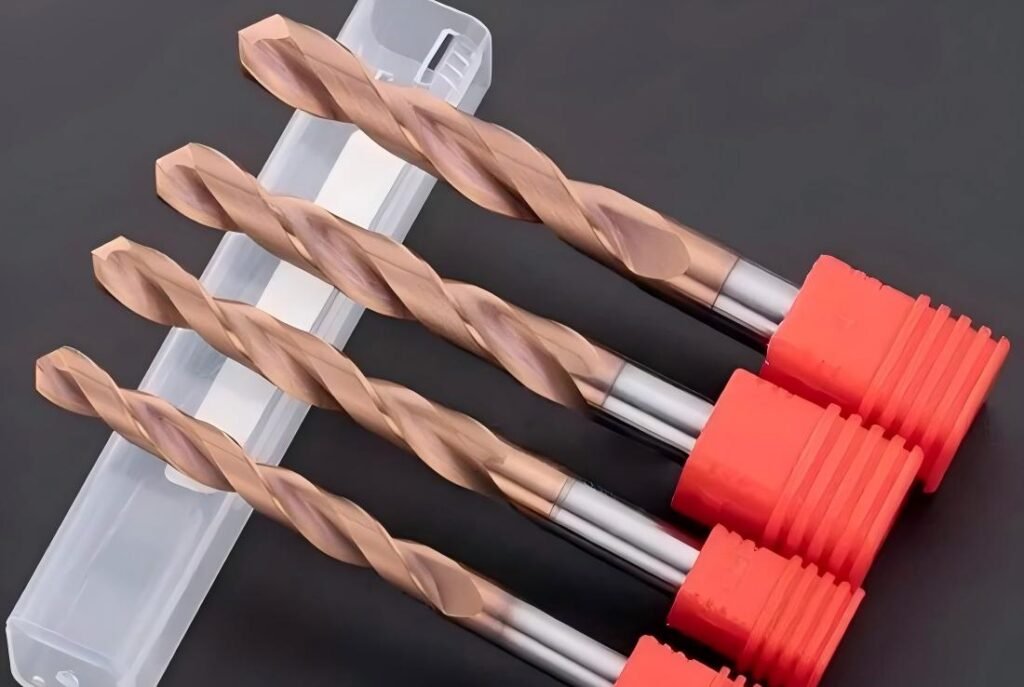
Sourcing china solid carbide drill bits successfully is less about “finding a cheap supplier” and more about proving consistency. Two factories can show similar photos, similar catalogs, even similar prices—yet one delivers stable hole size and predictable tool life, and the other delivers random premature chipping, oversized holes, and “it depends” excuses.
This article gives you a practical, verifiable checklist to evaluate a China supplier (factory or trader) for solid carbide drill bits—with special focus on the two areas that most often decide your outcome:
- Runout control(the hidden killer, especially on small diameters)
- Coating capability & proof(thickness targets, process stability, and traceability)
If you want a reliable purchase—not a lucky batch—use the questions and tables below as your baseline.
Factory vs trader: how to tell quickly
A good trader can still be a good partner. The goal is simply to learn who controls the process and who is only forwarding messages.
Fast, non-offensive checks
- Ask for a recent inspection reportwith a lot number and measured items (runout, OD, point angle, flute length, coating). A factory that runs real QC can usually share a redactedreport quickly.
- Ask: “Which machines grind this drill? What brand/model? How many lines?” (You’re not asking secrets—just capability.)
- Ask for traceability: “If a drill fails, can you map it back to the grinding shift + coating batch?”
- Ask whether coating is in-house or outsourcedand how they verify thickness (more on this later).
What you’re listening for
- Fact-based answers (numbers, methods, gauge length, instruments), not slogans like “top quality, best carbide.”
What documents to ask for?
Ask for three document types. You’re not collecting paperwork—you’re validating process control.
1) A recent inspection report sample
Should include measurable items like OD, flute length, point angle, runout/TIR, coating, and a lot number.
2) Coating statement + thickness target
A coating name alone is not enough. Look for thickness target and the method used to verify. PVD coatings are often in the low-micron range, and reputable coaters track process recipes to keep it stable.
3) Traceability evidence
Lot coding on tool/box and an internal mapping (even a screenshot) showing how they trace a complaint back to production.
Document checklist and “fake-looking” warning signs
Document | What a real one usually contains | Red flags that waste your time |
Inspection report (recent) | Lot/batch ID, measured values with tolerances, date, inspector/shift, instruments | No lot number, only “PASS”, no dates, no measured values |
Coating statement | Coating type, thickness target (µm), process control (recipe/batch), verification method | Only marketing claims (“super hard”), no thickness target |
Traceability record | Lot code on package + mapping to grinding/coating/inspection | “We can trace” but can’t show a real example |
Runout: why it’s the hidden killer (especially small drills)
In solid-carbide drilling, runout doesn’t just reduce life—it changes cutting physics.
- One lip cuts more → higher heat and wear on one side
- Hole becomes oversized or tapered
- Chipping starts at the overloaded corner
- Small drills are dramatically more sensitive
Industry guidance often cites very low TIR targets (e.g., 0.0002 in for many solid carbide drill applications).Big Daishowa’s runout discussion also emphasizes that smaller tools require much tighter runout control than larger diameters.
Acceptable targets (practical ranges)
Use these as shop-floor targets to discuss with suppliers and to verify in incoming inspection. (Your exact limits should reflect machine condition, holder type, and application.)
Practical runout (TIR) targets and what to ask suppliers to report
Drill diameter (mm) | Incoming TIR target (µm) | Ask supplier to report TIR at… | Why it matters |
≤3 mm | ≤3–5 µm | stated gauge length (e.g., 3×D or fixed mm) + method | tiny drills fail fast with runout |
3–6 mm | ≤5–8 µm | same gauge length + holder details | affects hole size + life |
6–12 mm | ≤8–12 µm | same gauge length + method | still impacts size and corner wear |
≥12 mm | ≤12–20 µm (application-dependent) | same gauge length + method | larger tools tolerate more |
For reference, 0.0002 in is about 5 µm, a value commonly cited as acceptable for many solid-carbide drill applications.
Holder + measurement alignment
If you measure runout in an ER collet but run the drill in hydraulic, you can “pass” inspection and still fail in production.
Minimum alignment rules:
- Use the same holder typeyou plan to run (or better).
- Record gauge lengthand where the indicator touches.
- Measure multiple times and rotate the tool to detect seating issues.
Coating capability: in-house vs outsourced
Coating is not magic. It’s a controlled process that must be stable batch-to-batch.
Typical PVD thickness targets (what “normal” looks like)
Many cutting-tool PVD coatings are only a few microns thick. Example ranges commonly stated: 2–5 µm for AlTiN/TiAlN-type coatings, and around ~3 µm is also often referenced as “typical” for PVD. Research literature often reports thickness values in the same order of magnitude (e.g., ~4–5 µm in comparative studies).
In-house vs outsourced: how to think about risk
- Outsourced can be excellent ifthe drill factory controls incoming coating quality and keeps stable recipes with the coater.
- In-house can be excellent ifthey can prove thickness consistency and adhesion performance across lots.
What to ask (proof, not promises)
- Thickness target (µm) and allowable range
- Batch record (date, batch ID, recipe ID)
- Verification method (process-based + periodic physical verification)
Sampling plan for the first order: how to test without wasting money
Your first order should be a controlled experiment. Don’t start with “every size in the catalog.”
A practical approach is to use acceptance sampling standards (AQL-based) rather than “check two pieces and hope.” ISO describes acceptance sampling systems indexed by AQL in ISO 2859-1, and the U.S. equivalent is commonly referenced as ANSI/ASQ Z1.4.
A smart pilot plan (works for most buyers)
Choose:
- 3–5 diametersthat represent your real production (e.g., small, medium, one larger)
- 2 materialsyou actually drill (e.g., alloy steel + stainless)
- one depth category(e.g., 3×D or 5×D)
Acceptance criteria should include:
- Hole size capability (oversize and roundness trends)
- Tool life target (holes per drill or total cutting time)
- Failure mode control (chipping vs gradual wear)
- Runout and OD conformance
First-order sampling plan
Test item | How to test | Acceptance target (example) |
Runout (incoming) | Measure TIR in intended holder at stated gauge length | Meets Table 2 targets |
OD tolerance | Micrometer by size | Within agreed OD spec by range |
Geometry | Visual + measured point angle/web | No abnormal asymmetry; within stated spec |
Tool life | Drill same program & coolant on same material | Meets agreed holes/tool baseline |
Failure mode | Inspect edges at intervals | No early corner chipping pattern |
This is where “proof-first” sourcing wins: if a supplier can’t pass a simple, repeatable pilot, scaling volume only scales pain.

“Solid carbide drill bits set” sourcing: how to avoid mixed-quality sets
A solid carbide drill bits set is where many buyers get burned—because sets often mix:
- multiple production dates
- multiple grinders or lines
- multiple coating batches
- “filler sizes” with weaker control
If you buy sets, insist on:
1.Single lot per set (or clearly separated lots)
2.A set-level inspection report listing sizes included and lot codes
3.A rule that all sizes in the set share the same substrate + coating system unless clearly labeled
A good supplier will treat sets as a controlled SKU, not a basket of leftovers.
FAQ
What’s the #1 metric to compare among china solid carbide drill bits suppliers?
Runout control with a clearly stated measurement setup (TIR + gauge length + holder/method). Low runout is repeatedly emphasized as critical for solid-carbide drilling stability and life.
How thick should a PVD coating be on solid carbide drill bits?
Common references put many PVD tool coatings in the low-micron range, often around ~3 µm, and sometimes 2–5 µm depending on coating type and supplier process.
Should I prefer factories that coat in-house?
Not automatically. In-house coating is only “better” if they can prove thickness stability, adhesion, and traceability across lots. Outsourced coating can be excellent if tightly controlled.
Is there a standard way to structure incoming inspection sampling?
Yes. Acceptance sampling approaches tied to AQL are standardized (e.g., ISO 2859-1 and ANSI/ASQ Z1.4 concepts).
Conclusion: buy evidence, not confidence
If you remember one thing: sourcing china solid carbide drill bits is a verification game. The winning suppliers don’t just say “high quality”—they can show:
- measurable runout control with a defined method
- inspection reports tied to real lots
- coating thickness targets with verification
- traceability that actually works
- a pilot plan you can pass before scaling
That’s how you get stable solid carbide drill bits performance—without gambling on every shipment.