From Quote to Chip Load A Practical Sourcing Guide for China Cutting Tool End Mills
Table of Contents
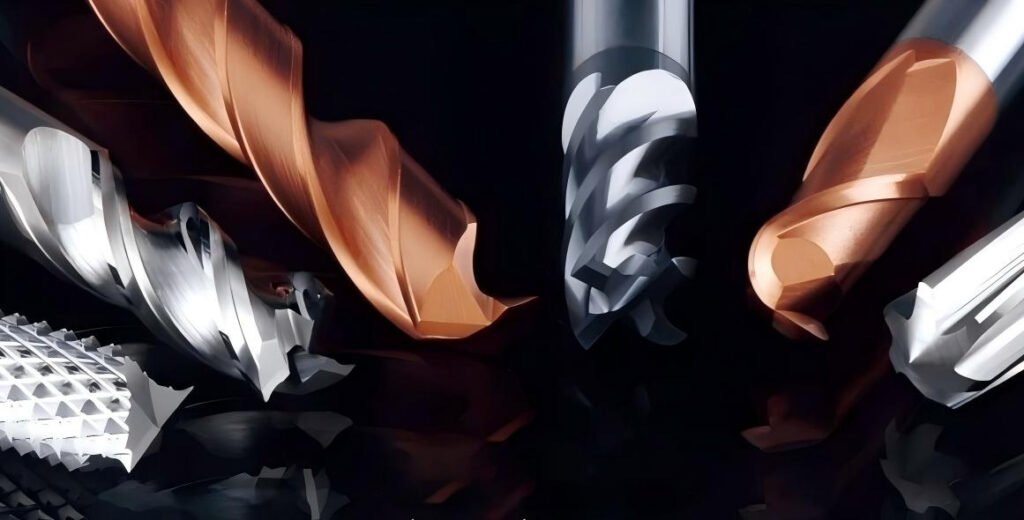
If you’re buying cutting tool end mills from China, you’re probably chasing a mix of lower cost, solid performance, and reliable delivery. Done right, China can be a fantastic source of carbide end mill cutting tools. Done wrong, you get peeling coatings, chipped edges, and boxes of scrap.
This guide walks you through how to evaluate China cutting tool end mill suppliers, read between the lines of their data sheets, and avoid the most common pitfalls—so you can place larger orders with confidence.
Why Source Cutting Tool End Mills from China?
Cost Advantages
For carbide tools in particular, Chinese manufacturers are often 30–50% cheaper than comparable European or US brands at list price.
Yet the real story is cost per part, not cost per tool:
- Studies and field reports show that optimized coated carbide end mills can deliver 40–60% longer tool lifethan uncoated tools in steels like 304/316 stainless.
- Well-designed Chinese carbide end mills can reach 80–90% of the tool lifeof premium imports while costing roughly half as much.
If you choose the right supplier and product line—e.g. nano coated end mill tools designed for tool steel—the total machining cost can drop significantly, even if tool life is slightly lower than the top global brands.
Range of Suppliers and Products
China’s cutting-tool ecosystem covers everything from basic flat end mill tools to advanced:
- Ball end mill toolsfor 3D mold and die
- End mill for tool steel(HRC 55–65) with PVD AlTiN / TiAlN, sometimes in nano-structured variants
- High-performance roughers, variable-helix end mills, and miniature end millssimilar in concept to Harvey Tool’s micro tooling lines
You’ll find generic catalog products, private-label options, and fully customized geometries. The trick is understanding what type of supplier you’re dealing with.
Types of China Cutting Tool End Mill Suppliers
Chinese suppliers usually fall into three categories. Each can work—if you use them correctly.
Typical Supplier Types and When to Use Them
Supplier Type | What They Really Are | Advantages | Risks / Limitations | Best Use Cases |
OEM Factory | Manufactures carbide rods → grinds → coats in-house | Strong cost control, custom geometry, short chain | Requires technical communication; QC varies between plants | Stable demand, custom specs, private label |
Trading Company | Middleman with multiple partner factories | Easy communication, flexible product range, low MOQs | Less process visibility; quality can vary by batch | Testing multiple lines, mixed tooling for small buyers |
Brand Manufacturer | Chinese brand with catalog, sometimes global distribution | Defined series, application data, marketing support | Higher price vs “no-name”; limited flexibility | Shops wanting stable SKUs & documentation |
OEM Factories
OEMs are ideal if you:
- Need custom end mill tool geometry(e.g. special corner radii, chip splitters)
- Want your own private labelon shanks and packaging
- Care about raw carbide gradeand coating equipmentdetails
Ask OEMs to show their grinding and coating lines, plus process control data.
Trading Companies
Trading companies are not always “bad”—good ones can:
- Quickly match you with different series (e.g. roughing, finishing, ball end mill tools)
- Consolidate orders from multiple factories into one shipment
- Handle documentation and English communication
But when the trading company has no real technical background, tool performance becomes unpredictable. You must lock in the exact factory and series for your critical carbide end mill tool life applications.
Brand Manufacturers
These firms offer product series similar to well-known Western brands like Fullerton Tool end mills or Harvey Tool miniature end mills, with:
- Named series (e.g. “HRC65 mold steel”, “Aluminum high-speed”)
- Published cutting data and coating specs
- Better batch-to-batch consistency
Prices are higher than “no brand”, but still below top-tier Western tools—good for users who want predictable catalog performance.
Key Quality Indicators to Check
Carbide Grade and Raw Material Source
Serious factories will specify:
- Carbide type: usually WC–Co micrograin (e.g. 0.6–0.8 μm grain size)
- ISO / ANSI grade: e.g. K20–K40 (C2–C12) for steel milling
- Rod supplier: domestic premium or imported (e.g. European/Japanese rods)
For end mills for tool steel and hardened steel (HRC 55–65), look for:
- Submicron or nano-grain carbide (0.5–0.8 μm)
- Grades comparable to K30–K40 for toughness and wear resistance in hardened materials
If the supplier can’t give you any carbide grade information, treat that line as low-end.
Coating Technology and Equipment
Coating strongly affects end mill tool life:
- TiAlN / AlTiN PVD coatingsprovide excellent thermal stability and oxidation resistance, letting you run higher cutting speeds in steel and stainless.
- Modern nano-structured AlTiN-based coatingscan significantly improve wear resistance and heat tolerance in dry or high-speed milling.
Ask:
- What coating types are available (TiAlN, AlTiN, TiCN, DLC, diamond)?
- Brand and model of coating equipment (e.g. well-known European or established local PVD systems)
- Typical coating thickness (e.g. 2–4 μm for PVD; 4–9 μm for CVD diamond on non-ferrous tools)
For a nano coated end mill tool line aimed at hardened tool steel, you should expect:
- AlTiN or AlTiN-based nanocomposite
- Data or test cases showing tool life vs uncoated or legacy coatings
End Mill Tool Geometry and Tolerances
Critical geometry points:
- Diameter tolerance: high-end solid carbide typically +0 / –0.010 mm (or tighter)
- Runout: ≤ 0.005–0.008 mm at 3×D for precision tools
- Helix / flute design: variable helix or unequal flute spacing for vibration reduction in steel; polished flutes for aluminum
You don’t need to match a Harvey Tool miniature end mill one-to-one, but you should know:
- How consistent the cutting edges are under microscope
- Whether end mill cutting toolgeometry is optimized for the specific material (tool steel vs aluminum vs stainless)
Evaluating a New Supplier
Requesting Sample Cutting Tool End Mills
Before big orders, request a structured sample set, for example:
- flat end mill tools, 2-flute and 4-flute, Ø6–10 mm for general steel
- ball end mill toolsfor mold steel (HRC 55–60)
- tools specifically marketed as “for stainless” or “for hardened steel”
Test them on your real parts, not just coupons. Measure:
- Average tool lifein meters of cutting or parts per tool
- Surface finish (Ra)
- Any chipping, coating wear pattern, or built-up edge
Checking Certificates and Production Capability
Ask for:
- ISO 9001 or similar quality certificates
- List of core machines: CNC grinders, coating furnaces, measurement equipment
- Basic process flow: rod → rough grind → finish grind → deburr → clean → coat → inspection
You’re not just checking if they own machines—you’re checking if they understand process capability and can support your end mill tool geometry requirements repeatably.
Communication and Technical Support
Good suppliers help you tune process, not just send prices.
Check if they can:
- Recommend cutting parameters by material and hardness
- Suggest series for “end mill for tool steel” vs stainless vs aluminum
- Support questions about end mill sharpening tooloptions, or compatible end mill tool grinders(many Chinese factories know brands like Cuttermaster, e.g. Cuttermaster end mill & tool sharpener used for regrind).
Prices vs Performance: How to Think About Cost
Example Cost–Performance Comparison (Illustrative)
Tool Type | Unit Price (USD) | Relative Tool Life (parts per tool) | Cost per 1,000 Parts | Notes |
Premium Western brand AlTiN | 50 | 1,000 | 50 | Benchmark performance |
Mid-tier China nano-coated | 25 | 800–900 | 27–31 | 80–90% of life at ~50% of price |
Low-cost uncoated China generic | 10 | 200–300 | 33–50 | Cheap per tool, but expensive per part |
This is why chasing the lowest quote is dangerous. A poor uncoated or low-grade tool can double your cost per part, even if the tool looks “cheap” on paper.
Dangers of Choosing Only the Lowest Price
Common consequences:
- Short carbide end mill tool life, forcing frequent tool changes
- Chatter, poor surface finish, and rework
- Unpredictable batch quality when the supplier quietly switches carbide or coating
Instead of asking only, “what’s your best price?”, ask:
“What is the expected tool life in 42CrMo or H13 at these parameters, compared to your higher-level series?”
Typical Problems and How to Avoid Them
Coating Peeling, Early Chipping, Poor Concentricity
Coating peeling often comes from poor surface prep or incompatible coating thickness. Proper PVD AlTiN/TiAlN processes can dramatically improve wear and resist chipping when done correctly.
Avoid:
- Tools with erratic coating color or visible pinholes
- Suppliers who can’t state which coating they use
Early chipping and poor concentricity usually point to:
- Inferior carbide grade (too brittle)
- Poor grinding wheel condition or inadequate inspection
- Runout from low-quality end mill tool holdersor spindles (e.g. worn R8 end mill tool holders)
Always separate tool quality from tool-holding quality. Even a premium tool will fail prematurely in a bad chuck.
Packaging, Labeling, and Logistics Issues
Simple, but important:
- Ask for individual plastic tubeswith labels showing size, coating, and material range
- For private label, confirm artwork and barcodes before mass production
- Check how they pack bulk boxes to avoid chipped corners in transit
For resellers, clean packaging and clear markings matter as much as performance.
Building Long-Term Partnerships
Feedback Loop on Performance
Treat your supplier like an engineering partner:
- After tests, send back data: material, hardness, cutting parameters, tool life, and failure pictures.
- Ask for geometry tweaks when needed: e.g. changing helix angle, chip gash depth, or edge prep for a specific end mill for tool steeljob.
Good suppliers will adjust their series or even build a custom line dedicated to you.
Custom Non-Standard End Mills and Private Label
Once trust is built, move beyond catalog SKUs:
- Special tool end millgeometries (e.g. corner radii, multi-step, extended reach)
- Coatings selected by material (AlTiN/TiAlN for steel, DLC for aluminum, CVD diamond for graphite and composites)
- Your brand name and part numbers on shanks and boxes
At this stage, your sourcing strategy looks much closer to dealing with a global brand like HTC Tool end mills or Fullerton Tool end mills, but at a more competitive cost level.
Final Thoughts
Sourcing cutting tool end mills from China is no longer just about finding the cheapest quote on a catalog end mill cutting tool. With the rapid improvement in carbide grades, nano-structured coatings, and process control, many Chinese lines now offer serious performance when matched correctly to your application.
If you:
- Understand the difference between OEM, trading, and branded suppliers
- Verify carbide, coating, and end mill tool geometry
- Measure end mill tool lifeand cost per part on your own machines
- And build a feedback-driven relationship
…you can safely move from small test orders to stable, long-term supply—backed by custom geometries, private labels, and predictable performance from your chosen China cutting tool end mill partner.