Stop Wasting Money on Random Tools: How to Choose the Right Carbide End Mill Set
Table of Contents
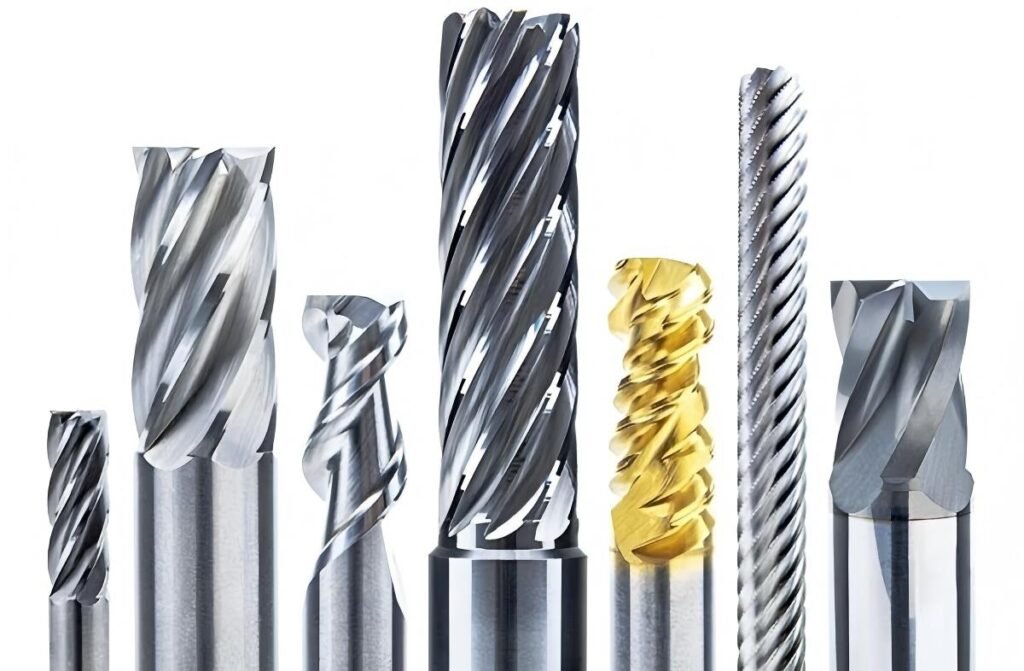
If your tool drawer is full of half-used cutters and odd sizes that never leave the box, you’re not alone.
Buying one carbide end mill at a time is slow; buying the wrong carbide end mill set is expensive.
A good set should:
- Cover 80–90% of your daily work
- Match your main materials and machines
- Use quality solid carbide end millblanks and appropriate coatings
- Be easy to reorder and expand as your jobs grow
In this guide, we’ll walk through how to choose a set that really earns its place in your shop, with concrete examples, realistic size ranges, and what to watch out for in low-cost kits.
Start With the Materials You Actually Machine
Before you look at flute count or fancy coatings, write down what you cut most of the time:
- Aluminum and non-ferrous alloys
- Carbon steel and stainless steel
- Hardened steels (HRC55+)
- Plastics, composites, wood
Different materials need very different carbide end mill bits and geometries. A router shop cutting 6061 and plastic plates does not need the same set as a mold shop finishing 60 HRC dies.
Material vs. Recommended Set Type
The table below gives a realistic starting point based on common industry guidance for carbide tooling and coatings.
Main Materials You Cut | Better Set Style | Typical Flutes & Geometry | Typical Coating |
Aluminum & non-ferrous | High-helix 2 flute / 3 flute carbide end mill set | Large chip pockets, sharp edges | Uncoated / DLC / ZrN |
Carbon steel, general engineering | 4 flute carbide end mill set | General-purpose, variable helix if possible | TiAlN / AlTiN |
Stainless steel | 4-flute, high-helix, stainless-rated solid carbide end mill set | Strong core, polished flutes helpful | AlTiN / AlCrN |
Hardened steels (HRC55–65) | Short, 4–6 flute hard-milling set | Corner radius / ball nose, stub length | Advanced nano PVD, AlTiN |
Plastics / composites / wood | 1–2 flute, sometimes single flute carbide end mill sets | Big chip space, razor-sharp cutting edges | Uncoated or DLC |
Most general machine shops start with a steel-oriented 4 flute solid carbide end mill set, then add a dedicated aluminum set and a hard-milling set as work demands.
Carbide Grade and Coating: What’s Inside the Steel Box Matters
A set is only as good as the carbide and coating you’re paying for.
Micro-grain Solid Carbide
Look for micro grain carbide end mill or “ultra-fine grain” in the description:
- Finer grain structure offers better wear resistance and toughness than coarse-grain grades.
- Most reputable solid carbide end mill manufacturersnow use micro-grain tungsten carbide for performance lines.
If the listing simply says “carbide” with no grade or HRC indication, it’s often optimized for price, not tool life.
Coating vs. Material
Modern sets for metalworking almost always use PVD coatings like TiAlN or AlTiN:
- TiAlN / AlTiN– workhorses for steels and stainless; high hot hardness and good wear resistance.
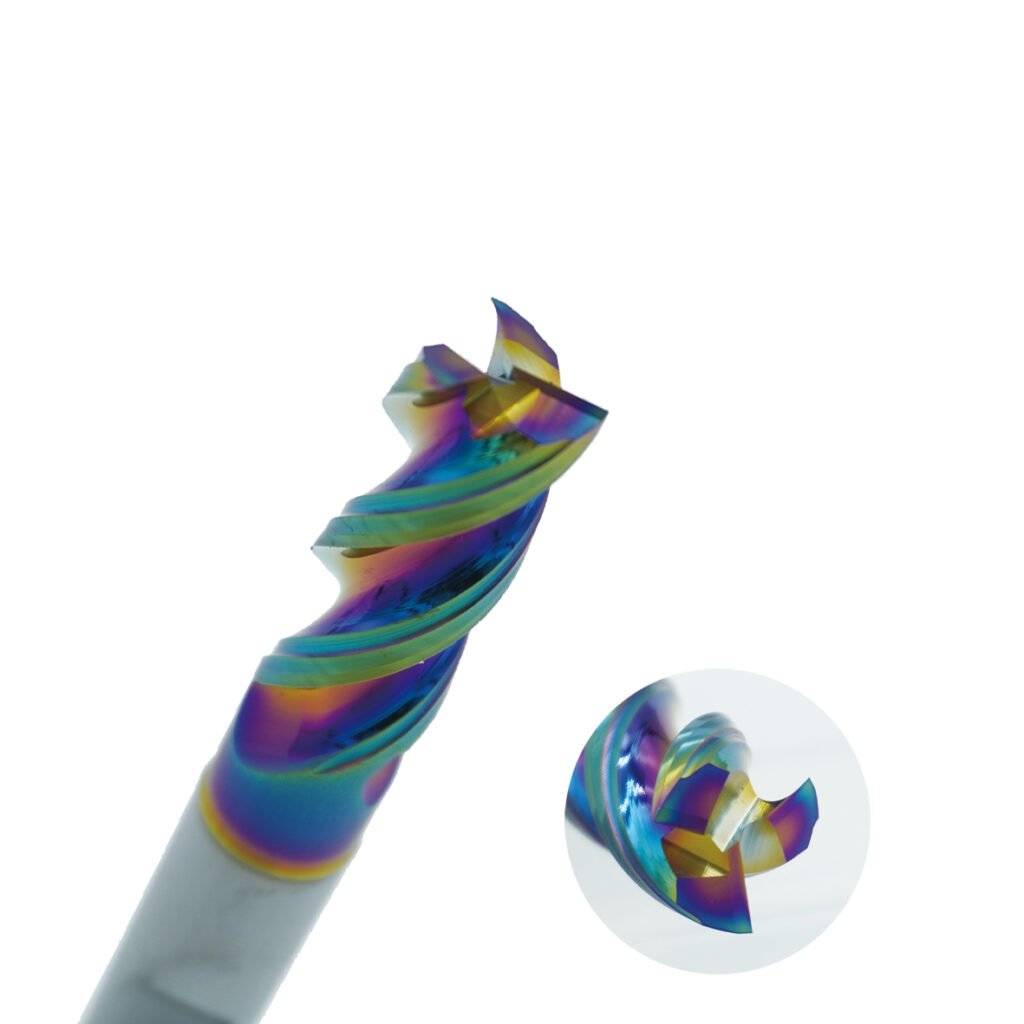
- DLC / bright finish– excellent for aluminum and plastics where built-up edge is a problem.
- Hard-milling sets (HRC55–65, even hrc70 carbide end mill) use high-hardness nano-layer coatings tuned for 55–70 HRC work.
If the set claims to cover “all materials” but doesn’t clearly specify coating and hardness rating, treat it as a general-purpose option, not a hard-milling or stainless specialist.
Size Range: Do These Diameters Match Your Jobs?
Good sets give you core diameters that really get used, not a random spread just to print a bigger number on the box.
Many popular sets on the market contain exactly the sizes below, because they cover most everyday slotting and contouring.
Typical Inch vs. Metric Set Contents
Set Type | Common Diameters Included | Usage Coverage (Typical Job Shops) |
Inch set (6 pcs) | 1/8, 3/16, 1/4, 5/16, 3/8, 1/2 inch carbide end mill | 80–90% of general milling |
Inch set (8 pcs) | Above + 5/8, 3/4 | Adds heavy roughing & facing |
Metric set (8 pcs) | 2, 3, 4, 5, 6, 8, 10, 12 mm carbide end mill | Common on CNC mills with metric CAM |
Metric set (10–12 pcs) | Above + 1 mm, 1.5 mm, or 16mm carbide end mill | Adds micro-features & heavy cuts |
Ask yourself:
- Do these diameters match the pockets, slots, and profiles we program every week?
- Will we ever use the smallest very fragile sizes (like 1 mm carbide end millor 1/32 carbide end mill) with our current machines and operators?
It’s often better to start with a focused 6–8 piece carbide end mill set in workhorse sizes (e.g. 1/4 inch carbide end mill, 3/8 carbide end mill, 1/2 inch carbide end mill, 10mm carbide end mill, 12mm carbide end mill) and buy ultra-small tools individually when needed.
Flute Count and Geometry: One Set Can’t Do Everything
Even within the same diameter range, sets can be very different:
- 2-flute vs 4 flute carbide end mill
- Standard vs high-helix
- Square, corner radius, bull nose carbide end millor ball nose
- Plain vs roughing carbide end millprofiles
Common Set Types by Geometry
1.2–3 flute aluminum set
- Excellent as a dedicated carbide end mill for aluminumor non-ferrous materials.
- Large flute volume, open gashes, sharp edges.
- Typical mix: 2 flute carbide end millor carbide end mill 2 flutein 1/8–1/2″ or 2–12 mm.
2.4 flute steel set
- General-purpose solid carbide end mill cutterfor steels and stainless.
- Good choice if you want “one box for most steel jobs.”
- Example from the market: 6-pc 4 flute solid carbide end millsets (1/8–1/2″) with AlTiN coating.
3.Mixed geometry set
- Includes roughers, square, and corner radius tools.
- Useful for mold and die work: roughing with serrated tungsten carbide end millroughers, then finishing with 4–6 flute radius tools.
For many general shops, the most practical path is:
Start with a quality 4-flute steel-oriented carbide end mill set, then add a separate 2–3 flute aluminum set and a small hard-milling set later.
Shank Compatibility and Toolholding
It’s easy to overlook shank sizes when you’re seduced by a long list of diameters.
Check:
- Do the shank diameters match your collets and holders (e.g. 1/4″, 3/8″, 1/2″)?
- Are you buying a set full of shanks your machine rarely uses?
Some designs use combinations like 5/16 carbide end mill 1/4 shank or reduced shank profiles to fit smaller holders and increase rigidity in small machines. This is especially useful in light VMCs and CNC routers where stiff clamping matters more than absolute flute length.
If your machine mostly runs 1/4″ and 1/2″ collets, it makes no sense to buy a set where half the tools have 3/4″ shanks.
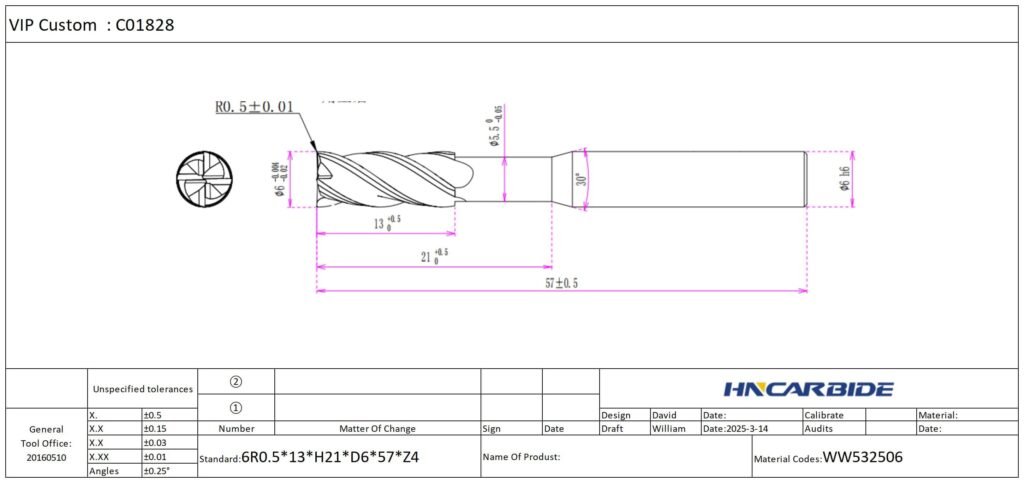
Packaging, Identification and Reorderability
This sounds basic, but it matters a lot once your team starts using the set.
Look for:
- Laser markingson the shank – size, flute count, coating or series code.
- Individual tubes or organized foam inlays so tools don’t bang together and chip in shipping.
- Clear part numbers so you can reorder single pieceswhen a popular size (like the 3/8 carbide end milleveryone loves) wears out.
Reputable carbide end mill suppliers and brands (for example, major names like Niagara or Kennametal in the US market) almost always document this clearly, because they expect repeat orders for individual diameters.
Very cheap sets from generic marketplaces sometimes lack this traceability—once a tool breaks, you have no idea which exact spec to replace it with.
Cost vs. Value: Cheap Kits vs. Professional Sets
The lowest carbide end mill price on the page is rarely the best value. Tool life, consistency, and support matter more over time.
Here’s a realistic comparison:
Aspect | Low-Cost “Market” Set | Professional-Grade Set |
Carbide grade | “Carbide” with no details | Micro-grain tungsten carbide end mill substrate |
Coating info | Often unclear or generic | Specific TiAlN/AlTiN/DLC with HRC rating |
Size selection | Many rarely used diameters | Core sizes that match common work |
Tolerance & runout | Variable; sometimes inconsistent | Tighter tolerances, better balance |
Tool life | Short; unpredictable | 2–3× longer in typical conditions (if applied correctly) |
Tech support / data | Minimal; no real carbide end mill speeds and feeds data | Proper carbide end mill speeds and feeds chart, online calculators |
Replacement availability | Whole set only | Single-diameter reorder, expansion options |
A professional set might cost 2× more up front, but if it provides 2–3× the tool life and fewer scrapped parts, it quickly becomes the cheaper choice.

Realistic Cutting Data: Does the Supplier Help You Succeed?
Even though you’re buying a set, you still need reliable carbide end mill cutting parameters to make those tools work.
Good suppliers and brands will offer:
- Material-specific carbide end mill speeds and feeds chartor online carbide end mill speeds and feeds calculator.
- Recommendations for solid carbide end mill cutting speed(SFM or m/min) and chip load by diameter.
- Basic troubleshooting tips for chatter, poor surface finish, or short tool life.
Typical published data for general-purpose carbide end mills shows, for example:
- Aluminum: high cutting speed, larger chip load
- Mild steel: moderate speed, moderate chip load
- Stainless and tool steel: lower speed, sufficient chip load to avoid rubbing