Choosing the Right End Mills for Aluminum and Steel: The Complete, No-Guesswork Guide
Table of Contents
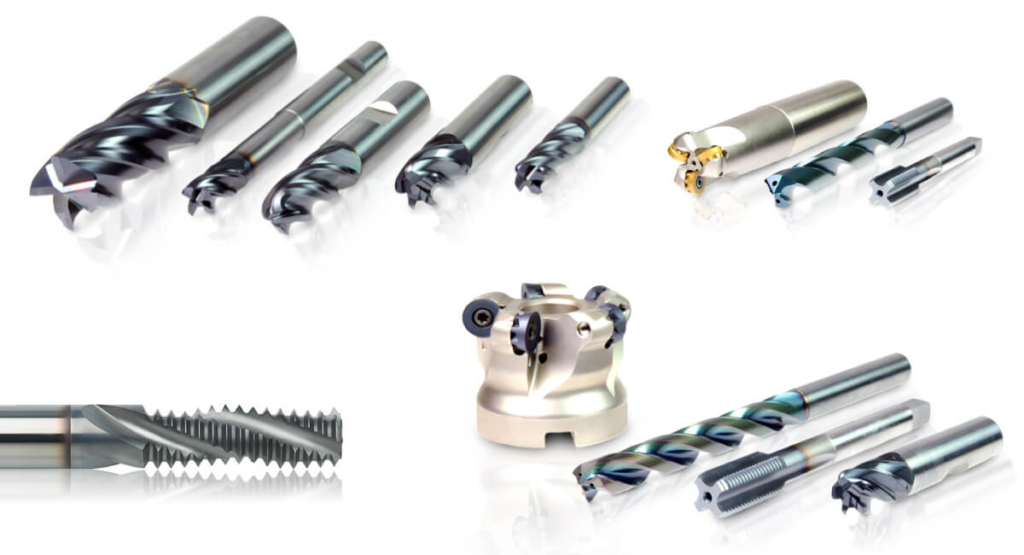
If you machine both aluminum and steel, you already know the ugly truth: what sings in 6061 can scream in 4140. This guide walks you—step by step—through choosing end mills that actually match the material.
We’ll explain what makes aluminum and steel behave so differently, specify practical end mill milling cutter geometries and coatings, and give you dial-in starting parameters (with formulas you can verify). Along the way, we’ll reference concrete product styles you can source from HNCarbide’s German-standard lineup.
Introduction
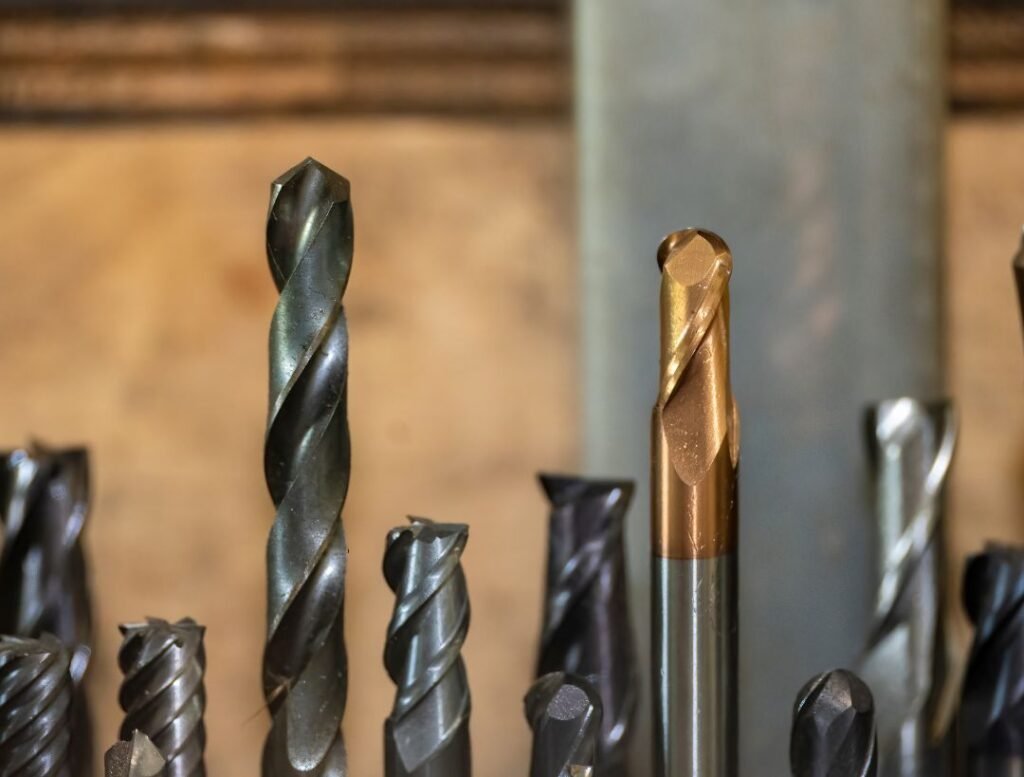
Picking “one tool for everything” is how scrap bins get full. Aluminum is soft, gummy, and thermally conductive; steel is harder, stronger, and holds heat at the cutting edge. The end mill that clears big, shiny chips in aluminum will often rub and overheat in steel. Conversely, the rigid, multi-flute cutter that handles steel like a pro will pack chips and weld up in aluminum.
This article covers:
- Why material properties force different tool choices
- Proven geometries for end millingaluminum and steel
- Coatings that prevent built-up edge vs. coatings that fight heat
- How to set end mill speeds and feeds(with an end mill rpm calculatorformula)
- Common mistakes to avoid when switching between materials
We’ll also include three concise tables you can paste into a shop traveler or CAM note.
Understanding Material Differences
Thermal Conductivity, Hardness & Chip Formation
- Aluminum(e.g., 6061, 7075) conducts heat quickly and is relatively soft. Chips should be large and free-flowing. Tools need large flute gulletsand a polished path to eject chips and prevent welding.
- Steel(e.g., 1018, 4140, H13) holds heat at the cutting zone and is much harder. Chips are smaller, and cutting edges see sustained thermal and mechanical load. Tools need more flutes and higher rigidityto prevent chatter and distribute load, plus heat-resistant coatings.
Why “One End Mill Fits All” Doesn’t Work
- Flute count & gullet sizeare in direct tension. Aluminum wants fewer flutes and bigger gullets; steel wants more flutes and a stiffer core.
- Edge prepdiffers: Aluminum favors razor-sharp edges; steel often benefits from a honed edge to resist micro-chipping.
- Coatings diverge: DLC/TiB₂ prevent aluminum welding; TiAlN/AlCrN withstand high-temperature steel cutting.
End Mills for Aluminum
What works:
- 2-flute or 3-flute solid carbidewith large flute spacingand high helix (38–45° or higher).
- Polished flutesand mirror-like rake facesto shed chips and resist built-up edge (BUE).
- Center cutting end millgeometry (for plunging or ramping).
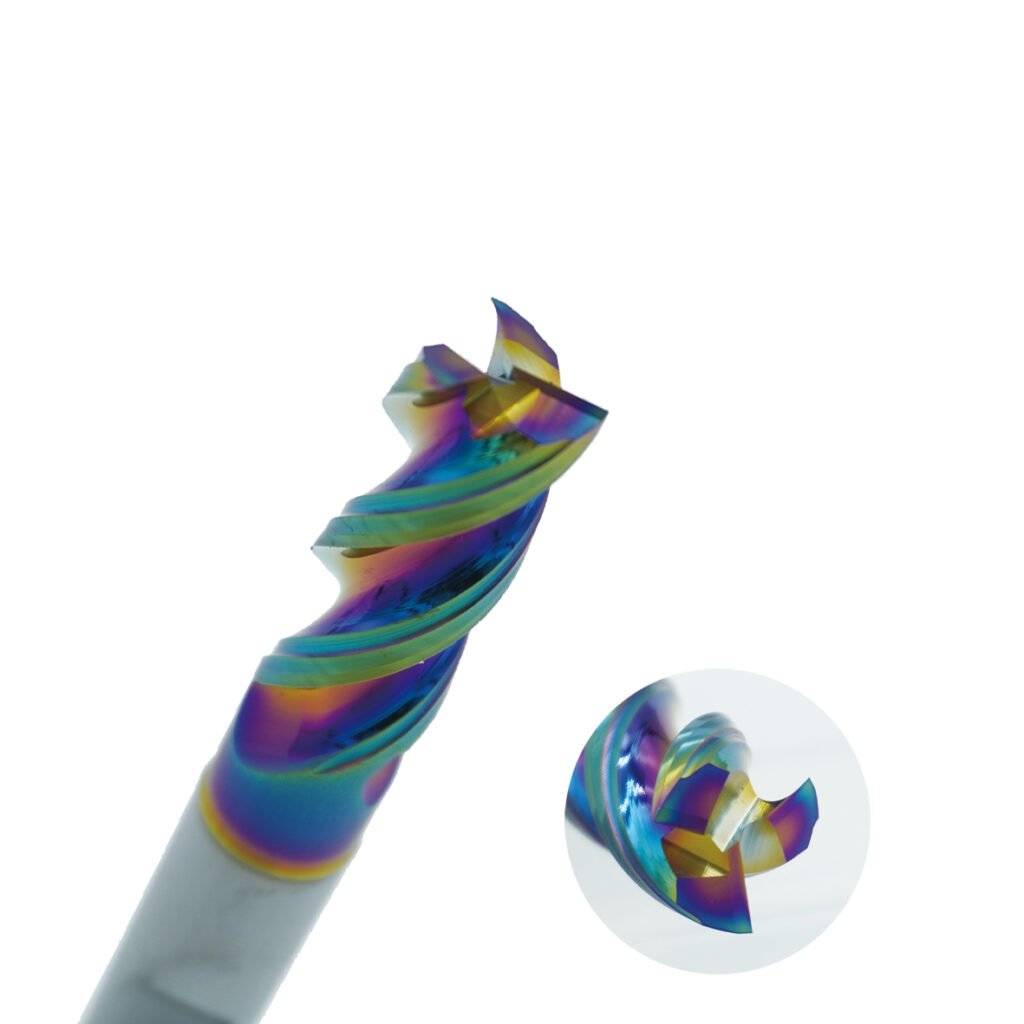
- Recommended coatings:DLCor TiB₂ (both reduce adhesion). Uncoated micro-polished carbide can also excel in clean, flood-cooled setups.
Use cases:
- 2 flute end mill for aluminumwhen you need maximum chip evacuation—slotting, deep axial engagement, smaller diameters like 1/8 end millor 1/4 end mill bit (6.35 mm) are classic.
- 3 flute end millwhen you want a bit more metal removal rate in profiling or adaptive paths while maintaining chip room.
- Ball end millfor 3D surfacing in molds/fixtures; a 1/4 ball end millis a workhorse for scallops in 6061.
HNCarbide picks (German-standard build):
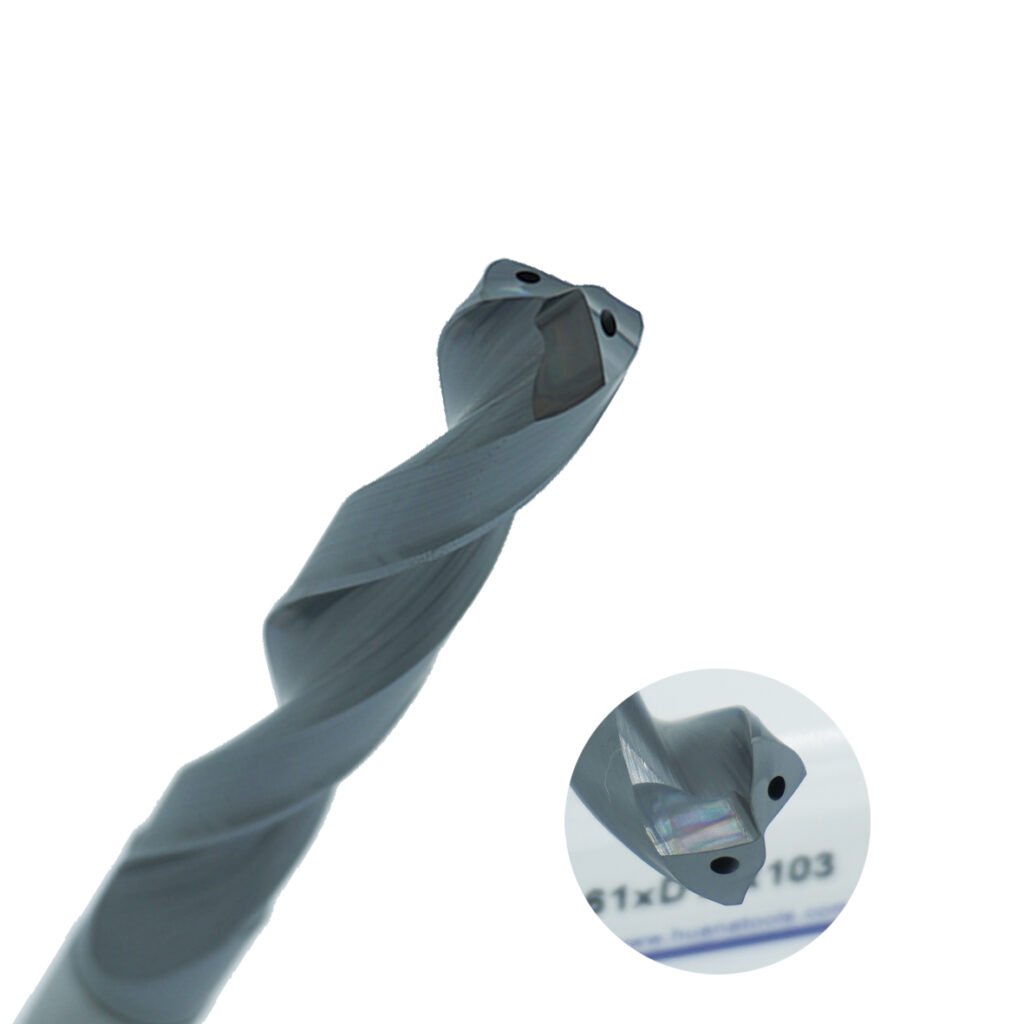
- Alu-Series A2F (2-flute, polished, DLC option):aggressive slotting, great for end mill solid carbidemicro sizes (1 mm–6 mm) and up to 1/2 inch end mill bit.
- Alu-Series A3F (3-flute, high helix, TiB₂):adaptive rough/finish in 6000/7000 alloys with air blast or MQL.
- Alu-Ball AB2 (2-flute ball):smooth surfacing in free-machining aluminums.
Aluminum End Milling Parameters
Tool Type | Flutes | Surface Speed (m/min) | Feed per Tooth (mm) | Recommended Coating |
2 Flute Carbide End Mill | 2 | 300–600 | 0.05–0.20 | DLC |
3 Flute End Mill | 3 | 250–500 | 0.04–0.18 | TiB₂ |
Ball End Mill | 2 | 200–400 | 0.03–0.12 | TiN |
Notes:
- Run air blast or MQLto keep chips moving. Flood is fine if containment is clean; avoid re-cutting chips.
- Use a light edge hone or sharp edgedepending on alloy; sharpest edges for 6061, light hone for 7075 to resist chipping.


End Mills for Steel
What works:
- 4-flute or 5-flutewith smaller flute spaces, thicker core, and variable pitch/helixto disrupt chatter.
- Corner radiusimproves edge strength and tool life.
- Coatings:TiAlNor AlCrN for hot-hardness and oxidation resistance; TiCN is a value option for low-alloy steels.
Geometry choices:
- 4 flute end millfor general steel slotting and pocketing.
- 5 flute end millfor higher MRR in profiling/adaptive (stiffer, more teeth = more feed at same chip load).
- Roughing end mill(chipbreaker serrations) to lower cutting forces in heavy stock removal before finishing with a square end millor radius tool.
HNCarbide picks
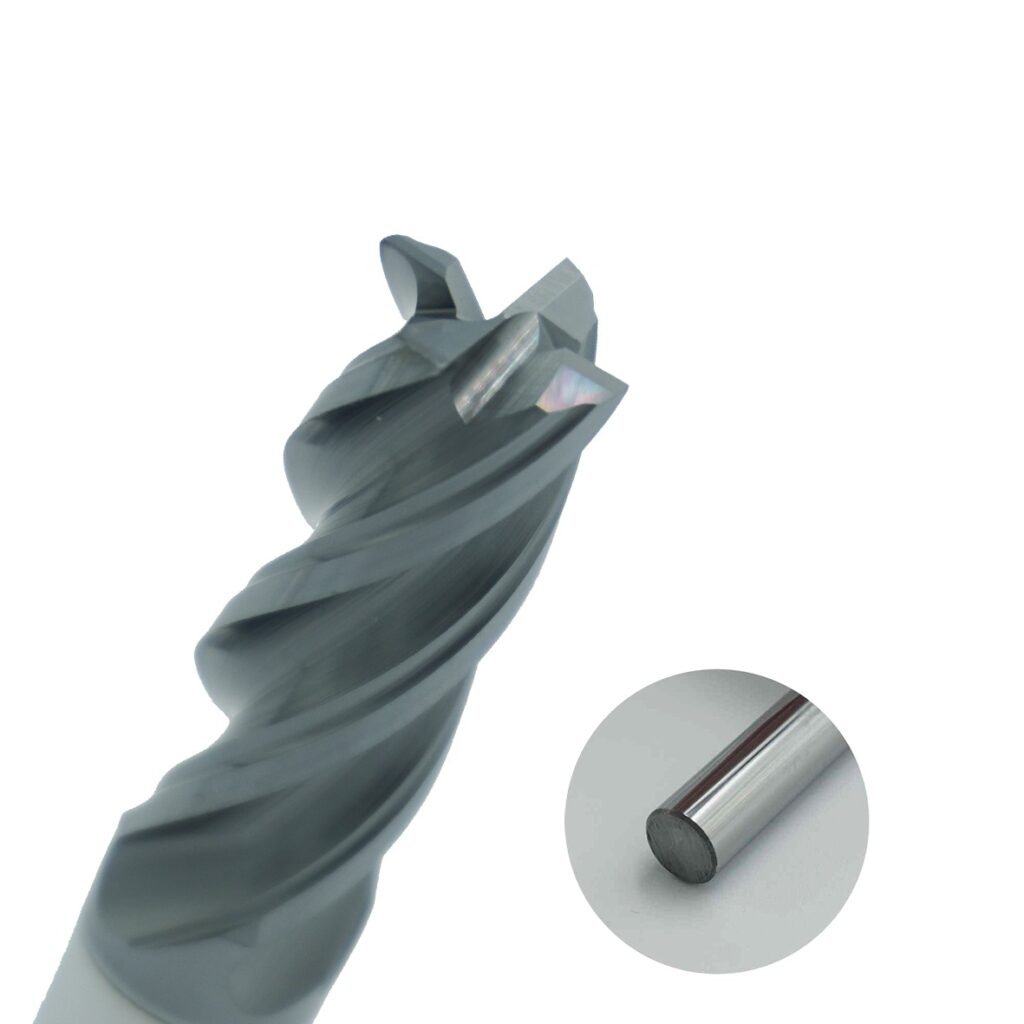
- Steel-Series S4U (4-flute TiAlN, unequal pitch):dependable universal steel performer.
- Steel-Series S5X (5-flute AlCrN, variable helix):excellent for high-speed profiling in 4140/Tool steel with air or limited coolant.
- RoughPro SR4 (4-flute, TiCN chipbreaker):fast rougher ahead of finishing; Weldon-flat shank options for secure holding.
Steel End Milling Parameters
Tool Type | Flutes | Surface Speed (m/min) | Feed per Tooth (mm) | Recommended Coating |
4 Flute End Mill | 4 | 100–250 | 0.02–0.08 | TiAlN |
5 Flute End Mill | 5 | 80–200 | 0.01–0.06 | AlCrN |
Roughing End Mill | 4 | 70–150 | 0.02–0.06 | TiCN |
Notes:
- In alloy/Tool steels, prioritize rigid toolholding(shrink-fit/hydraulic) and minimum runout(≤ 0.005 mm) to protect edges.
- For hardened steels (> 50 HRC), step down speeds and fz; consider specialized micro-grain carbide and AlTiN/AlCrN with proven hot hardness.
Optimizing Performance
The RPM & Feed-Rate Formulas
Spindle Speed (RPM)
- RPM=Vc×1000π×D\text{RPM} = \frac{V_c \times 1000}{\pi \times D}RPM=π×DVc×1000
where VcV_cVc = surface speed (m/min), DDD = tool diameter (mm). This is the same logic your end mill rpm calculator uses.
Feed Rate (mm/min)
- Feed (mm/min)=RPM×Flutes×fz\text{Feed (mm/min)} = \text{RPM} \times \text{Flutes} \times f_zFeed (mm/min)=RPM×Flutes×fz
where fzf_zfz = feed per tooth (mm/tooth). That’s all an end mill speeds and feeds calculator is doing—just faster.
Worked Example (Aluminum, 1/4 end mill bit = 6.35 mm, 3-flute):
- Pick Vc=400 m/minV_c = 400\ \text{m/min}Vc=400 m/min, fz=0.06 mmf_z = 0.06\ \text{mm}fz=0.06 mm.
- RPM =400×1000π×6.35≈20,072 rpm= \frac{400 \times 1000}{\pi \times 6.35} \approx 20{,}072\ \text{rpm}=π×6.35400×1000≈20,072 rpm.
- Feed =20,072×3×0.06≈3,613 mm/min= 20{,}072 \times 3 \times 0.06 \approx 3{,}613\ \text{mm/min}=20,072×3×0.06≈3,613 mm/min.
Use this as your first-cut number; adjust based on sound, spindle load, and chip form.
Worked Example (Steel, 1/2 carbide end mill = 12.7 mm, 5-flute):
- Pick Vc=160 m/minV_c = 160\ \text{m/min}Vc=160 m/min, fz=0.03 mmf_z = 0.03\ \text{mm}fz=0.03 mm.
- RPM =160×1000π×12.7≈4,013 rpm= \frac{160 \times 1000}{\pi \times 12.7} \approx 4{,}013\ \text{rpm}=π×12.7160×1000≈4,013 rpm.
- Feed =4,013×5×0.03≈602 mm/min= 4{,}013 \times 5 \times 0.03 \approx 602\ \text{mm/min}=4,013×5×0.03≈602 mm/min.
Tip: Log your results in a shared sheet next to your end mill feed and speed calculator outputs so your shop’s “tribal knowledge” becomes repeatable.
Tool Diameter Effects (1/4, 1/2, 1 inch end mill)
- Chip thinning & stiffness:Larger diameters (e.g., 1 inch end mill) permit higher VcV_cVc and depth of cutwith better stiffness—but remember spindle power limits.
- Small tools(e.g., 1/16 end mill, 1mm end mill) need higher RPM to reach target VcV_cVc; prioritize minimal runout and conservative fzf_zfz.
Rule of Thumb—Depth of Cut:
Aluminum roughing: up to 0.5–1.0 × D axial with light radial (adaptive).
Steel roughing: 0.3–0.6 × D axial with 10–20% radial (adaptive).
Finish passes: shallow radial, light axial for surface control.
Coolant & Lubrication
- Aluminum:Air blast or MQLto lubricate and evacuate chips. Flood is OK if it actually clears chips.
- Steel:Flood coolant helps life, but many TiAlN/AlCrN tools run dry or with airin high-temp regimes to keep coating hot and active. Follow toolmaker guidance.
Workholding & Toolholding
- Weldon-flat shanks(per German-standard HNCarbide builds) prevent pull-out in heavy roughing.
- Shrink-fit or hydraulic holdersminimize runout for finishing or small tools.
- Keep end mill extensionas short as practical; every extra millimeter invites chatter.
Common Mistakes to Avoid
1.Using 4-flute for aluminum slotting.
You’ll pack chips, weld the edge, and rub. Use 2 flute end mill aluminum or a 3-flute with big gullets.
2.Over-speeding steel tools.
Steel wants controlled heat. Too much SFM overheats edges even with AlCrN/TiAlN. Start in the ranges shown and creep up.
3.Babying chip load until it rubs.
Feather-light end mill feed rate = heat + wear. Target a minimum fzf_zfz to actually cut.
4.Ignoring runout.
A single flute carrying all the load = localized wear and breakage, especially on 1/8 end mill and smaller.
5.Wrong coating for the job.
DLC/TiB₂ in steel = premature failure; TiAlN/AlCrN in aluminum = welding. Choose coatings by material.
6.Forgetting edge prep and corner radius.
A small corner radius boosts life in steel. Razor-sharp edges shine in soft aluminum with stable setups.
Quick Selection Summary (Aluminum vs. Steel)
Material | Go-To Geometry | Flutes | Helix | Coating | Typical Use |
Aluminum (6061/7075) | Sharp, polished, big gullets | 2–3 | High (38–45°+) | DLC / TiB₂ | Slotting, adaptive rough/finish |
Mild/Alloy Steel | Rigid, variable pitch/helix | 4–5 | Medium–High | TiAlN / AlCrN | Pocketing, profiles, adaptive |
Tool Steel (pre-hard) | Stout core, corner radius | 5 | Variable | AlCrN / TiAlN | Finishing at moderate SFM |
Heavy Roughing (Steel) | Chipbreaker serrations | 4 | Medium | TiCN | Bulk removal before finishing |
3D Surfaces (Al) | Ball nose, polished | 2 | High | TiN / DLC | Fine scallops, molds/fixtures |
Practical Product Notes (What to Buy & When)
- For aluminum slotting & adaptive:
Choose 2 flute carbide end millwith polished flutes (A2F) or 3-flute high-helix(A3F). Stock common sizes: 1/8, 1/4, 1/2 inch end mill carbide. - For steel general purpose:
Keep a 4-flute TiAlN(S4U) for slots/pockets and a 5-flute AlCrN(S5X) for adaptive profiling with higher MRR. - For roughing steel:
Add a roughing end mill(SR4chipbreaker) to drop forces and increase tool life before finishing. - For finishing floors/walls:
Use a light square end millwith corner radius and shrink-fit holder.
When wall taper is required:
Tapered end mills help avoid step-downs and improve stability in deep cavities.
When tool wear cost dominates:
Consider indexable end mill bodies for larger diameters (≥ 16 mm) to reduce per-edge cost; use positive-rake steel inserts or polished-top aluminum inserts depending on material.

Conclusion
There’s no magic universal end mill bit—only the right tool for the material in front of you. Aluminum rewards sharp, polished, low-flute-count tools with DLC/TiB₂. Steel rewards rigid 4–5-flute designs with TiAlN/AlCrN and smart heat management. Use the tables above, verify with the simple formulas your favorite end mill calculator uses, and you’ll cut faster, cooler, and longer.
HNCarbide’s German-standard solutions are built around these principles: polished 2F/3F tools for aluminum; unequal-pitch 4F/5F for steels; chipbreaker roughers; ball and tapered profiles; and secure Weldon-flat shanks where it matters. If you want help mapping a specific alloy and machine to exact starting numbers, share your diameter, holder, overhang, and coolant method—we’ll give you dial-in, print-ready parameters.