What is the future of CNC machining? End milling cutter in high-speed machining
Table of Contents
Introduction
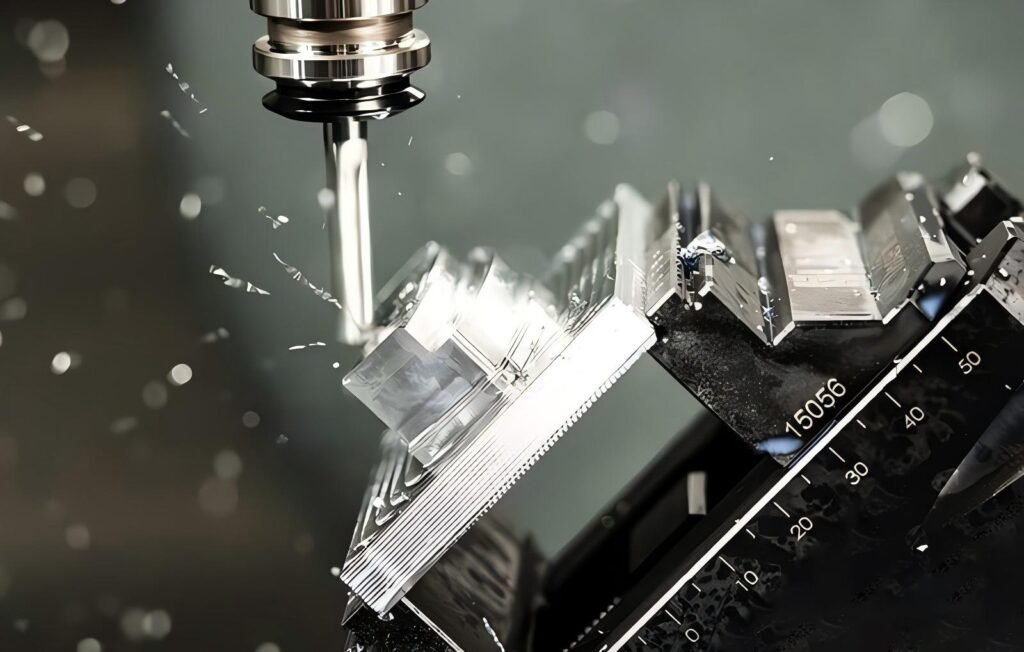
The advancement of CNC machining has revolutionized the manufacturing industry, enabling precision and efficiency like never before. One of the most critical factors in optimizing CNC machining operations is the selection and use of the right cutting tools. Among these, end mills play a central role in achieving high-precision cuts and maintaining high production rates. Particularly in high-speed operations, the choice of the correct end mill, such as carbide end mills, is crucial for improving productivity and reducing machining time.
In this article, we will explore the role of end mills in high-speed CNC machining, highlighting how these tools contribute to faster, more efficient machining processes and discussing the latest developments that are shaping the future of CNC machining.
DIN Milling Cutters Catalog
Click the button below to view our DIN milling cutters catalog and explore detailed product specifications to make the best choice.
Understanding the Role of End Mills in CNC Machining
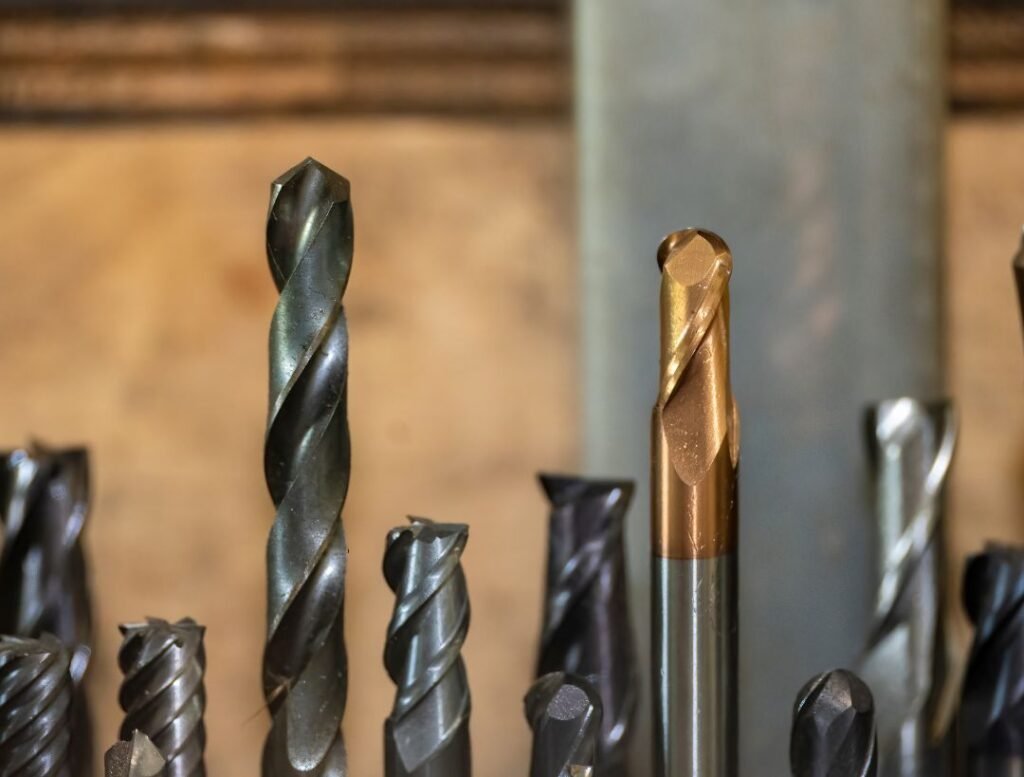
End mills are versatile cutting tools used in a variety of CNC milling operations. Unlike drills, which primarily cut along their axis, end mills are capable of cutting in multiple directions—radial and axial. This ability makes them ideal for a wide range of applications, including slotting, profiling, and contouring.
End Mill Types and Their Applications in High-Speed Machining:
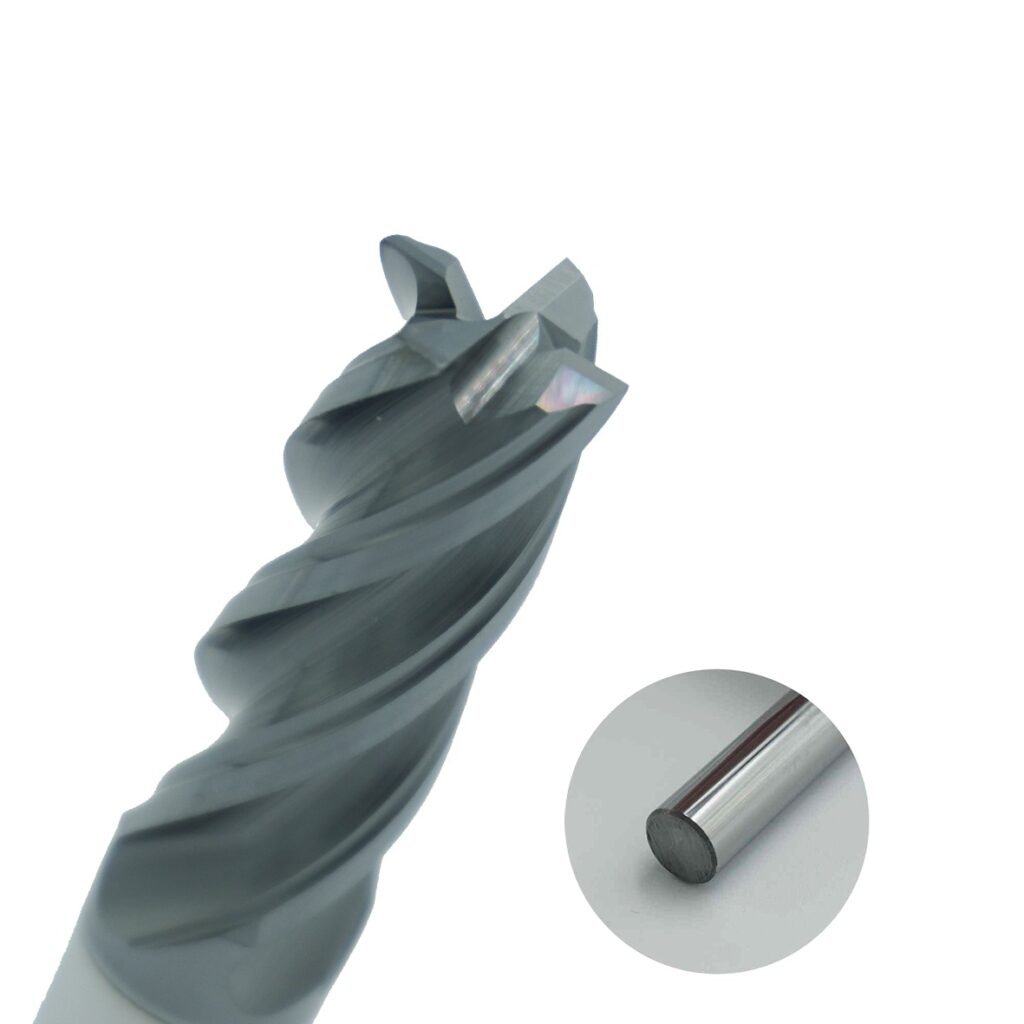
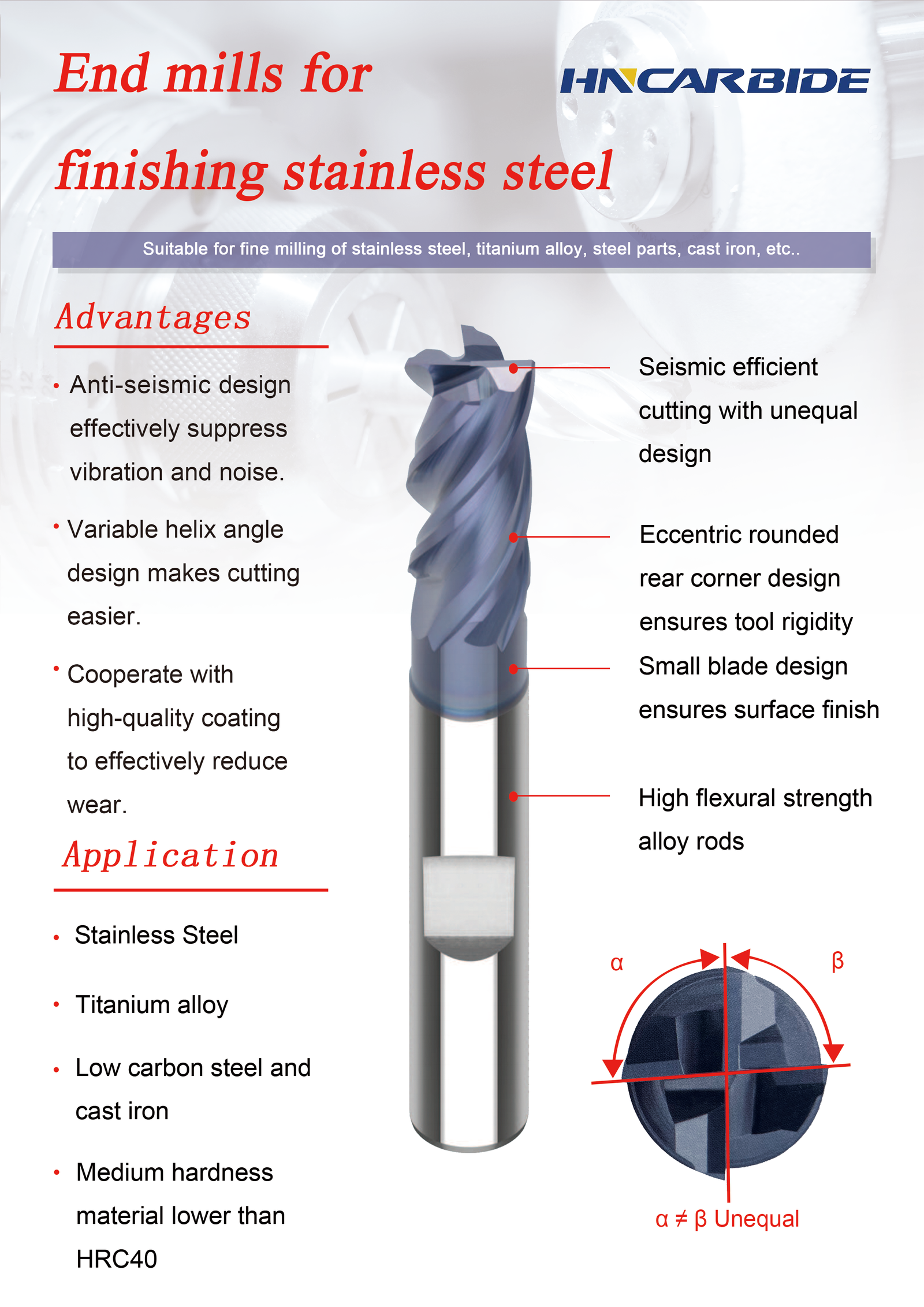
- Carbide End Mills: These are designed for high-speed applications due to their excellent wear resistance and hardness. Carbide end mills can withstand the high heat generated during high-speed cutting, making them ideal for stainless steel, titanium, and aluminum machining.
- Ball Nose End Mills: Perfect for 3D contouringand precision machining, ball nose end mills are commonly used for finishing operations and complex shapes, where high-quality surface finishes are required.
- Roughing End Mills: Designed to remove large amounts of material quickly, these tools are used in the initial stages of machining, significantly reducing cutting time before finer tools are used for finishing.
End Mill Comparison Table:
End Mill Type | Material Compatibility | Common Use | Pros |
2-Flute End Mill | Aluminum, Soft Metals | High-speed cutting | Faster chip removal |
4-Flute End Mill | Stainless Steel, Steel | Fine finishing, rigidity | Smooth surface, longer tool life |
Ball Nose End Mill | Aluminum, Steel | 3D contouring, profiling | Excellent for complex shapes |
Roughing End Mill | All metals | Rough material removal | High material removal rates |
Chamfer End Mill | Steel, Aluminum | Beveling, edge finishing | Clean, precise angle cuts |
How High-Speed Operations Improve CNC Machining
High-speed operations are defined by the ability to perform cutting tasks at much higher speeds than traditional machining methods. This approach brings numerous advantages:
- Increased Material Removal Rates: Higher cutting speeds allow for faster removal of material, which is essential in industries where production speed is critical, such as automotive or aerospace manufacturing.
- Better Surface Finish: High-speed operations can achieve smoother finishes with fewer tool marks, making it a preferred choice for precision components.
- Reduced Heat Generation: Using carbide end millsin high-speed operations helps dissipate heat more efficiently, preventing tool wear and material deformation.
Optimizing Cutting Speeds and Feeds:
In high-speed CNC machining, calculating the correct cutting speed and feed rate is crucial. Speeds refer to how fast the end mill spins, while feeds determine how fast the workpiece moves relative to the tool. Both need to be optimized based on the tool type, material, and machine capability. For example:
- Cutting Speed: For materials like aluminum, cutting speeds can be much higher (up to 500 feet per minute for carbide end mills), while tougher materials like stainless steelrequire slower speeds.
- Feed Rate: Increasing the feed rate during high-speed machining ensures that more material is removed in a shorter time, leading to faster production cycles.
Speeds and feeds calculators are often used in CNC software to automatically adjust these settings, ensuring optimal tool performance and efficiency.
Selecting the Right End Mill for High-Speed Machining
The choice of end mill plays a crucial role in achieving the best results in high-speed machining. Selecting the right end mill cutter involves considering several factors:
Material Compatibility:
Different materials require different types of end mills:
- Carbide End Mills: These are best suited for machining harder materials like stainless steel, titanium, and tool steels, as they offer superior wear resistance and can withstand high temperatures.
- High-Speed Steel (HSS) End Mills: While not as hard as carbide, HSS end millsare more cost-effective and work well for softer materials like aluminumand plastics.
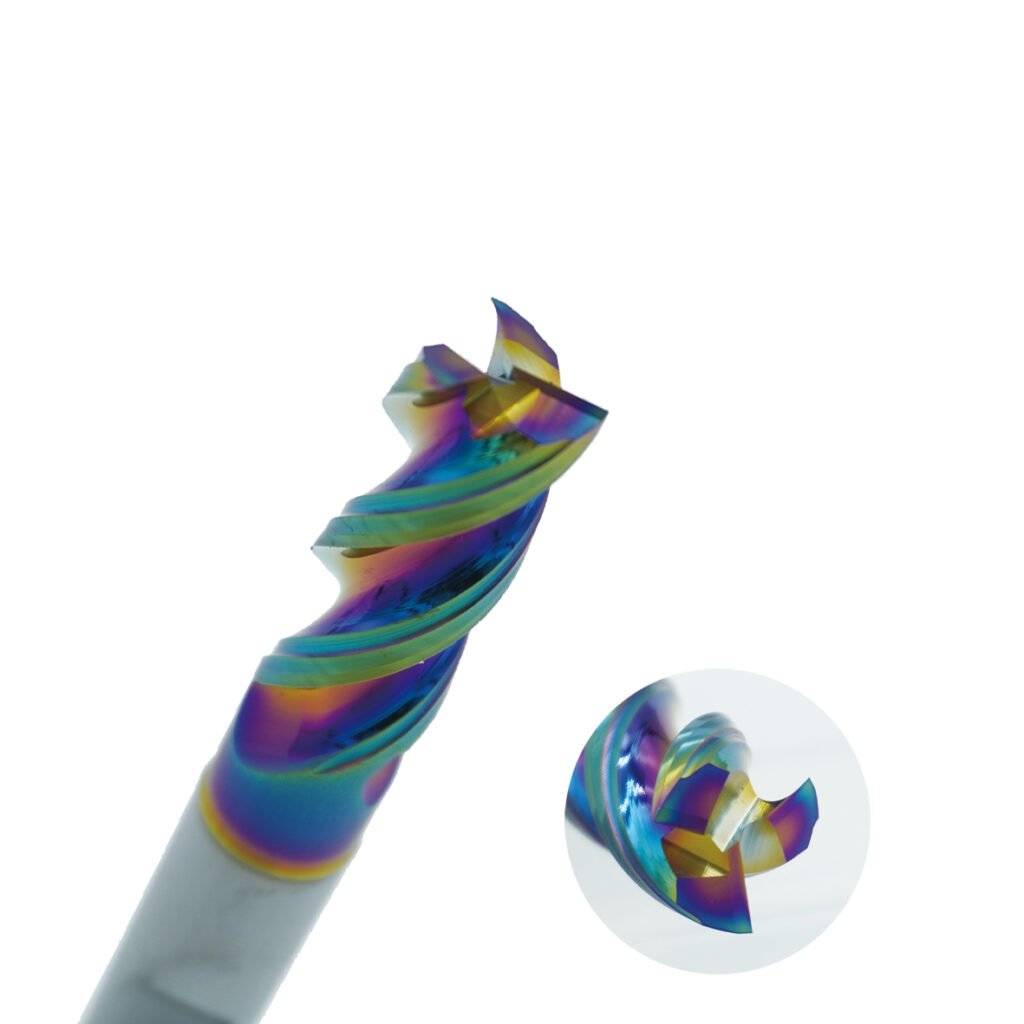
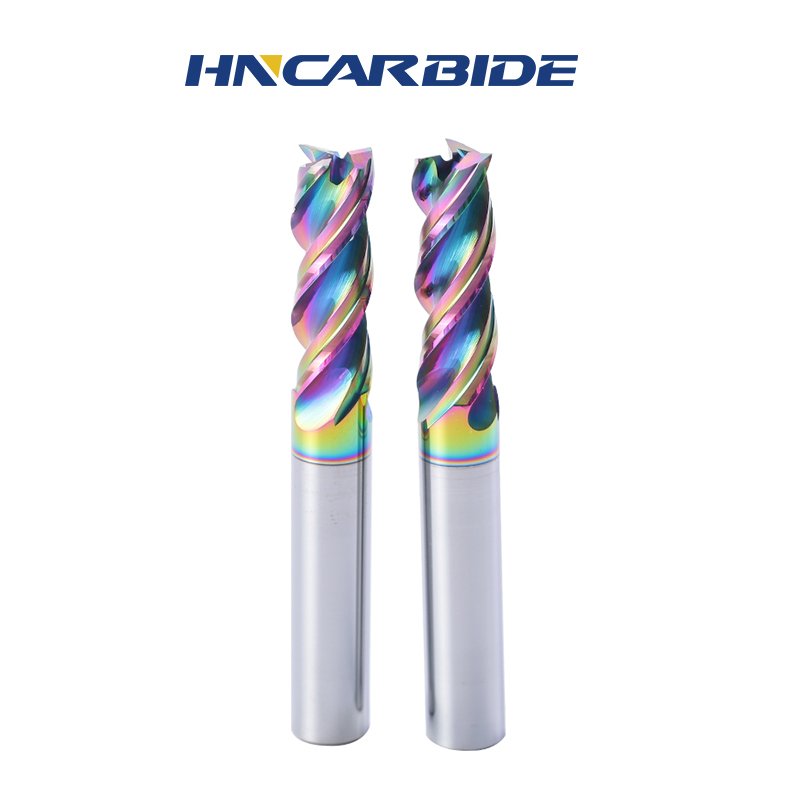
- Coated End Mills: Tools with coatings like TiN (Titanium Nitride)or TiAlN (Titanium Aluminum Nitride)improve tool life and reduce friction, making them ideal for high-speed cutting operations.
Flute Count:
- 2-Flute End Mills: These are excellent for high-speed cutting of softer materials like aluminumbecause they allow for faster chip removal.
- 4-Flute End Mills: These offer increased rigidity and better surface finishes, making them suitable for harder materials such as stainless steel.
- Ball Nose End Mills: Ideal for 3D profiling, these are used to cut complex shapes and produce high-quality surface finishes in high-speed applications.
End Mill Sharpening: Maintaining Tool Performance in High-Speed Operations
One of the challenges in high-speed CNC machining is maintaining the sharpness of end mills over time. Regular sharpening of end mill bits is essential to maintaining their cutting performance and extending tool life.
- End Mill Sharpener: A tool designed for restoring the sharp edges of end milling cutters. These sharpeners come in various forms, from manual to CNC-based sharpening machines.
- Grinding Machine: End mill grinding machinesare used for sharpening end mills, particularly carbide tools, which require specialized equipment to grind accurately.
End Mill Sharpener Comparison Table:
Sharpener Type | Features | Best for |
Manual Sharpener | Low cost, simple operation | Low-volume shops |
CNC End Mill Grinder | High precision, automated sharpening | High-volume, precision milling |
Belt Sander Grinder | Quick sharpening, good for general use | Rough sharpening, maintenance |
By regularly sharpening your end mill tools, you can reduce downtime and ensure that your milling operations remain smooth and precise.
End Mill vs. Face Mill: Which Should You Use?
While end mills are ideal for vertical cuts and detailed work, face mills are better suited for large surface area cuts.
Here’s a brief comparison:
Feature | End Mill | Face Mill |
Cutting Direction | Radial and axial cutting | Primarily axial cutting |
Applications | Precision work, profiling, and slotting | Surface finishing, rough cutting |
Tool Size | Smaller, more precise | Larger, more aggressive cutting |
If your project requires precision in detailed slots and profiles, end mills are the best choice. However, if you’re working with large surfaces and need to remove more material quickly, consider using a face mill.
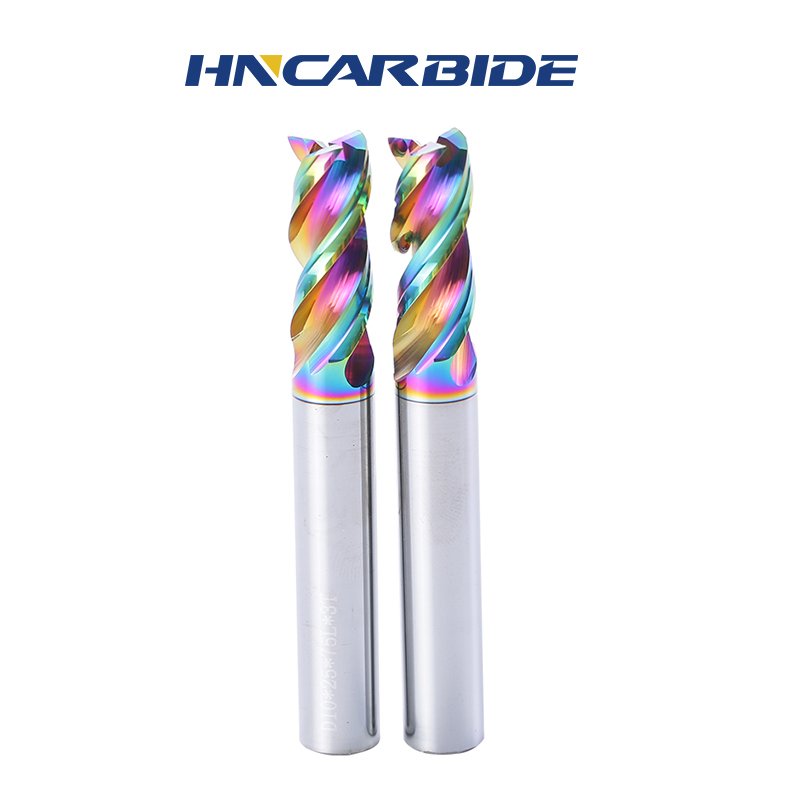
End Mills for High-Speed Aluminum Machining
Aluminum is one of the most commonly used materials in high-speed CNC machining due to its light weight and ease of machining. End mills for aluminum are specifically designed to optimize cutting speeds and ensure smooth finishes.
These tools typically feature:
- Higher Flute Counts: 4-flute or even 6-flute end millsare ideal for aluminum, allowing for smooth cuts and better surface finishes.
- Optimized Geometries: End mills with specific geometries designed for aluminum machiningreduce the risk of chip packing and improve material removal rates.
Example:
- 2-Flute Roughing End Mill: Often used in the initial stages of machining aluminum, these tools quickly remove material without compromising the integrity of the workpiece.

The Future Outlook: CNC Machining and End Mills in High-Speed Operations
As manufacturing continues to evolve, CNC machining will keep pushing the boundaries of what’s possible in high-speed operations. With increasing demands for precision, speed, and efficiency, end mills will remain at the heart of CNC machining. The integration of AI, machine learning, and smart sensors into milling operations will allow for continuous optimization of cutting parameters, ensuring that end mills are used in the most efficient way possible.
Moreover, additive manufacturing is expected to contribute to the development of custom end mills, offering even more specialized solutions for challenging machining tasks. As these technologies evolve, the role of end mills in high-speed CNC operations will become even more integral to achieving high-quality, cost-effective machining.
Conclusion
High-speed CNC machining has become an essential part of modern manufacturing, and end mills are key players in this evolution. By selecting the right end mill, optimizing cutting parameters, and maintaining tool sharpness, manufacturers can enhance production rates, improve surface finishes, and reduce machining costs. The future of end mills in high-speed operations looks bright, with technological advancements poised to make CNC machining even more precise and efficient.
By staying informed about the latest trends and innovations in end mill technology, manufacturers can ensure they remain competitive in a rapidly changing industry.